TLDR
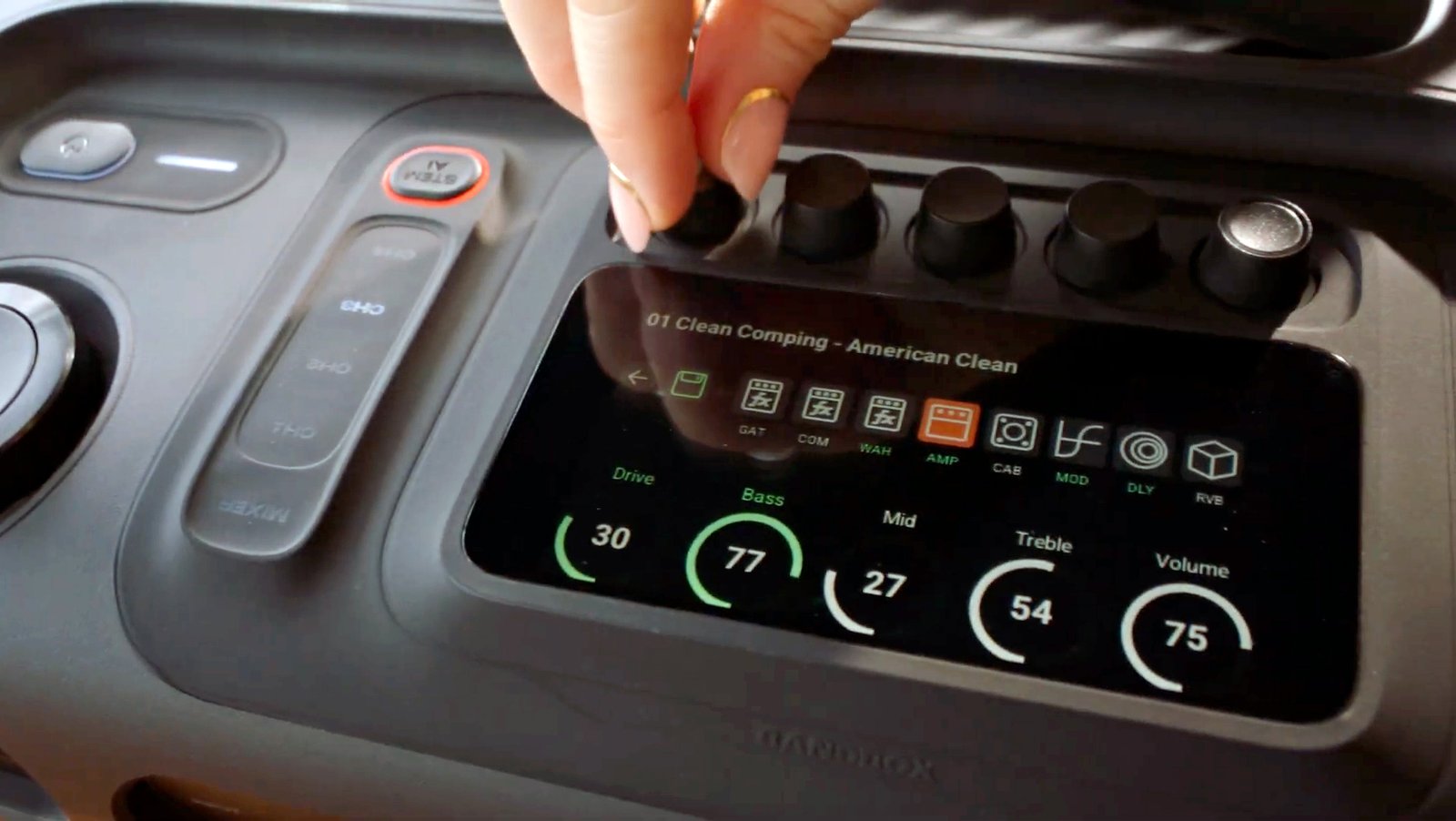
• Core Points: JBL introduces AI-driven practice amps with Stem AI for on-device vocal/instrument separation of Bluetooth-streamed music; BandBox Solo ($250) targets solo players, BandBox Trio adds additional features for collaborative or larger-scale practice.
• Main Content: These amps leverage Stem AI to selectively isolate or remove vocals and instruments from Bluetooth audio, enabling learners to practice with a backing track or to challenge themselves by removing prominent parts.
• Key Insights: On-device AI aims to support music education and practice workflows; implications include potential audio quality trade-offs, latency considerations, and reliance on Bluetooth streams.
• Considerations: Value relative to features, durability, app ecosystem, and ongoing software updates; potential licensing and dataset concerns for AI separation tech.
• Recommended Actions: Evaluate your practice needs, compare with traditional practice amps, test latency and output quality, and review JBL’s software updates and privacy commitments before purchasing.
Content Overview
JBL has ventured into the realm of AI-assisted music gear with a pair of practice amplifiers designed to help musicians train more effectively. The BandBox Solo and BandBox Trio are notable for incorporating Stem AI, a technology capable of separating or removing vocals and instruments from audio streams delivered via Bluetooth. This capability could, in theory, allow a guitarist learning a classic track like Led Zeppelin’s “Stairway to Heaven” to mute Jimmy Page’s guitar parts and practice along with the rest of the band’s arrangement.
Priced at $250 for the BandBox Solo, these devices are targeted at solo players seeking an affordable, compact solution that blends amplification with AI-based audio manipulation. The BandBox Trio extends the concept with additional features intended for more involved practice scenarios, potentially including stereo output options and more expansive processing capabilities. JBL’s approach reflects a broader trend in consumer audio where smart processing is integrated directly into practice-centric hardware, rather than relying solely on software or external devices.
This article provides an in-depth look at what the BandBox Solo and BandBox Trio offer, how Stem AI functions in a real-world practice setting, and what musicians should consider before integrating these amps into their routine. It also situates JBL’s initiative within the broader context of AI-assisted music tools, discussing potential benefits, limitations, and implications for the practice experience.
In-Depth Analysis
The BandBox Solo and BandBox Trio represent JBL’s attempt to blend traditional guitar amplification with modern AI-driven audio processing. Stem AI, the onboard technology in these devices, is designed to work with Bluetooth streams to perform source separation—specifically distinguishing vocals and instrumental tracks from the audio being played through the amp. This feature is particularly appealing to learners who want to isolate or remove certain elements of a backing track as they practice.
From a practical standpoint, the concept is straightforward: you stream music via Bluetooth, and the amp applies real-time processing to either suppress or highlight certain components of the mix. The most common use case is to minimize vocal presence or remove instruments so a guitarist can hear their own performance more clearly against a reduced mix, or to practice with a “band without a specific part” scenario to build confidence and technique.
However, several factors influence how effective this AI-driven separation will be in everyday use:
– Audio Source Quality: Separation performance can depend on the quality and stereo configuration of the Bluetooth source. Higher-fidelity streams generally yield better separation results.
– Latency: Real-time processing inherently introduces some latency. For practice, low latency is crucial to maintain musical alignment between the musician and the remaining track.
– Complexity of the Mix: Simple, well-mixed tracks with clear vocal and instrument separation tend to yield more accurate AI separation than dense, multi-instrument recordings.
– Processing Trade-offs: To achieve cleaner separation, JBL’s Stem AI may reduce some audio fidelity or stability of the remaining music, which is a typical trade-off in many AI-based source separation systems.
The Solo model targets the individual player, offering portability and a straightforward interface. At $250, it positions itself as an accessible option for beginners and intermediate players who want a compact practice setup without sacrificing the advantages of AI-assisted learning. The Trio, by expanding on the Solo’s capabilities, could introduce stereo imaging or more flexible routing to accommodate practice sessions that involve a second guitarist, a drummer simulation, or other multi-part practice configurations. Details on bandwidth, inputs, and output configurations would further illuminate how the Trio enhances or differentiates itself from the Solo.
For musicians, the potential workflow with these amps is compelling but not without caveats. If you’re trying to recreate live-band dynamics without a full backing band, removing vocal cues could help you stay in time and in tune while you follow the reduced mix. Conversely, if the AI mock-ups misidentify certain frequency ranges or instruments, you might encounter artifacts or an uneven listening experience that distracts rather than aids practice.
In addition to core AI features, the BandBox models align with JBL’s broader design principles: compact form factors, consumer-grade amplification, and user-friendly interfaces. The price point and design considerations make these devices competitive within the practice-gear segment, especially for players who value integrated AI capabilities over purely analog or traditional digital alternatives.
From a broader perspective, JBL’s move reflects a growing trend in consumer audio equipment toward incorporating artificial intelligence as a standard feature. By embedding AI directly into a practice amp, JBL taps into an audience that seeks smarter tools for learning and rehearsal—without needing a separate app, complex setup, or external processing units. Yet, this also invites scrutiny around privacy, as AI-based processing often relies on analyzing or processing audio streams locally on the device. JBL’s statements about on-device processing and data handling would be critical considerations for prospective buyers.

*圖片來源:Unsplash*
Beyond the immediate product specifics, this development highlights emerging opportunities for musicians to customize their practice environment. If Stem AI can deliver reliable vocal or instrument removal with minimal latency and consistent results, it could become a standard feature requested in future practice gear. It also raises questions about licensing and copyright implications when isolated audio tracks are manipulated or used for educational purposes, particularly when tracks originate from commercially released recordings.
In sum, JBL’s BandBox Solo and BandBox Trio place AI-powered practice within easy reach for musicians who want to elevate their practice sessions with smart, built-in processing. The success of these devices will depend on the practical effectiveness of Stem AI in diverse listening environments, the stability of the Bluetooth connection, and how JBL supports ongoing updates to improve separation quality and user experience over time.
Perspectives and Impact
AI-powered audio processing in practice equipment signals a shift in how musicians approach learning and technique development. The BandBox line exemplifies a trend where hardware developers embed sophisticated AI tasks—traditionally reserved for software or cloud-based services—directly into portable gear. For learners, this can translate into more flexible, location-independent practice routines. Instead of relying on a separate DAW, an audio interface, or a dedicated AI app, players can simply pair a device, stream music, and begin a guided practice session with vocal or instrumental elements manipulated in real time.
This approach brings several potential benefits:
– Personalization: AI-based separation may enable students to customize their practice environment by choosing to mute or emphasize certain parts, potentially aligning practice with specific learning objectives.
– Accessibility: The compact BandBox form factor lowers barriers to entry, making AI-assisted practice accessible to a broader audience of guitarists and aspiring musicians.
– Integration with learning methods: If Stem AI can reliably isolate parts, instructors and learners can design targeted exercises around a given track, tempo, or key, facilitating more focused skill development.
However, there are important considerations and uncertainties:
– Consistency of results: The accuracy and consistency of AI separation can vary across different songs, genres, and production styles. Success in one track may not translate to another.
– Latency and timing: Any noticeable delay between the input (your playing) and the output (the audible track) can affect rhythm and feel, particularly for beginners or fast-paced passages.
– Audio fidelity: To achieve separation, some processing might affect spectral balance or introduce artifacts, which could alter the listening experience and the perceived quality of practice material.
– Privacy and data handling: Devices that process audio locally reduce privacy concerns, but users should confirm how data is stored or used, especially if any cloud-based components are involved in updates or features.
– Longevity and support: The ongoing value of these devices depends on JBL’s commitment to firmware updates, feature enhancements, and compatibility with a range of Bluetooth sources and music services.
From the industry perspective, JBL’s stance on on-device AI processing aligns with a broader push toward smarter consumer electronics that offer immediate value without complex setup. If successful, the BandBox line could influence competitors to introduce similar AI-enabled features in their own practice-oriented hardware, accelerating the adoption of AI-assisted learning tools in music education. Conversely, limitations in separation accuracy, latency, or bass-heavy content could temper enthusiasm and push users to seek alternative methods or devices for practice.
Educators and researchers may also be interested in how such devices impact learning outcomes. For example, does practicing with an AI-adjusted backing track improve pickup speed, accuracy, and long-term retention? Do students become more proficient at sight-reading or timekeeping when they can isolate or mute parts in real-time? These questions invite empirical study to understand the educational benefits and potential pitfalls of AI-powered practice amps.
In terms of future evolution, we can anticipate improvements in the following areas:
– Advanced separation capabilities: More nuanced AI models could better distinguish overlapping elements, leading to cleaner removals or more natural re-mixes.
– Lower latency pipelines: Real-time processing improvements would help players maintain synchronization with the backing track, reducing distractions.
– Expanded inputs and outputs: Additional line-in/line-out options, USB connectivity, or integration with mobile apps could broaden use cases, including recording, teaching, and live performances.
– Customizable practice modes: Enhanced templates for scales, arpeggios, tempo-adjusted loops, and playback-speed controls could make AI features more actionable for learners.
Overall, the BandBox Solo and BandBox Trio place JBL at the intersection of hardware, AI, and music education. While the promises are compelling, prospective buyers should assess how well the AI features perform with their preferred genres, tracks, and practice routines. The devices’ success will hinge on the practical quality of separation, the robustness of Bluetooth performance, and the company’s ongoing commitment to refining the technology through software updates.
Key Takeaways
Main Points:
– JBL introduces BandBox Solo and BandBox Trio with onboard Stem AI for vocal/instrument separation from Bluetooth streams.
– The Solo targets solo players at $250, while the Trio extends features for more complex practice setups.
– Real-world effectiveness depends on track quality, latency, and separation accuracy.
Areas of Concern:
– Variable separation strength across tracks and genres.
– Potential latency and artifact issues impacting timing and feel.
– Privacy considerations and the need for ongoing firmware support and updates.
Summary and Recommendations
JBL’s BandBox Solo and BandBox Trio represent a notable step in bringing AI-powered music learning directly into a portable practice amplifier format. By integrating Stem AI, these devices enable users to manipulate the mix of Bluetooth audio—potentially removing vocals or other parts to tailor practice sessions. For players starting out or advancing toward more interactive rehearsals, the concept offers a compact, affordable pathway to a more customizable practice environment.
Prospective buyers should:
– Test separation quality across your typical practice tracks to gauge how reliably vocals or instruments can be removed without introducing noticeable artifacts.
– Consider latency and how it affects your timing, especially for rhythm-heavy styles.
– Review JBL’s firmware update plans, privacy notes, and support policies to understand long-term value and data handling.
– Compare with conventional practice setups (e.g., using backing tracks, metronomes, or separate audio interfaces) to determine whether the AI features justify the purchase.
If JBL can deliver consistently reliable separation with minimal latency and maintain active software updates, the BandBox line could become a valuable addition to the practice routines of guitarists and other musicians seeking smarter, more adaptable training tools. As with any AI-aided educational technology, users should approach it as a complement to foundational skills and musical ear development, rather than a complete substitute for traditional practice methods.
References
- Original: https://www.engadget.com/audio/speakers/jbl-made-a-pair-of-ai-powered-practice-amps-221000631.html?src=rss
- Additional references:
- JBL official BandBox product page and stem AI documentation
- Articles on AI-driven source separation in consumer audio gear
- Reviews or user experiences with AI-based practice tools in music education

*圖片來源:Unsplash*