TLDR
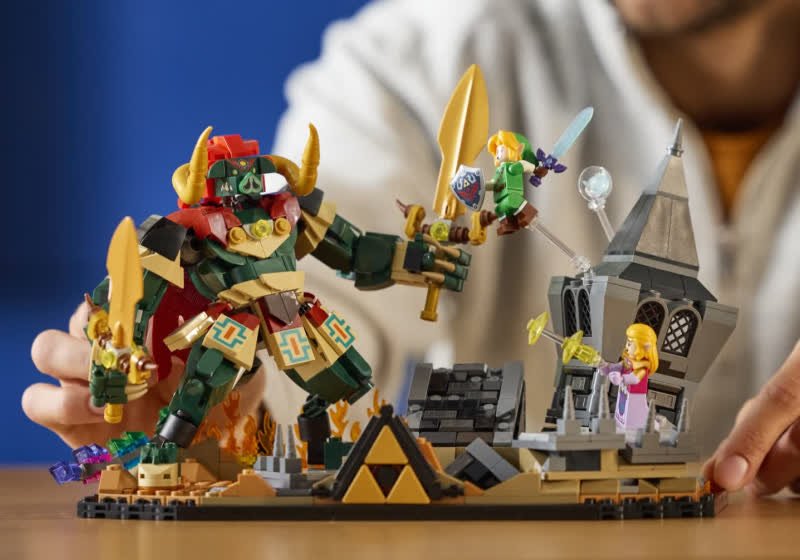
• Core Points: Lego announces The Legend of Zelda: Ocarina of Time – The Final Battle (set 77093) with 1,003 pieces, featuring Link, Zelda, and Ganondorf, set in Ganon’s ruined castle with hidden Recovery Hearts and other in-game elements.
• Main Content: The set reimagines a pivotal Ocarina of Time moment in brick form, emphasizing collectible minifigures and faithful design details for fans.
• Key Insights: The collaboration blends Lego’s construction play with Nintendo’s iconic franchise, appealing to both builders and Zelda enthusiasts.
• Considerations: Collectibility, price, and availability will influence long-term value; the set’s complexity targets older builders.
• Recommended Actions: Zelda fans and Lego collectors should monitor official announcements for release dates, pricing, and retailer availability; consider subscribing for updates.
Content Overview
Lego has unveiled its forthcoming Legend of Zelda set that pays homage to one of Nintendo’s most enduring classics, The Legend of Zelda: Ocarina of Time. The model, officially titled The Legend of Zelda: Ocarina of Time – The Final Battle, is designated as set 77093. It comprises 1,003 pieces and includes minifigures of three central characters: Link, Zelda, and Ganondorf. The scene depicts Ganon’s ruined castle, a location that serves as the climactic battleground in the game. Within this miniature battlefield, builders will encounter several nods to the original game, such as three hidden Recovery Hearts and other elements that fans will recognize from Ocarina of Time’s core gameplay and lore.
The release aligns with Lego’s ongoing strategy of expanding its licensed-brick portfolio to include revered video game franchises. The Zelda collaboration has drawn heightened anticipation due to the enduring popularity of Ocarina of Time, a title frequently cited as one of the greatest video games of all time. While the product is built to function as a display piece for fans, it also invites interactive play through its modular design, minifigures, and the inclusion of recognizable environmental details from the source material. The combination of a robust piece count and a familiar setting positions this set as a potential centerpiece for both Lego collectors and Zelda memorabilia enthusiasts.
As Lego reveals the set details, questions naturally arise about its price, availability, and the extent to which it captures the spirit of the original game. The inclusion of the three classic minifigures is a notable feature, offering fans a tangible way to recreate pivotal scenes. The Final Battle’s design philosophy appears to center on recreating a dramatic atmosphere—the ruinous architecture of Ganon’s castle, the dramatic lighting, and the tension of a decisive confrontation—while still providing the flexibility and accessibility expected from Lego creator sets. This approach aims to bridge Nintendo’s narrative depth with Lego’s modular-building experience, delivering a product that can be appreciated both as a display piece and as a platform for imaginative play.
The set’s release also invites broader discussion about licensing partnerships in the brick-building market. Fans have long awaited a Zelda-themed Lego set that does justice to the series’ visual language and iconic characters. The Final Battle appears to respond to those expectations by presenting a recognizable stage from Ocarina of Time, interpreted through Lego’s signature aesthetic. The combination of 1,003 pieces and three minifigures suggests a product that emphasizes both complexity and collectibility, which could appeal to experienced builders and long-time fans alike.
In-Depth Analysis
The Legend of Zelda: Ocarina of Time – The Final Battle (set 77093) marks a notable entry in Lego’s expanding catalog of licensed properties. With 1,003 pieces, the set invites builders to engage in a comparatively substantial construction project, offering a level of detail and structural complexity aligned with mid-to-upper tier Lego sets. The inclusion of Link, Zelda, and Ganondorf as minifigures is significant for collectors, as it provides a compact, display-ready cast from a pivotal narrative moment.
The focal point of the model—the ruined castle setting—serves as a stage for the climactic encounter that defines many players’ experiences with Ocarina of Time. In the original game, the Final Battle is characterized by dramatic scenery, dynamic combat, and the ritualistic pulling of the Master Sword. Translating this moment into brick form requires careful attention to architectural cues: shattered stonework, weathered textures, fractured parapets, and the overall sense of a once-magnificent structure now in decay. The set’s design likely embraces a modular approach, enabling fans to rearrange components or integrate the scene into a broader Zelda diorama.
Hidden Recovery Hearts scattered across the build are a thoughtful nod to the game’s health economy, which relied on these collectable items to guide exploration and risk assessment. In play terms, Recovery Hearts function as rewards that encourage players to explore, experiment, and improvise within the bounds of the level’s design. The inclusion of three such hearts not only serves as an easter egg for seasoned players but also offers a tactile feature that enhances the set’s interactivity, potentially inspiring custom scenes or alternate configurations.
From a play value perspective, the set’s 1,003 pieces indicate a substantial build that can provide a satisfying assembly experience. The minifigure lineup—Link, Zelda, and Ganondorf—enables fans to stage the iconic confrontation and reenactment of famous lines, gestures, or moments from the game. Beyond the soldiers of Hyrule, the presence of Ganon’s castle context gives builders a recognizable stage with narrative weight, which can be leveraged for display purposes or as a springboard for fan-created adventures.
The artistic direction of the set mirrors broader trends in licensed Lego offerings: a balance between faithful source material and the distinctive Lego design language. While the exact architectural details remain under a veil of marketing previews, the expectation is that Lego’s designers have translated familiar textures—stone, moss, and ruined masonry—into brick-built elements that feel authentic without compromising buildability. The result is a product that should resonate with fans seeking a high-quality, screen-accurate homage, while still remaining accessible to builders who appreciate the challenge of assembling a 1,000+ piece model.
Pricing and distribution are important considerations for potential buyers. Large licensed sets with multiple minifigures often command premium price points and have limited initial availability as retailers manage demand. Prospective purchasers should monitor official Lego channels and authorized partners for sensible purchasing guidance, including recommended age ranges, price, and any regional release nuances. Availability may also vary with regional licensing constraints and stock levels, so early pre-orders or announcements from Lego’s official store could be advantageous for collectors who want to secure the set upon launch.
From a collector’s standpoint, the interplay between playable functionality and display aesthetics is key. The Final Battle’s value proposition hinges on its capacity to evoke a cherished moment from Ocarina of Time while offering the tactile satisfaction of constructing a sizable, intricate model. The minifigures are a central appeal, as they allow for personalized dioramas and recreations of critical scenes beyond the immediate battlefield. The toy’s collectibility will likely hinge on its standing within Lego’s broader Zelda lineup, the availability of exclusive or variant elements, and how successfully the set integrates with other Zelda-themed sets released by Lego.
The lego-nerd discourse surrounding licensed sets frequently touches on the balance between nostalgia and playability. Ocarina of Time’s enduring legacy makes it a strong candidate for a commemorative release, as evidenced by this set’s emphasis on iconic locations and character moments. The Final Battle could also inspire complementary builds—such as separate versions of Hyrule Castle, temples, or Link’s various equipment—expanding the ecosystem for Zelda fans who enjoy building, displaying, and storytelling with Lego bricks.
Looking ahead, the release of The Final Battle could influence Lego’s strategy with Nintendo licenses. If the set performs well with the target audience, it may encourage more frequent collaborations that bring beloved video game moments into brick form. For players and builders alike, this trend suggests a growing catalog of high-profile sets that invite both homage and creative expansion, bridging fans of Nintendo’s IP with the hands-on, constructive appeal of Lego.

*圖片來源:Unsplash*
In terms of play experience, the set is likely well-suited for collectors who appreciate fidelity to the source material, as well as builders who enjoy intricate construction challenges. It also provides a potential entry point for younger players who want to engage with Zelda characters in a brick-based format, though the piece count and assembly complexity might position it toward an older demographic or experienced hobbyists. The intergenerational appeal could contribute to enduring interest in Lego’s Zelda line as a staple of both display and play collections.
Perspectives and Impact
The announcement of The Legend of Zelda: Ocarina of Time – The Final Battle adds a new dimension to Lego’s cross-media collaborations. The Legend of Zelda has a storied history across gaming and popular culture, with Ocarina of Time often cited as a defining entry that helped popularize 3D action-adventure design. Translating such a landmark into a physical brick representation reflects a broader desire to preserve and celebrate iconic moments in tangible form, enabling fans to engage with the series in a new tactile medium.
From a cultural standpoint, the set serves as a bridge between generations of players. Longtime fans who grew up with Ocarina of Time can revisit the game through a physical model, while newer players and younger builders can discover the narrative through a modern LEGO experience. The Minifigures—Link, Zelda, and Ganondorf—encapsulate central archetypes within the franchise, providing a concise narrative lens for fans to explore the climactic events of the game. The decision to depict Ganon’s ruined castle as the stage aligns with the emotional weight of the finale, a moment that pivots the series toward triumphant resolution and the restoration of peace in Hyrule.
The product also reflects broader market dynamics in licensed toys and collectibles. High-profile licenses tend to draw attention from both core fans and casual buyers, but success hinges on effective marketing, product positioning, and distribution strategy. The Final Battle’s piece count, minifigure complement, and recognizable setting place the set as a flagship-type release within Lego’s Zelda portfolio. If sales reflect strong demand, Lego could see additional Zelda expansions or side stories that broaden the narrative universe and invite more elaborate dioramas or custom builds.
From a design perspective, the set emphasizes the craft of modular construction. The architecture of a ruined castle offers a rich texture palette for Lego designers, enabling the replication of crumbling stone, weathering, and seasonal overgrowth. The visual storytelling of this set can be enhanced by careful lighting, photography, and display arrangements, helping collectors articulate the atmosphere of the Final Battle. For builders, the challenge of assembling a 1,003-piece model can provide a satisfying and immersive building experience, with opportunities to customize or repurpose components for fan-made scenes.
Future implications for the Lego-Nintendo collaboration could involve expanded packaging formats, new minifigure assortments, and potential interactive features that leverage digital components or augmented reality experiences. While the current release is a brick-focused homage, ongoing partnerships could explore new ways to integrate game-specific mechanics, settings, or artifacts within Lego’s construction system, further enriching the cross-media appeal.
In addition, the release highlights the importance of preserving video game history through collectible formats. As gaming narratives become increasingly cinematic and expansive, physical representations like this Lego set offer an accessible entry point for fans to celebrate and study game design, storytelling, and world-building. The Final Battle thereby becomes not just a toy, but a cultural artifact that commemorates a critical chapter in one of gaming’s most influential franchises.
Key Takeaways
Main Points:
– Lego announces The Legend of Zelda: Ocarina of Time – The Final Battle (set 77093) with 1,003 pieces and three minifigures: Link, Zelda, Ganondorf.
– The set depicts Ganon’s ruined castle and includes three hidden Recovery Hearts, nodding to in-game mechanics.
– The release strengthens Lego’s Zelda lineup and offers a substantial building challenge for collectors and fans.
Areas of Concern:
– Availability and pricing could affect early adoption and long-term value.
– The size and complexity may limit appeal to younger builders; the target demographic leans older.
– Licensing dynamics and regional distribution could influence access to the set.
Summary and Recommendations
The Legend of Zelda: Ocarina of Time – The Final Battle represents a strategic addition to Lego’s licensed offerings, capturing a defining moment from a beloved game in a detailed, brick-based centerpiece. With 1,003 pieces and minifigures of Link, Zelda, and Ganondorf, the set provides a robust building experience and a compelling display piece for fans. The inclusion of Recovery Hearts and a faithful depiction of Ganon’s ruined castle reinforces the set’s connection to the source material while offering practical play elements and potential for diorama storytelling.
For fans and collectors, this release offers an opportunity to preserve a cherished chapter of Ocarina of Time in a tangible form, while also expanding the broader Lego Zelda ecosystem. Prospective buyers should stay tuned to official Lego communications and retailer announcements to learn about pricing, release dates, and regional availability. Early interest from the community could influence pre-order opportunities, stock allocations, and potential promotional campaigns.
In terms of future prospects, the collaboration signals a healthy appetite for further Zelda-themed sets, should this release perform well in the market. Lego’s ability to reproduce iconic locations and moments with a faithful yet accessible design language will likely shape forthcoming licenses and the depth of such offerings. As the Zelda franchise continues to resonate with new audiences, the synergy with Lego could yield additional collectible builds, expanded minifigure rosters, and complementary sets that allow fans to construct broader narratives across Hyrule.
References
- Original: https://www.techspot.com/news/110959-lego-next-zelda-set-celebrates-ocarina-time.html
- Additional references:
- Nintendo official Zelda site for Ocarina of Time overview
- Lego Ideas and licensed sets page for policy and design philosophy
- Collectible toy market analysis reports for licensed LEGO releases

*圖片來源:Unsplash*