TLDR
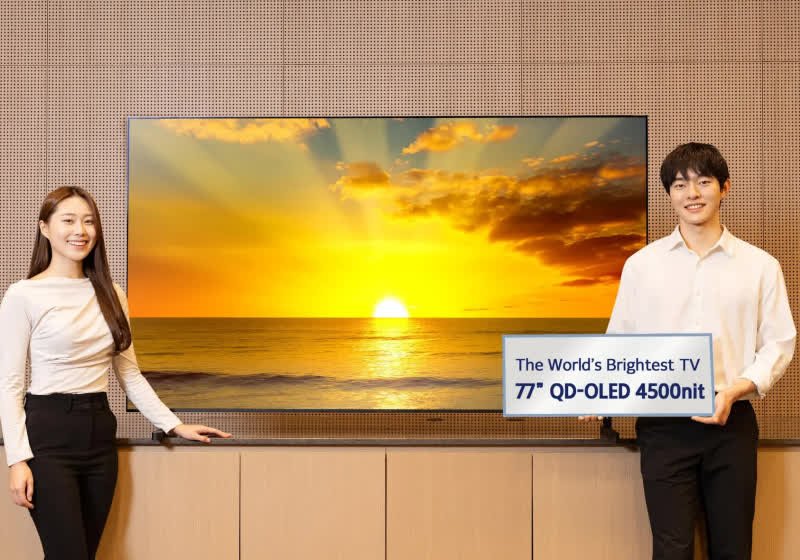
• Core Points: LG Display touts Tandem WOLED with peak 4,500 nits brightness and reduced reflections using light-absorption and diffusion tech, promising improved real-world performance.
• Main Content: The claim centers on higher peak brightness and lower reflections, but independent validation and practical implications remain uncertain.
• Key Insights: Brightness claims depend on measurement standards; OLED trade-offs include aging, power consumption, and display longevity; consumer impact hinges on real-world viewing conditions.
• Considerations: Measurement methods, content realism, factory vs. consumer environments, and panel durability require scrutiny.
• Recommended Actions: Seek independent testing, compare with existing OLED and Mini-LED benchmarks, and monitor performance across varied content and temperatures.
Content Overview
The CES season brought a flurry of display announcements, with LG Display and its partners highlighting advances in OLED technology. LG Display has introduced a Tandem WOLED panel concept, a variation on its flagship OLED technology, designed to push peak brightness higher while mitigating on-screen reflections. The company claims that the Tandem WOLED configuration enables a peak brightness of up to 4,500 nits, a milestone that would represent a significant step for OLED panels in bright-room viewing scenarios. To achieve this, LG Display describes a combination of light-absorption and diffusion techniques intended to reduce unwanted reflections and improve perceived contrast when ambient light is present. The firm positions these panels as delivering the lowest reflections among competing display technologies while maintaining the intrinsic benefits of OLED, such as deep blacks and wide color gamut.
Alongside LG Display’s announcement, Samsung Display has similarly highlighted its interest in high-brightness OLED solutions for televisions and other devices. While Samsung has been vocal about its intent to advance OLED performance, the media coverage around CES at the time emphasized the potential of 4,500 nits as a benchmark figure for next-generation OLED panels. The broader context for these claims is a continuing arms race in display brightness, brightness stability, and anti-reflection performance, driven by consumer demand for vibrant HDR content and usable performance in bright living rooms or retail environments.
Both companies acknowledge that achieving such brightness levels in a controlled test environment does not automatically translate to real-world viewing experiences. Independent reviewers and third-party labs typically assess OLED performance under a variety of real-world conditions, including movie night lighting, daylight-rich rooms, and different content types (HDR vs. SDR). The practical implications hinge on several factors, including color accuracy under intense brightness, panel aging, heat management, power consumption, and the integrity of the diffusion and absorption layers over time.
This article synthesizes the claims announced at CES, outlines what is technically involved in attaining high peak brightness in OLED displays, and discusses the potential benefits and caveats of Tandem WOLED technology. It also considers how these advancements could affect consumer perception, market competition, and future display design trends.
In-Depth Analysis
OLED technology has long been celebrated for its ability to produce true blacks, high contrast, and precise color reproduction. However, achieving very high peak brightness on OLED panels has proven challenging due to the risk of accelerated wear, color shift, and increased power consumption. The Tandem WOLED approach represents an evolution of OLED design that seeks to address the brightness limit by layering or stacking emissive materials and optimizing light management through specialized diffusion and absorption layers.
LG Display’s Tandem WOLED concept builds on the company’s established WOLED architecture, which uses multiple stacks of organic layers to emit light. The “tandem” aspect implies a coupled or stacked emission stack that can generate more luminance than a single organic layer could comfortably produce. In practice, boosting brightness involves careful engineering to control heat, electron flow, and color balance across the stack. The claimed 4,500 nits peak brightness would place Tandem WOLED in a performance tier often associated with high-end LCD or LED-based micro-LED displays, though with the distinct advantages of OLED’s pixel-level contrast.
A central component of LG Display’s claim is the reduction of reflections through light-absorption and diffusion technologies. In bright environments, reflections can significantly reduce perceived image clarity, washing out highlights and diminishing contrast. By absorbing stray ambient light and diffusing the transmitted light more evenly, the panel could offer better perceived brightness and legibility without sacrificing the deep blacks OLED is known for. The effectiveness of these technologies depends on the materials used, their placement within the panel stack, and the panel’s microstructure, including surface texture and coating processes.
Despite the optimism around 4,500 nits, several caveats deserve emphasis. First, peak brightness figures are typically measured under specific, often idealized test conditions. These conditions involve controlled ambient lighting, specific test patterns, and standardized measurement points. In real living rooms, brightness perception varies with display content, viewer distance, screen reflections from windows or ceiling lights, and the presence of ambient color cast. Second, sustaining high brightness over extended periods raises questions about OLED longevity. Prolonged exposure to intense luminance can accelerate material aging, potentially influencing color accuracy, brightness stability, and burn-in risk. Manufacturers usually deploy dynamic brightness management and panel protection schemes to mitigate such risks, but the long-term impact remains an important area for consumer scrutiny.
Power consumption is another practical consideration. Higher brightness levels generally demand more electrical power, which can affect energy efficiency ratings and heat generation. OLED panels’ efficiency varies depending on the pixel color (blue OLEDs historically show shorter lifespans and faster degradation). The tandem approach may distribute the load differently across the stack, but energy efficiency remains a critical factor for consumer electronics where battery life and thermal management are concerns.
Content accuracy and color fidelity under high brightness are also relevant. When brightness is pushed to extreme levels, color accuracy can drift if compensation algorithms and color filters are not perfectly calibrated. Real-world testing is essential to determine whether the color gamut remains wide and true across different content genres, including HDR movies, sports, and gaming.
Market implications of LG’s Tandem WOLED news extend beyond a single product specification. If validated through independent testing, the display could set a new benchmark for OLED brightness, potentially pressuring competing OLED makers, including Samsung Display, to pursue similar or superior performance. It could also influence consumer expectations and prompt retail displays to adopt higher brightness demonstrations to convey HDR impact more effectively. However, the gap between a laboratory specification and consumer experience remains a critical point of analysis. Retail environments vary widely, and the actual viewing experience depends on many variables outside the manufacturer’s control.
Samsung’s positioning in the high-brightness OLED space complements LG’s claims, with both companies aiming to push the envelope for OLED performance. Samsung has historically focused on its own voxel-based color management and materials science, seeking to achieve competitive brightness while maintaining OLED’s hallmark contrast. The CES coverage often emphasizes the potential of new materials, improved electrode configurations, and advanced light management layers as pathways to higher peak brightness. The competitive landscape also includes non-OLED technologies like Mini-LED and micro-LED, which have demonstrated strong brightness capabilities and longevity but come with different trade-offs in terms of blacks, motion handling, and manufacturing complexity.
One of the critical questions for industry observers is how quickly these high-brightness OLED demonstrations translate into commercial products. Manufacturing scale, yield, and cost parity with existing OLED panels are significant barriers that must be addressed before mass-market adoption. Additionally, supply chain considerations, process maturity, and the ability to maintain reliable long-term performance are essential to sustaining consumer trust and market momentum.
From a consumer standpoint, the appeal of higher brightness is most evident in HDR content, where dazzling highlights can create more immersive visuals in well-lit rooms. For gamers, higher peak brightness can enhance visibility in HDR gaming, especially in attacks or scene transitions with intense lighting. Nevertheless, practical gaming sessions often involve varied content with rapidly changing brightness, which could trigger dynamic brightness adjustments that may impact the viewing experience if not carefully tuned. Content creators and studios may also benefit from higher luminance ranges when mastering HDR content, potentially enabling greater tonal latitude and more dramatic presentation.

*圖片來源:Unsplash*
As the industry evaluates the potential benefits of Tandem WOLED, it is important to consider testing methodologies. Independent labs often employ a variety of measurement standards, including different ambient lighting levels (measured in lux), color temperature, and measurement angles. The International Organization for Standardization (ISO) and other standards bodies have defined procedures for display brightness and color calibration, but manufacturers’ claimed specs may still reflect optimal testing scenarios rather than everyday use. Therefore, consumers should look for independent reviews and verification across a range of real-world conditions, including room brightness, content type, and viewing angles.
The CES announcements also highlight broader questions about transparency in performance claims. While 4,500 nits is an impressive figure, the precise conditions under which this peak brightness is achieved, the duration of sustained brightness, and the impact on color fidelity and longevity are critical to a complete understanding. As the market evolves, neutral benchmarks and third-party validation will play a decisive role in shaping consumer confidence and adoption rates.
In sum, LG Display’s Tandem WOLED concept and Samsung’s related high-brightness ambitions underscore a pivotal moment in OLED technology development. The possibility of achieving 4,500 nits peak brightness with reduced reflections suggests meaningful improvements for bright-room viewing. However, translating peak performance into consistent, real-world benefits requires rigorous independent testing, transparent disclosure of measurement conditions, and careful consideration of long-term durability and energy efficiency. For now, the CES headlines reflect an industry striving to push OLED into brighter, more versatile use cases, while acknowledging the gap that often exists between laboratory numbers and everyday viewing experiences.
Perspectives and Impact
The push for higher brightness in OLED displays signals several strategic trends in the display industry. First, competition among OLED makers to outpace traditional LCD-based solutions—especially in high-dynamic-range content and bright living spaces—remains intense. If Tandem WOLED or similar approaches deliver the promised brightness without compromising black levels or introducing unacceptable wear, OLED could further erode some advantages that LCD-based panels have enjoyed in very bright environments.
Second, the emphasis on reflections and ambient light management points to a broader market demand for displays that perform well in unconstrained living spaces. Consumers are increasingly using televisions in rooms with windows, skylights, or multiple light sources, where glare and reflections can degrade picture quality. Technologies that mitigate reflections can improve perceived contrast and color richness, making OLED more competitive in day-to-day viewing.
Third, the development timeline matters. Achieving a lab-based figure such as 4,500 nits does not guarantee immediate availability to consumers. Production yield, process stability, and upstream supply chain constraints will influence when, or if, these panels reach mass production and consumer devices. Short-term impact may include more advertising of enhanced brightness capabilities in higher-tier OLED TVs, with mid-range offerings gradually incorporating refined light management as production scales.
Fourth, the discussion around high brightness intersects with concerns about image retention and burn-in. OLEDs are susceptible to uneven aging across sub-pixels, particularly if certain content patterns are consistently shown in bright scenes. While modern OLED panels include burn-in mitigation strategies, any new architecture, including tandem stacks, must prove durability across diverse usage patterns. The industry will watch for long-term reliability data from independent testers and manufacturers.
Finally, the market dynamics will influence how competitors respond. If LG Display demonstrates credible, independently verified performance gains, rival OLED makers—including Samsung Display and other panel developers—may accelerate R&D investments in similar technologies or pivot toward complementary approaches, such as improved DPIs (diffusion and absorption layers) or integrated light management features. It could also intensify the debate about whether OLED’s advantages in contrast and color can be complemented by LCD-like brightness in a single pane of glass.
In addition to performance metrics, the broader ecosystem—content creation, streaming standards, color management, and display calibration tools—will play a role in how effectively higher brightness translates into consumer satisfaction. For example, HDR mastering studios may optimize content for higher luminance, while consumer calibration workflows will need to ensure color accuracy is preserved at elevated brightness levels. As displays become capable of brighter performance, the importance of robust, user-friendly calibration pipelines grows.
From a strategic perspective, the CES announcements serve as a signaling device. They announce that OLED technology is entering a new phase of performance ambition. Whether this translates into tangible consumer benefits will depend on how transparent manufacturers are about testing conditions, how quickly independent validation emerges, and how readily the market can adopt these innovations in mainstream products without sacrificing durability or energy efficiency.
Key Takeaways
Main Points:
– LG Display claims Tandem WOLED panels can reach up to 4,500 nits peak brightness with reduced reflections via light-absorption and diffusion technology.
– Real-world performance depends on ambient lighting, content, viewing distance, and panel durability; measurements vary by test conditions.
– Samsung Display is pursuing parallel pathways to high brightness in OLED, contributing to a competitive landscape and potential rapid evolution in display technology.
Areas of Concern:
– Longevity and burn-in risk under sustained high-brightness operation.
– Actual real-world gains versus laboratory peak brightness; independent verification is essential.
– Power consumption and thermal management implications for consumer devices.
Summary and Recommendations
The CES disclosures from LG Display and Samsung Display underscore a continued push toward brighter OLED panels with improved ambient light management. The prospect of 4,500 nits peak brightness, if validated under independent testing, could mark a meaningful milestone for OLED displays, particularly for HDR content in well-lit rooms. However, the path from peak laboratory performance to durable, mass-market products is not guaranteed. Consumers should await corroborating measurements from trusted third-party labs that replicate typical living-room conditions, including different content types, ambient lighting scenarios, and longer-term usage.
Key considerations for potential buyers include: assessing how sustained brightness affects panel longevity and energy use, evaluating color accuracy at higher luminance, and confirming that the improvement in reflections translates into noticeable, everyday picture quality. For industry watchers, the emphasis should be on transparent measurement methodologies, long-term reliability data, and the practical implications for consumer electronics pricing and availability.
As the market continues to explore high-brightness OLED solutions, collaborations between display manufacturers, standards bodies, and testing organizations will be crucial to establishing reproducible benchmarks. If Tandem WOLED and related technologies demonstrate credible, consistent performance with durable longevity, OLED could further broaden its appeal across living rooms and multimedia setups, strengthening its role as a premium display technology.
References
– Original: TechSpot article detailing LG and Samsung’s 4,500-nit OLED panel claims at CES
– Additional references to independent testing methodologies and OLED longevity considerations (to be added)
*圖片來源:Unsplash*