TLDR
• Core Points: A study proposes liquid gears—using controlled fluid flows to transmit motion instead of solid gears—potentially redefining mechanical transmission.
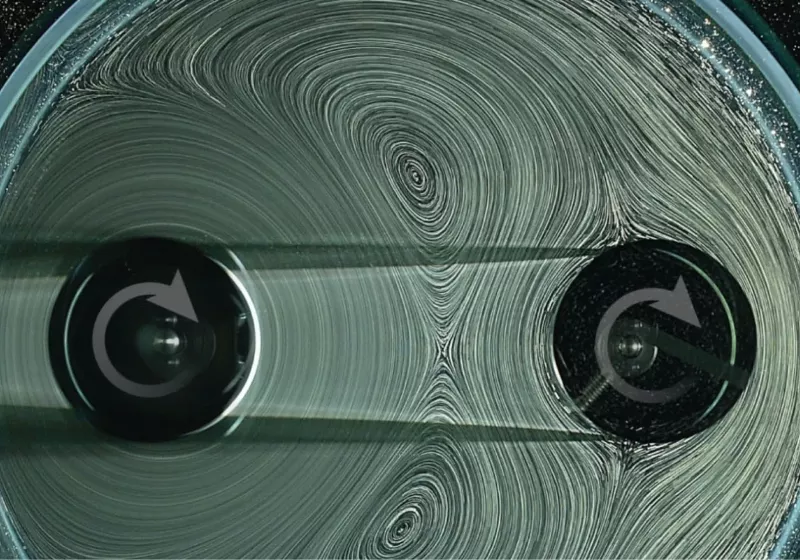
• Main Content: NYU physicists demonstrated that two submerged cylinders in a viscous water–glycerol mixture can transfer rotation through generated liquid currents, mimicking gear-like coupling.
• Key Insights: Fluid-based transmission offers tunable, frictionless-like behavior and could address wear, maintenance, and design limits of traditional gear trains.
• Considerations: Practical implementation faces challenges in scalability, energy efficiency, lubrication control, and sealing in real-world machines.
• Recommended Actions: Invest in foundational fluid-structure experiments, explore hybrid systems combining liquid- and solid-based transmission, and assess industrial viability through scaling studies.
Content Overview
A provocative study in physics envisions replacing traditional metal or plastic gears with controlled flows of liquid to transmit mechanical power. Published January 13 in Physical Review Letters, the work from New York University researchers explores how fluid dynamics can substitute the meshing teeth of conventional gear trains. The core idea is to eliminate solid contacts that wear over time by transmitting motion through carefully engineered liquid motion. In a simplified experimental setup, the researchers submerged two cylinders in a viscous water–glycerol mixture. When one cylinder is rotated, it generates fluid flows that interact with the second cylinder, effectively transferring rotational motion through the liquid without a direct mechanical tooth engagement. The results open a conceptual pathway toward “liquid gears” that could, in principle, reduce wear and potentially enable new modes of motion control in micro- and macro-scale devices. The broader implications touch on fundamental questions about how mechanical power can be transmitted in environments where rigid gears are impractical or susceptible to degradation.
The study sits at the intersection of fluid dynamics, soft matter physics, and mechanical engineering. It challenges long-held assumptions that gears require rigid teeth and contact to convey torque. By demonstrating that viscous flow fields can couple rotating bodies in a controlled way, the researchers provide a proof of principle that fluid-mediated transmission can mimic some aspects of gear behavior. Yet the work remains early-stage, with a focus on fundamental physics and proof-of-concept demonstrations rather than ready-to-deploy devices. The translation from a laboratory cylinder pair to industrial gearboxes or miniature micro-electromechanical systems (MEMS) entails substantial questions about efficiency, control, stability, manufacturing, and integration with existing machinery.
Beyond the immediate experiment, the paper contributes to a broader narrative about how non-solid media can participate in mechanical systems. It invites engineers and physicists to rethink traditional design rules and to consider hybrid or alternative modalities for power transfer, lubrication, and wear management. If matured, liquid gears could complement or replace certain gear configurations in environments where traditional gears falter—such as extremely high temperatures, corrosive environments, or miniaturized devices where solid gears are difficult to fabricate or maintain. However, realizing such a concept at scale would require advances in fluid control, sealing technologies, energy efficiency optimization, and robust feedback mechanisms to regulate motion precisely.
In-Depth Analysis
The core experiment replaces a conventional mechanical interface with a liquid medium that transmits motion through viscous coupling. Two cylinders are immersed in a viscous water–glycerol mixture, chosen for its favorable rheological properties—namely high viscosity and controllable flow behavior. When the researchers rotate one cylinder, the induced shear and circulation in the surrounding fluid generate velocity fields around the second cylinder. If the parameters are tuned correctly (rotation rate, fluid viscosity, cylinder spacing, and geometry), these fluid-mediated interactions can impart rotational motion to the second cylinder with a controllable degree of coupling.
Key aspects of the study include:
Material choice and rheology: The water–glycerol blend provides a stable, tunable viscosity that makes the flow dynamics tractable for precise measurements. The viscosity sets the scale for how effectively momentum is transferred through the liquid, while density differences and surface interactions influence secondary effects like buoyancy and lift forces that can modify the coupling.
Geometric configuration: The two-cylinder arrangement serves as a minimal, analyzable system to observe how a driven fluid around one body can apply torque to another. The spacing between cylinders, their radii, and whether boundaries (e.g., container walls) constrain the flow are critical factors that determine coupling strength and stability.
Fluid dynamics and torque transfer: The central physics rests on viscous diffusion of momentum in the fluid. Rotation of the first cylinder creates a velocity field; the second cylinder experiences hydrodynamic torques due to this field. The degree of synchronization between the driving and driven cylinders reflects the efficiency of the liquid-based transmission and reveals how closely a fluid-based system can emulate rigid gear coupling.
Experimental observables: Researchers likely measure angular velocities, torques, and perhaps flow fields around the cylinders using particle image velocimetry (PIV) or tracer particles. By varying drive speeds and fluid properties, they map the response of the driven cylinder and identify regions of stable, proportional transmission versus instabilities or slippage in the coupling.
Theoretical framing: The study sits within the framework of low-Reynolds-number hydrodynamics and lubrication-like interactions, where viscous forces dominate inertial effects. Theoretical models would aim to describe how torque transmitted through a viscous medium scales with driving velocity, viscosity, and geometry, and what regimes yield robust, linear coupling akin to gear ratios.
Limitations and challenges: The experimental system is a stylized representation of a gear-like mechanism. Real-world translation would require addressing three major challenges: efficiency losses due to viscous dissipation, control over dynamic variations (e.g., fluctuations in flow or disturbances), and the integration of fluid channels or reservoirs into engineered devices. Additionally, sealing, containment, and maintenance considerations for long-term operation in industrial environments would demand new engineering solutions.
Potential performance envelope: The concept could excel in specialized environments where conventional gears are disadvantaged, such as high-temperature or corrosive surroundings, or in micro-scale devices where fabricating solid gear teeth with precision is difficult. At present, the proof of concept demonstrates the possibility of torque transmission via a liquid medium, but it does not yet prove viability for large-scale mechanical power transmission.
Comparative context: In conventional gearing, solid teeth enable positive, low-slip transmission with defined gear ratios and high efficiency when properly lubricated. Liquid gears would trade some efficiency for advantages like reduced wear and the potential for continuous, self-regulating coupling through fluid dynamics. The balance between efficiency, control, and durability will determine whether liquid gears find niches or broader applicability.
Path to maturation: A credible path to maturation would involve scaling up the concept to multi-gear arrangements, exploring active fluid control (e.g., variable viscosity, flow shaping, or active pumping within microchannels), and developing integrated fluidic manifolds that can couple multiple shafts with precise timing and torque transfer. Advances in soft robotics, microfluidics, and tribology could inform the design of practical liquid gear systems.
Overall, the study offers a bold demonstration that motion transmission need not rely on rigid tooth engagement. It provides a foundational block for reimagining how mechanical power can be conveyed, potentially opening doors to new classes of devices where traditional gears are suboptimal. Nevertheless, the leap from a controlled laboratory setup to reliable, widely adopted technology requires overcoming significant engineering and practical hurdles. The research thus serves as both a provocative conceptual exploration and a call for further interdisciplinary work at the intersection of fluid mechanics and mechanical design.
Perspectives and Impact
The introduction of liquid gears challenges a millennia-long engineering paradigm that has treated gears as the primary means of transmitting torque and rotational motion. If scalable and controllable in practical devices, liquid-based transmission could offer several potential benefits:

*圖片來源:Unsplash*
Wear reduction and maintenance: Since the primary contact surfaces in a liquid gear system would be reduced or eliminated, wear-related degradation of gear teeth could be mitigated. This could translate to lower maintenance costs and longer service intervals in appropriate applications.
Environmental resistance: In harsh environments—characterized by high temperatures, corrosive media, or abrasive particles—a liquid-driven transmission could be engineered to minimize direct solid contact, potentially improving reliability where metal gears degrade quickly.
Tunable dynamics: Fluid-based coupling could allow for dynamic adjustment of transmission characteristics by varying fluid properties (viscosity, density) or active control of fluid flows. This hypothetical tunability could enable adaptive transmissions for varying load and speed conditions.
Micro- and nano-scale applications: In MEMS/NEMS devices, where manufacturing and integration challenges prevent traditional gears from operating effectively, fluid-mediated motion transfer could offer alternative coupling strategies, perhaps enabling novel actuation schemes and compact powertrains.
Soft and bio-inspired engineering: The concept resonates with trends in soft robotics and bio-inspired design where compliant, fluidic, or elastomeric components replace rigid mechanical interfaces. Liquid gears could align with these trajectories by providing gentle yet controllable torque transfer within soft systems.
However, the perspective also highlights substantial barriers:
Efficiency and energy losses: Viscous dissipation in liquids inherently reduces efficiency, especially at higher speeds or larger scales. For many industrial applications, high-efficiency power transmission is essential, making any significant loss a critical hurdle.
Control and stability: Achieving precise and repeatable torque transfer through fluid flows requires sophisticated control strategies. Instabilities in flow, turbulence, or resonant interactions could undermine reliability.
Scaling: The experiment’s simplicity—two cylinders in a controlled viscous fluid—must be translated into complex machinery with multiple interfaces, seals, and containment. Designing scalable liquid channels that integrate with existing drivetrain architectures would demand substantial structural and materials innovations.
Sealing and maintenance: Fluid systems introduce new maintenance challenges, including preventing leaks, maintaining fluid purity, and ensuring consistent lubrication. These concerns may offset some wear advantages in practical settings.
System integration: For liquid gears to be attractive, they would need to demonstrate clear value over conventional transmission systems across metrics such as efficiency, cost, weight, and manufacturability. Integration with sensors, feedback mechanisms, and control electronics would also play a central role.
Safety and reliability: Any liquid-based mechanical system would need to meet rigorous safety standards, particularly in high-power or automotive contexts where leaks or failure could have severe consequences.
The broader scientific significance of the work lies in its demonstration that liquid-mediated interactions can produce controllable mechanical coupling with gear-like behavior, at least under certain conditions. It invites researchers to explore non-traditional transmission mechanisms and to rethink how energy can be transferred in systems where rigid contact is undesirable or impractical. If subsequent research can address the scale and efficiency barriers, liquid gears could co-exist with or complement traditional gear systems, offering specialized solutions rather than wholesale replacement.
Looking forward, collaborations across fluid dynamics, materials science, tribology, and mechanical design will be essential. Experimental extensions might incorporate multiple interacting bodies, non-Newtonian fluids, or smart fluids whose properties can be modulated in real time. Computational modeling will be critical to map the parameter space and predict stability regimes. Policy and industry considerations will also influence adoption, including manufacturing capabilities for fluid channels, reliability testing protocols, and standardization of performance metrics.
In sum, while the concept of liquid gears is still nascent, it represents an intriguing scientific and engineering exploration with the potential to broaden the spectrum of how we conceive motion transmission. The translation from curiosity-driven physics to practical engineering will depend on sustained, interdisciplinary research and careful evaluation of trade-offs across real-world use cases.
Key Takeaways
Main Points:
– Liquid gears propose transmitting rotational motion via controlled fluid flows instead of solid gear teeth.
– A laboratory setup with two submerged cylinders in a viscous fluid demonstrates fundamental coupling between driven elements.
– Real-world viability depends on overcoming efficiency, control, scalability, and integration challenges.
Areas of Concern:
– Energy efficiency and viscous losses at practical scales.
– Complex fluid control requirements and stability under varying loads.
– Scaling a simple two-cylinder experiment to multi-gear, industrial systems with reliable sealing and maintenance.
Summary and Recommendations
The NYU study introduces a provocative concept: gear-like motion transmission through controlled liquid flows rather than traditional metal or plastic gears. By immersing two cylinders in a viscous water–glycerol mixture, researchers show that rotating one component can induce motion in the other through hydrodynamic coupling. This proof-of-principle work expands the landscape of how mechanical power might be transferred, suggesting potential advantages such as reduced wear and new tunability options in specific environments or applications.
However, the transition from a controlled lab experiment to practical, scalable technology is far from assured. Significant hurdles remain, including achieving high efficiency, ensuring robust and precise control of fluid flows, and developing scalable designs that integrate fluid channels with conventional mechanical systems. Sealing, maintenance, and safety considerations add further layers of complexity. In the near term, liquid gears are best viewed as a conceptual and exploratory avenue—one that could inspire hybrid approaches or niche solutions where traditional gears are challenged.
For researchers and engineers, the prudent path involves targeted investigations that extend beyond a two-cylinder model to multi-body systems, non-Newtonian fluids, and active fluid control methods. Computational modeling, small-scale experiments, and early prototype demonstrations could establish the parameter regimes in which fluid-mediated transmission is competitive or complementary. Continuous evaluation against real-world requirements—efficiency, reliability, cost, and manufacturability—will determine whether liquid gears remain an academic curiosity or emerge as a practical technology in specialized domains.
In conclusion, while liquid gears do not yet threaten centuries of mechanical engineering tradition, they offer a fresh perspective on motion transmission and invite a renewed conversation about how we design and control mechanical power. The future of this concept will hinge on interdisciplinary collaboration and a clear demonstration of tangible advantages in targeted applications.
References
- Original: techspot.com
- Additional references (suggested for context and background):
- Physical Review Letters (the original journal venue for the study)
- Reviews in Fluid Mechanics or tribology literature on hydrodynamic coupling and liquid-mediated motion transmission
- Texts on microfluidics and soft robotics for related fluidic actuation concepts

*圖片來源:Unsplash*