TLDR
• Core Points: Logitech’s Pro X2 Superstrike replaces traditional microswitches with electromagnetic analog sensing, aiming to improve durability and precision for esports players; priced at $180.
• Main Content: The Swiss brand markets the mouse as a competitive edge for professionals, leveraging magnetic sensing to deliver consistent inputs and potentially longer lifespan.
• Key Insights: Electromagnetic analog sensing introduces a new input modality that could influence click latency, durability, and maintenance considerations in high-usage scenarios.
• Considerations: Longevity of the sensing technology under long-term gaming rigs, software support, and compatibility with existing sensor profiles and tuning tools.
• Recommended Actions: Prospective buyers should weigh cost against potential durability and consistency benefits, and monitor independent tests of reliability.
Content Overview
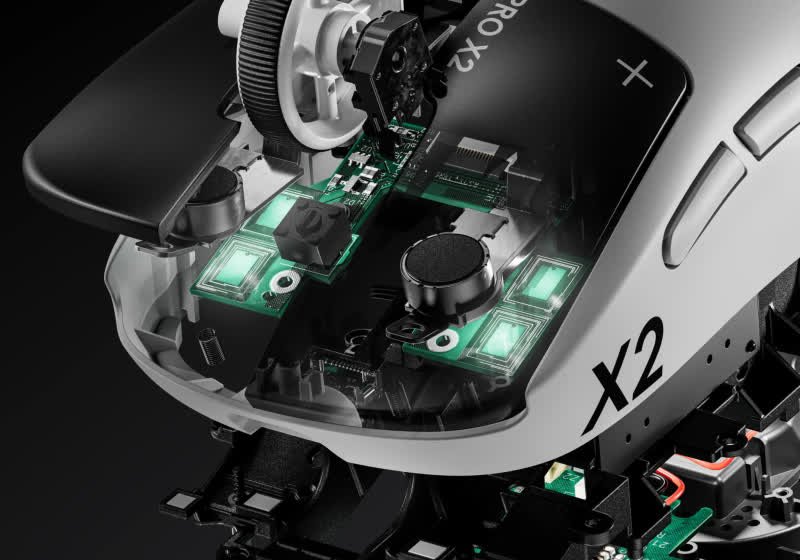
Logitech has launched the Pro X2 Superstrike, a high-end gaming mouse priced at $180, targeting esports professionals and serious competitive gamers. The defining feature of this new model is its replacement of traditional mechanical microswitches with an electromagnetic analog sensing system. In typical gaming mice, microswitches under the primary clicks convert physical press into electrical signals, a mechanism known for tactile feedback but also susceptible to wear and eventual failure after heavy usage. Logitech’s approach with the Pro X2 Superstrike seeks to address these durability concerns while offering a different input signature that could influence perceived actuation force and response.
The product ecosystem surrounding the Pro X2 Superstrike includes software configuration options, weight tuning, and grip compatibility considerations. Logitech positions the mouse as a tool for players who demand consistent performance across long tournament sessions, where millions of clicks can accumulate over a competitive lifetime. The price point situates the device in the premium tier of gaming peripherals, aligning with Logitech’s broader strategy to deliver professional-grade hardware with a focus on reliability, stability, and precise control.
This overview synthesizes what Logitech has communicated about the Pro X2 Superstrike, and situates the device within the broader landscape of gaming mice where mechanical switches have been the longstanding standard. It also considers potential implications for professional players, retailers, and the peripheral market at large as electromagnetic sensing technologies begin to enter mainstream gaming hardware.
In-Depth Analysis
The Pro X2 Superstrike’s hallmark feature—the substitution of microswitches with electromagnetic analog sensing—represents a significant shift in how a gaming mouse translates a physical click into a computer-readable input. Traditional mechanical switches operate on a binary signal: a switch is either pressed and closed or released and open. They provide precise tactile feedback and a well-understood life expectancy measured in millions of cycles. However, they are still mechanical components that can wear out, drift over time, or eventually fail, which can lead to inconsistencies in input timing and actuation feel.
Electromagnetic analog sensing, by contrast, relies on non-contact measurement principles to infer click events and sometimes to gauge the degree of actuation along with other factors such as proximity or pressure. In practice, this approach can offer several potential advantages:
- Durability and longevity: With fewer moving parts subject to mechanical wear, the sensoric interface can remain stable across extended use, which is appealing for esports players who log millions of clicks over a short period.
- Consistent actuation metrics: Analog sensing can provide more uniform response characteristics over time, minimizing drift that might occur as mechanical components degrade.
- Potential for refined input signals: The technology may allow capture of nuanced input data, such as the precise travel distance or force, enabling advanced profiling or swappable tuning curves within software.
However, this transition also introduces questions and considerations:
- Latency and response consistency: Esports players are highly sensitive to input latency and jitter. The electromagnetic system must prove its supremacy in real-world scenarios where microseconds matter. Any added processing layer or signal interpretation needs to be tightly optimized to avoid adding perceived delay.
- Sensitivity to environmental factors: Non-contact sensing systems can, in some designs, be more susceptible to interference, temperature fluctuations, or dust ingress that could influence readings. Logitech would need to mitigate these risks through robust shielding and calibration routines.
- Calibration and maintenance: While reducing mechanical wear, an analog electromagnetic system may require firmware updates or calibration routines to preserve accuracy. Users may need to rely on software utilities for ongoing tuning or to address edge cases.
- Compatibility with existing ecosystems: Players often customize their mice through software to map buttons, set DPI profiles, and configure lift-off distances. The new system should integrate seamlessly with current Logitech software and support third-party profiles where applicable.
From a product design perspective, Logitech’s choice to price the Pro X2 Superstrike at $180 places it alongside other premium mice that emphasize professional-grade materials, weight balance, and long-term reliability. The price signals a commitment to a niche audience that values incremental improvements in durability and consistency, rather than mass-market appeal. For esports professionals, the question is whether the electromagnetic sensing translates into tangible on-table advantages—more consistent inputs during high-stakes moments, less variability across sessions, and fewer failures that could disrupt competition.
Another dimension to consider is the broader ecosystem shift. If electromagnetic analog sensing proves successful in this form factor, it could prompt a wave of competition and further research into non-contact sensing technologies for input devices. This could include rival brands testing similar approaches or introducing hybrid designs that combine magnetic sensing with traditional sensing for redundancy and reliability.
Logitech’s emphasis on professional-grade ergonomics and performance also aligns with ongoing trends in the gaming peripherals market: higher-grade build quality, weight customization, and software-driven performance tuning. In the Pro X2 Superstrike, Logitech appears to blend these elements with a forward-looking sensor technology, aiming to preserve the tactile familiarity of a high-quality click while delivering a more durable and potentially more precise input system over time.
In evaluating the product’s value proposition, buyers should consider their usage patterns. Competitive players who rely on hundreds of thousands or millions of clicks per month may perceive a meaningful benefit from a more durable sensing mechanism. However, casual gamers or those with limited longevity concerns may weigh the $180 price tag against other feature sets, such as lighter weight options, adjustable hooks and grips, or alternative input mechanisms.
Beyond the hardware, the software and service layer will be critical. The ability to fine-tune the actuation thresholds, sensitivity, and response curves could determine how well the Pro X2 Superstrike integrates into a player’s existing setup. Logitech’s ecosystem—drivers, firmware updates, cloud synchronization of profiles, and cross-device compatibility—could be a differentiator in ensuring that the initial advantages of the sensor technology endure as game titles evolve and new input demands emerge.
In terms of market positioning, the Pro X2 Superstrike sits at a crossroads between the elite mechanical-swap era and an era of sensor-driven innovation. It signals that manufacturers are willing to reimagine fundamental input mechanisms in pursuit of higher reliability and consistent player experience. If the approach proves robust and well-supported, it could set a precedent that pushes other brands to experiment with alternative sensing modalities—whether magnetic, optical, or capacitive—in higher-end mice and other peripherals.

*圖片來源:Unsplash*
The adoption of electromagnetic analog sensing could also have implications for warranty and service policies. If the new sensing systems demonstrate superior durability, manufacturers might offer extended warranties or service programs to reinforce confidence in professional users who rely on consistent hardware over long competitive seasons. Conversely, any early reliability concerns or firmware-related issues could shape customer perceptions about the practicality of adopting non-traditional sensing solutions in gaming hardware.
As with any hardware launch, independent testing and long-term user feedback will play significant roles in assessing the Pro X2 Superstrike’s real-world performance. Review channels that measure click latency, actuation force stability, and durability under simulated tournament conditions will help potential buyers determine whether the benefits of electromagnetic analog sensing justify the premium price. For professional players and teams, the decision will hinge on whether this technology translates into measurable improvements in consistency and confidence during crucial moments.
Perspectives and Impact
The introduction of an electromagnetic analog sensing system in a gaming mouse marks a notable milestone in the evolution of peripherals. It challenges the long-standing dominance of mechanical microswitches as the default mechanism for button clicks in gaming mice. For esports ecosystems, this shift might influence how players train, calibrate, and select gear. Teams may begin to favor hardware with longer lifespans and tighter performance guarantees, reducing downtime between tournaments and practice blocks.
Looking ahead, several potential trajectories emerge:
- Broader industry adoption: If the Pro X2 Superstrike proves reliable and well-received, other manufacturers may explore electromagnetic or non-contact sensing for primary click detection. This could lead to broader competition and innovation in input sensing technologies.
- Innovation in software tooling: The success of the hardware will increasingly depend on software to tune and harness the full capabilities of the new sensing approach. Vendors might invest in advanced calibration, profiling, and analytics features that enable players to extract maximum performance from their devices.
- Hybrid sensing strategies: To mitigate any potential limitations of a single sensing method, future devices might combine magnetic analog sensing with redundant sensors or sensor fusion techniques. This could enhance reliability and provide richer input data for in-game actions.
- Competitive dynamics: The premium positioning of the Pro X2 Superstrike could intensify competition among peripherals brands to justify higher price points with durability and precision-centric features. This may push the market toward more durable components and clearer performance benchmarks.
From a user experience perspective, the transition to electromagnetic analog sensing promises a familiar click feel while offering new benefits in durability and consistency. However, the true test will be long-term usage across diverse gaming titles, grip styles, and mouse-handling habits. Esports professionals often require a consistent tactile signature that remains stable across repeated presses, high-repetition training sessions, and extended match durations. If the Pro X2 Superstrike meets these expectations, it could become a preferred tool for players seeking reliability and a slight edge in consistency.
In terms of education and consumer awareness, it will be important for Logitech and retailers to provide accessible explanations of how the electromagnetic sensing works, how it affects input feel, and what maintenance or updates users should anticipate. Demystifying the technology can help players make informed decisions and set realistic expectations about performance benefits and potential trade-offs.
The Pro X2 Superstrike’s pricing also raises questions about market segmentation. While esports organizations and serious enthusiasts may be drawn to the premium build and durability promises, casual buyers could opt for more affordable alternatives if they do not perceive a clear performance advantage. The balance between cost, perceived value, and actual performance gains will be a critical determinant of the device’s adoption rate in broader markets.
Finally, it is worth considering the implications for warranties, repairability, and component lifecycle. A shift away from mechanical switches introduces new failure modes and service considerations. Logically, manufacturers should be prepared to support these devices with robust warranty coverage, straightforward replacement options, and transparent guidance on sensor longevity. The success of the Pro X2 Superstrike will, in part, be measured by how well Logitech communicates, supports, and sustains this non-traditional actuation paradigm over its product lifetime.
Key Takeaways
Main Points:
– Logitech introduces the Pro X2 Superstrike with electromagnetic analog sensing, replacing traditional microswitches.
– The design aims to improve durability and input consistency for professional gaming use.
– The device is priced at $180, targeting esports athletes and serious gamers.
Areas of Concern:
– Real-world latency, durability under long-term high-use scenarios, and potential environmental sensitivities.
– Integration with software tools, profile management, and cross-title stability.
– Market acceptance relative to the premium price point and perceived value.
Summary and Recommendations
The Logitech Pro X2 Superstrike represents a pioneering step in gaming peripheral design by substituting mechanical microswitches with an electromagnetic analog sensing system. This approach aims to address durability concerns and deliver consistent inputs for players who rely on precise and repeatable button actuation during high-stakes competition. The device’s premium pricing reflects its target audience: esports professionals and enthusiasts who prioritize reliability, longevity, and nuanced input behavior over lower-cost alternatives.
Potential buyers should consider their typical usage patterns, gaming titles, and preference for latest sensing technologies. For players who subject their hardware to heavy training regimes and extended tournament play, the promise of reduced wear and more stable actuation could translate into meaningful long-term value. However, the benefits must be weighed against the upfront cost and the need to trust non-traditional sensing in a high-pressure competitive environment. Independent reviews focusing on latency, durability under stress, and long-term reliability will be key to forming a robust assessment.
In conclusion, Logitech’s Pro X2 Superstrike could symbolize a broader shift in gaming hardware toward sensor-based input innovations. Its success will depend on demonstrable, reproducible performance benefits, effective software support, and continued assurance around durability and serviceability. If these elements align, the Pro X2 Superstrike could influence future generations of gaming mice and other peripheral devices.
References
- Original: https://www.techspot.com/news/111273-logitech-pro-x2-superstrike-mouse-replaces-microswitches-electromagnetic.html
- Additional context and comparison: Industry coverage on non-traditional sensing in gaming mice; Logitech product pages and press materials (where applicable)

*圖片來源:Unsplash*