TLDR
• Core Points: Mercedes-Benz pauses Drive Pilot Level 3 program due to rising costs, limited usability, and shifting supplier dynamics, after a period as the only Level 3-certified system in the U.S.
• Main Content: The pause reframes the path to automated driving, highlighting financial pressures, narrow operational conditions, and evolving supplier relationships.
• Key Insights: Early leadership in Level 3 tech faced real-world constraints; scalable, cost-effective automation remains challenging outside highly controlled environments.
• Considerations: Industry must balance safety, regulation, cost, and consumer value; perception risk and insurer coverage also matter.
• Recommended Actions: Reassess economics, expand usable scenarios, and strengthen partnerships to reintroduce Level 3 capabilities when viable.
Content Overview
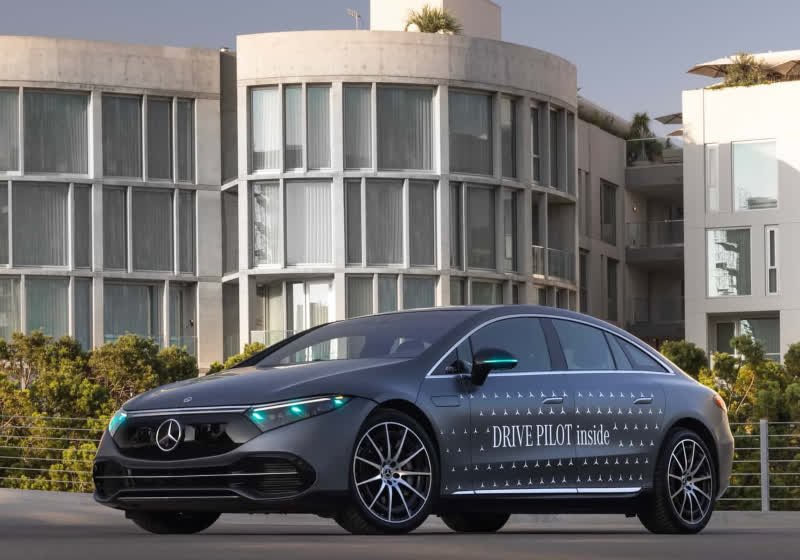
Mercedes-Benz has put its Drive Pilot system on hold as it recalibrates its strategy for automated driving. Drive Pilot, which became the first and only Level 3-certified product available to U.S. drivers, promised genuine hands-off and eyes-off driving but was operational only under limited conditions and within carefully defined geofenced zones. The decision to pause comes amid rising development and production costs, questions about the system’s practical utility beyond restricted settings, and shifting dynamics with suppliers who support the program’s hardware and software stack.
Drive Pilot’s introduction marked a notable milestone for the automotive industry: a consumer-facing Level 3 capability that could take over driving tasks in specific scenarios, such as certain highway segments with defined speed ranges and weather conditions. Yet, the real-world deployment exposed the tension between ambitious automation goals and the realities of mass-market adoption. The pause signals a strategic pause rather than a full abandonment, suggesting Mercedes-Benz is weighing how to optimize the technology’s value to customers, investors, and partners while addressing the financial and operational hurdles that have emerged since rollout.
This situation reflects broader industry dynamics. Automakers racing to deliver Level 3 and higher automation face a complex mix of hardware demands, software sophistication, regulatory compliance, liability frameworks, and consumer expectations. Early leaders in automation often discovered that achieving safe, reliable, and scalable hands-off operation across diverse driving environments is more arduous—and more expensive—than initially anticipated. Mercedes’ decision underscores the need for a sustainable model that can deliver meaningful benefits to a broad customer base, not just constrained geofenced corridors.
The pause also comes as suppliers—ranging from sensor manufacturers and compute platforms to mapping and over-the-air update ecosystems—restructure their offerings and pricing models. These shifts affect unit economics, upgrading paths, and the ability to keep Drive Pilot current with evolving software. The combined effect of higher component costs, the need for rigorous validation, and the intricacies of maintaining a Level 3 system in a consumer vehicle contributes to a longer, costlier path to broad deployment.
In the broader automotive landscape, Mercedes’ move invites reflection on how automakers balance innovation with practicality. While Level 3 technology represents a leap forward relative to traditional driver-assistance features, it remains a transitional technology before higher levels of autonomy become commonplace. The pause suggests manufacturers may choose to prioritize incremental improvements, better use-case alignment, and more favorable economic conditions before reintroducing or expanding Level 3 offerings.
This decision does not necessarily indicate the end of Mercedes-Benz’s pursuit of automated driving. Rather, it indicates a strategic reassessment, focusing on how to deliver reliable capability in a way that is economically viable and aligned with regulatory, safety, and consumer expectations. The company may explore alternate approaches, partnerships, or phased upgrades that could pave the way for a more scalable automation strategy in the future.
In-Depth Analysis
Mercedes-Benz’s Drive Pilot program represented a turning point in the march toward consumer-level autonomous driving. As the first Level 3-certified system marketed in the United States, Drive Pilot offered hands-off driving for the driver in certain controlled environments. The fundamental premise was straightforward: the vehicle could assume control of most driving tasks within predefined geofenced areas, allowing the driver to disengage from monitoring the road under specific conditions. This approach differed from lower-level driver assistance systems by enabling a broader scope of autonomy, albeit still under the driver’s readiness to retake control if conditions exceeded the system’s capabilities.
However, the path from certification to widespread adoption proved more fragile than initially anticipated. The real-world usability of Level 3 features hinges on several factors that converge unfavorably at scale:
Cost pressures: Developing, validating, and maintaining Level 3 hardware and software imposes significant upfront and ongoing expenses. As the technology matures, automakers contend with the risk that the per-vehicle cost remains high, which can dampen demand and erode margins. Simultaneously, customers may not perceive sufficient value if the feature is confined to a small geographic area or a narrow set of conditions.
Limited usable scope: Drive Pilot’s implementation required specific geofenced zones and controlled environments. While the feature was groundbreaking within those confines, it did not offer the broad, unconditional hands-off experience many anticipated or anticipated by early marketing narratives. The resulting gap between aspiration and practice reduces the feature’s appeal to a broad audience.
Supplier dynamics: The ecosystem supporting Level 3 technology is complex. Suppliers of sensors, computing hardware, software platforms, mapping data, and validation services must align on cost, performance, and update cadence. Shifts in these relationships—whether pricing pressure, product roadmaps, or reliability concerns—affect the program’s ability to scale. When supplier arrangements change, the overall system’s stability and predictability can be compromised, increasing risk for automakers.
Regulatory and liability considerations: Level 3 automation sits at a regulatory frontier. The delineation of responsibility between the driver and the vehicle when the system disengages or encounters limits remains nuanced. Compliance costs, liability coverage, and the need for continuous improvement to meet evolving standards all influence the economic calculus of offering such a feature.
User experience and trust: The transition of control between the system and the driver requires clear UX design, consistent behavior, and reliable fail-safes. If drivers feel uncertain about when the system will disengage, or if the system’s performance varies with weather, road construction, or traffic density, trust erodes. This can lead to lower adoption, shorter usage windows, or increased customer support costs.
From a strategic vantage point, Mercedes’ pause invites stakeholders to consider how automakers can unlock meaningful benefits from automation without incurring prohibitive costs or exposing the business to unsustainable risk. A few dimensions emerge as especially salient:
Value proposition redefinition: Rather than offering a feature with limited geographic applicability, automakers might pursue automation that yields tangible, widespread benefits, such as reducing driver fatigue on long highway trips or enabling safer driving in a broad range of weather and traffic conditions. This requires broader operational envelopes or progressively enhanced capabilities that justify the investment.
Incremental deployment strategies: A staged approach—starting with highly controlled environments and gradually expanding—can help calibrate hardware reliability, software robustness, and customer expectations. Each expansion would ideally come with a clear ecosystem of software updates, maintenance cycles, and customer support improvements.
Economics of scale: Achieving cost efficiencies through standardization across models, economies of scope in sensor and compute platforms, and closer integration with suppliers’ development cycles could improve profitability. A durable business model may rely on a mix of hardware sales, software subscriptions, and aftersales services that align incentives across the value chain.
Partnerships and alliances: The complexity and capital intensity of automated driving encourage collaboration. Shared platforms, data-sharing agreements, and joint validation programs can spread risk and accelerate progress. The dynamics with suppliers can determine whether the program remains financially viable.
Regulatory alignment: Continuous engagement with regulators to establish clear requirements, testing protocols, and liability frameworks can reduce uncertainty. Predictable regulatory pathways enable automakers to plan investments more confidently and potentially accelerate deployment timelines.
In practical terms, Mercedes’ decision to pause Drive Pilot suggests a prioritization of sustainability over speed. It signals that, despite the initial triumph of becoming a first mover, the company recognizes the necessity of ensuring that automation technologies deliver meaningful value without exposing the brand or customers to disproportionate risk or cost. For consumers, this pause translates to a temporary hold on a feature that promised hands-off driving in a broader sense but delivered only within constraints—limits that were likely more pronounced in real-world usage than in controlled demonstrations.
Looking ahead, several scenarios could unfold:

*圖片來源:Unsplash*
Reconfigured Drive Pilot: Mercedes could reintroduce a refined version of Drive Pilot that reduces cost pressures and expands usable conditions, perhaps by leveraging newer sensor fusion techniques, more efficient compute platforms, or streamlined software architectures. This would require a renewed assessment of geofenced applicability, update cadence, and customer education to manage expectations.
Alternative autonomy pathways: The company might pursue complementary technologies that enhance safety and convenience without claiming full Level 3 capability. For example, expanding Level 2 plus features with improved driver monitoring, or exploring Level 4 demonstrations in limited pilot programs with strong safety oversight.
Supplier-focused strategy: By renegotiating supplier arrangements, renegotiating pricing, and co-developing components tailored to Drive Pilot’s requirements, Mercedes could regain financial viability. This might involve standardizing hardware across a family of models to achieve scale and reduce per-vehicle costs.
Data and validation ecosystems: Building robust data collection and validation processes could unlock longer-term benefits. High-quality data helps improve algorithms, reduces testing burdens, and can support regulatory approvals for broader deployment in the future.
The Drive Pilot pause should be viewed in the context of an industry still navigating the transition from assisted driving to higher levels of autonomy. The early entrants who claim a podium position in Level 3 maturity must balance the allure of market leadership with the realities of product viability. In practice, the technology’s promise—hands-off driving in designated conditions—remains valuable to certain segments, particularly customers who frequently undertake long highway commutes in favorable environments. The challenge is to translate that promise into a scalable, commercially sustainable offering.
Mercedes’ leadership in pushing Level 3 forward helped define expectations for what automated driving could be. The current pause does not imply incapacity but rather an acknowledgment that achieving broad, durable impact requires an adaptable plan that accounts for costs, usability, and the evolving supplier landscape. The company’s next steps will be watched closely by peers, regulators, and consumers who are eager to understand whether Level 3 automation can deliver consistent value across a wide array of driving scenarios.
Perspectives and Impact
Industry-wide, Mercedes’ decision to pause Drive Pilot projects highlights a pragmatic shift in how automakers approach highly automated driving technologies. Early demonstrations and pilot programs generated substantial interest and public curiosity. However, sustaining momentum requires more than initial hype; it demands a repeatable business model and engineering approach that can withstand the pressures of scale.
Economic realism: The cost structure of Level 3 systems remains a primary obstacle to adoption. The combination of specialized sensors, high-performance computing, and extensive validation creates a price point that can be difficult for mainstream customers to justify, even when the feature is marketed as a premium offering. The pause signals a reluctance to push a model that cannot currently generate acceptable margins.
Use-case practicality: Consumers often expect features to work reliably across varied road types and weather conditions. Drive Pilot’s constrained operational envelope can create customer dissonance when the feature resurges only in narrow contexts. A broader, more reliable execution is essential to deliver convincing value and encourage ongoing usage.
Supplier relationships: The automotive ecosystem depends heavily on a network of specialized vendors. When these relationships shift—whether due to cost pressures, strategic realignments, or performance concerns—automakers must reevaluate the feasibility of their automation programs. A resilient strategy requires flexible supply arrangements, modular hardware, and adaptable software architectures that can accommodate evolving components.
Regulatory path: Clear, predictable regulations around automated driving are still taking shape in many markets. The cost of compliance and the risk associated with deployments that may require driver takeover in certain situations complicate the economics of Level 3 products. Policymakers play a central role in determining acceptable testing grounds, liability rules, and safety requirements, all of which influence corporate decisions on rollout.
Market expectations: The public narrative surrounding Level 3 often implies near-total autonomy. In reality, the technology’s strengths are best leveraged in carefully defined scenarios. Communicating this distinction to customers is crucial to managing expectations and building trust. Transparent messaging helps prevent dissatisfaction and potential reputational damage from overpromising.
The pause could also stimulate renewed collaboration across the industry. Other automakers, suppliers, and technology firms may see an opportunity to reassess their own Level 3 strategies, learn from Mercedes’ experience, and pursue more sustainable approaches to automated driving. This could involve shared testing corridors, joint validation programs, and licensing agreements that spread the capital costs and risk.
Consumer safety remains a paramount concern. The pause underscores the importance of rigorous safety testing and robust fail-safes when automakers move features that reduce the need for driver attention. Even as technology advances, responsible deployment requires that automakers remain vigilant about the conditions under which automated driving is allowed and the mechanisms for driver re-engagement when systems reach the edge of their capabilities.
Finally, the pause might influence how automakers frame future product roadmaps. Rather than emphasizing aggressive feature tandems, developers could prioritize reliability and user experience, ensuring that any automation feature provides consistent benefits across a broad spectrum of real-world conditions. In doing so, manufacturers can balance innovation with practical, customer-centered value.
Key Takeaways
Main Points:
– Mercedes-Benz is temporarily pausing its Drive Pilot Level 3 hands-off driving program due to rising costs, limited usability, and changing supplier dynamics.
– Drive Pilot represented a milestone as the first Level 3-certified system in the U.S., but its practical scope was limited to narrow conditions and geofenced areas.
– The pause reflects broader industry challenges in making Level 3 automation financially viable, scalable, and trusted by consumers.
Areas of Concern:
– Economic viability of Level 3 systems in mainstream vehicles.
– The tension between ambitious automation and real-world usability beyond controlled environments.
– Dependency on a complex network of suppliers whose changes can impact program viability.
Summary and Recommendations
Mercedes-Benz’s decision to pause Drive Pilot illuminates the difficult math behind bringing Level 3 automation from a pioneering achievement into a scalable, customer-valued product. The journey from certification to broad adoption is encumbered by high development and validation costs, limited geofenced usability, and volatile supplier arrangements. While this pause may be viewed as a setback in the race toward ubiquitous automated driving, it also offers a constructive opportunity to reassess and recalibrate.
To maximize the likelihood of a successful re-entry into Level 3 driving or its next iteration, Mercedes could consider several avenues. First, reframe the value proposition around broader, more reliable use cases that deliver measurable benefits—such as reducing fatigue on long highway trips or enabling safer driving in a wider range of conditions—while maintaining safety and regulatory compliance. Second, pursue a modular, scalable hardware/software architecture that allows for cost-effective upgrades and easier supplier integration. Third, strengthen strategic partnerships with suppliers to secure favorable pricing and a more predictable development cycle, potentially through shared platforms or joint validation programs. Fourth, engage with regulators and industry groups to clarify safety and liability frameworks, which can reduce uncertainty and shorten time-to-market for future automation efforts. Finally, maintain clear and honest communications with customers about what the technology can and cannot do, managing expectations to preserve trust and brand value.
If executed thoughtfully, Mercedes’ pause can lead to a stronger, more durable automation strategy. The company may reintroduce Drive Pilot or a successor system with improved usability, a clearer path to scalability, and a more compelling business case. In the broader market, the industry will watch closely to see whether the pause translates into a more sustainable approach to Level 3 and beyond, one that balances innovation with real-world practicality and economic viability.
References
- Original: https://www.techspot.com/news/110966-mercedes-hitting-pause-level-3-hands-off-driving.html
- Additional reference 1: [Industry analysis on Level 3 feasibility and economics]
- Additional reference 2: [Regulatory framework for automated driving systems]
- Additional reference 3: [Mercedes-Benz Drive Pilot official communications]

*圖片來源:Unsplash*