TLDR
• Core Points: Meta to deploy Nvidia Blackwell and Rubin GPUs to power AI training and inference in planned hyperscale data centers; will integrate Nvidia Spectrum-X Ethernet switches within FBOSS-based infrastructure.
• Main Content: Meta partners with Nvidia to equip upcoming AI-focused data centers, leveraging advanced GPUs and new networking hardware to support large-scale AI workloads.
• Key Insights: The collaboration underscores reliance on specialized AI accelerators and high-performance networking to scale social-media AI initiatives; integration with FBOSS suggests emphasis on open, software-defined switching.
• Considerations: Deployment timing, data-center energy efficiency, software ecosystem compatibility, and potential supply chain or scheduling risks for AI hardware.
• Recommended Actions: Stakeholders should monitor Nvidia’s roadmap for Blackwell and Rubin, assess data-center cooling and power plans, and ensure FBOSS compatibility with Spectrum-X in existing workflows.
Content Overview
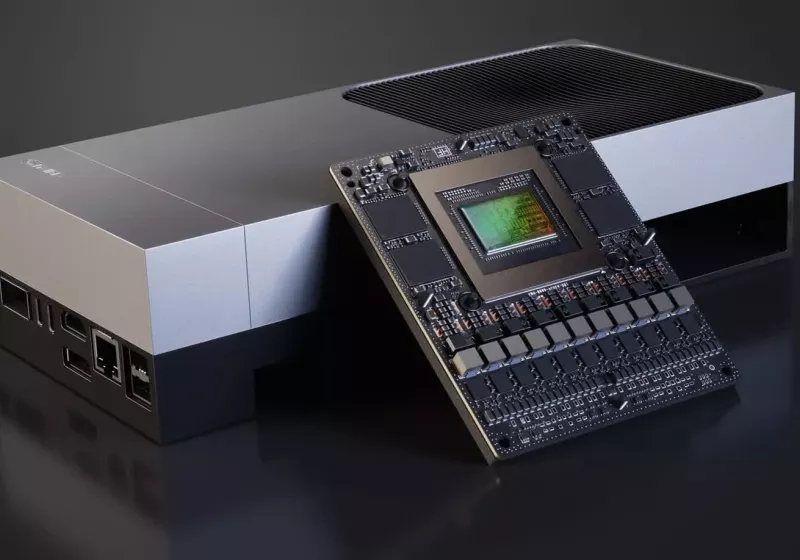
Meta Platforms, the parent company of Facebook, Instagram, and WhatsApp, announced a strategic partnership with Nvidia to power its forthcoming hyperscale data centers optimized for artificial intelligence (AI) training and inference. The collaboration centers on deploying Nvidia’s AI accelerators—specifically the Blackwell and Rubin GPUs—alongside Nvidia’s Spectrum-X Ethernet switches as part of Meta’s Facebook Open Switching System (FBOSS) software stack. The combined deployment aims to enable Meta to scale its AI workloads efficiently, supporting a broad range of applications from content moderation to recommendation systems and advanced user-facing AI features.
Meta has outlined plans to build hyperscale data centers designed for the demands of modern AI workloads. Hyperscale facilities are characterized by vast compute, storage, and networking resources, all optimized to deliver high throughput, low latency, and energy efficiency at scale. Nvidia’s Blackwell line represents the next generation of its AI accelerators, with Rubin GPUs expected to deliver high-performance throughput for extremely large model training and inference tasks. While Nvidia has not disclosed every technical detail of the rollout, press materials indicate a focus on mixing AI training pipelines with inference workloads to support Meta’s platform-wide AI initiatives.
In addition to the compute accelerators, Meta will deploy Nvidia’s Spectrum-X Ethernet switches as part of its networking fabric. Spectrum-X is designed to provide high-bandwidth, low-latency connectivity suitable for large-scale AI deployments, enabling efficient data movement between GPUs, storage, and other compute nodes. The integration with FBOSS—Meta’s open source, software-based switching framework—highlights the company’s ongoing strategy to maintain control over its networking stack while leveraging advanced hardware from Nvidia. FBOSS supports programmable networking features, which can be crucial for managing complex AI workloads at data-center scale.
The news emerges from separate press releases issued by Meta and Nvidia. Both companies framed the collaboration as a strategic alignment to accelerate AI development and deployment across Meta’s platforms. Nvidia’s hardware is expected to play a central role in Meta’s data-center modernization, enabling more efficient model training and faster inference for real-time AI features, content recommendations, and moderation workflows. Meta’s alliance with Nvidia aligns with a broader industry trend of large tech firms investing in specialized accelerators and high-speed networking to support increasingly sophisticated AI models.
While the details in the public statements emphasize the strategic nature of the deal, several practical questions remain. Timelines for deployment, the exact data-center locations, and the scope of hardware integration (including the scale of Blackwell and Rubin GPU deployments) have not been fully disclosed. Given the capital-intensive nature of hyperscale AI infrastructure, Meta will need to navigate supply chain considerations, software optimization challenges, and energy efficiency targets as it scales its AI capabilities.
The partnership also signals Nvidia’s continued push into enterprise-grade AI acceleration beyond its traditional cloud-provider customers, highlighting the broader market for AI accelerators and high-speed networks. For Meta, the move is part of a broader strategy to internalize essential AI infrastructure, reducing reliance on external providers for critical AI workloads and accelerating innovation across its vast ecosystem of apps and services.
In sum, Meta’s collaboration with Nvidia to power AI data centers with Blackwell and Rubin GPUs, complemented by Spectrum-X networking, marks a significant step in the company’s journey to scale AI at hyperscale levels. The alliance is expected to influence how Meta designs its data-center architecture, how AI workloads are managed across its platforms, and how other large-scale digital services approach the integration of next-generation AI accelerators and cutting-edge networking technologies.
In-Depth Analysis
The Meta-Nvidia deal represents a concerted effort by a major social media platform to anchor its AI ambitions in a vertically integrated hardware-software stack. By combining Nvidia’s AI accelerators with a high-performance Ethernet switching fabric, Meta aims to reduce latency and increase throughput for a wide array of AI tasks—from real-time content understanding and moderation to more personalized and context-aware user experiences.
Key hardware components in this partnership include Nvidia’s Blackwell and Rubin GPUs. Blackwell is Nvidia’s latest generation designed to take on diverse AI workloads with enhanced energy efficiency and improved compute density. Rubin GPUs, while not yet as widely publicized in every technical disclosure, are positioned as capable accelerators for large-scale model training and inference. Together, these GPUs are intended to deliver a robust balance of training speed and inference latency, enabling Meta to iterate on model development more rapidly and deploy AI capabilities at a much larger scale than before.
On the networking side, Nvidia’s Spectrum-X Ethernet switches are designed to support the demanding data movement patterns of AI workloads. In hyperscale data centers, efficient interconnects between compute nodes, accelerators, and storage systems are critical. Spectrum-X promises high bandwidth, low latency, and programmable networking features that can help Meta implement advanced traffic management, quality-of-service (QoS) policies, and data-center overruns mitigation. The switches are intended to integrate with FBOSS, Meta’s open-source, software-defined networking (SDN) platform. FBOSS provides the intelligence and control plane necessary to orchestrate traffic flows, route decisions, and policy enforcement across the data center fabric. This synergy allows Meta to tailor the networking behavior to its own AI workflows, potentially reducing bottlenecks and enabling more predictable performance.
Contextualizing this deal within the broader AI infrastructure landscape reveals several notable patterns. Large technology platforms are moving toward bespoke AI data centers, combining top-tier accelerators with purpose-built networking to support both training and inference at scale. Nvidia’s involvement in powering enterprise and hyperscale AI deployments—beyond its traditional role as a hardware supplier for cloud providers—signals a maturing market for AI-specific infrastructure. Meta’s investment underscores its commitment to internalizing critical AI capabilities, ensuring that its AI-driven features can scale with user demand and platform growth.
From a technical perspective, the success of such a deployment hinges on several interrelated factors. Power and cooling are paramount in hyperscale AI facilities due to the substantial heat generated by densely packed GPUs during training sessions. Efficient cooling strategies, advanced power delivery, and optimization of data-center layout are essential to maintain operational efficiency and minimize total cost of ownership. Additionally, software optimization plays a crucial role. Meta will need to adapt its AI frameworks, libraries, and model deployment pipelines to leverage Blackwell and Rubin GPUs effectively. This includes ensuring compatibility with Nvidia’s software ecosystem—such as CUDA, cuDNN, and other acceleration libraries—as well as integrating seamlessly with FBOSS-managed networking.
Security and governance considerations also come into play in large-scale AI data centers. Protecting sensitive user data while enabling AI workloads requires robust access controls, secure boot processes, encrypted interconnects, and careful data segregation across different workloads and environments. Meta’s implementation must balance performance with strict privacy and compliance requirements, particularly in regions with stringent data protection regulations.
The strategic value of the collaboration extends beyond immediate performance gains. By embedding Nvidia GPUs and Spectrum-X networking within FBOSS-driven infrastructure, Meta potentially accelerates its AI experimentation cycles, enabling faster iteration and deployment of new features. This can translate into improved user experiences, more effective content moderation through AI-assisted tools, and more personalized content recommendations. The scale of Meta’s user base means even marginal gains in AI efficiency can yield substantial aggregate benefits in throughput and responsiveness.
The external market implications are notable as well. Nvidia strengthens its position in the enterprise AI hardware market by partnering directly with Meta, a major user with unique requirements for scale and reliability. This collaboration could influence other tech giants to pursue similar strategies, prioritizing vertically integrated AI data centers that combine advanced accelerators with programmable networking. It may also spur further development of software-defined networking capabilities tailored to AI workloads, as well as optimizations in AI frameworks to better exploit next-generation GPUs.
In terms of deployment timelines, public disclosures have not provided a precise schedule for when the new data centers will come online or how quickly the GPUs and switches will be rolled out across Meta’s global infrastructure. Given the complexity and capital expenditure involved, Meta is likely to phase deployments, starting with pilot facilities or specific workloads to validate performance, reliability, and energy efficiency before a broader rollout. The success of these pilot efforts will influence subsequent investment and expansion decisions.
Another angle worth considering is the potential for interoperability with existing Meta data-center architectures. Meta operates a mix of under-the-radar custom infrastructure and commercially available components. The FBOSS component indicates a continued emphasis on software-defined networking, which can enhance flexibility in traffic management and policy enforcement. The ability to extend or retrofit existing data centers with Spectrum-X switches and Blackwell/Rubin GPUs could determine how quickly Meta can scale its AI initiatives without a full infrastructure replacement.

*圖片來源:Unsplash*
From an industry perspective, this deal highlights ongoing shifts in how AI workloads are architected within large-scale digital platforms. The combination of powerful AI accelerators and programmable, high-speed networking is becoming a baseline expectation for hyperscale environments. As AI models grow in size and complexity, the demand for efficient compute, memory bandwidth, and low-latency interconnects becomes more acute. Meta’s approach may serve as a blueprint for other platforms seeking to optimize AI pipelines, including model training across distributed data centers and real-time inference for live services.
In addition to performance considerations, Meta will need to address long-term operational considerations such as hardware refresh cycles, software compatibility updates, and potential supply chain constraints affecting GPU and switch availability. Nvidia’s roadmap for Blackwell and Rubin GPUs, including anticipated performance improvements, energy efficiency gains, and new features, will shape how Meta plans future expansions. Monitoring these developments will be essential for stakeholders who rely on the continued modernization of Meta’s AI infrastructure.
Overall, the Meta-Nvidia collaboration signals a major strategic initiative to build AI-forward, hyperscale data centers equipped with state-of-the-art accelerators and networking. The combination of Blackwell and Rubin GPUs with Spectrum-X switches, integrated into FBOSS, positions Meta to enhance AI capabilities across its platforms while pursuing efficiency and scalability at a scale few other companies can match. The success of this venture will depend on thoughtful implementation, rigorous software optimization, robust cooling and power management, and careful governance of data and security within a rapidly evolving AI landscape.
Perspectives and Impact
Industry observers view this agreement as part of a broader realignment in how large technology platforms approach AI infrastructure. Rather than relying solely on general-purpose computing resources or external cloud providers, Meta’s investment in bespoke AI data-center capabilities aligns with a trend toward greater autonomy over AI workloads. This autonomy can translate into faster feature development cycles, more granular control over inference latency, and improved user experiences across Meta’s suite of social applications.
For Nvidia, this deal reinforces its strategy to broaden adoption of its latest GPUs beyond traditional cloud service providers and into major platforms with the scale to fully leverage advanced accelerators. The collaboration highlights the practicality of Blackwell and Rubin GPUs in real-world, enterprise-grade AI workflows and underscores the importance of high-performance networking in supporting these workloads. Spectrum-X switches are positioned as a critical enabler of scalable, low-latency interconnects, a necessary complement to the compute power of modern GPUs.
From Meta’s perspective, internalizing critical AI infrastructure can yield competitive advantages, including faster deployment of features, improved data locality, and the ability to tailor data-center networks to specific AI workloads. The open nature of FBOSS could foster an ecosystem of optimization and customization, enabling Meta to experiment with innovative traffic engineering, congestion control, and policy enforcement techniques that are specifically tuned for AI pipelines.
The broader implications for the AI ecosystem include potential acceleration of research and deployment timelines for models that require massive parallelism and rapid data movement. As more large platforms invest in AI-dedicated data centers, the market for specialized accelerators, high-speed networking, and software-defined infrastructure is likely to grow, inviting further innovation from hardware and software vendors alike.
Regulatory and policy considerations will also shape how such data centers operate. Data privacy, data localization, and compliance with regional regulations will influence where and how Meta deploys its AI infrastructure. The need to balance performance with privacy protections remains a central challenge for any platform handling vast amounts of user data and employing AI-driven analytics and moderation.
Overall, the Meta-Nvidia alliance reflects a mature phase of AI infrastructure development, where scale, efficiency, and software-defined control are paramount. The collaboration may influence partner ecosystems, procurement strategies, and the ways in which AI workloads are designed and managed across hyperscale environments.
Key Takeaways
Main Points:
– Meta partners with Nvidia to power AI-focused hyperscale data centers using Blackwell and Rubin GPUs.
– Nvidia Spectrum-X Ethernet switches will integrate with Meta’s FBOSS software for programmable networking.
– The deal signals effort to internalize AI infrastructure for faster innovation and scalability.
Areas of Concern:
– Deployment timelines and exact data-center locations are not fully disclosed.
– Dependence on Nvidia hardware raises considerations about supply chain resilience and long-term roadmap alignment.
– Security, privacy, and data governance must be carefully managed across large-scale AI workloads.
Summary and Recommendations
Meta’s collaboration with Nvidia marks a pivotal step toward building AI-forward data centers capable of handling extensive training and inference workloads at hyperscale. By combining Nvidia’s Blackwell and Rubin GPUs with Spectrum-X networking and FBOSS software, Meta aims to achieve high performance, lower latency, and greater control over its AI infrastructure. This approach aligns with a broader industry shift toward specialized accelerators and software-defined networking as essential components of scalable AI ecosystems.
For Meta, the primary benefits lie in accelerated AI development cycles, improved operational efficiency, and the potential for more responsive and personalized user experiences across its platforms. However, the path forward requires careful management of deployment schedules, energy consumption, and security governance. The success of this partnership will depend on seamless software optimization, effective cooling and power strategies, and the ability to adapt to evolving AI workloads and hardware updates.
Industry observers should watch Nvidia’s roadmap for Blackwell and Rubin GPUs, especially regarding performance gains, power efficiency, and new features. Meta should plan phased deployments to validate performance and reliability before broader rollouts, ensuring that FBOSS and Spectrum-X are tightly integrated with existing data-center architectures. Proactive risk management around supply chain dynamics and regulatory considerations will also be essential to sustaining progress.
Ultimately, the Meta-Nvidia collaboration illustrates how the largest digital platforms are reimagining AI infrastructure to support increasingly sophisticated AI capabilities. The outcomes of this initiative could influence investment patterns across the tech industry and shape the design principles for next-generation AI data centers.
References
- Original: https://www.techspot.com/news/111375-meta-signs-major-nvidia-deal-power-ai-data.html
- Nvidia press release materials on Blackwell and Rubin GPUs
- Meta press release on FBOSS, Spectrum-X integration, and AI data center plans
- Industry analyses on hyperscale AI data centers and software-defined networking in AI workloads
Forbidden:
– No thinking process or “Thinking…” markers
– Article starts with “## TLDR”

*圖片來源:Unsplash*