TLDR
• Core Points: Xbox Insiders with Asus ROG Xbox Ally handhelds can test a feature that leverages the device’s embedded NPU to automatically capture notable gameplay moments without interrupting play.
• Main Content: The feature uses on-device neural processing to detect highlights, enabling seamless capture while gaming remains uninterrupted.
• Key Insights: This highlights growing use of edge AI, device-embedded NPUs, and program-level testing among Xbox Insider participants.
• Considerations: Availability is limited to specific hardware and Insider participants; accuracy and toggle options will shape user experience.
• Recommended Actions: Developers should monitor user feedback, refine highlight detection thresholds, and consider broader device support if successful.
Content Overview
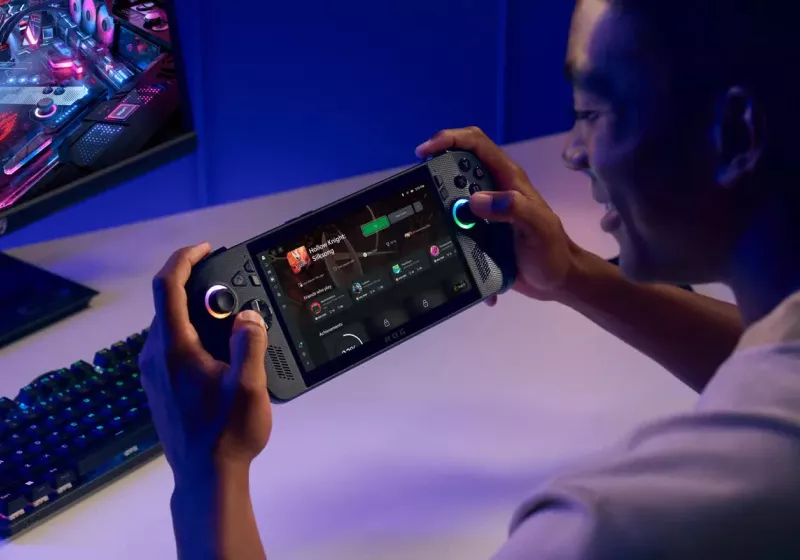
Microsoft has been experimenting with on-device artificial intelligence to enhance the gaming experience on handheld hardware. Through a collaboration with Windows Central and insider program participants, it has been revealed that Xbox Insiders who own the Asus ROG Xbox Ally handheld gaming PC can test a feature that uses the system’s embedded Neural Processing Unit (NPU) to automatically capture notable in-game moments. The innovation aims to provide automatic highlight capture without interrupting gameplay, leveraging the device’s AI capabilities to monitor and identify exciting or significant moments in real time.
The Asus ROG Xbox Ally is a handheld PC designed to run Xbox Game Pass and other Windows-based games, pairing a compact form factor with substantial internal components. The inclusion of an embedded NPU—an on-device accelerator designed to run neural networks efficiently—offers the potential to perform complex video analysis locally, reducing the need for cloud-based processing and minimizing latency. By employing the NPU, the feature can continuously analyze gameplay frames, detect events that meet predefined criteria for highlights (such as clutch plays, near-misses, or extraordinary actions), and automatically save or clip these moments for later viewing. The goal is to deliver a smoother user experience by eliminating manual screen captures or post-game capture sessions.
As with many Insider programs, the rollout is incremental and limited to a subset of users who own the compatible hardware. Early testers will provide feedback on the accuracy of highlight detection, the frequency of captures, and any performance or battery life implications. The approach aligns with broader trends in the gaming industry toward on-device AI assistance, reducing the need for constant cloud communication and enabling faster, more responsive features.
In summary, Microsoft’s initiative showcases how edge AI and NPUs on portable gaming devices can enhance the value proposition for players who want to preserve exciting moments effortlessly. The test signals potential expansion to other devices or configurations if the feature proves reliable and scalable through Microsoft’s Insider program.
In-Depth Analysis
The move to incorporate on-device AI for capture highlights represents a convergence of several ongoing trends in gaming and hardware design. First, edge AI—performing AI computations directly on the device—offers tangible benefits for mobile and handheld devices. By running the highlight-detection models locally on the Asus ROG Xbox Ally’s NPU, the system can analyze frames with low latency, avoiding the round-trip delay to cloud servers. This is crucial in a gaming context where even milliseconds matter for capturing moments that players want to revisit or share.
Second, the strategy leverages the growing presence of dedicated neural processing units in consumer devices. NPUs are optimized for parallelized neural network workloads, enabling more efficient real-time analysis without taxing the main CPU or GPU. Offloading detection tasks to the NPU can help preserve battery life and maintain steady frame rates during gameplay, a critical concern for handheld devices with limited power budgets.
Third, the feature represents a practical application of automatic content generation within gaming ecosystems. While many players manually record clips or use built-in capture keys, an automatic highlight system reduces friction and encourages sharing and engagement. This aligns with social features and creator ecosystems seen across gaming platforms, where ease of content creation can drive longer play sessions and increased visibility for games and titles.
From a development perspective, this feature would rely on carefully designed machine-learning models trained to recognize moments of high entertainment value or gameplay significance. The models must balance sensitivity and specificity to minimize false positives (unwanted or irrelevant captures) and false negatives (missing important moments). Tuning these models for diverse game genres, playstyles, and user preferences is a non-trivial challenge. Additionally, the system would need robust privacy and user-control mechanisms, ensuring players can disable automatic captures or customize what qualifies as a highlight.
For testers, the Insider program provides a valuable feedback loop. Participants can report issues such as capture quality, the timing of clips, or any negative impact on performance or battery life. Microsoft can use this feedback to adjust sampling rates, detection thresholds, and the user-configurable aspects of the feature before broader deployment. The incremental rollout also allows the company to observe how well the feature scales with different game types and workloads, which is important given the wide variety of titles available on Xbox Game Pass and Windows games.
From a broader industry perspective, Microsoft’s exploration mirrors similar efforts by other platforms to introduce AI-assisted capture and content generation. Competitors are increasingly exploring on-device AI workflows for features like in-game event detection, dynamic difficulty adjustment, or real-time performance analysis. The success or limitations of this Xbox Ally feature could influence future decisions on cross-device AI-enabled services, especially in ecosystems that span handheld consoles, PCs, and cloud services.
However, there are considerations and potential challenges. The accuracy of highlight detection is paramount; too aggressive a setting may flood users with captures, while too conservative settings could frustrate players who expect automatic recording to catch memorable moments. Battery consumption is another practical concern—running continuous video analysis on a handheld device consumes power, and users will weigh the trade-off between captured moments and session longevity. Additionally, the solution needs to respect user privacy and consent, ensuring that no captures happen without user intent or awareness, and providing straightforward controls to enable, disable, or customize the feature.
In terms of scope, the feature currently appears to be limited to Asus ROG Xbox Ally owners within the Xbox Insider program. The Xbox ecosystem supports a variety of hardware configurations, including different handhelds, consoles, and PC configurations. If the feature proves successful on this specific hardware with Insider feedback, Microsoft may consider expanding support to additional devices or generations, potentially including other OEMs that integrate NPUs or AI accelerators. The decision would hinge on technical feasibility, power constraints, and the overall user demand demonstrated through Insider feedback.
Lastly, this initiative underscores how hardware features—like NPUs—can influence software capabilities and user experiences. By enabling sophisticated AI workloads on-device, Microsoft and its hardware partners can unlock capabilities that feel seamlessly integrated into the gaming workflow. The ability to capture highlights without disrupting gameplay could become a differentiating feature for handheld gaming devices, encouraging developers and publishers to optimize for AI-assisted capture as a standard experience.

*圖片來源:Unsplash*
Perspectives and Impact
The test introduces a new paradigm for content creation within gaming: automatic highlight capture anchored in on-device AI. For players, this could lower the barrier to sharing impressive plays and memorable moments, potentially increasing engagement with both titles and communities. It may also enable content creators to generate more clips with less manual effort, fueling social media presence and streaming activity around diverse games.
From a platform standpoint, this feature can deepen the value proposition of the Asus ROG Xbox Ally as a portable, Windows-based gaming device. If the system can reliably identify high-impact moments and save them with minimal user intervention, it could influence purchasing decisions among gamers who value built-in content creation tools. It also showcases Microsoft’s willingness to pilot AI-centric enhancements across its ecosystem, integrating hardware capabilities with software features to enrich user experiences.
Future implications include broader adoption of on-device AI for other tasks beyond highlight capture. For example, similar NPUs could assist in real-time performance analytics, dynamic capture quality adjustments based on game genre, or automatic tagging and categorization of clips for easier organization and discovery. If Microsoft demonstrates strong results, developers across the Xbox and Windows ecosystems may design experiences that leverage on-device AI to enhance both playback and sharing of gaming moments.
There are also questions about accessibility and customization. Users with different play styles—competitive players, storytellers, or casual gamers—may have varying preferences for what constitutes a highlight. Providing flexible controls, including the ability to define or adjust highlight criteria, would be important to broaden appeal. Ensuring easy opt-out options and clear privacy settings will be essential to maintaining user trust as AI-assisted features become more integrated into gaming devices.
In the broader AI and hardware landscape, this initiative aligns with the ongoing trend of embedding AI accelerators into consumer gadgets. As NPUs and other specialized processors become more prevalent in handhelds and PCs, the potential for sophisticated, low-latency AI tasks on-device expands. This could spur hardware manufacturers to design devices with more capable AI accelerators, while software platform owners like Microsoft experiment with a wider array of on-device AI features. The result could be a more responsive, immersive gaming experience where intelligent features operate in the background without compromising performance.
Additionally, the Insider program’s role in validating this feature cannot be overstated. Real-world testing across diverse environments—varying game genres, network conditions, and battery levels—helps identify edge cases and refine the user experience before a broad rollout. The feedback loop from enthusiasts and early adopters will be crucial in shaping future iterations and determining whether the feature becomes a standard offering across more devices.
From a policy and ethical perspective, the move prompts consideration of data handling and ownership. Even though captures occur on-device, metadata and clips could be stored or transmitted in ways that require transparency and user consent. Clear explanations of how captures are stored, who can access them, and how long they’re retained should accompany any broader release. Maintaining robust privacy controls will be a cornerstone of long-term acceptance and success.
Key Takeaways
Main Points:
– Microsoft is testing an on-device highlight-capture feature for Xbox Ally handhelds that uses an embedded NPU.
– The feature operates without interrupting gameplay and relies on edge AI to identify notable moments.
– Availability is currently limited to Asus ROG Xbox Ally owners participating in the Xbox Insider program.
Areas of Concern:
– The accuracy of highlight detection and the potential for false positives or missed moments.
– Impact on battery life and device performance during extended gaming sessions.
– Access and control concerns, including privacy, consent, and ease of opting out.
Summary and Recommendations
Microsoft’s exploration of on-device AI to automatically capture gaming highlights on the Asus ROG Xbox Ally marks a notable step in integrating edge AI with portable gaming hardware. By utilizing the device’s embedded NPU, the feature aims to deliver seamless, automated content creation without disrupting gameplay. The Insider program approach allows Microsoft to gather real-world feedback on detection accuracy, performance impact, and user experience, which will be essential in refining the feature for broader deployment.
For the product and engineering teams, the next steps should include:
– Collecting comprehensive feedback from Insider participants on detection thresholds, clip quality, and any perceived latency or performance issues.
– Conducting rigorous power and thermal testing to quantify battery life trade-offs and ensure sustained performance during long sessions.
– Expanding customization options so players can tailor what qualifies as a highlight and adjust capture frequency or duration.
– Ensuring robust privacy controls, clear user guidance, and straightforward opt-out mechanisms for automatic captures.
– Evaluating broader device support, including other NPUs or AI-capable handhelds, to determine the feasibility of wider rollout.
If the feature proves reliable and scalable, Microsoft could consider extending support to additional hardware within the Xbox ecosystem and enhancing integration with social sharing workflows and clip management. The underlying approach—edge AI for real-time content generation—could also inspire similar capabilities across gaming devices, contributing to richer, more automated user experiences while maintaining the performance and battery life essential to portable gaming.
Ultimately, the success of this initiative will hinge on the balance between accurate, useful highlight captures and the unobtrusive, efficient operation of the AI system. Properly executed, it could become a valued enhancement for gamers who want effortless ways to preserve and share their most exciting in-game moments.
References
- Original: https://www.techspot.com/news/111441-microsoft-using-npus-automatically-capture-xbox-game-highlights.html
- Additional context: Industry trends in edge AI and on-device processing for gaming devices
- Related reading: AI-assisted content creation in gaming ecosystems and Insider program testing methodologies
Note: The above article is a rewritten synthesis based on the referenced TechSpot report and related industry context. It preserves the essential facts while expanding on interpretation, implications, and future considerations.

*圖片來源:Unsplash*