TLDR
• Core Points: A mother in India accuses EY of a toxic culture contributing to her daughter’s death from overwork; public sentiment grows for India’s Right to Disconnect.
• Main Content: The case centers on a daughter who died after prolonged work hours at Ernst & Young (EY); her mother alleges the firm’s demanding environment, including unpaid overtime and insufficient support, played a role.
• Key Insights: The incident highlights ongoing concerns about corporate work-life balance, employee well-being, and the need for regulatory space to protect workers’ rest.
• Considerations: While the specifics of causation are complex, rising calls for policy changes and corporate accountability are shaping discourse in India and among Indian tech and consulting firms.
• Recommended Actions: Companies should assess workload management, enforce reasonable hours, and adopt explicit Right to Disconnect policies; regulators may consider clearer guidelines for employee well-being.
Content Overview
The death of a young professional after extended periods of work has reignited debate about workplace culture in India, particularly within multinational professional services firms such as Ernst & Young (EY). A mother has publicly criticized EY for what she describes as a toxic work environment that demanded excessive overtime and neglected the well-being of employees, ultimately contributing to her daughter’s death. The case has drawn broad attention on social media and news platforms, fueling discussions about the right to disconnect—an emerging labor right that allows workers to disengage from work communications outside of standard hours.
Proponents argue that the incident underscores systemic issues in high-pressure environments typical of consulting and accounting firms, where project deadlines, client demands, and performance metrics can drive around-the-clock work. Critics, while acknowledging the challenging nature of professional services, emphasize that sustained overwork is unsustainable, ethically harmful, and potentially illegal in some jurisdictions if it endangers health or violates labor standards. The broader public conversation in India has started to converge around the need for formal policies that protect workers’ personal time and mental health, along with stronger enforcement of existing labor laws.
This discussion arrives at a moment when Indian lawmakers and civil society are increasingly attentive to workplace rights and corporate accountability. The concept of Right to Disconnect has gained traction in various regions, prompting calls for Indian legislation or policy guidance that would permit employees to disengage from work-related communications after hours without fear of retaliation or negative performance assessments. The case against EY thus serves as a focal point for these debates, raising questions about how multinational corporations manage work culture in India, how much responsibility firms bear for employee welfare, and what systemic changes may be required to prevent tragedies linked to overwork.
In-Depth Analysis
The core of the discourse revolves around a grieving mother’s assertion that her daughter’s life was adversely affected by an unsuitable work environment at a prestigious global firm. EY, like many professional services organizations, operates in a high-demand sector where client needs often translate into long hours, tight deadlines, and intense performance expectations. When such conditions persist without adequate support, they can create a workplace climate where employees feel compelled to sacrifice rest, personal time, and boundaries in order to meet perceived goals.
Several factors commonly observed in cases involving overwork include:
– Scheduling pressures: Back-to-back client engagements, travel, and complex project scopes can extend workdays beyond conventional hours.
– Overtime expectations: In some services cultures, overtime can become normalized or implicitly expected as a measure of dedication and productivity.
– Resource constraints: High demand for services can outpace available staffing, resulting in individuals shouldering disproportionate workloads.
– Career progression incentives: High performers may be rewarded for long hours, reinforcing a cycle of extended work periods.
Critics argue that such dynamics are not inevitable and can be restructured to prioritize health and sustainable performance. They point to best practices in global firms that have begun to implement formal work-life balance policies, mandated break periods, limits on after-hours communication, and mental health resources. The Right to Disconnect, a policy concept adopted in various countries, seeks to codify the boundary between work and personal life, ensuring that employees are not obligated to respond to emails or messages outside designated work times.
The broader Indian context adds nuance to this discussion. India’s labor landscape includes a mix of multinational firms and domestic enterprises operating under diverse regulatory frameworks. While labor laws provide baseline protections regarding working hours, rest periods, and compensation, enforcement and cultural norms can vary by sector and company. The rising public demand for a Right to Disconnect in India reflects concerns about quality of life, burnout, and the long-term societal costs associated with overwork. Advocates argue that protecting workers’ rest is not only a moral imperative but also essential for sustaining productivity and innovation in a competitive economy.
From a preventive standpoint, organizations may consider implementing several measures:
– Clear work-hour policies: Establish maximum weekly hours, explicit quiet periods, and guidelines for after-hours communications.
– Resource and workload management: Monitor project staffing to prevent chronic overload; deploy temporary or permanent hires as needed.
– Mental health support: Provide confidential counseling, stress-management resources, and easy access to employee assistance programs.
– Training and culture change: Leadership training to recognize signs of burnout; peer accountability for maintaining boundaries.
– Transparency and accountability: Regular audits of work patterns; metrics that reward sustainable work practices rather than mere hours logged.
Legal considerations also come into play. In some jurisdictions, excessive overtime can raise questions about labor law compliance, including minimum rest periods, overtime compensation, and hazard to worker health. While India’s labor framework has evolved, the alignment between policy and practice remains an ongoing challenge for many organizations, particularly in sectors characterized by high demand and client-driven pressures.
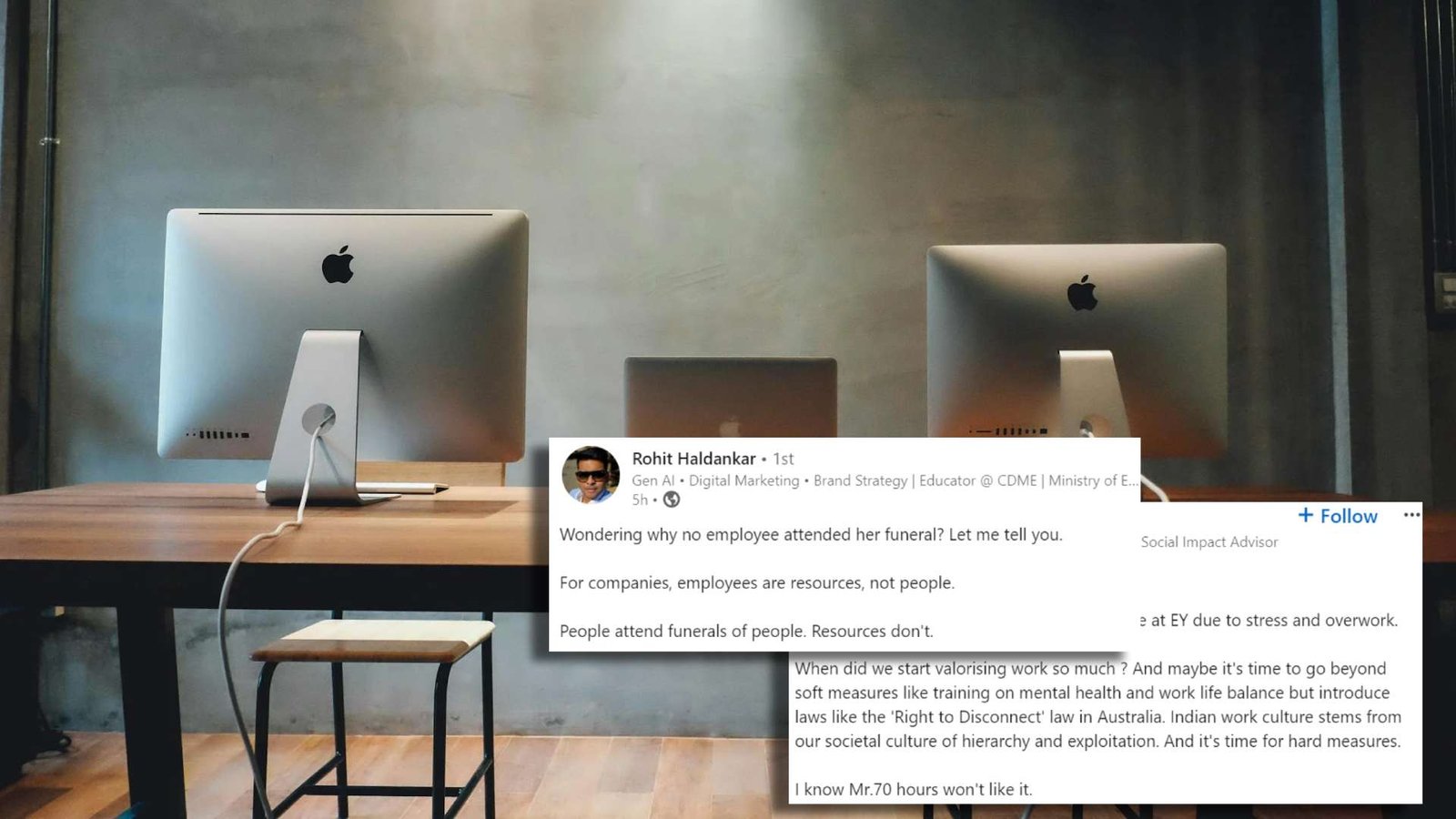
The personal dimension of this case—the mother’s account of her daughter’s experience and the absence of attendance at a funeral—highlights the human cost behind the statistics. It underscores that policies and compliance measures are not merely abstract governance concerns but matters that resonate through families and communities. Public sympathy often emerges when a tragic event is tied to systemic workplace practices, reinforcing the urgency of meaningful reforms.
Media coverage and social media discourse surrounding the incident reveal a spectrum of perspectives. Some commentators call for corporate accountability, insisting that firms should be held to higher standards when it comes to employee welfare and the long-term health implications of overwork. Others urge caution, noting the complexity of causation in any single tragedy and caution against attributing blame without comprehensive investigations. In this context, the debate tends to favor reforms that protect workers while recognizing the realities of competitive, client-driven industries.

*圖片來源:description_html*
The incident also occurs as digital communication technologies intensify expectations of constant availability. The ubiquity of smartphones and collaboration tools means that work can extend beyond traditional office hours, often blurring boundaries between professional and personal life. As societies grapple with these trends, policy experiments and regulatory proposals—such as the Right to Disconnect—seek to restore balance by ensuring workers are not perpetually tethered to work demands.
In sum, the situation brings into focus the tension between high-performance professional environments and the fundamental right of individuals to rest and care for their health. It challenges firms to reflect on their internal cultures, leadership practices, and the mechanisms by which they support or fail to support employee well-being. While the exact causality of this case may require a thorough and nuanced investigation, the broader conversation it has sparked is likely to influence corporate policies, regulatory considerations, and public expectations in the years ahead.
Perspectives and Impact
- Corporate accountability: The case intensifies scrutiny of how multinational firms manage work culture in India. It reinforces calls for clear boundaries between work and personal time and for explicit, enforceable policies that protect employee well-being.
- Policy implications: The Indian labor landscape may see renewed interest in formalizing the Right to Disconnect within labor regulations or through sector-specific guidelines. Such measures could set standards for permissible after-hours communications, mandatory rest periods, and penalties for non-compliance.
- Industry practices: Firms in consulting, accounting, and technology services may respond by auditing workloads, investing in staffing, and integrating well-being metrics into performance reviews. Leadership development programs could emphasize sustainable work practices as a core value.
- Societal dialogue: The case contributes to a broader societal conversation about mental health, burnout, and the social costs of a culture that glorifies long hours. Public discourse may drive demand for corporate transparency about work conditions and employee welfare initiatives.
- Future implications: If Right to Disconnect policies gain traction, they could reshape organizational norms across India, influencing hiring practices, compensation structures, and the design of collaboration tools to minimize after-hours disruption.
Key Takeaways
Main Points:
– A mother alleges that her daughter’s death was linked to a toxic work culture at EY, highlighting concerns about overwork in Indian professional services.
– The case has intensified calls for a Right to Disconnect in India, emphasizing workers’ rights to disconnect from work outside standard hours.
– Broader discussions focus on balancing high-performance expectations with employee well-being, and the need for corporate accountability and regulatory guidance.
Areas of Concern:
– Causation vs. correlation: Determining the extent to which workplace culture directly contributed to the tragedy requires careful investigation.
– Enforcement gaps: Even where policies exist, enforcement and cultural uptake may be weak, allowing detrimental practices to persist.
– Mental health support: Access to confidential mental health resources and stigma reduction remain critical in many workplaces.
Summary and Recommendations
The case spotlighting a mother’s accusation against EY regarding a toxic work culture and the resulting tragedy underscores a broader, ongoing challenge: how to reconcile demanding professional environments with fundamental human needs for rest and health. While definitive causality in such cases is often complex and multifactorial, the public discourse surrounding this incident has amplified calls for structural change. The emerging Right to Disconnect concept in India seeks to codify boundaries that protect workers from perpetual after-hours obligations, a move that could have wide-reaching implications for corporate policy, labor regulation, and workplace culture.
For organizations, the advisable path includes proactive measures to ensure sustainable work practices. This entails implementing explicit work-hour policies, setting clear expectations around after-hours communication, investing in adequate staffing, and expanding access to mental health resources. Leadership must model healthy boundaries, and performance metrics should reward efficiency and quality rather than sheer hours spent on tasks. Transparent reporting on workload, burnout indicators, and employee well-being can help identify risk areas before they escalate.
Regulators and policymakers should consider clear guidelines or statutory provisions that protect workers’ rights to disconnect, while allowing for reasonable exceptions in certain essential roles. Collaboration among government, industry bodies, employers, and employee representatives can help design balanced, enforceable rules that protect health without compromising service delivery. Public awareness campaigns can also reduce stigma around seeking help for mental health concerns and encourage employees to utilize available support systems.
Ultimately, safeguarding worker well-being is not only a moral imperative but a strategic necessity for organizations aiming to attract and retain talent in a competitive market. By transforming workplace culture and policy, firms can foster environments where high performance and personal health coexist, reducing the risk of tragedy and building more resilient organizations for the future.
References
- Original: https://in.mashable.com/tech/82410/mother-slams-eys-toxic-work-culture-over-daughters-death-by-overwork-internet-demand-right-to-discon
- Additional perspectives on Right to Disconnect and workplace well-being:
- https://www.oecd.org/employment/rights-and-regulations/
- https://www.weforum.org/agenda/2023/05/right-to-disconnect-work-life-balance/
- https://www.mckinsey.com/featured-insights/diversity-and-inclusion/the-top-10-issues-facing-the-indian-it-industry

*圖片來源:Unsplash*