TLDR
• Core Points: MSI debuts Meg X AI monitor lineup at CES 2026, featuring onboard NPU-driven AI that optimizes display based on in-game content to aid aiming, enemy detection, and flashbang survivability.
• Main Content: First “true AI monitor” claims to adapt dynamically to gameplay, integrating AI for visibility and response under combat scenarios.
• Key Insights: Onboard processing aims to reduce latency and provide tailored visuals, potentially impacting esports performance and user experience.
• Considerations: Effectiveness may vary by game, engine, and user perception; real-world impact and possible overreliance on AI aids warrant scrutiny.
• Recommended Actions: Prospective buyers should test AI features across titles, verify input lag differences, and evaluate long-term reliability and gaming benefits.
Content Overview
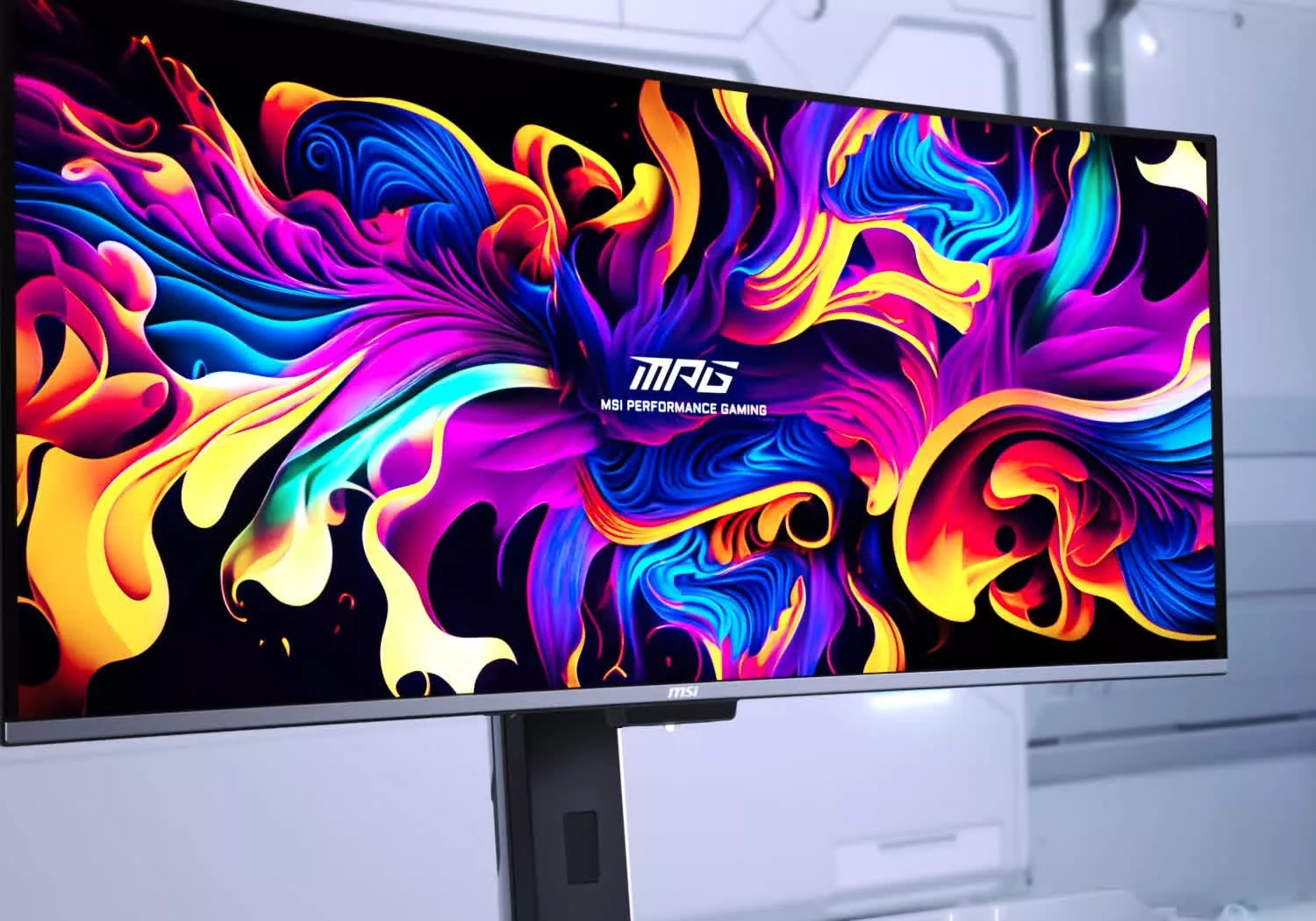
MSI’s CES 2026 presentation spotlighted a new generation of gaming monitors under its Meg X series, branded as the first true AI monitors. The centerpiece of this initiative is the integration of an onboard neural processing unit (NPU) that enables real-time AI-based adjustments to the display, driven by the content and dynamics of the game being played. MSI positions these monitors as tools that can intelligently assist players by enhancing aiming accuracy, increasing enemy visibility, and mitigating the disruptive effects of flashbangs and similar gameplay events. The Meg X family represents MSI’s attempt to fuse high-refresh-rate visuals with on-device AI capabilities, aiming to deliver a more responsive and perceptually advantageous gaming experience without relying solely on server-side processing or external software.
The push toward AI-enhanced displays builds on a broader industry trend of moving compute closer to the user to reduce latency and improve responsiveness. By handling computation directly on the monitor rather than in the PC or cloud, MSI claims faster reaction times and lower input lag, which are critical factors in competitive gaming. The Meg X monitors are designed to adjust brightness, contrast, color mapping, motion handling, and other image parameters in real time, potentially in ways that complement a gamer’s reflexes and strategies.
In practice, the AI system analyzes in-game cues such as scene lighting, enemy silhouettes, motion dynamics, and environmental effects. Based on this analysis, the monitor’s AI can adapt on-screen elements to improve target recognition, enemy visibility in dim or cluttered scenes, and the perceived sharpness of objects of interest. The system also purports to offer enhanced perception during flashbang events, where sudden brightness and transient glare can challenge visual tracking.
MSI is careful to frame these AI features as assistive tools rather than substitutions for skill, aiming to augment human performance rather than automate it. As with any advanced display technology, the actual benefits will vary across titles, engine implementations, and individual user perception. The Meg X line’s success will depend on how seamlessly the AI translates across different genres—from fast-paced shooters to strategy titles—and how reliably these features function under diverse lighting conditions and monitor settings.
This introduction comes amid growing consumer interest in AI-enabled peripherals that can tailor experiences to user needs. While on-device AI presents advantages in latency-sensitive environments, it also raises questions around calibration, potential predictability, and the degree of control users have over AI behavior. MSI’s announcement invites a broader discussion about how adaptive displays can shape gaming workflows, player comfort, and overall performance in competitive settings.
In-Depth Analysis
The Meg X AI monitor family represents a strategic expansion of MSI’s hardware ecosystem, integrating edge AI capabilities directly into the display stack. The onboard NPU allows the monitor to interpret gaming content without routing data to a PC or cloud service. This architectural choice has several implications:
Latency and Responsiveness: Processing AI tasks locally minimizes round-trip communication delays that could otherwise undermine the perceived advantage. For high-refresh-rate monitors used in esports or twitch shooters, even small reductions in input lag can matter. MSI’s claim of “true AI monitor” hinges on the ability to perform meaningful optimization with negligible added latency, ensuring that AI-driven changes do not introduce perceptible lag or stutter.
Visual Adaptation: Real-time adjustments to brightness, contrast, color grading, and local tone mapping can optimize visibility in dynamic scenes. For example, in a dim indoor map with bright flashes, AI might adjust local contrast to preserve detail where it matters most—on enemies or interactive objects—without globally washing out highlights. The goal is to preserve target visibility and reduce eye strain across long gaming sessions.
Enemy Visibility and Targeting Aids: By analyzing silhouettes, motion contours, and scene composition, the AI could highlight or clarify potentially important targets. While this could be framed as a perceptual assist, there is a line between enhancement and automation. The article’s framing suggests these aids are designed to support skill rather than replace it, but the practical effect on aiming and decision-making warrants careful examination.
Flashbang and Event Mitigation: Flashbangs create extreme brightness, glare, and temporary loss of detail. If the AI can modulate on-screen exposure or compensate for glare, it may help players reacquire landmarks and targets faster after disruptive events. The effectiveness of such compensation would depend on how quickly the AI can adapt and how consistent the results are across different flash intensity levels and angles.
Content Adaptation vs. User Customization: A potential tension exists between automated AI optimizations and user preference. Some gamers prefer precise, manual control over brightness, gamma, and color temperature. MSI’s AI approach should ideally offer transparent controls that allow players to dial in or override AI behavior, preserving agency for those who want it.
Compatibility and Ecosystem: The benefit of an AI monitor often multiplies when paired with AI-friendly games and drivers. If the AI relies on game-driven signals or standardized in-game events, its effectiveness may be uneven across engines, titles, or settings. MSI will need to provide robust presets and likely a developer-friendly interface to maximize cross-title performance.
Risk and Reliability Considerations: On-device AI hardware adds another layer of complexity. Reliability hinges on the NPU’s performance, firmware updates, and the monitor’s ability to maintain calibration over time. Potential downsides could include longer recovery times after AI mode changes, occasionally invasive adjustments, or reduced image fidelity in certain scenes if the AI overcorrects.
Market Position and Differentiation: The Meg X line’s AI capabilities set MSI apart from traditional gaming monitors that rely on static HDR modes, local dimming, or fixed sharpening. This differentiation aligns with a broader market shift toward ambient intelligence in peripherals. The question for buyers is whether AI enhancements deliver a tangible, repeatable improvement in real games, or if the technology remains mostly a marketing signal until proven across diverse play styles.
Benchmarking and Independent Evaluation: Given the novelty of AI monitors, independent measurements will be essential. Objective tests should examine latency, color accuracy, HDR performance, peak brightness, PWM-free dimming behavior, and the consistency of AI-driven adjustments under varied scenes and lighting. User perception studies will also help determine whether the AI’s benefits translate into real-world performance gains.
Competitive Landscape: Other manufacturers are exploring AI-enabled displays or software-assisted gaming tools. MSI’s Meg X approach emphasizes on-device AI, which may offer advantages in latency and privacy, but it will face scrutiny against alternatives that leverage software or cloud-based analysis. The long-term success will depend on how effectively MSI communicates measurable benefits and provides reliable, user-friendly controls.
The Meg X initiative reflects a broader industry trend: developers and manufacturers seeking to bridge the gap between high-end hardware performance and intelligent, context-aware assistance. The consumer engineering challenge is to deliver AI that is perceptibly helpful in diverse gaming contexts while maintaining predictability and control for the user. If done well, AI-monitors could become standard peripherals in competitive gaming setups; if not, they risk being seen as gimmicks or overly aggressive enhancements that disrupt the gaming experience.
MSI’s communication around the Meg X emphasizes “the first true AI monitor,” which is a bold claim. The market currently includes displays with advanced image processing features such as dynamic tone mapping, adaptive sync, and enhanced motion reprojection, but on-device AI that actively interprets in-game content and modifies display output in real time represents a new category. The claim rests on the presence of an onboard NPU capable of running AI inference efficiently, reducing reliance on external computation. If MSI sustains this edge—through rapid firmware updates, expanded game compatibility, and transparent user controls—the Meg X could become a reference point for AI-enabled displays.
Additionally, MSI’s approach raises questions about data usage and privacy. On-device AI minimizes data that needs to leave the monitor, which is generally favorable from a privacy standpoint. However, any telemetry or diagnostic data collected to improve AI performance would be a consideration for users who value control over what data their hardware sends back to manufacturers. Clear documentation regarding data practices, opt-in options, and firmware update policies will be important for informed consumer choice.
In practice, the user experience will depend on several practical factors:
– Setup and calibration: How intuitive is the AI feature setup? Are there presets tailored to popular games or genres? Can players fine-tune AI aggressiveness or simply toggle it on/off?
– Game support: Which titles benefit most, and how quickly does MSI add support for newly released games? Will the AI adjust for non-standard graphics options or mods?
– Visual fidelity: Does AI adjustment preserve color accuracy and cinematic intent, or does it introduce unwanted shifts in saturation, gamma, or contrast?
– Accessibility: Could AI-assisted enhancements improve accessibility for players with visual impairments or sensitivity to brightness spikes?

*圖片來源:Unsplash*
MSI’s announcement at CES 2026 signals a broader willingness among display manufacturers to explore AI as a core feature rather than a peripheral extra. The Meg X line’s potential to influence how players experience competitive gaming depends on how transparently MSI communicates performance gains, how robust the AI is across games, and how easily players can adopt or modify these features to suit their preferences and needs.
Perspectives and Impact
The rise of AI-enabled gaming monitors represents a shift in how peripherals participate in the gaming experience. If AI-driven optimizations prove effective, several implications emerge for players, developers, and the wider ecosystem:
Player Performance: For professional or highly competitive players, minute reductions in input lag and improved enemy visibility can translate into faster reactions and more precise aiming. If AI can reliably emphasize threats and reduce perceptual obstacles during high-intensity moments, it may become a component of a high-performance setup. However, the magnitude of improvement is likely to be context-dependent, varying with skill level, game mechanics, and personal visual preferences.
Training and Onboarding: AI-assisted displays could serve as onboarding aids for new players by reducing early frustration related to visibility in dim or cluttered scenes. Over time, players might rely on AI less as their own skills improve, or conversely, rely on AI more as games grow more visually complex.
Game Design Considerations: Developers might take AI monitor capabilities into account when designing visual systems. If AI enhancements become ubiquitous, designers could tailor content to ensure that key elements remain discernible under AI processing. This could influence art direction, lighting, contrast, and enemy silhouettes to maintain clarity across a range of displays.
Accessibility and Inclusion: AI enhancements that improve visibility in challenging scenes could benefit players with visual impairments or sensitivity to brightness changes. Providing accessible presets and clear opt-out options will be important to ensure that AI features are inclusive and do not alienate users who prefer a classic rendering approach.
Privacy and Security: On-device AI reduces data transmission, but any telemetry introduced to optimize performance will need transparent governance. Manufacturers should offer clear privacy statements, user consent controls, and robust security measures to prevent misuse of sensor or usage data.
Market Dynamics: The Meg X AI monitor could push competitors to pursue their own AI-enabled displays, accelerating innovation in the peripheral market. Consumers could gain access to a broader range of intelligent monitors, with features that virtuously balance performance, image fidelity, and adaptive capabilities.
Long-Term Reliability: The hardware complexity of integrating AI accelerators into displays raises questions about long-term reliability, heat management, and firmware update cycles. The industry will require rigorous reliability testing and predictable product lifecycles to ensure that AI features remain stable and beneficial over time.
Ethical and Realism Considerations: As AI assists in elements like aiming or enemy visibility, there may be debate about the line between augmentation and automation. It is essential that AI remains a supportive tool rather than a crutch that reduces the development of core skills or creates disparities among players who access AI features.
In sum, MSI’s Meg X AI monitors herald a potential future where displays do more than passively render images. They actively participate in gameplay through intelligent adaptation. The extent to which this technological vision translates into meaningful, measurable improvements will determine its acceptance and influence within the gaming community. The next steps for MSI will involve expanding game compatibility, refining AI behavior to avoid over-automation, and offering clear, user-centric controls that maintain player agency.
Key Takeaways
Main Points:
– MSI introduces Meg X AI gaming monitors with an onboard NPU enabling AI-driven display adjustments based on in-game content.
– The AI aims to improve aiming accuracy, enemy visibility, and mitigation of flashbang disruptions.
– The technology emphasizes low latency processing and user-perceived perceptual enhancements while preserving player control.
Areas of Concern:
– Variable effectiveness across different games and engines.
– Potential overreliance on AI features and the risk of perceived automation.
– Need for transparency around privacy, data collection, and firmware updates.
Summary and Recommendations
MSI’s CES 2026 unveiling of the Meg X AI monitor family marks a notable entry into on-device AI-enabled gaming displays. By embedding an NPU, MSI aims to deliver real-time visual optimizations tailored to in-game scenarios, with the goals of enhancing aiming precision, enemy visibility, and resilience during disruptive events like flashbangs. The approach aligns with a broader industry trend toward edge AI in gaming peripherals, promising reduced latency, heightened responsiveness, and personalized visual experiences.
However, the success of this initiative will hinge on several factors. First, the AI’s real-world impact must be demonstrated across a broad library of games and settings. Consumers should expect independent benchmarks that quantify latency, image quality, and perceptual benefits, rather than relying solely on marketing claims. Second, user control and transparency are essential. Players should have intuitive ways to enable, customize, or disable AI features and understand how AI decisions affect color, brightness, and detail.
For potential buyers, a prudent approach is to evaluate the Meg X AI monitor through hands-on testing across representative titles, paying attention to:
– Real-time responsiveness and any perceived changes in input lag when AI is engaged.
– Consistency of enemy visibility improvements without compromising color accuracy.
– Stability of AI-driven adjustments during rapid scene changes and during events with extreme brightness.
Additionally, it will be important to monitor firmware support, game compatibility, and opt-in telemetry policies to ensure privacy and data governance meet user expectations. If MSI can deliver reliable performance gains, broad game support, and a transparent user experience, the Meg X AI monitors could influence how gamers choose displays in the coming years, potentially raising the baseline for adaptive, intelligent peripherals.
As the landscape evolves, AI-enabled displays may become standard components of gaming setups, but only if they prove to be genuinely beneficial in diverse contexts and maintain the essential balance between automation and user control. The Meg X line embodies MSI’s ambition to push the boundaries of what a computer monitor can do, turning a passive viewing device into an active participant in the gaming experience.
References
- Original: techspot.com article detailing MSI’s Meg X AI monitor announcement at CES 2026
- Additional references:
- Industry overview of AI in gaming peripherals and edge AI in displays
- Independent bench-marking methodologies for gaming monitors (latency, response time, color accuracy)
- Privacy and data governance considerations for AI-enabled hardware peripherals

*圖片來源:Unsplash*