TLDR
• Core Points: NASA has expressed interest in CapFrameX to assess FPS performance of cockpit simulator video systems.
• Main Content: CapFrameX developers clarified NASA initiated the inquiry, highlighting collaboration potential but no finalized domestic agreements were disclosed.
• Key Insights: Benchmarking tools like CapFrameX could standardize performance assessment for high-fidelity simulators across agencies.
• Considerations: Implications for data sharing, reproducibility, and mission-critical reliability must be navigated.
• Recommended Actions: NASA and CapFrameX should outline scope, data handling, and validation procedures before formal adoption.
Content Overview
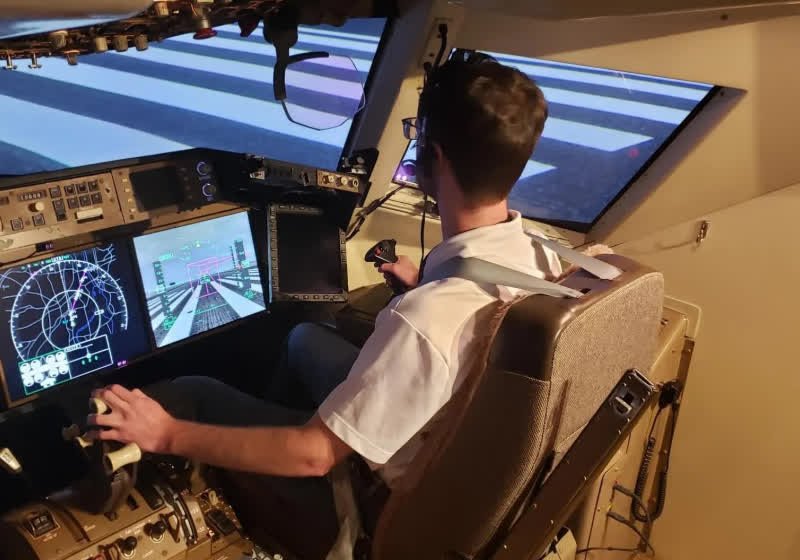
The cosmos has always inspired precision engineering, and nowhere is precision more critical than in the flight simulators used by NASA for pilot training, mission planning, and systems verification. In recent discussions circulating within the professional community, CapFrameX—a PC benchmarking tool renowned for its capability to measure and analyze frames-per-second (FPS) performance across complex graphics workloads—has emerged as a candidate solution for evaluating the performance of NASA’s cockpit simulator video systems. According to a social media post from CapFrameX’s official account, the U.S. space agency has “expressed interest” in leveraging the application to assess FPS performance specifically within its cockpit simulator environments. The subsequent communications from CapFrameX’ developers stressed that the interest originated with NASA, clarifying that CapFrameX is not facilitating the initiative unilaterally but rather responding to NASA’s inquiry. The situation underscores NASA’s ongoing focus on ensuring that its simulators deliver reliable, high-fidelity visual output under a broad set of mission scenarios while maintaining standardized benchmarking practices.
To appreciate the potential significance, it is helpful to place CapFrameX within the broader ecosystem of hardware benchmarking and flight simulation fidelity. CapFrameX is designed to capture granular frame time data, including per-frame timings, frame rates, and stability metrics, and to present these results in a way that enables engineers to compare performance across different hardware configurations, software stacks, and driver versions. In high-stakes simulation environments—where even small frame drops or latency spikes can impact situational awareness—the ability to quantify and compare FPS performance in a repeatable, documented manner is valuable. NASA’s interest suggests an intent to introduce or expand systematic performance verification methods for its cockpit display pipelines, possibly spanning multiple simulator platforms and update cycles.
At the same time, collaboration between a federal research agency and a software benchmarking tool vendor raises several practical questions. NASA would need to define the scope of its benchmarking program, including which simulator models are included, what metrics are captured beyond FPS (such as frame time variance, input-to-display latency, and graphical fidelity indicators), and how data is collected, stored, and analyzed. There are also considerations around reproducibility across different test environments, calibration of display systems, and ensuring that the benchmarking results align with real-world operational performance. The CapFrameX team, for its part, would be expected to provide transparency about tool capabilities, limitations, and any known caveats when applied to highly specialized simulator hardware.
This development mirrors a broader trend in aerospace and defense domains, where industry-standard benchmarking practices are increasingly adopted to underpin performance validation for mission-critical systems. As simulators become more sophisticated—incorporating high-resolution displays, expansive field-of-view setups, and advanced visual effects—robust measurement frameworks help engineers identify bottlenecks, prioritize hardware investments, and verify that upgrades do not degrade critical timing characteristics. For NASA, the potential adoption of CapFrameX could represent a step toward harmonizing performance assessment across diverse simulator platforms, ensuring consistency in how FPS-related metrics are evaluated and reported.
However, details remain scarce. The public statements indicate NASA’s interest but do not reveal a formal partnership, procurement path, or implementation timeline. It is plausible that any collaborative effort would commence with a pilot study or a limited scope trial to validate CapFrameX’s suitability for NASA’s specific cockpit simulation configurations. Such an approach would allow NASA engineers to assess the tool’s data fidelity, integration with existing measurement infrastructure, and alignment with NASA’s internal safety and cybersecurity requirements. The CapFrameX developers, in turn, would likely seek to demonstrate the tool’s value proposition in a government context while clarifying licensing terms, data ownership, and long-term support commitments.
In sum, NASA’s expressed interest in CapFrameX points to a pragmatic effort to reinforce the reliability and reproducibility of FPS measurements within its cockpit simulator ecosystems. If pursued, this collaboration would fit into a broader pattern of government agencies exploring third-party benchmarking tools to supplement in-house testing capabilities, particularly as simulators grow more complex and performance-sensitive. As with any such engagement, the success of the effort will hinge on clear scope definitions, rigorous validation, and transparent data governance.
In-Depth Analysis
A deeper look at the potential implications of NASA’s interest in CapFrameX highlights several dimensions of importance to both public agencies and software benchmarking firms. Foremost is the goal of achieving repeatable, objective performance metrics across heterogeneous hardware and software stacks. Flight simulators used by NASA typically incorporate specialized display pipelines, high-refresh-rate panels, precise calibration targets, and extensive logging to support research and training. Introducing a standardized FPS benchmarking tool could provide a common language for evaluating upgrades, comparing vendors, and supporting decision-making about where to invest in hardware accelerators or software optimizations.
The CapFrameX platform itself has established utility in consumer and enthusiast PC benchmarking contexts, where it measures frame times, frame rates, stutter characteristics, and stability across running subsystems. When adapted to NASA’s cockpit environments, the tool would need to demonstrate robust robustness to hardware diversity, including not only consumer-grade GPUs and CPUs but also potentially specialized workstations and simulation subsystems. In addition, NASA’s environment places a premium on data integrity, reproducibility, and traceability. The benchmarking workflow would need to incorporate controlled test scenarios, repeatable test sequences, and well-documented configurations so that results can be reviewed, replicated, and audited as part of formal verification processes.
A critical consideration is the scope of metrics. FPS alone is a useful indicator but does not capture all aspects of visual fidelity or simulator performance that can affect training outcomes. For example, frame time variance, micro-stutter, input latency, and display pipeline latency can each influence operator perception and reaction times in high-fidelity simulators. Therefore, a NASA deployment might extend CapFrameX usage beyond simple FPS counting to include comprehensive timing analysis, overlay diagnostics, and integration with NASA’s own telemetry and logging frameworks. The potential for metrics to be cross-validated with human-in-the-loop assessments could also be a topic of interest, enabling researchers to correlate quantified performance with training effectiveness or simulator-induced fatigue.
From an operational perspective, integrating CapFrameX into NASA’s existing verification suites would require careful collaboration on data governance. NASA would want to ensure that any data collected through CapFrameX adheres to internal data handling policies, export controls, and cybersecurity standards. Licensing terms would need to be negotiated to permit use across NASA facilities and projects, with clear delineation of data ownership, confidentiality, and potential civilian disclosures. CapFrameX developers would benefit from understanding these constraints as they tailor their product roadmap toward enterprise and government audiences, potentially offering features such as role-based access control, secure data export, and on-premises deployment options to satisfy government-security requirements.
Additionally, the development and testing timeline would likely begin with a pilot program rather than an immediate nationwide rollout. A pilot could encompass a limited number of cockpit simulator configurations, a defined set of test workloads (for example, takeoff and landing sequences or emergency procedure scenarios), and a defined measurement window. The outcomes of such a pilot would help determine whether CapFrameX’s capabilities align with NASA’s performance validation needs and whether any custom development would be required. CapFrameX’s open-source or commercial licensing model could also influence how quickly a pilot translates into broader adoption. Government projects sometimes favor reproducible, auditable tooling that can be deployed and re-deployed across multiple programs, which may shape how CapFrameX or its supporters tailor the product for this use case.

*圖片來源:Unsplash*
It is worth noting that CapFrameX’s own communications team emphasized that NASA, not CapFrameX, initiated the interest. This distinction matters in terms of positioning and accountability. CapFrameX is a tool—an investigative instrument that can reveal performance characteristics when properly configured and used in appropriate contexts. NASA’s capabilities, requirements, and internal approval processes will govern whether a collaboration progresses and, if so, what form it takes. The absence of contractual details in public discussions is not unusual in early-stage inquiries, especially when sensitive or mission-critical stakeholders are evaluating the fit of a third-party tool for critical operations.
As with any cross-sector technology adoption, stakeholders should manage expectations. Benchmarking tools are powerful for quantifying performance and informing investment decisions, but they are one piece of a larger ecosystem that includes software optimizations, hardware procurement strategies, data analytics workflows, and human factors research. In aviation and space contexts, even small performance variances can have outsized implications for operator workload and mission safety. Therefore, any movement toward standardizing FPS benchmarking within NASA’s cockpit simulators would need to be accompanied by rigorous validation against recognized standards and alignment with mission-critical performance criteria.
Beyond NASA, the broader aerospace and defense communities watch such developments with interest. If NASA validates CapFrameX as a reliable tool for cockpit simulator benchmarking, other agencies and contractors may consider similar approaches to measure and optimize simulator performance. This could spur competition among benchmarking tool providers to offer enterprise-grade capabilities tailored to government and industry use cases, including enhanced security features, detailed governance, and better integration with complex simulation pipelines. At the same time, vendors will likely need to address concerns about data privacy, tool accuracy, and the potential risk of over-reliance on narrow metrics like FPS at the expense of other important performance indicators.
Future directions could also involve collaborations that extend CapFrameX’s capabilities through partnerships with hardware vendors, display manufacturers, and software developers who maintain the simulation software used by NASA. Such collaboration could yield standardized test suites that cover a range of mission scenarios and hardware configurations, alongside recommended baselines for FPS, frame validity, latency, and stability. The outcome could be a more unified approach to evaluating simulator performance, benefiting not only NASA but the broader field of high-fidelity simulation where accurate timing and smooth visuals are essential.
In considering the potential impact of this interest on NASA’s operational readiness and training programs, it is important to balance ambition with practicality. NASA has thrived on rigorous engineering and disciplined experimentation, often validated through multiple independent methods. If CapFrameX becomes part of NASA’s benchmarking toolkit, it would likely complement existing internal systems rather than replace them. The resulting framework could serve as a reproducible, auditable method to compare performance across simulator versions and hardware upgrades while preserving the ability to cross-check with other quality assurance processes.
In summary, NASA’s expressed interest in leveraging CapFrameX for cockpit simulator FPS analysis reflects a broader trend toward formalizing performance assessment in aerospace simulators. While the public statements clarify that NASA initiated the inquiry, the path from interest to formal adoption involves a careful balance of technical feasibility, data governance, security considerations, and alignment with mission objectives. The initiative, if realized, would signal a maturation of benchmarking practices in spaceflight simulation and could catalyze further collaboration between government agencies and benchmarking tool developers to support safer, more effective training and mission preparation.
Perspectives and Impact
- Short-term implications: NASA may initiate a pilot program to evaluate CapFrameX’s capabilities on select cockpit simulators, establishing whether the tool delivers repeatable, auditable FPS metrics in NASA’s environment.
- Medium-term considerations: Depending on pilot outcomes, NASA could expand the tool’s use across additional simulators or mission domains, potentially standardizing FPS benchmarking across programs to inform hardware refresh cycles and software optimization efforts.
- Long-term outlook: If CapFrameX proves valuable, it could inspire industry-wide benchmarking standards within aerospace simulation, encouraging other agencies and contractors to adopt standardized performance metrics to improve interoperability and safety.
- Global context: International collaborations or reviews may examine benchmarking approaches in spaceflight and aviation simulators, contributing to shared best practices for evaluating visual performance and system latency in mission-critical environments.
Key Takeaways
Main Points:
– NASA has shown interest in CapFrameX for cockpit simulator FPS benchmarking.
– CapFrameX clarified NASA initiated the inquiry, not CapFrameX driving the effort.
– Any adoption would require careful scoping, data governance, and validation.
Areas of Concern:
– Data security, licensing, and data ownership in a governmental context.
– Ensuring metrics capture comprehensive performance factors beyond FPS.
– Integration with NASA’s existing verification and safety standards.
Summary and Recommendations
NASA’s inquiry into CapFrameX for evaluating FPS performance of cockpit simulator video systems marks a meaningful step toward standardized, transparent performance measurement in high-fidelity flight simulation. While the public communications indicate that NASA initiated the interest, the next steps—if pursued—will determine whether CapFrameX can provide meaningful enhancements to NASA’s benchmarking processes. The recommended path involves a structured pilot program to assess tool suitability, followed by a broader plan that addresses data governance, security, and metric scope. Importantly, any collaboration should articulate clear success criteria, auditability, and alignment with NASA’s mission assurance requirements. If successful, this collaboration could help harmonize performance assessment across NASA’s simulator ecosystem and potentially shape benchmarking practices across the aerospace sector.
References
- Original: techspot.com
- Additional references:
- CapFrameX official website and product documentation
- NASA Flight Simulation and Mission Assurance guidelines
- Industry benchmarks for cockpit display systems in high-fidelity simulators

*圖片來源:Unsplash*