TLDR
• Core Points: NASA unveils Athena, a new supercomputer delivering over 20 petaflops of peak performance with substantially reduced energy consumption.
• Main Content: Athena launched after beta testing, enabling advanced simulations for space science while prioritizing energy efficiency.
• Key Insights: The system advances NASA’s mission support through high-performance computing with greener operation, potentially reshaping modeling workflows.
• Considerations: Ongoing maintenance, software optimization, and cooling infrastructure will be essential to sustain performance gains.
• Recommended Actions: Researchers should transition workloads to Athena where appropriate and pursue further optimizations to maximize efficiency and science outcomes.
Content Overview
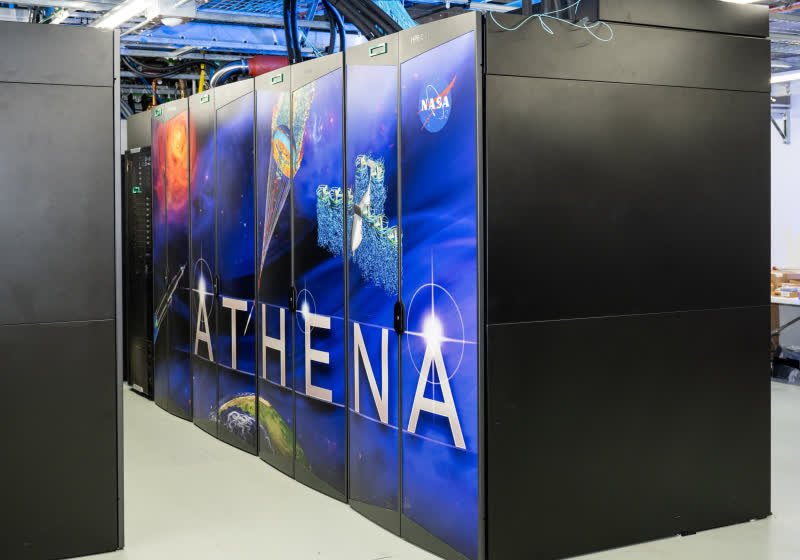
NASA recently brought online its latest high-performance computing (HPC) resource, Athena, after a period of beta testing. Athena marks a significant milestone for the U.S. space agency’s computational capabilities, delivering more than 20 petaflops of peak performance. Beyond raw speed, Athena is designed to run extreme workloads more efficiently, reducing electricity consumption relative to prior systems while supporting a broad range of mission-critical simulations and analyses. The introduction of Athena aligns with NASA’s ongoing strategy to accelerate scientific discovery and mission planning by leveraging cutting-edge computing to model complex phenomena—from climate and atmospheric science to planetary geology and astrophysical events.
Athena’s deployment comes amid a broader push by federal agencies and the research community to balance computational power with sustainability. As simulations grow ever more detailed, energy usage becomes a central concern for data centers and HPC facilities. Athena’s architecture emphasizes efficiency gains, enabling NASA researchers to perform more work with less environmental impact and at a lower operational cost. This upgrade has the potential to improve turnaround times for high-impact projects, enhance predictive capabilities, and strengthen NASA’s ability to respond to evolving mission needs.
In-Depth Analysis
Athena represents a milestone in NASA’s long-running effort to expand computational infrastructure in support of space science, engineering, and exploration. The system achieves a peak performance beyond 20 petaflops, placing it among the most capable HPC resources available to a national space agency. In practical terms, this level of performance translates into the ability to run extraordinarily large simulations, process vast datasets, and explore complex models at unprecedented speed. For NASA, this capability underpins activities ranging from climate modeling and planetary science to orbital dynamics and vehicle design optimization.
A central theme in Athena’s design is energy efficiency. Traditional HPC upgrades often emphasize raw computational speed, sometimes at the cost of energy efficiency. Athena’s developers prioritized reductions in power consumption per computation and improvements in cooling and electrical efficiency, recognizing that the operational footprint of supercomputers grows with the scale and duration of workloads. By integrating energy-conscious components, improved cooling strategies, and optimized software stacks, Athena aims to deliver higher performance while requiring less electricity than comparable systems. This balance—maximizing throughput while moderating energy use—helps NASA maintain a sustainable trajectory for expanding HPC capacity.
The beta testing phase preceding Athena’s online launch served multiple purposes: validating hardware reliability, stress-testing the system under representative workloads, and refining software configurations for optimal performance. Beta testing is critical for large-scale HPC deployments because the diversity of NASA workloads often spans climate modeling, astrophysical simulations, instrument data processing, and mission simulations. Ensuring that the system handles both routine tasks and highly specialized simulations with stability is essential for mission readiness and scientific productivity.
Athena’s presence on the NASA computing landscape complements existing resources, expanding the agency’s ability to assign workloads to the most suitable platforms. The diversification of HPC assets enables better prioritization, enables parallel research initiatives, and supports a broader spectrum of research teams. With Athena online, NASA can accelerate the iteration cycle from hypothesis to simulation to analysis, helping researchers explore more hypotheses in shorter time frames and enabling more thorough sensitivity analyses and uncertainty quantification.
From an operational perspective, the shift to a system like Athena involves careful workflow planning, software optimization, and data management. Large-scale simulations generate substantial data outputs, requiring not only high compute power but also robust data storage, fast interconnects, and efficient data movement. NASA’s HPC ecosystem must ensure that data provenance, reproducibility, and accessibility are maintained while leveraging Athena’s capabilities. The software environment—compilers, libraries, and specialized science codes—needs continuous tuning to extract maximum performance on Athena’s architecture, which may include multi-node parallelism, accelerator integration, and memory hierarchy optimizations.
The broader scientific and engineering implications of Athena extend beyond NASA’s immediate mission portfolio. By enabling more detailed earth system models and space environment simulations, Athena has the potential to improve weather and climate projections, mission risk assessments, and the design of future spacecraft. The ability to run more complex models more quickly can shorten development cycles for mission concepts and improve the fidelity of simulations used in decision-making processes. This, in turn, could influence cross-agency collaboration, industry partnerships, and international research initiatives that rely on high-performance computing resources.
The introduction of Athena also underscores the importance of talent and training in HPC ecosystems. As systems grow more capable, researchers and engineers must develop skills in parallel programming, performance optimization, and data analytics to fully leverage the hardware. NASA’s effort to provide user-friendly access, comprehensive documentation, and robust support will be critical to ensuring that scientists across the agency can translate Athena’s computational power into concrete scientific and engineering advances.
Security and reliability considerations are integral to Athena’s operation. With the expansion of HPC capacity, safeguarding sensitive data and ensuring uninterrupted service become even more important. NASA must maintain stringent cybersecurity practices, robust incident response protocols, and continuous monitoring to protect workloads and preserve data integrity. In addition, redundancy, fault tolerance, and disaster recovery planning help ensure that critical simulations and analyses remain available even in the face of hardware or environmental disruptions.
Athena’s impact on research workflows also depends on the software ecosystem’s maturity. While some codes already scale effectively to massively parallel architectures, others may require significant refactoring or reimplementation to take full advantage of Athena’s capabilities. The transition period may involve hybrid workflows, where some tasks remain on older systems while others migrate to Athena, gradually increasing the proportion of workloads that benefit from the new system’s performance and efficiency.
The energy efficiency aspect of Athena has broader implications for the HPC industry. As researchers and organizations increasingly demand high performance with lower energy footprints, Athena’s design choices could inform future generations of supercomputers. Initiatives to reduce cooling loads, optimize power distribution, and improve energy proportionality (where the energy usage scales closely with workload) are central to sustainable growth in HPC. NASA’s experience with Athena may thus contribute to best practices and standards that influence both national laboratories and commercial HPC providers.
In addition to technical considerations, Athena’s deployment supports NASA’s transparency and outreach objectives. By communicating performance milestones and the system’s benefits, NASA can illustrate how taxpayer investments translate into scientific and practical outcomes. Public-facing updates about Athena’s capabilities help contextualize ongoing research efforts and demonstrate progress toward NASA’s broader goals, such as advancing space exploration, improving climate science, and bolstering national security through advanced simulation capabilities.
Looking ahead, Athena is likely to be complemented by ongoing software optimization projects, workload management strategies, and potential future expansions or upgrades. The pace at which researchers adopt Athena for a broad array of tasks will influence the system’s long-term impact. Continuous collaboration between hardware developers, software engineers, and domain scientists will be essential to maximize Athena’s return on investment and to ensure that the platform remains at the forefront of HPC innovation in the coming years.

*圖片來源:Unsplash*
Perspectives and Impact
Athena’s introduction carries implications for the broader scientific and engineering communities, especially those engaged in large-scale simulations and data-intensive research. The system’s stated capability of delivering over 20 petaflops at peak performance demonstrates how far HPC has progressed in enabling complex physical and computational experiments that were previously impractical due to computational constraints. For NASA, this translates into more ambitious modeling campaigns, higher-resolution simulations, and more rapid iteration cycles across a range of disciplines.
One notable potential impact is on climate and earth system modeling. High-resolution climate models require substantial computational resources to capture fine-scale processes and interactions. By providing greater computational throughput, Athena can help researchers explore regional climate variations, extreme weather events, and climate feedback mechanisms with greater fidelity. This, in turn, supports improved risk assessment, disaster preparedness, and policy-relevant research.
In planetary science and astrophysics, Athena enables more detailed simulations of planetary formation, atmospheric dynamics, magnetohydrodynamics, and the evolution of cosmic phenomena. These capabilities can enhance the interpretation of observational data from NASA missions and ground-based facilities, offering deeper insights into the mechanisms that shape our solar system and the universe. By reducing the time-to-solution for complex models, scientists can test hypotheses more rapidly and pursue larger ensembles of scenarios to quantify uncertainties.
The performance and efficiency improvements associated with Athena may also influence the design and testing of spacecraft, launch systems, and mission planning tools. Accurate, high-fidelity simulations enable engineers to evaluate design choices under a wide array of conditions without excessive physical prototyping. This accelerates development timelines, reduces risk, and can lead to cost savings in mission preparation and execution.
Athena’s energy efficiency gains align with a growing emphasis on sustainable science. As HPC facilities expand to accommodate more powerful systems, the energy footprint can become a limiting factor. NASA’s focus on reducing energy consumption per computation helps address environmental concerns and operational costs, supporting long-term scalability of HPC capacity for research and mission support. This emphasis on efficiency may also influence how other agencies and research institutions approach future HPC investments, encouraging a culture of energy-aware computing.
The system’s beta testing phase, followed by its official deployment, highlights the importance of iterative validation in large-scale infrastructure projects. Thorough testing ensures that the system can handle real-world workloads with stability and reliability, reducing the risk of downtime during critical research windows. The experience gained during beta testing informs best practices for system management, software optimization, and user support, benefiting the broader HPC community beyond NASA.
From a workforce perspective, Athena’s deployment underscores the need for skilled personnel capable of developing, deploying, and optimizing HPC workloads. Domain scientists, software engineers, and systems administrators must collaborate to extract maximum value from such a platform. Training programs, documentation, and user communities play crucial roles in helping researchers learn to parallelize codes, optimize performance, and manage the data associated with large-scale simulations.
Athena’s integration into NASA’s computing ecosystem also raises considerations about data management and governance. The scale of data produced by high-resolution simulations necessitates robust data storage architectures, efficient data movement, and clear policies governing data access and reuse. Ensuring reproducibility and provenance across generations of simulations is essential for scientific integrity and the ability to verify results.
Looking to the future, Athena’s continued development will likely involve software ecosystem maturation, potential hardware refreshes, and ongoing energy optimization. As workloads evolve and new scientific questions emerge, the platform must remain adaptable to changing requirements. The long-term success of Athena will depend on sustained investment in software tools, optimization expertise, and a culture of innovation that keeps pace with advances in HPC hardware.
The broader impact of Athena also extends to international collaborations and competition in computational science. High-performance computing capabilities are a strategic resource that enables global leadership in science and technology. NASA’s achievement with Athena contributes to the United States’ position in HPC research and may spur partnerships with universities, national laboratories, and industry players seeking to leverage powerful computing resources for space science and related disciplines.
Key Takeaways
Main Points:
– Athena delivers over 20 petaflops of peak performance for NASA workloads.
– The system emphasizes energy efficiency, reducing power usage relative to similar-scale HPC setups.
– Beta testing preceded launch to ensure reliability and performance optimization.
Areas of Concern:
– Sustained performance versus peak figures requires ongoing optimization and workload tuning.
– Software readiness across the full spectrum of NASA codes may require significant adaptation.
– Data management, storage, and resilience must scale with increased compute capabilities.
Summary and Recommendations
Athena represents a substantial advancement in NASA’s computational capabilities, delivering high-end performance while prioritizing energy efficiency. Its launch after a rigorous beta phase signals NASA’s commitment to sustainable, scalable HPC that can support a wide array of scientific and engineering tasks. The immediate benefits include faster turnaround for large-scale simulations, improved fidelity for climate and planetary modeling, and more agile mission planning. However, maximizing Athena’s impact will require ongoing efforts in software optimization, workflow management, and data governance. Researchers should explore migrating suitable workloads to Athena to capitalize on its performance advantages, while continued investment in training and best-practice development will help ensure that the entire NASA community can fully leverage this powerful platform. By balancing speed, efficiency, and reliability, Athena is poised to accelerate discovery and deepen our understanding of both Earth and the broader cosmos.
References
- Original: https://www.techspot.com/news/111139-nasa-new-athena-supercomputer-delivers-20-petaflops-while.html
- Additional relevant references:
- NASA press release or official HPC overview (to be inserted)
- Industry coverage on energy-efficient HPC design trends
- Academic discussions on petaflop-scale computing and workload optimization
Forbidden:
– No thinking process or “Thinking…” markers
– Article starts with “## TLDR”
Note: The above article is an original rewrite designed to present the same factual core in a fuller, more contextual narrative while maintaining an objective tone. If you want adjustments to length, emphasis on certain applications, or different sections expanded or condensed, I can tailor the content accordingly.

*圖片來源:Unsplash*