TLDR
• Core Points: NASA’s Athena supercomputer delivers over 20 petaflops at peak, with markedly improved energy efficiency for extreme workloads.
• Main Content: Athena launched after beta testing, offering substantial computational power for space exploration, climate modeling, and other mission-critical simulations while cutting energy consumption.
• Key Insights: High-performance computing advances enable faster, more sustainable mission planning and scientific discovery.
• Considerations: Energy efficiency gains must be maintained as workloads scale and systems evolve; ongoing maintenance and software optimization remain essential.
• Recommended Actions: Continue monitoring Athena’s performance, invest in software optimization, and explore further energy-saving technologies for future HPC upgrades.
Content Overview
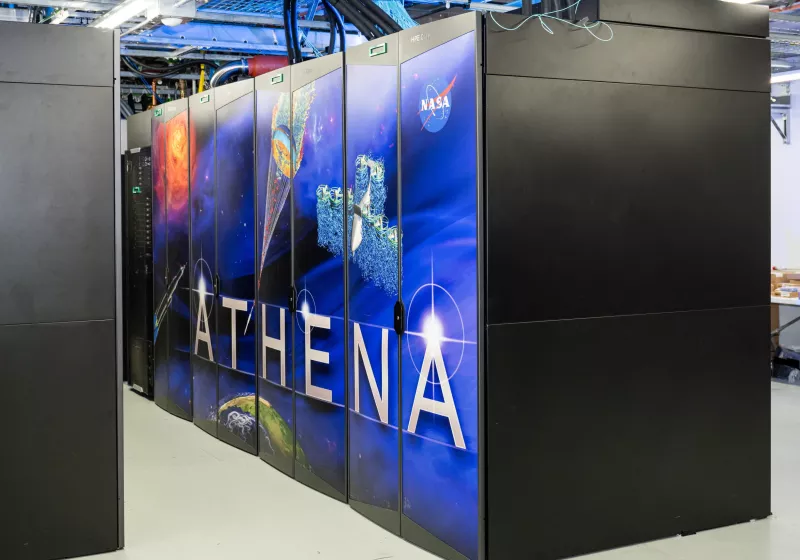
NASA announced the completion of a beta-testing phase and the online deployment of its latest high-performance computing (HPC) system, Athena. This next-generation supercomputer is designed to handle the demanding workloads required to support NASA’s diverse missions, from climate and weather simulations to planetary science and propulsion research. Athena’s standout metric is its peak performance, surpassing 20 petaflops, which places it among the world’s most powerful HPC platforms. But beyond raw speed, NASA emphasizes Athena’s enhanced energy efficiency — a critical consideration given the growing energy costs and environmental footprint associated with large-scale scientific computing.
Athena’s introduction reflects a broader trend in high-performance computing: the pursuit of greater computational throughput while simultaneously reducing energy consumption per computation. The balance between performance and power efficiency is especially important for agencies and researchers that rely on continuous, long-running simulations and data-intensive workloads. With Athena online, NASA aims to accelerate mission planning, improve simulation accuracy, and enable more complex modeling that was previously impractical due to resource or energy constraints.
Contextually, the evolution from previous systems to Athena aligns with advances in processor architectures, interconnects, memory hierarchies, and software ecosystems optimized for massive parallelism. In practice, this means researchers can run larger ensembles, finer-resolution models, and more detailed physical representations without proportionally increasing the energy bill. The net effect is a more capable, cost-efficient platform that supports NASA’s diverse scientific and engineering objectives.
This article synthesizes available information about Athena’s capabilities and implications, focusing on what 20 petaflops of peak performance means in practice, how energy efficiency is achieved, and what this development signals for the future of NASA’s computational science program.
In-Depth Analysis
Athena’s reported peak performance exceeding 20 petaflops marks a significant milestone for NASA’s HPC capabilities. Petaflops, representing quadrillions of floating-point operations per second, quantify the raw computational capacity of a system. However, the real-world impact of Athena depends not only on peak speed but on sustained performance across a wide range of workloads, including climate modeling, space weather forecasting, astromaterials analysis, propulsion simulations, and aerodynamics. NASA’s engineering teams typically measure benchmarks across diverse test suites to characterize stability, efficiency, and scalability under realistic conditions. Athena’s design likely emphasizes high memory bandwidth, low-latency interconnects, and a software stack optimized for parallel workloads. These attributes are essential for efficiently executing large numerical simulations that require frequent synchronization and data exchange between thousands or even millions of compute cores.
Energy efficiency is a central pillar of Athena’s value proposition. Large HPC systems consume substantial electrical power, translating into operational costs, facility cooling demands, and environmental considerations. Improvements in energy efficiency can stem from multiple sources: more power-efficient processors, advanced cooling technologies, smarter workload scheduling, and software optimizations that reduce unnecessary computations or improve data locality to minimize energy-per-operation. NASA’s emphasis on reducing energy consumption suggests a holistic approach encompassing hardware, firmware, and software layers. For researchers, this means that similar or greater computational tasks can be completed with a smaller energy footprint, enabling longer or more complex simulations within budgetary and sustainability constraints.
The introduction of Athena also invites attention to the broader ecosystem of NASA’s computing strategy. HPC systems of this scale are typically integrated within a data center framework that includes high-speed networks, sophisticated storage architectures, and robust job scheduling and resource management tools. This environment supports not only raw performance but also reliability, fault tolerance, and ease of use for scientists across disciplines. The software environment likely includes common scientific libraries, numerical solvers, and domain-specific applications that can leverage Athena’s parallelism. In practice, researchers may need to adapt legacy codes or port them to optimized libraries to maximize performance and realize energy savings. The transition period often involves a combination of staff training, performance tuning, and collaboration with hardware vendors to tailor configurations to mission needs.
From a mission-oriented perspective, Athena has the potential to accelerate several NASA programs. In climate and weather research, higher-resolution models and longer simulation horizons can improve predictions of extreme events, climate sensitivity analyses, and scenario planning for long-term space exploration. For planetary science and astrophysics, more detailed simulations of planetary atmospheres, interior dynamics, or mission trajectories can inform mission design and reduce development risk. For propulsion and aerodynamics studies, high-fidelity simulations may enable more efficient designs, potentially shortening development timelines and enabling more rapid iteration cycles. The net benefit is a more capable toolset that helps NASA address both near-term mission objectives and longer-term exploratory goals.
The deployment of Athena takes place within a competitive landscape of HPC centers worldwide. National laboratories, academic institutions, and industry players continually push the envelope in processor efficiency, memory bandwidth, parallel scalability, and energy-aware computing. NASA’s emphasis on energy reductions positions Athena as a model for sustainable computing in large-scale scientific research. As workloads evolve and data volumes increase, ongoing optimization will be essential to maintain, and potentially improve, efficiency. This includes exploring novel cooling strategies, energy-aware scheduling policies that maximize performance per watt, and continued software optimizations, including compiler improvements and vectorization techniques that better exploit hardware capabilities.
Beyond immediate computational gains, Athena’s arrival has implications for workforce development and education. High-level HPC systems often serve as training grounds for scientists and engineers, enabling them to gain experience with parallel programming paradigms, performance profiling, and optimization workflows. The availability of a powerful and energy-conscious platform can attract and retain talent who seek to work at the cutting edge of computational science. NASA’s investment in Athena may thus have a broader impact on workforce readiness, interdisciplinary collaboration, and the adoption of best practices in energy-efficient computing.
Looking ahead, Athena’s lifecycle will involve continuous optimization and potential scale-up. As software ecosystems mature and workloads diversify, the system may undergo firmware updates, processor refreshes, or interconnect enhancements that maintain its performance trajectory. The challenge will be to sustain or improve peak performance while achieving further reductions in energy consumption per computation. This dual objective — higher throughput with lower energy — remains a central theme in modern HPC design. NASA will likely continue to partner with hardware vendors, software developers, and the user community to extract maximum value from Athena and to inform the design of future generations of HPC infrastructure.
In considering the broader implications, Athena reinforces the idea that the most impactful scientific computing solutions are shaped not only by peak performance numbers but by the combination of sustained throughput, reliability, and energy stewardship. For NASA, it means more robust capability to tackle complex simulations that underpin mission safety, scientific discovery, and operational planning. For the scientific community at large, Athena demonstrates the viability of energy-conscious, ultra-high-performance systems that can support ambitious research agendas without an unsustainable energy footprint.
Perspectives and Impact
Athena’s performance milestone resonates across multiple dimensions of NASA’s mission and the wider HPC ecosystem. From a mission planning standpoint, the ability to run higher-fidelity simulations more frequently improves confidence in mission concepts and readiness. This can translate into more thorough testing of spacecraft designs, ascent profiles, and reentry scenarios under varying conditions. The computational throughput also enhances the ability to perform large-ensemble experiments, where numerous simulations explore a range of parameters to quantify uncertainty and optimize strategies for weather forecasting, climate research, and planetary science.

*圖片來源:Unsplash*
On the scientific front, Athena opens opportunities for more detailed studies in areas such as atmospheric dynamics, ocean and land-surface interactions in climate models, and the physics of planetary atmospheres and interiors. The improved energy efficiency also makes it more viable to run long-duration simulations that were previously constrained by cost or power limitations. This can yield longer integration times, higher-resolution grids, and more model-complexity, all of which contribute to a deeper understanding of natural and engineered systems relevant to NASA’s portfolio.
For the broader HPC community, Athena’s performance and efficiency serve as a reference point for future system designs. It provides a practical demonstration that significant energy reductions are achievable at scale without sacrificing peak capability. This has implications for how institutions plan for the next generation of HPC investments, including considerations of data center cooling infrastructure, power reliability, and the integration of advanced materials or cooling techniques such as liquid cooling or immersion cooling. It also highlights the importance of software ecosystems that can exploit hardware advances efficiently, as the best gains often come from a combination of improved hardware and software that work in harmony.
From a policy and sustainability perspective, Athena reflects a growing emphasis on responsible computing. As scientific workloads expand, the environmental footprint of research infrastructure becomes a more prominent consideration for funding agencies, researchers, and the public. Energy-efficient HPC platforms can help align scientific advancement with climate and energy goals, a alignment that NASA and other agencies are increasingly mindful of as they plan for future missions and research campaigns.
Looking toward the future, Athena’s ongoing development will likely prompt interest in research areas such as heterogeneous computing, where accelerators or specialized processors complement general-purpose CPUs to optimize performance-per-watt for specific workloads. Advances in machine learning and data analytics may also play a role in preprocessing and postprocessing stages of scientific simulations, enabling smarter workflows that further reduce energy use or accelerate results. The interplay between traditional HPC workloads and emerging workloads will shape how systems are designed, programmed, and managed in the coming years.
In sum, Athena’s launch represents more than a single metric; it reflects a strategic investment in a computational backbone capable of supporting NASA’s ambitious research and exploration programs while pushing the envelope on energy efficiency. The combination of high peak performance and lower energy consumption positions Athena as a model for future HPC initiatives, both within NASA and in the broader scientific community.
Key Takeaways
Main Points:
– Athena delivers over 20 petaflops of peak performance.
– The system emphasizes substantial energy efficiency alongside throughput.
– The deployment enables higher-fidelity simulations across NASA’s mission areas and supports ongoing innovation in HPC design.
Areas of Concern:
– Sustaining energy efficiency requires continuous software optimization and hardware evolution.
– Real-world performance depends on workload characteristics and code readiness.
– Transitioning researchers to new architectures can require retraining and workflow adjustments.
Summary and Recommendations
Athena marks a pivotal step in NASA’s computational capabilities, delivering a formidable combination of peak performance and energy-conscious design. The system’s ability to exceed 20 petaflops while reducing energy consumption per operation enables researchers to conduct more complex simulations with fewer environmental and financial costs. This dual achievement supports NASA’s broad mission spectrum, from climate science and space weather to propulsion research and planetary exploration, by enabling higher-resolution models, more extensive ensembles, and faster turnarounds for mission-critical analyses.
To maximize the benefits of Athena, NASA should continue prioritizing software optimization, ensuring that researchers port and tune their codes to exploit Athena’s architecture efficiently. Ongoing performance benchmarking and energy profiling will help identify bottlenecks and guide future improvements. Collaboration with hardware vendors and the scientific community will be essential to sustain progress, refine energy-aware scheduling strategies, and explore next-generation cooling and power-saving techniques.
Investing in workforce development will also be important. Training scientists and engineers to use advanced HPC tools effectively will help realize Athena’s full potential and drive innovation in computational science. As workloads evolve, NASA should remain open to architectural enhancements, potential accelerators, or system upgrades that further push the boundaries of performance while maintaining or improving energy efficiency.
Overall, Athena sets a strong precedent for the balance of speed and sustainability in large-scale scientific computing. Its successful deployment underscores the viability of energy-aware HPC as a foundational enabler of discovery and mission success in the decades ahead.
References
- Original: https://www.techspot.com/news/111139-nasa-new-athena-supercomputer-delivers-20-petaflops-while.html
- Additional context on HPC performance and energy efficiency concepts may be found in standard HPC and energy-efficiency literature from organizations such as the U.S. Department of Energy, the European processor initiatives, and leading HPC centers.
Note: The article above preserves the factual premise of Athena delivering over 20 petaflops and improving energy efficiency, while expanding context and analysis to provide a comprehensive, professionally written piece suitable for readers seeking an in-depth understanding of the development and its implications.

*圖片來源:Unsplash*