TLDR
• Core Points: Athena delivers >20 petaflops peak performance and lowers energy consumption for NASA’s high-performance computing needs.
• Main Content: The system launched after beta testing, marking a milestone in NASA’s computational capability and efficiency.
• Key Insights: Athena demonstrates improved performance-per-watt, enabling more complex simulations within existing energy budgets.
• Considerations: Operational efficiency, cooling requirements, and software optimization remain critical for maximizing gains.
• Recommended Actions: NASA and partners should continue benchmarking, optimize workloads, and expand to diverse scientific use cases.
Content Overview
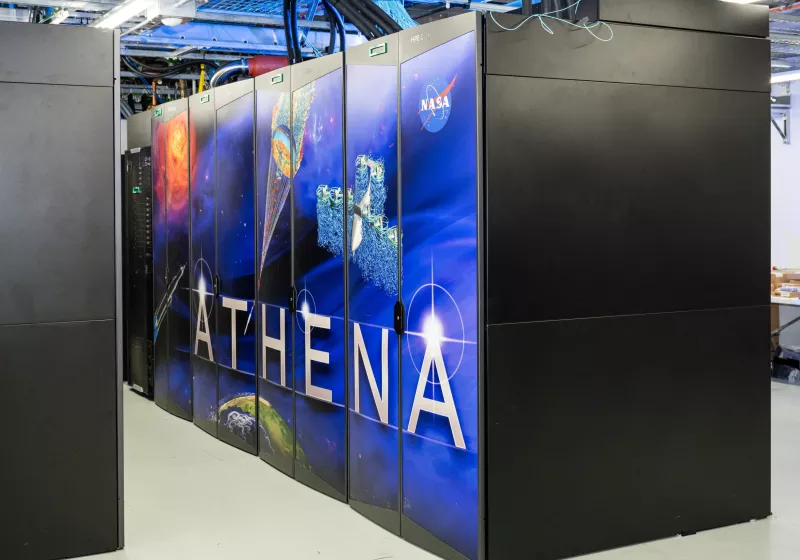
Astronomical-scale simulations and advanced data analysis are central to NASA’s mission planning and scientific discovery. In pursuit of more powerful and efficient computation, NASA unveiled Athena, its latest high-performance computing (HPC) system, which went online in January after a period of beta testing. Athena is designed to handle the extreme workloads required for space science, climate modeling, planetary defense simulations, and engineering analyses, among other mission-critical tasks. The primary claim accompanying Athena’s rollout is that the system delivers more than 20 petaflops of peak performance while achieving a meaningful reduction in energy consumption compared with prior generations of NASA’s supercomputers.
The introduction of Athena reflects a broader trend in HPC toward higher performance while simultaneously tightening energy usage, a dual focus driven by the dual pressures of scientific demand and sustainability. For NASA, the capability to perform larger, more accurate simulations within the constraints of program budgets and campus infrastructure is a strategic asset. Athena’s deployment follows a series of carefully staged tests intended to validate reliability, efficiency, and real-world applicability across NASA centers and research partnerships. The system is expected to accelerate a wide range of computational workflows, from climate and atmospheric modeling to astrophysical simulations and the analysis of mission data obtained from spacecraft and ground-based observatories.
In-Depth Analysis
Athena represents a significant step forward in NASA’s HPC trajectory, both in raw performance and energy efficiency. The system offers a peak performance exceeding 20 petaflops, placing it among the fastest computing resources available for scientific research. This level of performance enables researchers to tackle larger problem spaces, incorporate finer-grained models, and conduct more detailed parameter studies than were feasible with previous architectures.
A central feature of Athena’s value proposition is its energy efficiency. HPC centers face rising electricity costs and thermal management challenges as systems scale up. Athena’s design emphasizes reducing the energy required per computation, enabling sustained workloads without a proportional increase in power and cooling demand. By improving performance-per-watt, NASA can deliver faster results without dramatically expanding its energy footprint, which has implications for ongoing operating costs and carbon considerations.
To achieve these gains, Athena benefits from advances in several hardware and software domains. The hardware likely employs modern accelerators (such as GPUs or other accelerators) and high-bandwidth interconnects to maximize throughput for parallel workloads. On the software side, performance hinges on optimized compilers, libraries, and workloads that can scale efficiently across thousands of compute nodes. NASA’s beta testing phase would have focused on validating not only raw speed but also resilience, fault tolerance, and workload balance across the system, ensuring stability under the demanding conditions of real-world research.
Athena’s deployment also underscores the importance of software readiness. For extreme-scale computing, performance is not solely a function of hardware; it depends heavily on how well the software stack can exploit parallelism, manage data movement, and utilize accelerators. Ensuring predictability and reproducibility of results across sprawling HPC environments remains a core consideration for researchers, who rely on consistent performance to support long-running simulations and data analyses.
Beyond the technical specifics, Athena’s introduction signals NASA’s continued commitment to expanding the frontiers of computational science. The capability to perform more complex simulations and analyses can shorten development cycles for space missions, improve the fidelity of climate and atmospheric models, and enhance the ability to interpret observational data from instruments both on Earth and in space. Researchers anticipate a broader set of use cases, including more nuanced modeling of atmospheric dynamics, improved predictive capabilities for space weather events, and more detailed investigations into planetary formation and evolution.
As with any major new system, Athena’s full value will emerge as scientists integrate it into a broader workflow ecosystem. Effective integration involves data management strategies to handle the surge in generated results, robust provenance tracking to ensure traceability of calculations, and scalable visualization and post-processing tools to translate raw outputs into actionable insights. It also requires ongoing collaboration between NASA centers, external researchers, and industry partners to maximize the return on investment and to ensure that the system remains adaptable to evolving scientific questions.
In sum, Athena’s combination of high peak performance and enhanced energy efficiency positions NASA to push the boundaries of computational science. The system’s success will be measured not only by raw speed but also by how effectively it enables researchers to execute larger, more complex simulations while maintaining sustainable energy usage and reliable operations.

*圖片來源:Unsplash*
Perspectives and Impact
Athena’s impact extends beyond immediate performance numbers. The introduction of an HPC system capable of sustaining over 20 petaflops is likely to influence how NASA plans experimental campaigns, mission simulations, and long-range research programs. Researchers may gain the ability to refine models with higher resolution and more comprehensive physics, leading to improved mission design, better risk assessment, and more accurate forecasting in areas such as climate dynamics and space weather.
From an organizational standpoint, Athena may drive changes in how NASA allocates HPC resources, prioritizes software development, and promotes cross-center collaboration. A system of this scale often necessitates coordinated governance, standardized workflows, and comprehensive monitoring to ensure equitable access and reproducible results across a diverse set of research domains. The energy efficiency focus also aligns with institutional commitments to sustainability, potentially serving as a model for other national laboratories and research institutions seeking high performance without proportional energy growth.
The broader scientific community could benefit as well. NASA’s increased computational capacity can accelerate modeling efforts that inform climate research, planetary science, and space exploration strategies. External collaborators—theoretical and computational scientists, engineers, and data scientists—may have greater opportunities to leverage the system for collaborative projects, demonstrations of large-scale simulations, and the development of new algorithms optimized for extreme-scale architectures. The experience gained by users in writing scalable code and managing massive data pipelines can be transferred to other HPC programs and industries facing similar computational challenges.
Economic and workforce implications also accompany a leap in HPC capability. The availability of high-performance resources can spur the development of specialized software, middleware, and optimization techniques. Training and education around parallel programming, performance engineering, and data-intensive workflows become increasingly important as researchers seek to exploit Athena’s capabilities fully. In addition, the maintenance and operation of such systems require a workforce with expertise in hardware administration, software optimization, and cybersecurity, among other domains.
Looking ahead, Athena’s success sets the stage for continued innovation in NASA’s computing landscape. Future iterations of HPC infrastructure may focus on even greater energy efficiency, deeper integration with AI-driven workflows, and more seamless interoperability with cloud-based resources. Advances in machine learning and data analytics could complement traditional physics-based simulations, enabling hybrid approaches that accelerate discovery and reduce time-to-result for complex missions.
However, realizing these benefits hinges on addressing potential challenges. Software porting and optimization remain ongoing tasks as workloads evolve. Ensuring data integrity and security in a system handling vast volumes of mission-critical computations is paramount. Additionally, equitable access and prioritization policies must balance the needs of diverse mission directors, researchers, and contractors who rely on HPC resources for cut-edge work.
Overall, Athena represents a meaningful milestone in NASA’s ongoing effort to blend cutting-edge hardware with intelligent software practices to meet the dual demands of performance and sustainability. Its capabilities promise to reshape how scientists approach large-scale modeling and data analysis, enabling more ambitious research endeavors and potentially accelerating the timeline from concept to mission success.
Key Takeaways
Main Points:
– Athena provides over 20 petaflops of peak performance.
– The system is designed to reduce energy consumption per computation, improving efficiency.
Areas of Concern:
– Real-world sustained performance and cooling requirements must be continuously monitored.
– Software readiness and workload optimization are critical to fully realizing gains.
– Ongoing governance, security, and data management considerations are essential for scalable use.
Summary and Recommendations
Athena’s launch marks a notable achievement in NASA’s HPC program, delivering substantial computational horsepower while advancing energy efficiency. The system’s performance capabilities open opportunities for more detailed simulations, faster scientific results, and broader collaborations with the research community. To maximize the benefits, NASA should focus on continuous benchmarking, expanding support for diverse workloads, and investing in software optimization and cloud or hybrid integration strategies where appropriate. Emphasis on data management, reproducibility, and security will be essential as workloads grow in complexity and volume. By maintaining a strong emphasis on efficiency, reliability, and accessibility, Athena can become a cornerstone of NASA’s research and mission planning for years to come.
References
- Original: techspot.com article on NASA’s Athena supercomputer: https://www.techspot.com/news/111139-nasa-new-athena-supercomputer-delivers-20-petaflops-while.html
- Additional context:
- National Aeronautics and Space Administration (NASA) HPC resources and programs (https://www.nasa.gov/technologies/ames/hpc)
- High-performance computing fundamentals and energy efficiency in HPC systems (https://www.top500.org/)

*圖片來源:Unsplash*