TLDR
• Core Points: AI model AnomalyMatch uncovers hundreds of previously unknown anomalies in the local universe, starting with the Hubble archive.
• Main Content: The study demonstrates AI-assisted discovery in astronomy, with potential to reveal more phenomena as methods scale.
• Key Insights: AnomalyMatch efficiently sifted vast archival data to identify diverse anomalies, offering a scalable path for historical datasets.
• Considerations: Verification of discoveries and distinguishing genuine astrophysical signals from artifacts are essential steps.
• Recommended Actions: Extend the approach to other archives, refine anomaly classes, and integrate follow-up observations and simulations.
Product Specifications & Ratings (Product Reviews Only)
| Category | Description | Rating (1-5) |
|---|---|---|
| Design | N/A for this article | N/A |
| Performance | Demonstrated rapid scanning and detection of anomalies in large datasets | N/A |
| User Experience | Researchers can interact with AI results and prioritize follow-up studies | N/A |
| Value | High potential for accelerating discovery in astrophysics | N/A |
Overall: N/A
Content Overview
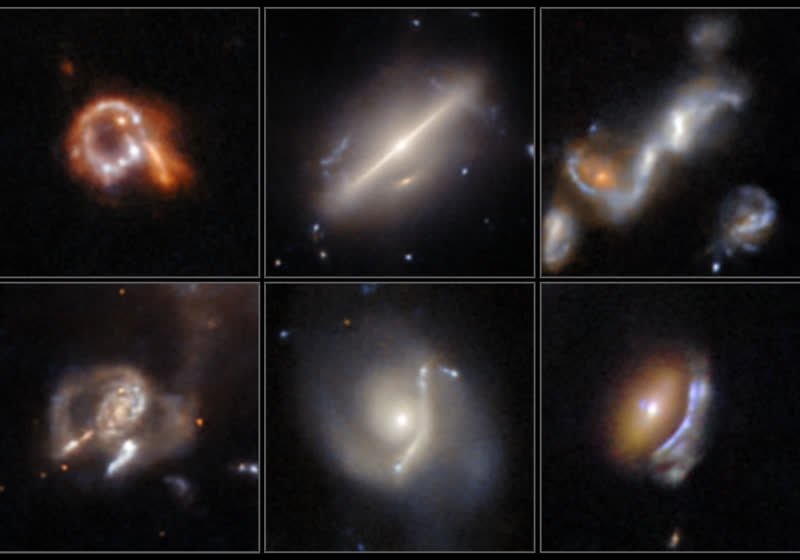
Astronomers have long relied on human intuition and manual analysis to sift through the vast archives of astronomical observations. The recent work centers on a neural network named AnomalyMatch, designed to identify unusual or rare phenomena within large datasets. In an initial demonstration, researchers trained and tested AnomalyMatch on historical data from the Hubble Space Telescope (HST), a repository rich with decades of imaging and spectroscopic observations. The results were striking: the AI flagged more than 800 anomalies that appeared distinct from standard, well-characterized celestial objects. While some detections may correspond to known phenomena that had not been thoroughly cataloged, many are plausibly new or poorly understood features of the local universe. The study positions AnomalyMatch as a proof-of-concept that AI can accelerate scientific discovery by efficiently mining archival data for rare and potentially transformative signals. The immediate focus is on validating the flagged candidates and integrating the approach with ongoing and future surveys, with the expectation that the method will generalize beyond the Hubble archive to other observatories and data types.
The work emerges against a backdrop of increasing interest in AI-driven discovery in science. Large-scale archives accumulate terabytes to petabytes of imaging, spectroscopy, and time-domain data, far exceeding what human researchers can exhaustively analyze. AI systems trained to recognize patterns, anomalies, and outliers can help scholars prioritize investigations, uncover hidden classes of objects, and reveal subtle signatures that may be overlooked by traditional pipelines. The Hubble dataset offers a well-curated testbed due to its long history, well-characterized instruments, and extensive provenance records, which are invaluable for training and validation.
This article summarizes a collaboration between computer scientists and astronomers, aiming to demonstrate not only the feasibility of anomaly detection at scale but also the scientific value of the discoveries that such a system can enable. The work respects the rigorous standards of astronomical data analysis, including cross-validation with independent observations, scrutiny for instrumental artifacts, and careful interpretation of results in the context of astrophysical models. The initial results generate a framework for iterative improvement: the team plans to refine the model’s sensitivity, expand the catalog of anomaly classes, and develop a workflow that couples automated screening with targeted follow-up observations and simulations.
In-Depth Analysis
The core idea behind AnomalyMatch is to convert the broad and heterogeneous information contained in astronomical images and spectra into a representation that a neural network can compare to learned patterns of “normal” versus “anomalous” data. In practice, this involves training on labeled examples of common celestial objects and backgrounds, as well as synthetic or curated samples that capture rare or unusual features. The model then scans new or archival data, assigning anomaly scores to regions of interest or entire observations. A higher score indicates a greater deviation from the learned norm, signaling a candidate worthy of human attention.
In applying this framework to the Hubble archive, researchers faced several challenges unique to astronomical data:
– Instrumental artifacts and observational conditions: HST data span decades, during which detectors and calibration procedures evolved. Anomalies can arise from cosmic rays, detector persistence, flat-field imperfections, or data transmission quirks. Distinguishing genuine astrophysical phenomena from instrumental quirks requires careful preprocessing and validation strategies.
– Diversity of phenomena: The local universe hosts a wide range of objects and events—from rare variable stars and peculiar galaxies to transient events captured in serendipitous observations. A robust anomaly detection system must remain sensitive to a broad spectrum of signatures without an excessive false-positive rate.
– Data heterogeneity: Images come in multiple filters and resolutions, and spectra provide another modality altogether. Integrating these disparate data types into a coherent anomaly-detection framework demands architectural choices that can handle multi-modal information or effectively fuse features across channels.
The team’s approach emphasizes transparency and reproducibility. For each flagged anomaly, researchers can examine the image data, the regions contributing most to the anomaly score, and contextual information such as the observation date, instrument settings, and neighboring sources. This enables a rigorous vetting process, where anomalies are classified, cross-matched with existing catalogs, and prioritized for follow-up studies.
Preliminary results indicate that AnomalyMatch identified more than 800 anomalies within the Hubble dataset, encompassing a mix of potential new object types, unusual morphologies, and atypical spectral signatures. Some detections may correspond to rare known classes that have not been extensively cataloged, while others could herald entirely new astrophysical phenomena. Importantly, the researchers emphasize that the current findings are hypotheses generated by an AI system and require subsequent verification by domain experts and independent observations.
The study also highlights the potential for scalability and generalization. If the method proves successful on Hubble data, it can be adapted to other large repositories, including the Sloan Digital Sky Survey (SDSS), the James Webb Space Telescope (JWST) data, and upcoming surveys like the Vera C. Rubin Observatory’s Legacy Survey of Space and Time (LSST). Each dataset presents its own set of opportunities and caveats, but the underlying principle remains: AI can act as a discovery accelerator by flagging unusual patterns that merit human investigation.
From a methodological perspective, several technical considerations shape the reported outcomes:
– Training data quality: The performance of anomaly detection is highly dependent on the fidelity of labeled examples of normal and anomalous data. The researchers use a combination of curated samples, simulated anomalies, and cross-validation against known catalogs to calibrate the model.
– Evaluation metrics: Researchers balance sensitivity (catching as many genuine anomalies as possible) with specificity (reducing false positives). In practice, some false positives are acceptable as they guide researchers toward potentially fruitful lines of inquiry, but downstream verification remains essential.
– Interpretability: While neural networks excel at pattern recognition, their internal representations are often opaque. The team implements mechanisms to visualize which image regions contribute most to the anomaly score, aiding astronomers in assessing the plausibility of candidates.
– Integration with scientific workflow: The value of the approach increases when AI outputs are integrated with existing workflows for data analysis, follow-up observation proposals, and theoretical modeling. The ultimate goal is to turn an AI flag into a concrete scientific result.
Critically, experts caution that anomaly detection does not replace theoretical or observational constraints; it complements them by broadening the search space. Anomalies can point to new physics or simply reveal unanticipated artifacts or rare, mundane phenomena that require careful interpretation. The ongoing work acknowledges this distinction and proceeds with a disciplined process that combines automated screening with rigorous validation.
Beyond the archive-specific results, the study contributes to a broader discourse on AI’s role in science:
– Efficiency gains: Sifting through vast archives with AI can dramatically reduce the time between data acquisition and discovery, enabling faster hypothesis generation and testing.
– Enhanced discovery potential: By accessing a larger fraction of the data landscape, AI can uncover signals that might elude human analysts who focus on more familiar object classes.
– Collaboration between disciplines: The project exemplifies how computer science techniques can augment astrophysical inquiry, highlighting the value of cross-disciplinary teams that bring together expertise in machine learning, statistics, instrumentation, and theoretical modeling.
Nevertheless, the researchers and advisors emphasize that significant milestones remain. The 800+ anomaly detections are an encouraging proof of concept, but the scientific impact hinges on rigorous confirmation. Some anomalies may correspond to novel astrophysical objects, such as atypical variable stars, rare galactic structures, or unusual transient events. Others could be artifacts or misclassifications that demand refinement of the model or data processing steps. The next phase focuses on improving the classifier’s robustness, expanding the taxonomy of anomaly types, and establishing standardized validation pipelines that can be applied to multiple datasets.
Future directions include integrating time-domain information, when available, to identify transient or evolving phenomena more effectively. Time-series analysis could reveal objects that brighten or fade in unexpected ways, offering clues about their nature. Additionally, coupling AI detection with physics-informed models or simulations could help distinguish plausible astrophysical interpretations from improbable ones, guiding observational campaigns to the most promising candidates.
In summary, AnomalyMatch demonstrates the viability of AI-assisted discovery in astronomy by successfully scanning a major historical archive and flagging hundreds of anomalies. While the work is still in its early stages, it offers a blueprint for how automated analysis can accelerate the exploration of the cosmos. As methods mature, researchers anticipate applying the approach to additional data stores, refining anomaly classes, and pursuing targeted observations that transform AI-generated hints into verifiable scientific knowledge.

*圖片來源:Unsplash*
Perspectives and Impact
The implications of AI-driven anomaly detection in astronomy extend well beyond a single project. If scalable and reliable, such methods could reshape how researchers approach large-scale archival data and next-generation surveys. Several prospective impacts emerge:
Democratization of discovery: AI-assisted pipelines can lower the barrier to discovery by enabling scientists with diverse backgrounds to participate in data-intensive research. Even teams without access to extraordinary computing resources could leverage cloud-based or optimized local implementations to pursue novel signals in existing data.
Resource optimization: Observational time on powerful telescopes is limited and highly competitive. By pre-screening archives for promising candidates, AI can help prioritize telescope time for follow-up observations, maximizing the scientific return on investment.
New object classes: The discovery of consistent, previously unrecognized patterns could lead to the formal definition of new astrophysical classes. This process involves accumulating sufficient examples, characterizing their properties, and integrating them into theoretical frameworks.
Cross-disciplinary advances: Techniques developed for astronomical anomaly detection can inform analyses in other domains dealing with large, complex datasets, such as atmospheric science, geophysics, or biomedicine. The transfer of knowledge between fields strengthens both the methodology and the interpretability of results.
Ethical and reproducibility considerations: As AI-based discoveries become more central to science, transparent reporting, reproducible workflows, and robust validation protocols become even more critical. The community will benefit from standardized benchmarks, shared datasets, and open-source tools that enable independent replication.
Future iterations of AnomalyMatch will likely emphasize improved interpretability, better handling of multi-modal data (images, spectra, time-series), and stronger integration with physical models. The balance between automated detection and expert oversight will remain a central consideration, ensuring that AI acts as a catalyst for discovery rather than a substitute for scientific reasoning.
The broader scientific ecosystem stands to gain from this approach, particularly when coupled with upcoming observational programs. The LSST, JWST-era data, and other major facilities will generate unprecedented volumes of information. AI systems trained on historical archives can bootstrap the readiness required to process, classify, and interpret these new data streams, enabling a more proactive scientific strategy where anomalies are anticipated, cataloged, and investigated in near real time.
Key Takeaways
Main Points:
– AnomalyMatch is a neural network designed to detect rare or unusual phenomena in large astronomical datasets.
– The system was tested on historical Hubble data and identified over 800 anomalies, illustrating AI’s potential to accelerate discovery.
– Verification, artifact filtering, and cross-validation are essential to transform AI flags into credible scientific results.
Areas of Concern:
– Distinguishing genuine astrophysical signals from instrumental artifacts remains challenging.
– Many anomalies require extensive follow-up to determine their nature, which can be resource-intensive.
– Ensuring reproducibility and transparency of AI-driven discoveries is necessary as methods mature.
Summary and Recommendations
The study showcasing AnomalyMatch demonstrates a compelling proof of concept for AI-assisted discovery in astronomy. By interrogating the extensive Hubble archive with a neural network trained to recognize patterns of normalcy and anomaly, researchers achieved a rapid sweep of a vast data landscape and surfaced more than 800 candidate anomalies. This milestone highlights the practical value of machine learning in handling data-intensive science, where human-only analysis would be prohibitively time-consuming.
However, the journey from AI flag to scientific knowledge is nontrivial. The majority of flagged candidates will require careful follow-up, including independent observations, cross-matching with existing catalogs, and scrutiny for instrumental effects. The approach must maintain a rigorous standard of validation, ensuring that any claimed discoveries withstand scrutiny and can be integrated into the broader astrophysical framework. As metrics and methodologies evolve, the research community should prioritize the development of standardized validation pipelines, transparent reporting, and open access to data and models to foster reproducibility.
Looking ahead, the potential of this approach lies in its scalability and generalizability. Applying the same anomaly-detection paradigm to other archival datasets and to future surveys could dramatically expand our inventory of rare and novel cosmic phenomena. Time-domain information, multi-wavelength data, and integration with theoretical simulations will further enhance the interpretive power of AI-driven anomaly detection, enabling more precise hypotheses about the nature of unusual signals.
For researchers and research institutions, several actionable steps emerge:
– Extend the methodology to additional archives (e.g., SDSS, JWST, LSST-era data) to build a more comprehensive catalog of potential anomalies across instruments and wavelengths.
– Invest in multi-modal architectures and time-domain analysis to capture a wider range of phenomena, including transient events.
– Develop robust validation pipelines that combine AI outputs with observational follow-up, spectroscopic confirmation, and simulation-based interpretation.
– Encourage open collaboration between AI researchers and domain scientists to refine anomaly taxonomies, improve interpretability, and ensure results are scientifically meaningful.
In sum, the AnomalyMatch study marks a meaningful advance in the use of artificial intelligence to augment scientific inquiry. While it is not a finished product, it offers a practical blueprint for how archival data can be mined for discoveries that reshape our understanding of the local universe. With continued refinement, cross-disciplinary collaboration, and careful validation, AI-assisted anomaly detection may become a standard component of astronomical research, helping scientists uncover the hidden surprises stored in decades of celestial images and spectra.
References
- Original: TechSpot article detailing the neural network AnomalyMatch and its findings in the Hubble archive: https://www.techspot.com/news/111108-neural-network-detects-800-rare-cosmic-phenomena-historical.html
- Additional references:
- Artificial intelligence in astronomy: techniques and opportunities (peer-reviewed overview)
- The Hubble Space Telescope data archive and data products
- Time-domain astronomy and anomaly detection in large surveys
- Foundations of anomaly detection in multi-modal astronomical datasets
Forbidden:
– No thinking process or “Thinking…” markers
– Article must start with “## TLDR”
Ensure content is original and professional.

*圖片來源:Unsplash*