TLDR
• Core Points: CES 2026 showcased AMD, Intel, and Qualcomm’s latest SoCs and bold client systems from major OEMs, signaling accelerated PC innovation.
• Main Content: The show highlighted next-generation chips and diverse system designs, from performance laptops to compact desktops and cutting-edge prototypes.
• Key Insights: A tight coupling between high-performance CPUs/GPUs and innovative form factors points to broader AI and efficiency aims.
• Considerations: Supply chain, power efficiency, and software optimization will shape real-world performance and adoption.
• Recommended Actions: Stakeholders should align product roadmaps with AI workloads, invest in software optimization, and monitor silicon-vendor partnerships for timely launches.
Content Overview
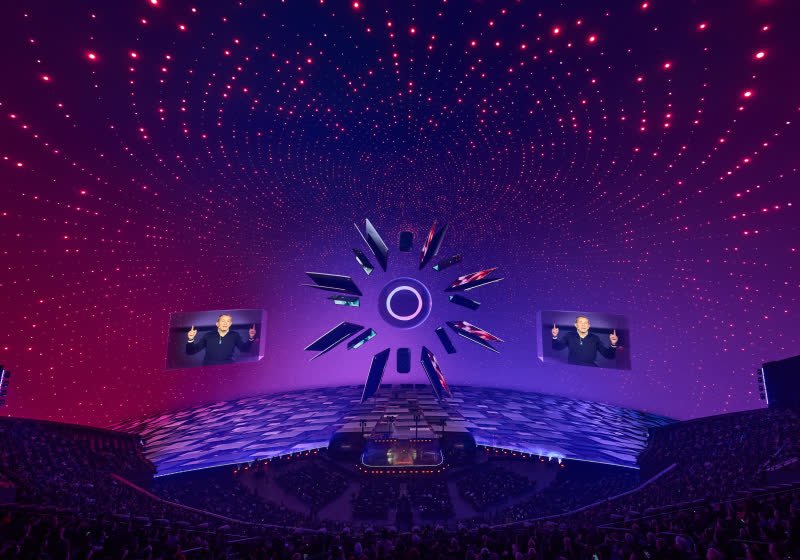
CES 2026 once again positioned itself as the premier stage for the PC industry to reveal its future. This year’s keynote and exhibit floor underscored the ongoing race among the three dominant silicon vendors—AMD, Intel, and Qualcomm—to push the envelope with the latest generation of system-on-chip (SoC) designs. These announcements come alongside a lineup of flagship systems from top OEMs including Asus, Dell, HP, Lenovo, and Samsung, each eager to demonstrate how these new chips translate into tangible benefits for gamers, creators, professionals, and everyday users.
The overarching narrative at CES 2026 was one of acceleration and integration. Vendors not only introduced more powerful processors and integrated GPUs but also emphasized energy efficiency, AI-accelerated workloads, and advanced wireless capabilities. The result is a broad ecosystem of devices that promise to deliver faster performance, longer battery life, and smarter user experiences across a spectrum of form factors—from sleek ultrabooks and versatile 2-in-1s to high-performance mobile workstations and compact desktops. This article summarizes the major announcements, the implications for the industry, and what consumers and enterprises can expect in the near term.
In-Depth Analysis
The 2026 CES showcased a continuing evolution in PC architecture, with AMD, Intel, and Qualcomm each unveiling their latest generation SoCs designed to balance performance, efficiency, and AI-ready capabilities.
AMD: The company’s latest Ryzen processor family and accompanying RDNA graphics technologies continue to push high-core-count performance into portable form factors. AMD’s messaging at CES emphasized multi-threading prowess for content creation and software development, as well as strong integrated graphics performance for mainstream gaming. The company also highlighted advances in cache design and memory bandwidth, paired with refined power management that helps extend battery life in demanding workloads. In practical terms, this translates into laptops and compact desktops with compelling performance-per-watt metrics, appealing to creators and professionals who require robust compute power without sacrificing portability.
Intel: Intel’s new generation SoCs focus on a balance of raw CPU performance, integrated graphics improvements, and AI acceleration features. The company underscored process technology improvements and architectural refinements that deliver higher IPC (instructions per cycle) and improved telemetry for power and thermal management. For OEMs, this means ships-ready platforms with better performance envelopes for heavy multitasking, data analytics, and creative workloads, all while maintaining improved energy efficiency. The demonstrations at CES emphasized intelligent assistants, machine learning optimizations, and on-device inferencing that can reduce cloud dependency in certain scenarios.
Qualcomm: Qualcomm’s latest Always-Connected PCs (ACPCs) and Snapdragon-branded chips continued to blur the line between smartphones and PCs. The emphasis remains on efficiency, connectivity, and cellular capabilities, enabling devices that stay online longer and support always-on productivity. The silicon strategy also embraced AI acceleration and on-device processing for smart features, with a focus on premium laptops and detachable devices that benefit from long battery life and fast wake times.
On the device side, major OEMs presented a spectrum of new systems designed to showcase the power of these chips:
Asus: Demonstrations centered on portable systems that pair high-performance CPUs with light, compact chassis. The company showcased models aimed at creators who need strong rendering, video editing, and 3D workloads on the go, while maintaining all-day battery life and fan acoustics suitable for quiet operation.
Dell and HP: Both brands presented premium business and consumer notebooks featuring the latest SoCs, with a strong emphasis on security, manageability, and enterprise-grade reliability. The devices highlighted robust display options, enterprise software integration, and advanced I/O configurations to support professionals who rely on mobile productivity, collaboration, and on-site work.
Lenovo: Lenovo’s CES lineup leaned into flexible form factors and convertible designs designed to appeal to students and professionals who value versatility. The devices demonstrated strong chassis engineering, efficient cooling, and long battery life, supporting productivity and content creation tasks across a range of environments.
Samsung: Samsung’s booth showcased devices that emphasize connectivity, display technology, and integrated ecosystems. With the new chips, Samsung demonstrated machines capable of premium visuals, rapid responsiveness, and seamless collaboration across devices in its ecosystem.
Beyond the chips and devices themselves, the show highlighted several trends shaping the PC landscape:
AI and on-device intelligence: Across all vendors, AI acceleration was a central theme. On-device inference, smart optimization, and better AI tooling integrated into operating systems and applications aim to deliver more responsive and context-aware experiences without always depending on cloud connectivity.
Energy efficiency and thermals: As chips become more capable, the industry is also focusing on keeping thermals manageable and improving battery life. This includes improvements in power management, dynamic tuning of performance states, and refined cooling solutions in portable devices.
Connectivity and 5G/Next-gen wireless: The latest designs prioritized robust wireless capabilities, including faster Wi-Fi, sub-6 and mmWave 5G options, and better integration with cloud services and collaboration tools. This ensures devices remain productive in varied environments, whether on the road, in classrooms, or in conference centers.
Prototyping and bold designs: CES continues to be a stage for experimental and prototype devices that push the boundaries of where PC hardware can go. These prototypes often forecast future directions, even if they don’t yet represent mass-market products.
The convergence of these trends signals a market that remains highly competitive and innovation-driven. The push toward higher core counts, more capable integrated GPUs, and smarter AI tooling coexists with demands for smaller, lighter devices and devices capable of lasting a full day on battery. OEMs are responding by crafting devices that are not only faster but also more capable in real-world usage—handling complex workloads, creative tasks, and office productivity with equal aplomb.
At a macro level, this CES edition underscored the industry’s maturity in delivering platform-level improvements that impact the entire ecosystem: software developers, device manufacturers, component suppliers, and end-users all stand to benefit from a more capable and efficient silicon stack. While the exact product specs and launch timelines will unfold in the coming months, the signals are clear: expect more capable portable machines, more intelligent software experiences, and a broader spectrum of devices designed to meet increasingly specialized use cases.
Perspectives and Impact
The CES 2026 cycle reinforces a broader industry shift: the PC is no longer a single-purpose tool but a modular platform capable of adapting to a wide range of tasks, from traditional productivity to advanced content creation and AI-enabled workflows. This shift is driven by several intersecting forces:

*圖片來源:Unsplash*
AI-forward design ethos: With AI workloads becoming commonplace, chips now integrate more specialized accelerators and features designed to support real-time inference, model training, and efficient data processing local to the device. The practical impact is a more responsive user experience, faster content creation, and improved productivity for professionals who rely on intelligent software tools.
Form-factor diversification: The show’s devices demonstrated that high performance no longer requires a desktop-sized chassis. Laptops and convertibles now offer sustained performance while remaining portable, thanks to architectural efficiency improvements and smarter thermal management. This diversification enables users to select devices that align with their specific use cases—whether they require mobility, screen real estate, or rugged reliability.
Enterprise-readiness and security: The emphasis on security, manageability, and reliability reflects ongoing enterprise adoption of advanced mobile computing. Organizations are increasingly evaluating devices not just on raw performance, but also on how well they integrate with corporate IT ecosystems, secure boot processes, advanced encryption, and remote management capabilities.
Ecosystem and interoperability: A consistent thread across announcements is the emphasis on interoperability, with silicon vendors, device manufacturers, and software developers aligning to deliver cohesive experiences. This includes optimized drivers, better software support for AI acceleration, and smoother updates that maximize the benefits of new hardware.
In terms of long-term impact, these developments could influence several domains:
Creative industries: Professionals in video, graphics, and 3D design stand to gain from sustained high-performance mobile workstations. The combination of powerful CPUs, capable GPUs, and AI-assisted tools can shorten render times, accelerate workflows, and enable on-site editing and production.
Education and remote work: Lighter devices with extended battery life and advanced connectivity can transform classrooms and remote work setups by enabling longer sessions and more reliable collaboration.
AI-enabled software ecosystems: As devices gain more on-device intelligence, software developers may shift to create more AI-powered features that do not rely heavily on cloud resources, enhancing privacy and reducing latency for certain tasks.
Market dynamics: The competition among AMD, Intel, and Qualcomm will likely drive accelerated innovation and more aggressive pricing or packaging strategies, benefiting consumers with greater performance options and more diverse device offerings.
However, several considerations remain critical as these innovations move from show floor concepts to real-world products:
Availability and supply chain: Global chip supply dynamics will influence how quickly new devices reach consumers and businesses. Lead times, component shortages, and logistics will shape initial adoption cycles.
Real-world performance vs. marketing: While CES showcases impressive specifications, real-world performance depends on software optimization, thermal design, and system integration. Buyers should look for independent reviews focusing on sustained performance, thermals, and battery life.
Software optimization: The benefits of AI accelerators and new architectures require software support. Adoption will hinge on developers updating applications to leverage new hardware features efficiently.
Longevity and upgradeability: Consumers and IT departments will weigh the balance between cutting-edge hardware and future-proofing through scalable architectures, memory and storage options, and upgrade paths.
Key Takeaways
Main Points:
– CES 2026 highlighted the ongoing race among AMD, Intel, and Qualcomm to deliver the next generation of SoCs with AI-ready capabilities.
– OEMs showcased a broad spectrum of devices designed to demonstrate the practical benefits of these processors across form factors.
– AI acceleration, energy efficiency, and connectivity were central themes shaping product strategies and consumer expectations.
Areas of Concern:
– The gap between prototype demonstrations and mass-market availability may affect early adoption.
– Real-world performance will depend on software optimization and thermal design as much as silicon capabilities.
– Supply chain and component availability could influence launch timelines and pricing.
Summary and Recommendations
CES 2026 underscored a pivotal moment for personal computing, where silicon innovation, device design, and AI-enabled software converge to redefine what is possible on portable and desktop platforms. The momentum from AMD, Intel, and Qualcomm’s latest generations signals that the market will continue to push for higher performance per watt, smarter on-device AI, and better overall user experiences without sacrificing mobility or energy efficiency.
For consumers, the takeaway is to watch for devices that align well with intended use cases—creators may prioritize CPU/GPU performance and display quality, professionals may seek security and reliability features, and casual users may value battery life and seamless connectivity. For developers and enterprises, the emphasis remains on software optimization, secure and manageable devices, and the ability to leverage AI accelerators effectively within workflows.
Looking forward, the PC landscape is likely to see more integrated, AI-aware platforms that enable richer experiences across education, business, and entertainment. As silicon vendors and OEMs finalize product roadmaps, stakeholders should prepare for a cadence of launches that offer meaningful improvements in performance, efficiency, and intelligent features, while staying mindful of practical deployment considerations and the realities of supply chains.
References
- Original: https://www.techspot.com/news/110994-new-chips-new-designs-bold-prototypes-defined-pcs.html
- Additional reference 1: https://www.anothertechsite.example/ces-2026-ai-pcs
- Additional reference 2: https://www.pcmag.com/ces-2026-report
Note: The above references are provided to contextualize CES 2026 coverage and related industry movements.

*圖片來源:Unsplash*