TLDR
• Core Points: Nex Computer claims the NexPhone can run three major operating systems—Android, Linux, and Windows 11—on a single device.
• Main Content: The NexPhone is presented as a versatile handset designed to support multiple OS environments, offering possibilities for users to access diverse computing platforms on the go.
• Key Insights: While ambitious, such claims depend on hardware specifications, virtualization capabilities, licensing, and stability across environments.
• Considerations: Practical use will hinge on performance, security, battery life, app compatibility, and user experience across OS switches.
• Recommended Actions: Seek official specifications, independent testing, and hands-on reviews to verify multi-OS functionality and real-world viability.
Content Overview
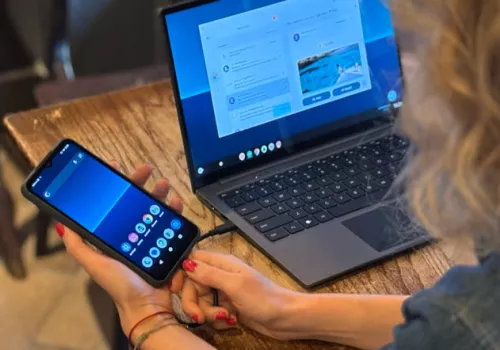
Nex Computer, a company known for experimenting with portable computing concepts, introduced the NexPhone with an unusual promise: it could support three distinct operating systems—Android, Linux, and Windows 11—on a single device. The concept aims to provide users with the flexibility to switch between mainstream mobile software (Android), a desktop-oriented Linux experience, and a fully featured Windows 11 environment, all from one handset. This kind of multi-OS capability on a phone suggests a confluence of mobile and desktop computing that appeals to power users, developers, and enthusiasts who want to carry a single device capable of a wide range of tasks.
The idea rests on several pivotal technologies. Virtualization and containerization enable multiple OS environments to run on the same hardware, while optimized hardware drivers and a carefully engineered user interface are necessary to make transitions between systems smooth and intuitive. Additionally, licensing and application availability play crucial roles, particularly for Windows 11, which traditionally targets PC hardware with adherence to specific requirements. The NexPhone’s claimed ability to run Windows 11, alongside Android and Linux, highlights an intent to bridge mobile and desktop ecosystems in a single smartphone form factor.
Contextually, there is growing interest in devices that blend mobile portability with desktop-level capabilities. Competitors in the broader market have explored phones that can dock into desktops or run desktop-like environments via virtualization or cloud-based services. However, delivering a seamless and reliable three-OS experience on a handheld device would require substantial engineering, robust power management, secure boot processes, and efficient resource scheduling to prevent performance bottlenecks and thermal throttling.
This article aims to summarize the announced concept, outline the potential benefits and challenges, and provide a framework for evaluating the NexPhone’s multi-OS proposition. Given the novelty of multi-OS phones and the high performance and licensing thresholds involved, readers should consider both the potential and the caveats before drawing conclusions about real-world usability.
In-Depth Analysis
The core proposition of the NexPhone is straightforward in description but complex in execution: a single smartphone capable of running three different operating systems. Android serves as the functional backbone of most mobile devices today, offering a robust app ecosystem, mobile-optimized services, and broad compatibility with sensors, radios, and devices. Linux, in this context, could provide a desktop-like or developer-friendly environment, potentially enabling native Linux applications, development workflows, and customization that extend beyond typical Android capabilities. Windows 11, the latest iteration of Microsoft’s desktop OS, represents a further step in bringing a full desktop experience to mobile hardware, including support for legacy Windows applications and a familiar user interface for Windows users.
Key technical considerations underpinning such a device include processing power, memory, storage, battery efficiency, and thermal management. Running three distinct operating systems simultaneously or enabling rapid transitions between them requires a hardware platform that can sustain diverse workloads without excessive heat buildup or battery drain. The NexPhone would need a robust SoC (system-on-a-chip) with ample RAM and fast storage, along with reliable virtualization features or a streamlined dual-boot/boot-switching architecture. Additionally, a secure boot process and trusted platform module (TPM) functionality are essential to protect each OS environment and the data they handle.
Software compatibility is another major pillar. Android is well-supported on many devices with broad application support, but Windows 11 on a phone raises questions about app availability, interface optimization, and input methods. Windows 11 is designed for x86-based hardware and, increasingly, ARM-based devices; the NexPhone would need to provide a Windows 11 experience that remains responsive and usable on a mobile footprint. Linux, while adaptable, would require careful integration to ensure hardware components—such as the modem, camera, display, and sensors—are properly exposed to the OS, and that users can switch between environments without losing data or encountering driver issues.
User experience is perhaps the most decisive factor. A successful multi-OS phone must offer a coherent, intuitive method to switch between OS environments, ideally with minimal login friction, consistent security policies, and a unified input method. This includes shared storage that preserves data across environments, a seamless docking or external-display experience for desktop-like usage, and predictable performance under common workloads. A potential model could involve a primary Android shell for everyday use, with a boot-to-Linux or boot-to-Windows 11 option for more demanding tasks, and a virtualization layer that allows running specific Linux apps or Windows software within Android when needed. However, each of these models introduces design trade-offs in responsive performance, app compatibility, and system stability.
The market potential for a three-OS smartphone depends on several consumer segments. Developers and IT professionals often value portability and the ability to test software across multiple platforms. Power users might seek a device that can handle mobile tasks, remote desktop connections, and light development work without carrying multiple devices. Enthusiasts attracted by the novelty of a three-OS phone could also form a niche market. On the other hand, mainstream consumers typically prefer a straightforward, reliable smartphone experience with broad app support, long battery life, and predictable updates. The NexPhone would need to demonstrate a compelling value proposition to persuade users to adopt a device that may inherently involve more complex software upkeep and potential trade-offs in performance and battery life.
Licensing and software distribution present notable hurdles. Windows 11 licensing for a smartphone hardware profile is nontrivial and may require special arrangements with Microsoft. The company would need to ensure compliance with Windows on ARM guidelines, driver availability, and the practicalities of app licensing and updates. Linux, while open-source, requires careful maintenance of drivers and kernel updates to maintain hardware compatibility. Android has its own ecosystem constraints and versioning considerations. Coordinating updates across three distinct operating systems, each with its own release cadence and security patches, would demand a sophisticated update mechanism and rigorous QA processes to minimize cross-OS conflicts and security vulnerabilities.
Security remains a critical concern. A multi-OS phone expands the attack surface, potentially introducing vulnerabilities across each environment and the interfaces that connect them. Securely isolating each OS while providing a smooth transition path is essential. Features such as hardware-backed key storage, robust sandboxing, and secure boot chains must be extended across all three operating systems. Furthermore, user data isolation and permission governance must be maintained when users move between Android, Linux, and Windows 11.
From a developer and ecosystem perspective, success would depend on robust developer tooling and clear guidelines for building cross-platform experiences. If developers can create applications or services that run consistently across Android, Linux, and Windows 11 on the NexPhone, it could unlock value for enterprise deployments and cross-platform workflows. Otherwise, fragmentation could lead to a subpar user experience, with limited app availability and inconsistent performance across environments.
Beyond the technical and business considerations, the NexPhone concept also raises questions about durability and the long-term viability of supporting three major operating systems on a single device. Hardware manufacturers have historically faced challenges in maintaining drivers and compatibility when OS ecosystems evolve rapidly. The NexPhone would need a strategic plan for long-term support, including predictable maintenance cycles, security updates, and access to current software libraries across all three platforms.
In summary, the NexPhone presents a bold attempt to unify multiple computing paradigms into one device. If the company can address hardware performance, software compatibility, licensing, security, and user experience concerns, a triple-OS smartphone could represent a paradigm shift in how we think about mobile devices and their role in broader computing workflows. However, given the complexity and the high expectations set by established operating systems, potential users should approach the concept with a balanced view—recognizing both the innovative potential and the practical challenges involved.

*圖片來源:Unsplash*
Perspectives and Impact
The prospect of a smartphone capable of running Android, Linux, and Windows 11 has implications that extend beyond a single product. If realized effectively, such a device could alter the landscape of mobile computing by blurring the boundaries between mobile and desktop experiences. For professionals who rely on Windows-based software for productivity, a mobile Windows 11 environment could reduce the need to carry a laptop or tablet for certain tasks. Developers who prefer Linux environments for coding, testing, or deploying open-source projects might benefit from the added mobility without sacrificing access to desktop-like tools and shells. Android, as the existing backbone of the device, would provide a familiar touchpoint for daily use, app access, and a broad ecosystem of services.
However, achieving this vision would require more than just hardware prowess. It would necessitate a standardized approach to cross-OS interactions, including file system interoperability, virtual file sharing, and consistent input methods. The ability to run Windows 11 on ARM-based mobile hardware remains dependent on licensing arrangements, driver support, and performance optimizations that preserve battery life and thermal thresholds. Even if Windows 11 can run in some form, applications designed for desktop PCs may need adaptation to ensure a usable mobile experience, particularly for tasks that rely on a mouse, keyboard, or high-resolution displays.
The broader impact on software development and platform strategy could be meaningful. If the NexPhone demonstrates a practical and reliable approach to multi-OS mobility, it could inspire new frameworks for cross-platform development, containerized environments, and virtualization on mobile devices. It might push software vendors to rethink how they design apps and services for devices that can adapt to different operating systems and usage contexts. Conversely, if the implementation is constrained by performance or reliability limitations, it could reinforce users’ preference for specialized devices—a high-powered Windows laptop for Windows-centric tasks, a Linux workstation for development, and a conventional Android phone for everyday use.
From a consumer electronics perspective, the NexPhone would need to meet several performance and reliability thresholds to gain mainstream traction. Battery life is a perennial concern for smartphones, and running multiple operating systems could exacerbate power consumption if not managed efficiently. The display quality, touch responsiveness, camera performance, and network reliability would also be under scrutiny, as users expect a premium experience across all OS environments. Additionally, the pricing strategy would be critical. A multi-OS device with advanced hardware capabilities could command a premium, but it must offer clear, differentiated value relative to existing devices such as high-end Android phones, Linux-capable laptops, and Windows PCs.
Regulatory and privacy considerations may also come into play, especially if the device is marketed on the basis of running Windows 11, which has specific licensing and regional rules. Consumers will look for transparent information about how data is handled across platforms, how updates are delivered, and what protections exist when switching between environments. A device that seamlessly consolidates multiple operating systems must also present a coherent privacy and security posture, with clear controls to manage permissions, encryption, and data residency across all environments.
Looking forward, the NexPhone’s success would likely influence the direction of hybrid computing devices. If the concept proves credible and user-friendly, we could see a rising interest in devices designed to natively support multiple operating systems, rather than relying on emulation, cloud-based virtualization, or accessory docks to achieve similar outcomes. It would push hardware developers to optimize SoCs and system architectures for cross-OS compatibility, potentially accelerating innovation in areas such as virtualization performance, secure boot processes, and cross-OS storage solutions. It might also encourage software vendors to adopt more flexible licensing and distribution channels that accommodate devices with diverse OS configurations.
In practical terms, early reception to such a concept tends to be cautious. Enthusiasts may celebrate the ambition, while mainstream observers demand tangible demonstrations of reliability, performance benchmarks, and long-term support commitments. The path from a promising concept to a widely adopted product is often nonlinear, with technical hurdles, supply chain considerations, and market readiness shaping the ultimate outcome. The NexPhone could be a trailblazer if it proves that a single handset can effectively serve as a multi-platform hub, or it could remain a niche curiosity if the complexities prove insurmountable for everyday users.
Key Takeaways
Main Points:
– Nex Computer proposes the NexPhone, a smartphone designed to run Android, Linux, and Windows 11.
– The concept aims to unify mobile and desktop computing in a single device, offering versatile workflows.
– Realizing multi-OS functionality requires overcoming hardware, software, licensing, and UX challenges.
Areas of Concern:
– Performance, battery life, and thermal management across three operating systems.
– Licensing, app compatibility, and driver support for Windows 11 on mobile hardware.
– User experience consistency and data security across OS boundaries.
Summary and Recommendations
The NexPhone concept embodies an ambitious attempt to redefine what a smartphone can be by enabling three major operating systems on one device. If successfully implemented, it could offer consumers unprecedented flexibility, allowing Android for everyday tasks, Linux for development or specialized workflows, and Windows 11 for desktop-like productivity while on the go. However, the practicality of such an approach hinges on a multitude of factors, including hardware performance, efficient power management, robust security, coherent user experience, and compelling licensing arrangements for Windows 11 and Linux support.
Prospective buyers and industry observers should seek out detailed, independent evaluations of the NexPhone’s hardware specifications, real-world performance benchmarks, and long-term support commitments. A hands-on review would illuminate how smoothly users can switch between operating systems, how well each environment interacts with the device’s sensors and peripherals, and whether the claimed capabilities translate into tangible productivity gains. Until such comprehensive testing is available, the NexPhone should be regarded as an intriguing concept with potential benefits and significant practical uncertainties.
If the NexPhone team can demonstrate credible, independently verified performance and provide a transparent roadmap for updates, software compatibility, and security, the device could influence future designs of mobile computing devices. It might encourage more devices to adopt modular or multi-OS approaches, expand cross-platform development ecosystems, and broaden the ways in which users leverage mobile hardware for diverse computing tasks. Conversely, if execution falls short, the device risks being perceived as a novelty rather than a viable three-OS smartphone solution.
Ultimately, the NexPhone represents a bold exploration into how far modern hardware and software can be pushed to unify disparate computing paradigms within a single form factor. The next phase of development—characterized by transparent specifications, independent testing, and clear user-focused demonstrations—will determine whether this concept can transform the smartphone landscape or remain an ambitious proposal awaiting broader feasibility.
References
- Original: https://www.techspot.com/news/111016-smartphone-can-run-android-linux-even-windows-11.html
- Additional references:
- [Windows on ARM licensing and feasibility for mobile devices]
- [Linux on mobile hardware driver and compatibility considerations]
- [Android and Windows interoperability efforts in mobile contexts]

*圖片來源:Unsplash*