TLDR
• Core Points: DLSS 4.5 is now universally available via the Nvidia App auto-update, after a beta rollout.
• Main Content: The feature, previously limited to beta testers, is now accessible to all Nvidia App users.
• Key Insights: Nvidia emphasizes improved image quality and higher GPU demands, signaling more intensive rendering capabilities.
• Considerations: Users should ensure their drivers and system meet the new requirements to fully leverage DLSS 4.5.
• Recommended Actions: Update the Nvidia App, verify supported titles, and enable DLSS 4.5 in-game where available.
Content Overview
Nvidia initially introduced DLSS 4.5 to users who opted into beta settings via the Nvidia App, inviting enthusiasts and developers to test the next generation of Deep Learning Super Sampling. The company later announced that the feature would be made available to all users, signaling a broader rollout. By simply launching the Nvidia App, users can perform an automatic update to access DLSS 4.5. This marks a step in Nvidia’s ongoing effort to enhance image quality and frame presentation while managing the trade-offs associated with higher GPU workload.
DLSS, or Deep Learning Super Sampling, uses artificial intelligence to render frames at a lower resolution and then upscale them to the display resolution, aiming to deliver higher performance with quality that approaches or surpasses native rendering. DLSS 4.5 is positioned as an evolution of this technology, focusing on improved image fidelity, more aggressive upscaling, and increased demands on the GPU to deliver these benefits. The update aligns with Nvidia’s broader strategy to optimize performance across a range of games and workloads, particularly as real-time ray tracing and other demanding features become more common in modern titles.
In-Depth Analysis
DLSS has become a cornerstone technology in Nvidia’s ecosystem, helping to balance performance and visual quality across diverse hardware configurations. The 4.5 iteration represents a continuation of Nvidia’s commitment to refining AI-driven upscaling techniques and expanding the set of scenarios in which DLSS can provide meaningful benefits.
1) Image Quality Improvements
DLSS 4.5 reportedly offers improvements in edge clarity, texture detail, and overall frame coherence when compared to earlier versions. The enhancements are designed to preserve fine details in complex scenes, reduce artifacts that can occur around motion boundaries, and improve color stability in upscaled frames. These gains are particularly noticeable in titles with high visual complexity, expansive environments, or rapid camera movement.
2) Higher GPU Demands
A notable aspect of the 4.5 update is the acknowledgment that achieving the improved image quality may require more processing power. Nvidia notes higher GPU demands associated with this version, which means users with mid-range GPUs may experience more pronounced performance impacts, while high-end GPUs can more readily absorb the increased workload. This balance is typical for generations of DLSS where quality improvements come with more intensive compute requirements. For users aiming to maximize image fidelity, ensuring adequate GPU headroom will be important, especially in titles that push ray tracing, volumetrics, or other advanced effects.
3) Compatibility and Ecosystem Impact
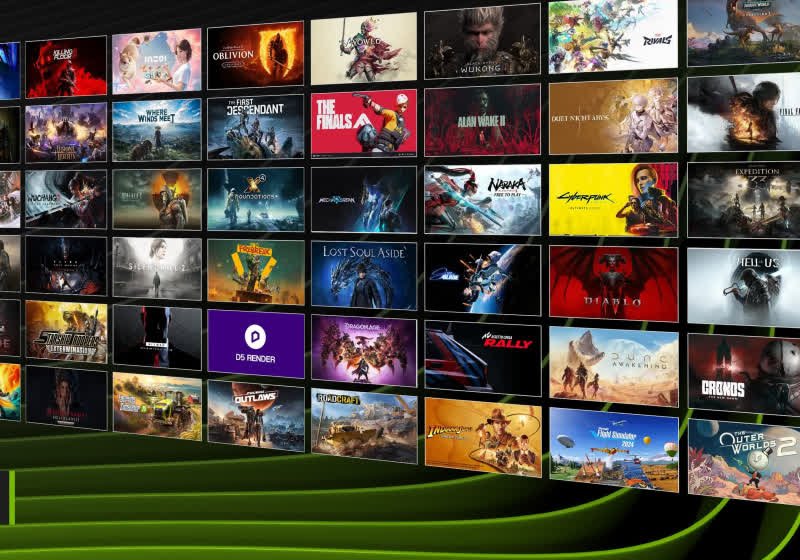
DLSS compatibility continues to expand across supported games and applications. The 4.5 release sustains Nvidia’s emphasis on an expansive and evolving ecosystem of titles that benefit from upscaling, as well as from Nvidia’s broader platform features such as Reflex for latency reductions and various performance modes. The broader rollout to all users simplifies the adoption process, removing the need for beta opt-ins and enabling a more uniform experience.
4) Practical Adoption Considerations
– System prerequisites: To experience the benefits of DLSS 4.5, users should ensure their Nvidia drivers are up to date and that their hardware configuration has sufficient headroom for higher GPU load.
– Game settings: Not all titles support DLSS 4.5 at launch, and the best results typically emerge from games that have been optimized specifically for the new upscaling approach. Users should verify game-specific notes in the Nvidia Game Ready driver package or the game’s own settings for DLSS 4.5 support.
– Performance vs. quality: Depending on the title and scene context, DLSS 4.5 can shift the performance/quality balance. Users may experiment with different DLSS modes (Quality, Performance, Ultra Performance) to tailor output to their preferences and target frame rates.
– Power and thermals: As DLSS 4.5 can push the GPU harder, maintaining adequate cooling and power delivery becomes more important, particularly in compact builds or laptops with constrained thermal envelopes.
5) Competitive and Market Context
DLSS 4.5’s rollout occurs in a landscape where upscaling and AI-driven rendering remain critical tools for delivering visually impressive experiences on a range of hardware. While rivals have pursued similar approaches with their own upscaling frameworks, Nvidia’s integration of DLSS with a broad software stack—including game-ready optimizations, RTX features, and developer tools—continues to differentiate its ecosystem. The updated version signals Nvidia’s ongoing push to maximize performance gains without sacrificing image fidelity, especially as next-generation titles and engines push further toward ray tracing and complex shading.
6) Developer and Publisher Considerations
For developers and publishers, DLSS 4.5’s availability means more players can access enhanced visuals, potentially reducing the perceived hardware gap between generations. Developers may want to consider enabling DLSS 4.5 support in upcoming patches and providing clear in-game guidance on how to enable the feature for players across a range of GPUs. Nvidia’s documentation and developer resources will be crucial for integrating the latest upscaling capabilities and ensuring stable performance across diverse game engines.
7) Future Outlook
While DLSS 4.5 represents a meaningful step forward, Nvidia’s roadmap suggests continued refinement of upscaling technology, with potential advances in temporal stability, anti-aliasing, and scene-specific optimizations. As games evolve and demand more from GPUs, Nvidia’s approach of combining high-quality AI upscaling with acceleration features like RTX will likely continue to influence how developers approach rendering pipelines in the coming years.

*圖片來源:Unsplash*
Perspectives and Impact
The broader availability of DLSS 4.5 to all Nvidia App users marks another milestone in Nvidia’s ongoing effort to democratize access to advanced rendering techniques. By removing the barrier of beta participation, Nvidia invites a wider audience to experience and evaluate the practical benefits of the updated upscaling tool across a diverse library of games and applications.
From a consumer perspective, the update can translate into more compelling visuals and smoother performance, especially on systems that can support the higher GPU demands. This is particularly relevant for gamers who seek to push higher resolutions or engage more sophisticated visual features without sacrificing frame rates. For content creators and professionals working with real-time rendering, DLSS 4.5 could offer improved throughput in production pipelines that rely on rapid previews and high-quality previews of scenes.
However, the emphasis on greater GPU requirements also highlights an important consideration for users with mid-range or older hardware. While DLSS 4.5 can deliver superior image quality, the performance gains may be uneven across the installed base, depending on the user’s GPU model, cooling solution, and power availability. In this context, Nvidia’s ecosystem remains valuable, as it provides multiple tuning options and modes to balance quality and performance according to each user’s setup.
The expansion to all users may also influence the broader market by setting expectations for future DLSS iterations. If 4.5 proves successful in delivering measurable benefits without introducing destabilizing trade-offs, developers may feel encouraged to adopt similar techniques earlier in the development cycle. Conversely, if some titles demonstrate inconsistent results or require high-end hardware to meet the quality targets, it could reinforce ongoing conversations about accessibility and hardware requirements for premium visual features.
Additionally, the rollout underscores the importance of driver and software interoperability. As Nvidia continues to evolve its software stack, ensuring compatibility with a wide array of titles and engines remains essential for maintaining a seamless user experience. The auto-update mechanism in the Nvidia App simplifies adoption, reducing friction for players who might otherwise delay updating due to concerns about potential bugs or performance changes.
Future implications extend to how hardware manufacturers approach upscaling and real-time rendering more broadly. If DLSS 4.5 achieves its intended balance of quality and efficiency, other players in the industry may accelerate their own AI-accelerated rendering initiatives, leading to a broader ecosystem of compatible software, tools, and hardware optimizations. The resulting convergence could benefit consumers through more consistent experiences and greater flexibility in how games and applications render stunning visuals on diverse devices.
Key Takeaways
Main Points:
– Nvidia DLSS 4.5 is now available to all Nvidia App users via an automatic update.
– The update emphasizes improved image quality alongside higher GPU demands.
– Users should prepare with up-to-date drivers and ensure their hardware can sustain the increased workload.
Areas of Concern:
– Higher GPU demands may reduce performance on mid-range hardware.
– Not all titles may support DLSS 4.5 immediately; adoption across games will vary.
– The increased computational load could affect thermals and power usage in compact systems.
Summary and Recommendations
The universal rollout of Nvidia DLSS 4.5 represents Nvidia’s continued commitment to advancing AI-driven upscaling in a broader user base. By delivering improvements in image fidelity and expanding the reach of the technology, Nvidia aims to enhance the visual experience across a wide array of titles while maintaining a flexible performance model through its DLSS modes and RTX features. For users, the practical path forward is straightforward: update the Nvidia App to enable DLSS 4.5, verify game compatibility, and experiment with different DLSS modes to find the right balance between image quality and frame rate for their specific hardware configuration. Keeping drivers current and ensuring adequate cooling will help users maximize the benefits of this upgrade.
As the ecosystem matures, developers and publishers should consider integrating DLSS 4.5 support where feasible and clearly communicating any hardware considerations to players. The broader implications for performance optimization, game design, and hardware demand will unfold as more titles adopt the updated upscaling approach and as Nvidia continues to refine its AI-powered rendering toolkit.
References
- Original: https://www.techspot.com/news/110926-dlss-45-now-available-all-nvidia-app-users.html
- Additional references:
- Nvidia Official DLSS 4.5 Release Notes
- Nvidia Geforce Newsroom: DLSS 4.5 Overview and System Requirements

*圖片來源:Unsplash*