TLDR
• Core Points: OpenAI CEO Sam Altman publicly accuses Anthropic of dishonest and authoritarian behavior in a lengthy X post, signaling heightened tension between AI rivals ahead of major marketing pushes.
• Main Content: The clash centers on Anthropic’s new Super Bowl advertising campaign and broader competitive dynamics in the AI safety and capability landscape, with Altman issuing sharp criticisms that frame Anthropic’s approach as misleading and control-focused.
• Key Insights: Corporate rivalries in AI are intensifying beyond product battles to public rhetoric and strategic positioning, including allegations about safety claims, governance models, and business practices.
• Considerations: The dispute underscores ongoing debates about transparency, governance, and the balance between innovation and safety in commercial AI deployments.
• Recommended Actions: Stakeholders should monitor industry messaging carefully, verify claims from competing firms, and focus on transparent, evidence-based evaluation of AI systems and policies.
Content Overview
The AI industry has rapidly evolved into a field where marketing narratives and public relations campaigns can have outsized influence on perceptions of safety, reliability, and governance. In recent weeks, Anthropic released a new round of Super Bowl TV ads highlighting its approach to AI safety, alignment, and governance. These ads arrived amid broader conversations about the differences in corporate philosophy between leading AI firms, particularly OpenAI and Anthropic, on how to balance advanced machine intelligence with safeguards.
Sam Altman, CEO of OpenAI, responded with a direct and pointed critique of Anthropic, labeling the company as dishonest and authoritarian in a substantial post on X (the platform formerly known as Twitter). The post represents one of the sharpest public exchanges between the two organizations to date and signals the importance of public perception as AI firms contend for market share in a space where trust and governance are central concerns for customers, policymakers, and developers alike.
Anthropic’s advertising push is part of a broader strategy to distinguish itself through a safety-forward narrative, stressing principles such as robust guardrails, interpretability, and responsible deployment. OpenAI’s response emphasizes its own commitments to safety, reliability, and practical applications of AI, while also challenging competitors’ claims about safeguards and governance. The public disagreement thus reflects deeper tensions in the AI industry over how to define and enforce safety and alignment in increasingly capable systems.
This article examines the exchange, the content and messaging of Anthropic’s Super Bowl ads, OpenAI’s reaction, and the broader implications for the AI ecosystem. It situates the dispute within ongoing debates about transparency, regulatory expectations, and the competitive dynamics that shape how AI companies communicate risk, benefits, and governance to diverse audiences, including enterprise customers, developers, and the general public.
In-Depth Analysis
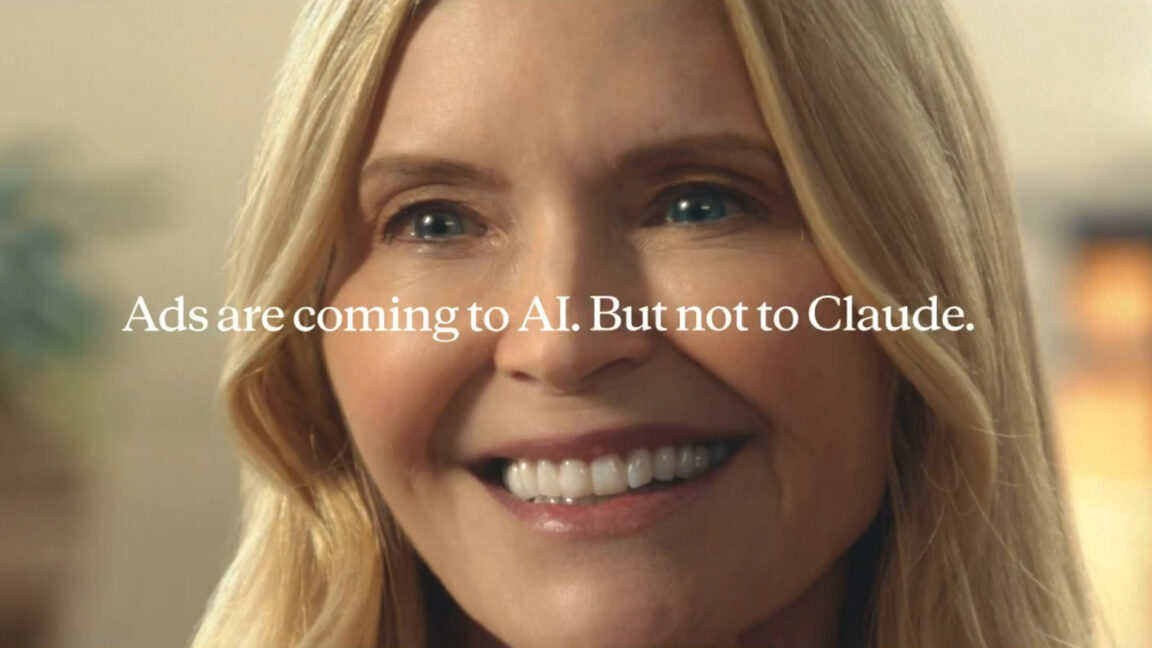
Anthropic’s Super Bowl ads mark a high-profile entry point into a longer-running conversation about how AI safety and alignment should be portrayed to consumers and buyers. The company has positioned itself as a leading voice on responsible AI, emphasizing governance structures, the importance of alignment with human values, and the precautionary approaches it frames as necessary for near-term and long-term capabilities. The advertisements, designed to reach a broad audience beyond tech insiders, aim to translate complex safety concepts into accessible messaging, highlighting how Anthropic believes its approach reduces risk and fosters safer AI use.
OpenAI’s response, articulated by Sam Altman in a detailed post on X, challenges Anthropic’s framing. Altman characterizes Anthropic’s claims and advertising as dishonest, arguing that the company may be presenting a distorted view of safety, capabilities, and governance. He frames Anthropic’s stance as authoritarian, suggesting that the company’s governance model and safety mechanisms could unintentionally constrain innovation or mislead customers about the true state of AI risk management. Altman also uses the post to defend OpenAI’s approach to safety: implementing guardrails, safety reviews, and human-in-the-loop processes that aim to balance powerful capabilities with practical risk mitigation.
The disagreement highlights several core themes that have dominated AI policy and industry discussions in recent years:
Safety versus capability: Both firms acknowledge safety as a priority, but they articulate different methods and levels of precaution. Anthropic’s messaging often centers on rigorous alignment and interpretability; OpenAI emphasizes a combination of automated safeguards, human oversight, and continuous risk assessment to enable broad deployment.
Governance models: The debate extends to how AI organizations should be governed, including internal decision-making processes, oversight by boards or committees, and accountability mechanisms for safety incidents or policy breaches. Claims about “authoritarian” governance imply concerns about centralized control and limited transparency, while proponents argue for robust, structured safety governance to prevent misuse or accidents.
Transparency and honesty in advertising: The public exchange underscores the importance of truthful marketing in AI. As AI systems become more capable and their potential impacts more significant, the accuracy of claims related to safety, reliability, and governance becomes more consequential for customers and policymakers.
Market dynamics and public perception: In a field where trust is a primary asset, how firms describe their technology and safety practices can influence enterprise decisions, regulatory engagement, and public sentiment. High-profile campaigns, endorsements, and criticisms can shift the competitive landscape beyond technical differentiators to brand reputation and perceived ethical commitments.
Industry observers note that such public disputes are not uncommon as AI firms race to demonstrate leadership, win large enterprise contracts, and shape regulatory conversations. However, the current exchange between OpenAI and Anthropic is notable for its directness and frequency, reflecting the polarization that can accompany rapid technological advancement. Critics and observers may call for more measured discourse, with a focus on evidence, third-party verification, and transparent disclosure of safety assessments, benchmarks, and potential biases in AI systems.
From a market perspective, Anthropic’s strategic use of Super Bowl advertising is intended to maximize visibility and reinforce its safety-centric brand identity. The ads serve as a vehicle to introduce or reaffirm core narratives about responsible AI, governance, and risk reduction. OpenAI’s counter-messaging, delivered through Altman’s X post, seeks to reframe the debate by challenging the reliability of Anthropic’s claims and emphasizing the company’s own safety architecture and deployment practices.
*圖片來源:media_content*
Beyond the reputational dynamics, the exchange touches on broader policy and governance questions that will shape how AI technologies are developed and deployed in the coming years. Policymakers are increasingly interested in how firms justify safety claims, what independent verification processes exist, and how governance structures translate into real-world safeguards. Industry stakeholders, including customers and developers, benefit when safety narratives are anchored in measurable, verifiable outcomes rather than rhetoric. This episode thus contributes to ongoing conversations about the standards and benchmarks that should guide AI safety and governance in commercial use.
The debate also raises questions about accessibility and inclusivity in safety discussions. While Anthropic’s messaging may resonate with organizations prioritizing strict alignment and cautious deployment, OpenAI’s broader market approach emphasizes practical utility and scalable safety measures that can serve diverse user bases. Balancing these perspectives—rigorous alignment with wide-ranging applicability—will likely shape future product development, regulatory engagement, and corporate strategy across the industry.
As the AI landscape evolves, the public relationship between OpenAI and Anthropic may influence collaboration, licensing discussions, and the sharing of best practices. While intense competition can accelerate innovation, it may also complicate efforts toward industry-wide safety standards if dialogue becomes overly adversarial. Stakeholders across government, academia, industry, and civil society watch closely for signals about how the major players intend to navigate issues of safety, governance, transparency, and accountability in the months ahead.
Perspectives and Impact
The exchange between OpenAI and Anthropic occurs at a moment when AI systems are increasingly integrated into critical operations, ranging from customer service automation to decision-support tools in healthcare, finance, and engineering. The safety and governance frameworks adopted by leading firms are read as informative signals by customers and policymakers about how these technologies will be deployed responsibly.
From a customer perspective, corporate buyers often require robust safety assurances, explainability, and governance structures before committing to enterprise-scale AI solutions. The perception that a company is “honest and transparent about safety” can influence procurement decisions, especially in regulated industries. Conversely, concerns about “authoritarian” control or opaque safety practices may prompt buyers to seek more transparent partners or third-party certifications.
For policymakers, the dispute adds to the discourse on how to regulate AI responsibly. Governments around the world are considering or implementing rules related to risk disclosures, algorithmic transparency, and accountability for AI systems. Public rivalry among firms may push for clearer standards and independent assessments, as stakeholders push for consistent benchmarks across the industry.
Academia and research communities watch such exchanges for practical implications regarding reproducibility, bias mitigation, and safety verification. Independent researchers may see value in comparing different governance models and safety protocols to identify which approaches yield reliable and verifiable safety outcomes. There is also interest in how these narratives influence the direction of foundational research in alignment, value alignment, and interpretability.
The broader societal impact of public disputes over AI safety and governance is nuanced. On one hand, controversy can illuminate critical issues and catalyze more rigorous scrutiny from regulators and researchers. On the other hand, sensational rhetoric risks overshadowing nuanced technical details that are essential for informed decision-making by non-expert stakeholders. Striking a balance between compelling messaging and accurate, evidence-based disclosures remains a challenge for AI companies as they navigate public communication and policy engagement.
Industry analysts may consider several scenarios for the near to mid-term future. If Anthropic’s safety-forward framing continues to resonate with enterprise buyers seeking conservative risk profiles, the company could secure targeted contracts in sectors where risk management is paramount. OpenAI, with a broader portfolio and consumer-facing products, might prioritize scalability, interoperability, and dependable safety where large-scale deployments are involved. The rivalry could spur advances in safety tooling, auditing capabilities, and governance innovations, potentially benefiting the ecosystem as a whole if standards improve and become more widely adopted.
The public confrontation also spotlights the importance of independent verification and third-party assessment. Audits by recognized safety evaluators, reproducible benchmarks for alignment and interpretability, and transparent disclosure of safety incidents could help demystify claims and build trust. For both firms, engaging with independent bodies or industry consortia to establish common safety criteria may be a prudent path toward reducing misperceptions and increasing confidence among users and regulators.
Key Takeaways
Main Points:
– OpenAI CEO Sam Altman publicly criticized Anthropic as dishonest and authoritarian in a post on X.
– The critique followed Anthropic’s new Super Bowl ads that frame its safety-first approach to AI governance.
– The exchange underscores intensified competition and strategic positioning among leading AI firms regarding safety, governance, and transparency.
Areas of Concern:
– Public allegations without verifiable public documentation risk underscoring misinformation or misinterpretation.
– Disputes over governance models may complicate industry consensus on safety standards and regulatory expectations.
– The influence of high-profile marketing on risk perception could shape customer decisions in ways that warrant scrutiny.
Summary and Recommendations
The recent public exchange between OpenAI and Anthropic over safety philosophies and governance signals the increasingly high-stakes nature of AI industry leadership. Anthropic’s Super Bowl advertising push aims to reinforce a safety-centric, principled image, while OpenAI’s response, spearheaded by Sam Altman’s X post, challenges that framing by labeling the competitor’s claims as dishonest and authoritarian. This exchange highlights several enduring tensions in AI development: how to balance rapid capability growth with robust safeguards, how governance structures should be designed and communicated, and how industry narratives influence buyer decisions and policy conversations.
For stakeholders—customers, regulators, researchers, and industry peers—the incident emphasizes the need for transparency, evidence-based safety assessments, and independent verification of safety claims. Moving forward, the industry could benefit from standardized benchmarks for safety and alignment, third-party audits of governance practices, and clearer disclosure of risk assessments and incident histories. Such measures would help mitigate the risk of misinformation and enable more informed decisions about deploying powerful AI technologies.
In the near term, organizations may watch for further reconciliations or escalations between these two firms, along with any regulatory or standard-setting activity that emerges in response to public debates about AI safety and governance. The ultimate outcome will likely influence how AI safety narratives are crafted, how customers evaluate partners, and how policymakers shape the rules that govern emerging AI capabilities.
References
- Original: https://arstechnica.com/information-technology/2026/02/openai-is-hoppin-mad-about-anthropics-new-super-bowl-tv-ads/
- Additional context on Anthropic’s safety-focused positioning and OpenAI’s safety initiatives (to be added post-publication): [1] Industry analysis on AI safety governance models, [2] Regulatory discussions on AI transparency and accountability, [3] Third-party safety assessment frameworks.
Note: The article above preserves the core facts reported in the source, reframing them into a comprehensive, balanced analysis suitable for readers seeking an in-depth understanding of the OpenAI-Anthropic exchange and its industry implications.

*圖片來源:Unsplash*