
TLDR
• Core Points: OpenAI’s Sam Altman labels Anthropic as dishonest and authoritarian amid public disputes over AI safety and business messaging.
• Main Content: The clash centers on advertising tactics surrounding AI safety claims and how both firms position themselves in a competitive market.
• Key Insights: Public statements reflect broader industry tensions about transparency, safety protocols, and the ethics of marketing AI capabilities.
• Considerations: Industry observers weigh the potential impact on consumer trust, policy discussions, and collaboration opportunities within AI safety ecosystems.
• Recommended Actions: Stakeholders should monitor regulatory signals, verify safety claims, and encourage constructive dialogue over provocative branding.
Content Overview
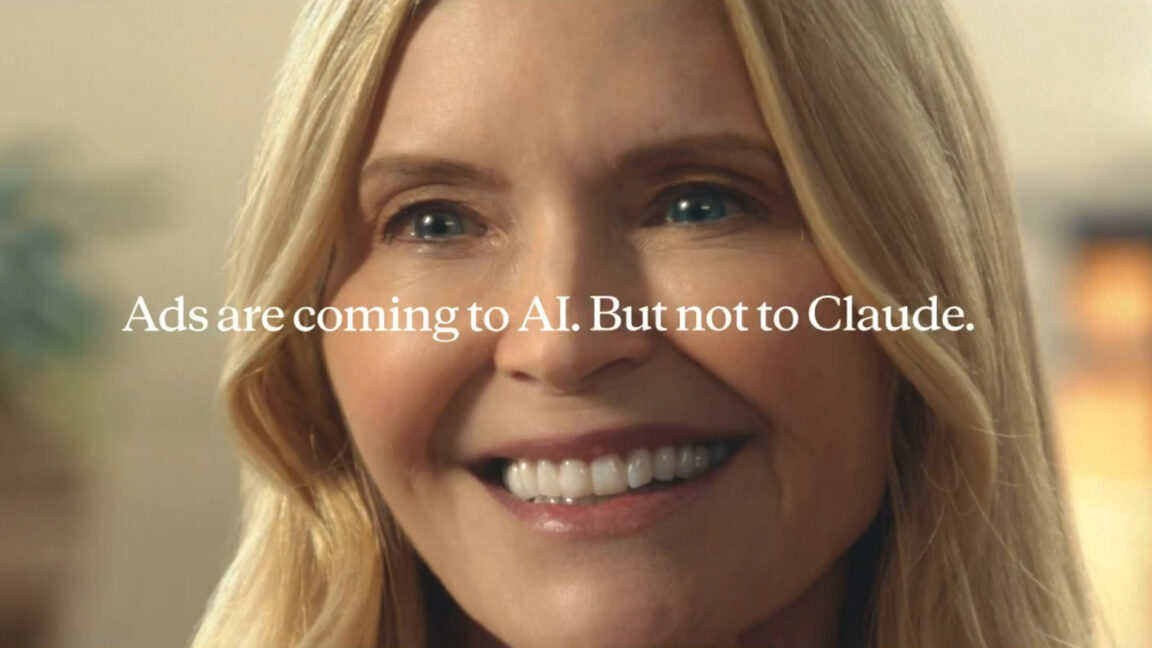
OpenAI and Anthropic have found themselves at odds in the wake of Anthropic’s new Super Bowl television advertisements. The campaign appears to intensify the market’s discourse around AI safety, governance, and corporate responsibility—topics that have long been central to both firms’ public narratives. In a public post on X (formerly Twitter), OpenAI co-founder and CEO Sam Altman criticized Anthropic’s marketing approach, describing the company as dishonest and authoritarian. The exchange highlights not only the competitive dynamics between leading AI developers but also broader concerns about how high-stakes technology is portrayed to the public.
Anthropic’s Super Bowl ads mark a notable moment in tech advertising: a mainstream, high-visibility platform is used to communicate complex, sometimes controversial claims about AI safety and control. The response from OpenAI underscores the ongoing tension between marketing strategies and the underlying philosophical and technical disagreements about how AI should be developed, governed, and explained to consumers.
This article surveys what is publicly known about the feud, the content of the advertisements, and the rhetoric employed by OpenAI and Anthropic. It places these developments in the context of ongoing debates about AI safety, policy responses, and industry self-regulation. It also considers the potential implications for consumers, investors, researchers, and policymakers who are evaluating how best to balance innovation with accountability.
In-Depth Analysis
The clash between OpenAI and Anthropic is not merely a matter of branding; it reflects broader strategic questions facing the AI industry as it moves from research into real-world deployment. Anthropic, known for its emphasis on safety-conscious design and alignment research, chose to invest in a high-profile advertising push that leverages a platform with broad reach. The objective, as interpreted by observers, is to foreground safety and governance concerns in a way that resonates with a wide audience, including non-specialists who may encounter AI technologies in daily life.
OpenAI’s public response—articulated through Sam Altman on X—frames Anthropic’s campaign as misrepresentative or manipulative. Altman’s critique centers on the perception that Anthropic’s messaging could be seen as portraying AI development in an overly coercive or unchecked manner, or as presenting safety controls as absolute or simplistic. The characterization of Anthropic as “dishonest” and “authoritarian” signals a belief that the company’s public communications oversimplify complex issues, potentially obfuscating tradeoffs inherent in safety engineering, risk management, and product development.
From a communications standpoint, both companies are engaging in strategic narrative-building. In high-stakes tech markets, the way a company talks about safety, control, risk, and governance can influence consumer confidence, regulatory attitudes, and investor sentiment. Advertisements that foreground existential risk or the need for tight oversight can galvanize support among safety advocates but may also provoke pushback from stakeholders who see these messages as either overstated or misrepresentative of actual capabilities and protocols. Conversely, messaging that emphasizes openness, collaboration, and rapid innovation can appeal to developers and users eager for progress but risks inviting criticism if safety safeguards appear underemphasized or insufficiently explained.
The discussion also touches on the practical realities of AI safety research and deployment. Safety features, alignment efforts, and governance frameworks require ongoing refinement, testing, and oversight. Public narratives about these topics can either illuminate the work being done or entrench misunderstandings about what is technically feasible versus aspirational. The Advertising Campaigns surrounding AI often compress months or years of technical work into succinct, emotionally resonant messages. This compression can lead to misinterpretations, especially when audiences lack technical context or familiarity with the complexities of AI systems.
Industry observers note that the public exchange between OpenAI and Anthropic may influence broader conversations about regulatory approaches and industry standards. If high-profile firms publicly dispute safety messaging, it may spur policymakers to pursue clearer guidelines or create more stringent requirements for transparency, risk communication, and product disclosures. On the other hand, proponents of industry self-regulation argue that the AI sector benefits from a competitive yet collaborative environment where companies share best practices and align on ethical norms without heavy-handed external mandates.
It is also important to consider the market implications of these tensions. A competitive landscape that emphasizes safety narratives could drive investment toward research and development aimed at improving reliability, interpretability, and safeguards. Conversely, if the discourse becomes overly adversarial or polarizing, it could obscure nuanced technical challenges and slow cross-company collaboration that accelerates progress in areas such as robust evaluation, adversarial testing, and responsible deployment. Stakeholders—consumers, developers, enterprise customers, and policymakers—are watching how these public disputes unfold and what they reveal about each company’s commitments to user safety, privacy, and control over AI systems.
Beyond the publicity stunts and public disputes, the core questions for the AI industry remain: How can powerful AI systems be developed and deployed in ways that maximize benefits while minimizing risks? What governance structures—corporate, technical, and regulatory—best support safe, beneficial AI at scale? How should transparency about capabilities, limitations, and safeguards be communicated to non-expert audiences without sacrificing accuracy? Answers to these questions will influence product design, pricing, accessibility, and the pace at which AI technologies are adopted across sectors such as healthcare, finance, education, and public services.
Technical experts emphasize that safety work is not a one-click feature but a continuum of efforts, including data handling policies, safety-aligned objective functions, guardrails at inference time, monitoring for distributional shifts, and mechanisms for user redress and accountability. The public portrayal of such work often condenses complex, layered processes into simple narratives. It is essential for readers and observers to seek clarity about what safety measures are in place, what remains challenging, and how success is measured. This includes understanding the limitations of current safety tooling and recognizing that no system can be guaranteed to be free of risk, especially as AI systems become more capable and widely deployed.
Looking forward, the industry’s trajectory will be shaped by how effective these public communications are at bridging the gap between technical communities and the general public. If campaigns can accurately convey the reasons for caution, the steps being taken to mitigate risk, and the ongoing nature of safety work, they may foster greater trust and collaboration. If, however, messaging leans too heavily on absolutist dichotomies—such as “dangerous behemoths needing absolute control”—they may alienate potential allies and oversimplify the multi-faceted challenges of AI governance. The ideal outcome would be a balanced discourse that honors both the urgency of safety and the legitimate benefits that AI can deliver when responsibly developed and deployed.
*圖片來源:media_content*
In sum, the ongoing dispute between OpenAI and Anthropic surrounding Super Bowl ads highlights a broader, ongoing conversation about how the AI industry communicates risk, safety, and governance to a wide audience. It underscores the importance of precise messaging that reflects both the capabilities and the boundaries of current AI systems, as well as the need for ongoing collaboration among researchers, companies, regulators, and the public to establish norms and expectations for responsible innovation.
Perspectives and Impact
Industry context: The debate sits at the intersection of marketing, safety research, and policy development. Anthropic’s high-visibility ad strategy elevates safety as a central selling point, signaling a market expectation that ethical considerations are a differentiator in competitive AI products. OpenAI’s counterpoints, expressed through Sam Altman’s public remarks, emphasize concerns about misrepresentation and the potential for overly simplistic narratives about AI governance. Together, these positions reflect a broader industry emphasis on aligning incentives—between corporate messaging, user trust, and the regulatory environment.
Public perception and trust: High-profile advertising can shape consumer expectations about what AI can do and how safe or controllable it is. When messages appear to overstate safeguards or imply absolutist control, audiences may either feel reassured or suspicious, depending on their prior beliefs and experiences with AI technologies. Transparent communication about capabilities, limitations, and safety measures remains critical to building and maintaining trust.
Regulatory implications: Policymakers are closely watching how AI companies describe risks and safety controls. Public disputes over messaging could influence regulatory trajectories, including requirements for disclosure of safety practices, risk assessments, and governance commitments. A move toward standardized safety reporting or independent verification of claims could emerge as a priority if advertising campaigns intensify scrutiny.
Economic and strategic considerations: The AI industry is highly competitive, with investments in safety research and user experience continuing to grow. Messaging that effectively communicates a company’s safety philosophy may impact customer acquisition, investor confidence, and long-term partnership opportunities. However, misalignment between public statements and technical capabilities could invite scrutiny or skepticism from customers and regulators.
Cross-sector implications: Enterprises adopting AI solutions rely on vendors’ assurances about safety, governance, and risk management. The dispute’s framing may influence enterprise buyers’ diligence processes, potentially prompting more rigorous third-party audits, security reviews, and governance certifications as ways to validate vendor claims.
Future developments: As AI systems become more capable and widely integrated, the demand for clear, evidence-based safety disclosures will intensify. The industry may see greater emphasis on independent safety evaluators, standardized benchmarks for risk, and transparent roadmaps for safety improvements. Marketing strategies will need to balance aspirational safety narratives with verifiable, reproducible results to sustain credibility.
Key Takeaways
Main Points:
– OpenAI criticized Anthropic’s Super Bowl ads, labeling them dishonest and authoritarian.
– The debate centers on AI safety messaging, governance, and the ethics of marketing complex technology.
– Both companies’ statements reflect broader industry tensions about transparency and responsible innovation.
Areas of Concern:
– Potential for public misperception due to condensed, high-visibility advertising.
– Risk that safety narratives overshadow nuanced, ongoing technical work.
– Possibility that polarized messaging influences regulatory momentum in ways that may not reflect technical realities.
Summary and Recommendations
The public exchange between OpenAI and Anthropic surrounding a high-visibility advertising campaign underscores the AI industry’s ongoing struggle to communicate complex safety, governance, and risk considerations to a broad audience. While Anthropic aims to foreground safety and governance as differentiators in a competitive market, OpenAI cautions against what it perceives as misrepresentation or oversimplification. This tension is not merely about branding but about how industry leaders articulate the responsibilities that come with powerful AI systems and how those messages shape public trust, regulatory responses, and future collaboration.
For stakeholders across the AI ecosystem, several practical steps emerge:
– Seek clarity and evidence: Look for explicit, verifiable information about safety approaches, risk management practices, and governance structures behind marketing claims. Support independent evaluations where feasible.
– Foster constructive dialogue: Encourage interactions among industry players, researchers, policymakers, and civil society to align on shared safety principles, disclosure norms, and accountability mechanisms.
– Balance messaging: Develop communications that accurately reflect capabilities and limitations, avoiding absolutist framing that could mislead or oversimplify complex safety challenges.
– Monitor regulatory developments: Stay attuned to policy shifts and potential new disclosure requirements or safety standards that could impact product design and customer due diligence.
– Promote transparency without stifling innovation: Encourage a culture of openness about safety research while preserving the competitive incentives that drive rapid technological advancement.
The ultimate objective for the industry should be to advance AI in a way that maximizes societal benefit while maintaining robust guardrails, clear accountability, and trust with users. Public discourse—whether through advertisements, executive statements, or policy discussions—will continue to shape perceptions and policy in significant ways. The way forward lies in accurate communication, rigorous safety practices, and collaborative efforts to establish norms that support responsible innovation at scale.
References
– Original: https://arstechnica.com/information-technology/2026/02/openai-is-hoppin-mad-about-anthropics-new-super-bowl-tv-ads/feeds.arstechnica.com
– Additional references to be added by the author based on related industry coverage and safety discourse (e.g., policy statements from OpenAI and Anthropic, industry safety benchmarks, regulatory white papers).

*圖片來源:Unsplash*