TLDR
• Core Points: OpenAI CEO Sam Altman criticizes Anthropic’s Super Bowl ads as dishonest and authoritarian in a detailed post on X, signaling heightened rivalry in AI safety and capabilities messaging.
• Main Content: The exchange underscores intensified competition in the AI space, public messaging strategies, and concerns about how rivals frame safety and governance.
• Key Insights: Public relations battles between leading AI firms reflect broader tensions over governance, safety claims, and the commercial stakes of next-generation AI.
• Considerations: Stakeholders should weigh how brand narratives influence policy discussions, consumer trust, and regulatory perspectives.
• Recommended Actions: Monitor competitor messaging, clarify OpenAI’s safety commitments, and engage transparently with regulators and the public.
Content Overview
The AI industry has long been characterized by rapid advancement, intense competition, and reputational battles as firms vie for leadership in both capability and safety narratives. In recent months, Anthropic—the startup founded by former OpenAI researchers— launched a bold advertising push around the Super Bowl. The campaign, designed to position Anthropic as a cautious, safety-forward alternative in a crowded market, triggered a pointed response from OpenAI’s leadership. Sam Altman, OpenAI’s CEO, published a lengthy post on X (formerly Twitter) in which he labeled Anthropic’s approach as “dishonest” and “authoritarian,” framing the critique in terms of governance philosophy, safety rhetoric, and corporate strategy. The exchange illustrates not only the competitive dynamics among AI developers but also the broader public-facing debate about how AI safety should be defined, governed, and communicated to users and policymakers.
This article presents a structured look at the incident, its context, and its potential implications for the industry, including what the dialogue reveals about corporate priorities, regulatory risk, and the evolving relationship between technology developers and the public sphere. It also considers how such exchanges may shape consumer perception, investor confidence, and the trajectory of AI governance discourse as the field approaches increasingly sophisticated capabilities.
In-Depth Analysis
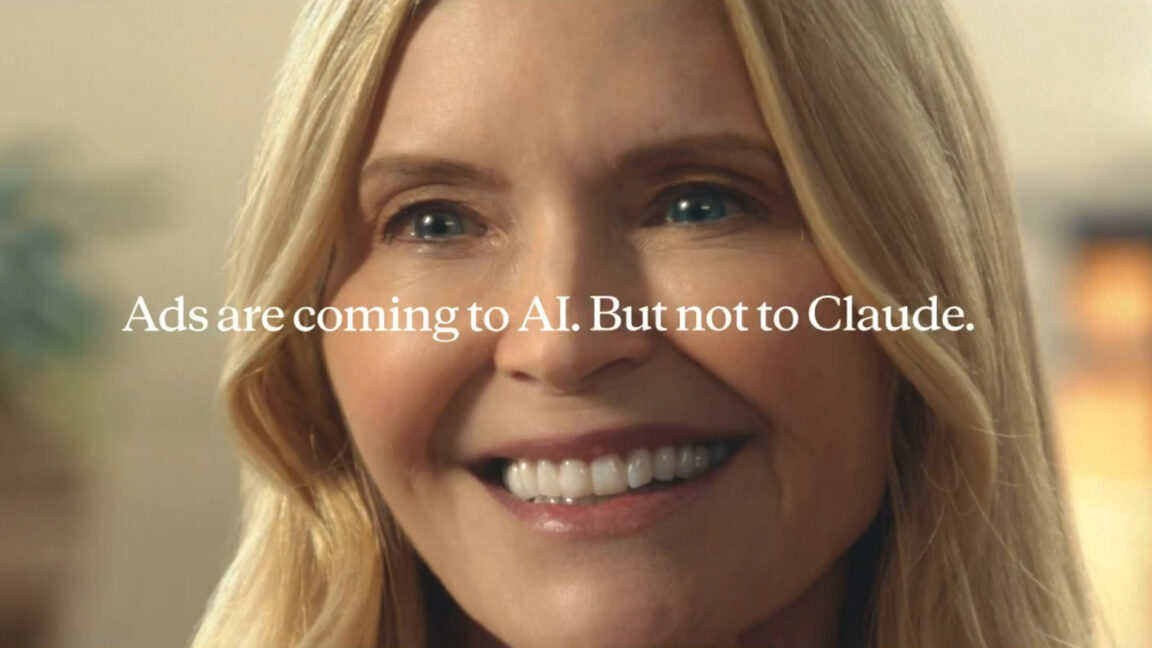
Anthropic’s decision to place Super Bowl ads represents more than a marketing stunt; it signals a strategic emphasis on public perception and safety-centric messaging at scale. The ads, which leveraged the two-week window surrounding one of the most-watched advertising events in the United States, sought to differentiate Anthropic by highlighting a philosophy centered on responsible AI design, alignment research, and a careful approach to deployment. The framing aligns with Anthropic’s public positioning since its inception: a firm that prioritizes safety, explainability, and governance mechanisms, with a promise to minimize harmful outcomes as AI systems become more capable.
OpenAI, by contrast, has historically presented a balanced, sometimes aggressive posture toward rapid AI advancement, with emphasis on broad access, practical applications, and scalable safety measures. The conversation surrounding safety is not merely theoretical; it has real consequences for product development, regulatory engagement, and competition for talent and capital. When Sam Altman called Anthropic’s messaging dishonest and authoritarian, he invoked a set of evaluative criteria that are central to debates about AI governance: how safety norms are defined, who enforces them, and what kind of oversight or governance framework is appropriate for powerful AI systems.
Several dimensions are worth considering when assessing Altman’s critique and Anthropic’s advertising strategy:
1) Governance and Safety Claims: The AI safety discourse often hinges on who gets to define “safe” AI and how that safety is implemented. Anthropic’s branding emphasizes a conservative approach to deployment and robust alignment research, suggesting that slower rollout with stronger oversight reduces risk. OpenAI’s response frames such messaging as potentially misleading if it underplays the feasibility and benefits of broader, safer AI deployment, while still acknowledging safety as a core concern. The tension here reflects a broader industry debate: is safety a constraint on innovation, or a framework that enables safer, more reliable innovation at scale?
2) Public Communications Tactics: The Super Bowl ads are a bold channel for signaling values to a mass audience. For Anthropic, the strategy is to attract consumer and regulatory empathy by foregrounding governance and risk mitigation. OpenAI’s counterpoint—via Altman’s post—emphasizes accountability, transparency, and a direct critique of competitors who, in OpenAI’s view, may misrepresent their safety track records or governance commitments. The effectiveness of these messaging gambits depends on public reception, media amplification, and how policymakers interpret each firm’s stated commitments.
3) Market Implications: The advertising push and the ensuing public dialogue can influence funding, talent mobility, and partnerships. Investors and potential customers watch not only product performance but also the narrative climate surrounding safety and governance. Clear, credible messaging about how a company approaches alignment, evaluation, and risk can shape boarding conversations with enterprise clients, government partners, and research collaborators.
4) Regulatory Context: The reaction to such disputes often spills over into regulatory and policy discussions. As AI capabilities advance, regulators are more likely to scrutinize governance frameworks, safety testing, and transparency requirements. Public disputes among leading firms can affect how policymakers prioritize legislation, enforcement mechanisms, and funding for safety research.
5) Industry Dynamics: This incident highlights how competitive dynamics interact with public sentiment. While the industry benefits from clear, well-communicated safety standards, it also relies on speed, efficiency, and the diverse applications of AI. Firms that balance robust safety practices with rapid, reliable deployment may gain an advantage in both market and regulatory spheres.
Altman’s post stands as a window into the high-stakes rhetoric that accompanies the launch of advanced AI products and safety tools. It also underscores a broader strategic question facing AI developers: how to articulate complex technical governance in a way that resonates beyond a technical audience, without oversimplifying or misrepresenting the state of the technology or the company’s safety track record. The commentary invites readers to evaluate whether safety rhetoric should be primarily aspirational or grounded in demonstrable, measurable safeguards—and how such rhetoric translates into real-world outcomes for users, workers, and society at large.
Beyond the specific dispute, the incident reflects ongoing tensions about how AI companies communicate with each other and with the public. The industry’s rapid evolution creates incentives for bold, sometimes provocative messaging that can attract attention and investment, but it also raises questions about accountability and truthfulness in public statements. As AI systems become more capable and integrated into everyday life, the expectations for corporate transparency, rigorous testing, and independent oversight are likely to intensify. Stakeholders—including researchers, policymakers, enterprise customers, and the general public—will be watching not only the performance metrics of AI models but also the credibility of the claims surrounding their safety, governance, and societal impact.
It is also important to consider the role of platforms like X in shaping discourse around technology leadership. Social media provides a rapid, amplified conduit for leadership voices to shape narrative, mobilize support, and respond to competitors. However, it also raises risks of miscommunication, sensationalism, and polarization. The effectiveness of Altman’s critique depends in part on how it is interpreted by a broad audience, including individuals who may not have a deep technical understanding of AI safety concepts. In this context, accuracy and nuance in public statements become as critical as the technical safety work behind the scenes.
From a strategic perspective, both sides are reinforcing a narrative approach that frames the debate over AI safety as a key differentiator in a landscape where performance and utility are increasingly advanced and widely distributed. Anthropic emphasizes deliberate risk management and governance as primary value propositions, while OpenAI emphasizes accountability and direct, data-driven safety mechanisms complemented by aggressive product development and broad availability. The ultimate measure of success for either company will be a combination of safety outcomes, user trust, practical deployment results, and regulatory alignment.
Publicly, there is no single agreed-upon standard for what constitutes “safe” AI. The term encompasses a spectrum of considerations, including alignment with human intent, robustness to adversarial inputs, predictability, transparency of decision processes, and mitigations for potential harms. As the industry continues to mature, it is likely that improved methods for evaluating safety, clearer articulation of governance practices, and independent oversight mechanisms will emerge. The debate between OpenAI and Anthropic could be seen as a microcosm of a larger shift in the AI sector—from a phase dominated by rapid capability expansion to one where safety, governance, and societal impact gain greater prominence in both strategy and public dialogue.
*圖片來源:media_content*
In terms of public perception, the effectiveness of Altman’s rebuttal will depend on several factors: credibility of the critique, perceived sincerity, and the extent to which stakeholders feel that safety is being applied in practice, not only stated as an ideal. Observers may look for concrete demonstrations of safety practices, independent verification of claims, and continued transparency about the limitations and potential risks of AI systems. For Anthropic, the Super Bowl ads offer a platform to crystallize its brand around caution and governance—an approach that may resonate with audiences concerned about control, misuse, and the governance of powerful technologies. The tension between aspirational safety rhetoric and verifiable safety outcomes remains central to the industry’s ability to build public trust.
As the field moves forward, the case exemplifies how major AI developers will need to navigate competing narratives without compromising on core commitments to safety, ethics, and effectiveness. The broader AI ecosystem—including researchers, policymakers, users, and investors—will benefit from a clearer, more accountable framework for evaluating safety claims, governance structures, and the real-world impact of deployment. In the end, public discourse surrounding these branding efforts may accelerate the maturation of industry norms, the establishment of robust safety research programs, and the development of governance mechanisms that can keep pace with rapid technical progress.
Perspectives and Impact
The public spat between OpenAI and Anthropic signals a broader shift in how tech leaders communicate about AI safety and governance. As AI systems become more capable and embedded in daily life—from chat assistants to decision-support tools and beyond—stakeholders across sectors are increasingly demanding clarity about how these systems are designed, tested, and monitored. The visibility of ads during high-profile events amplifies these concerns, turning abstract safety concepts into tangible prompts for public debate.
One potential impact is an accelerated push for formalized safety standards and third-party verification processes. If industry players consistently highlight safety in public messaging, regulators might respond with more concrete guidance, certifications, and accountability frameworks. This could create a more predictable regulatory environment for AI developers, potentially lowering some forms of risk while increasing others, such as compliance costs and the need for independent audits.
Additionally, the exchange emphasizes the importance of credible, evidence-based communication. Audiences—ranging from enterprise buyers to policymakers and the general public—are increasingly skeptical of marketing claims about AI safety and governance. Firms that can couple strong safety practices with transparent reporting and independent validation may build stronger trust and competitive advantage over time.
The incident also invites reflection on the ethics of advertising in the realm of potentially sensitive technologies. High-profile campaigns about safety and governance can shape public expectations and influence political discourse. Companies must balance persuasive messaging with accuracy, avoid sensationalism, and be prepared to back up claims with data, case studies, and demonstrable safety measures.
From a strategic standpoint, the rivalry underscores the premium placed on narrative control in the AI arena. As competitors vie for talent, capital, and customer trust, the ability to coherently articulate a vision for safe and beneficial AI becomes a differentiator. This environment may encourage more collaboration with researchers, policymakers, and civil society to build shared understandings of responsible AI development.
The broader tech ecosystem could also benefit from this public dialogue by observing how major players articulate risk, trade-offs, and governance choices. The conversation highlights the need for ongoing education and dialogue about what AI safety entails, how it can be measured, and how governance mechanisms can be implemented without hindering innovation. Over time, such discussions may contribute to more mature, nuanced public discourse around AI, reducing uncertainty and fostering more informed decision-making among stakeholders.
In terms of future implications, expect continued emphasis on safety as a strategic priority, with potential growth in alignment research, transparent safety metrics, and governance partnerships. The industry may see an increase in collaborative safety initiatives, including cross-company benchmarks, independent audits, and joint policy dialogues with regulators. As AI systems scale and permeate more aspects of society, the demand for credible, verifiable safety assurances will likely become a central criterion for product adoption and policy support.
Key Takeaways
Main Points:
– OpenAI CEO Sam Altman publicly criticized Anthropic’s Super Bowl ads, labeling them dishonest and authoritarian in an X post.
– The dispute highlights prevailing tensions around AI safety narratives, governance, and corporate messaging.
– Public advertising around safety underscores the importance of credibility, transparency, and demonstrable safety practices in the AI industry.
Areas of Concern:
– The potential risk of marketing claims outpacing verifiable safety proof, potentially eroding public trust.
– The possibility of increased polarization and sensationalism in public discourse about AI governance.
– How regulatory responses might be shaped by public disputes between leading AI firms.
Summary and Recommendations
The exchange between OpenAI and Anthropic over safety-centric advertising provides a window into the evolving dynamics of AI governance, marketing, and public trust. While Anthropic seeks to position itself as a cautious, governance-forward alternative, OpenAI emphasizes accountability and practical safety mechanisms alongside rapid development. The incident illustrates that as AI technologies become more influential in society, stakeholders will increasingly scrutinize not only technical capabilities but also the integrity and substantiation of safety and governance claims.
For industry participants, the prudent path is to couple ambitious safety objectives with transparent, evidence-based reporting. Independent verification, clear governance frameworks, and ongoing dialogue with regulators and civil society can help ensure that safety messaging translates into real-world safeguards. Firms should also recognize the power of public messaging in shaping policy conversations and consumer perceptions, and strive for communications that accurately reflect capabilities, limitations, and the status of safety initiatives.
In the longer term, maintaining public trust will require continuous, verifiable progress on safety research, reproducible safety metrics, and robust governance frameworks. The more the industry can demonstratedly align policy, practice, and performance, the more credible and constructive the dialogue around AI safety will become. As competition intensifies, leadership will increasingly hinge on the ability to integrate cutting-edge capabilities with credible, transparent governance—an equilibrium that will define the next era of AI development.
References
- Original: https://arstechnica.com/information-technology/2026/02/openai-is-hoppin-mad-about-anthropics-new-super-bowl-tv-ads/
- Additional references:
- [Context on Anthropic’s safety-focused branding and alignment research]
- [Industry analysis on AI governance and regulatory trends]
- [Public reception and media coverage of AI safety advertising campaigns]

*圖片來源:Unsplash*