TLDR
• Core Points: Pitch replication for aim offsets is essential in multiplayer games; common approaches involve using control rotation to mirror others’ viewing direction.
• Main Content: The article discusses how developers often replicate a player’s pitch for aim offset calculations, the common pitfalls, and how to implement this effectively in Unreal Engine without introducing axis compression issues.
• Key Insights: Relying on control rotation for pitch can introduce discrepancies due to network latency and perspective differences; robust replication requires thoughtful use of authoritative values and compression-safe data.
• Considerations: Ensure consistent frame of reference, account for client-server authority, and manage replication frequency to balance accuracy with bandwidth.
• Recommended Actions: Use replicated pitch values tied to the player’s aim system, implement smooth interpolation, and validate with testing across network conditions.
Content Overview
Replicating the pitch of a player’s aim is a ubiquitous task in multiplayer game development. It enables other players to see where someone is looking or aiming, which is critical for gameplay clarity, hit detection, and fair competition. Many developers begin by pulling pitch from the control rotation of the player’s camera or pawn, then apply it to aim offsets used in animation and gameplay calculations. While this approach is straightforward, it can introduce challenges in a networked environment, particularly around replication fidelity, axis compression, and consistency between client and server views.
This article examines why pitch replication matters, common strategies used in Unreal Engine, and how to implement robust axis handling that remains accurate under varying network conditions. It also discusses typical mistakes, such as over-reliance on control rotation without considering authority, latency, and perspective differences, and offers best practices to improve reliability and player experience.
In-Depth Analysis
Pitch replication is a key building block for realistic first-person and third-person aiming systems. In Unreal Engine, developers often use the player’s control rotation to derive the vertical aim (pitch). This pitch is then used to drive aim offsets in animation blueprints, blendspaces, and inverse kinematics, ensuring the character’s upper body and weapon align with where the player is looking.
However, a naïve approach—sharing pitch directly from a client or deriving it solely from local control rotation—can lead to several issues:
- Latency and reconciliation: The client’s perception of pitch can drift from the server’s authoritative state due to network latency. If the server uses the client’s pitch to validate shots or determine alignment, discrepancies can occur, producing unfair outcomes or visible jitter in character animations.
- Axis differences: In Unreal, pitch is tied to the actor’s rotation, which can be influenced by multiple components (camera, pawn, weapon bones). Ensuring a consistent reference frame is essential to prevent misalignment between the visual representation and actual gameplay data.
- Compression and replication bandwidth: Pitch values can be transmitted each frame. If not compressed efficiently or if the data is overly precise, it can waste bandwidth, particularly in large multiplayer sessions or on bandwidth-constrained connections.
To address these concerns, developers typically adopt a more robust replication strategy that separates authoritative orientation from client-side cosmetic motion. Key techniques include:
- Authority-driven replication: The server maintains the ground truth for rotation and pitch, while clients interpolate toward the server’s value. This approach reduces jitter and ensures consistency across clients.
- Anonymous or delta replication: Instead of sending full pitch values every frame, replicate only the delta or a compact representation (for example, quantized values within a small range). This reduces bandwidth while preserving sufficient fidelity for aim offsets.
- Reference frame discipline: Decide on a single, consistent reference frame for pitch (e.g., a camera-centered frame or a pawn-centered frame) and transform all related data into that frame before replication. This minimizes drift and misalignment.
- Interpolation and prediction: Client-side interpolation toward the latest server state creates smooth motion. In fast-paced gameplay, lightweight prediction can hide minor latency, provided it does not conflict with server authority or lead to visible cheating vectors.
Practical steps in Unreal Engine:
1) Establish an authoritative source for pitch:
– It is common to have the server own the authoritative pawn rotation and pitch state. Client inputs update a transient representation, but final validation and replication come from the server.
2) Use replicated variables with meaningful replication rules:
– Replicate a normalized pitch value, or a compressed representation (e.g., int8 or uint8 within a defined range).
– Allow the client to request an update via a RPC if necessary, but let the server reconcile and broadcast the authoritative value.
3) Normalize and transform consistently:
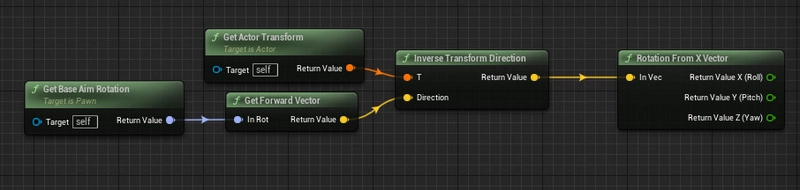
– Define a single pitch reference. If using a camera component, extract pitch as the difference between camera rotation and pawn rotation, then clamp and wrap as appropriate.
– Ensure aim offsets in animation blueprints consume this normalized pitch value consistently across clients.
4) Implement smooth transitions:
– Use interpolation (e.g., FInterpTo or similar) to move toward the replicated pitch value gradually. This avoids abrupt jumps in the animation and improves perceived latency.
5) Test under varied network conditions:
– Simulate latency, packet loss, and jitter to verify that replication remains stable and that aim offsets align with the visible aiming direction.
– Pay attention to edge cases, such as rapid pitch changes or extreme looking angles, and verify that the system handles these gracefully.

*圖片來源:Unsplash*
6) Debugging aids:
– Visualize replication streams and pitch values in the editor or dedicated debugging UI.
– Log discrepancies between client-predicted and server-authoritative pitch to identify timing issues.
It is essential to keep the system extensible. Different game genres may require different emphasis—PvP shooters might prioritize minimal latency at the cost of predictive errors, while cooperative or MMO-style games might tolerate slightly higher latency in exchange for consistency. The balance between fidelity, bandwidth, and responsiveness should guide the architecture.
Maintaining an objective, testable approach helps ensure that pitch replication supports accurate aim offsets without introducing exploit opportunities or performance problems. By centralizing pitch data, using compression-friendly representations, and combining server authority with client-side smoothing, developers can create a robust, scalable solution suitable for a wide range of multiplayer titles in Unreal Engine.
Perspectives and Impact
As the multiplayer landscape evolves, accurate pitch replication becomes more than a cosmetic feature—it directly influences user experience, fairness, and competitive integrity. When implemented well, pitch replication enables teammates and opponents to understand intent, anticipate actions, and engage more intuitively with the game world. Conversely, poorly implemented replication can degrade performance, produce confusing animation, and undermine trust in aiming mechanics.
Several trends influence how pitch replication might develop in the future:
- Network-aware animation systems: Unreal Engine and other tools are moving toward more network-aware animation pipelines. These systems aim to minimize desync in character pose while maintaining responsiveness of input-driven actions.
- Higher-fidelity but efficient data: Techniques such as delta encoding, data packing, and predictive interpolation will continue to improve as network bandwidth improves and players demand smoother experiences, even in crowded matches.
- Server-driven security: With increasing concerns about cheating, servers that validate aim-related data and restrict client-side manipulation become more critical. Replication strategies must account for security, ensuring that replicated pitch data cannot be easily spoofed to gain unfair advantages.
- Cross-platform consistency: As games span PC, consoles, and cloud streaming, ensuring pitch replication remains consistent across diverse hardware and network profiles will require adaptable replication policies and robust testing across scenarios.
The future of pitch replication lies at the intersection of networking efficiency, animation fidelity, and authoritative game logic. Developers who design their systems with a clear separation of concerns—authoritative orientation data on the server, client-side predictive smoothing, and well-defined reference frames—will deliver smoother, more reliable aiming experiences that hold up under real-world network pressures.
Key Takeaways
Main Points:
– Pitch replication is vital for accurate aim offsets in multiplayer games.
– Relying solely on client control rotation can lead to latency and consistency issues.
– A robust approach uses server authority, delta compression, and consistent reference frames with interpolation for smooth visuals.
Areas of Concern:
– Potential drift between client and server orientations.
– Bandwidth overhead from sending frequent, high-precision pitch data.
– Security risks if client-predicted data is not properly reconciled.
Summary and Recommendations
Pitch replication for aim offsets should be designed around server-authoritative orientation data, with client-side smoothing and a compressed, delta-based replication strategy. Establish a single, consistent reference frame for pitch, and ensure all relevant components (camera, pawn, and weapon) derive pitch from this frame. Use quantized pitch values to reduce bandwidth without sacrificing necessary accuracy, and interpolate toward server-provided values to maintain visual smoothness. Test under varied network conditions to validate correctness and resilience, and implement robust debugging tools to monitor replication health in real time.
By following these best practices, developers can deliver a reliable and fair aiming experience in Unreal Engine multiplayer games, with pitch replication that remains accurate, responsive, and efficient across diverse network environments.
References
- Original: https://dev.to/roasted-kaju/pitch-replication-and-axis-compression-in-unreal-engine-285k
- Additional references:
- Unreal Engine Documentation on Character Movement and Replication
- Networking and Replication best practices in UE4/UE5
- Tutorials on Aim Offsets and Animation Blueprints in Unreal Engine

*圖片來源:Unsplash*