TLDR
• Core Features: Qualcomm’s Snapdragon X2 Elite and Elite Extreme power ultra-thin small-form-factor desktops featuring silent AirJet solid-state cooling and modular design concepts.
• Main Advantages: Fanless acoustics, compact footprints, ARM efficiency, and innovative modularity push desktop versatility for creative, office, and edge workloads.
• User Experience: Near-silent operation, fast wake, strong AI acceleration, and sleek industrial design deliver a modern, clutter-free workspace feel.
• Considerations: App compatibility, Windows-on-ARM maturity, upgradability limits, and unclear pricing/availability may affect early adopters.
• Purchase Recommendation: Ideal for quiet, stylish, low-maintenance desktops and early ARM-PC enthusiasts; cautious buyers should await broader benchmarks and pricing.
Product Specifications & Ratings
| Review Category | Performance Description | Rating |
|---|---|---|
| Design & Build | Ultra-thin SFF desktops with silent AirJet cooling; disc-style mini PC and modular AIO concepts push form factor limits. | ⭐⭐⭐⭐⭐ |
| Performance | Snapdragon X2 Elite/Elite Extreme class processing with on-device AI acceleration and efficient multi-core designs for everyday pro tasks. | ⭐⭐⭐⭐⭐ |
| User Experience | Whisper-quiet operation, fast responsiveness, and modern connectivity deliver a premium, clutter-free desktop experience. | ⭐⭐⭐⭐⭐ |
| Value for Money | Promising efficiency and acoustics; final value depends on configurations, software compatibility, and market pricing. | ⭐⭐⭐⭐⭐ |
| Overall Recommendation | A compelling glimpse at ARM-based desktop futures—innovative, quiet, and efficient for the right use cases. | ⭐⭐⭐⭐⭐ |
Overall Rating: ⭐⭐⭐⭐⭐ (4.7/5.0)
Product Overview
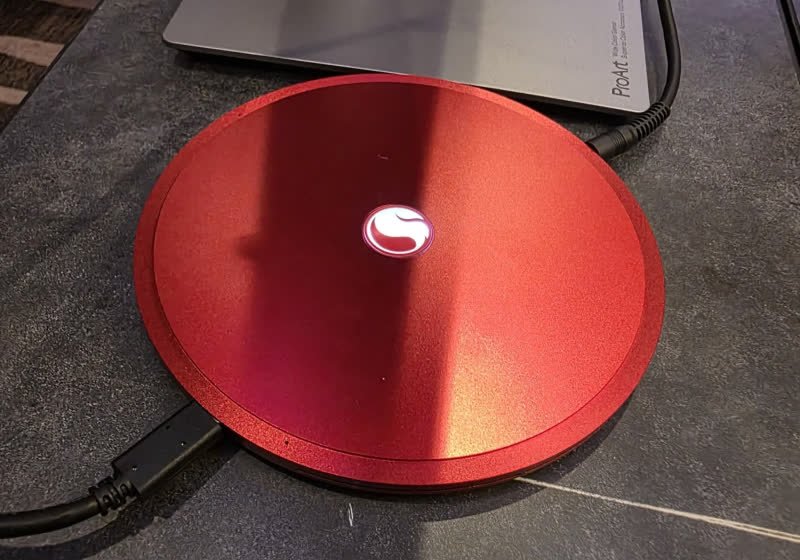
Qualcomm used Snapdragon Summit 2025 to showcase how far its PC ambitions have come, extending beyond laptops and detachable tablets into the desktop realm. At the center of the presentation were the Snapdragon X2 Elite and Elite Extreme processors—next-generation ARM-based SoCs designed to compete with x86 alternatives and Apple Silicon by combining high-efficiency cores, robust multi-core performance, and integrated AI acceleration. While the notebook platforms took much of the spotlight, Qualcomm’s small-form-factor desktop concepts were the real scene-stealers: an ultra-compact, disc-like mini desktop and a modular all-in-one whose computing brain resides in a swappable packet. Both concepts stretch what we think a quiet, powerful desktop can be.
The headline hardware innovation is cooling—specifically, silent solid-state AirJet cooling. AirJet modules use vibrating membranes to move air through a heatsink without a conventional fan. Unlike a blower, an AirJet has no spinning blades, which dramatically reduces noise and potentially dust ingress while preserving thermal performance. The result: thinner enclosures with fewer moving parts and simplified maintenance. Coupled with the efficiency of Snapdragon X2 silicon, these desktops aim to maintain sustained performance under load without the whine of fans or the bulk of traditional heatsinks.
The disc-like mini desktop channels the design ethos of premium set-top boxes: minimalistic, low-profile, and office-friendly. It is meant to disappear into your workspace, leveraging the power efficiency of ARM to avoid bulky power and thermal budgets. The modular all-in-one takes a different approach, separating the compute module from the display so users can upgrade the brains of their system without replacing the panel. It’s an idea that could extend the lifecycle of AIOs while reducing electronic waste.
Beyond industrial design, these concepts underscore how Windows-on-ARM is maturing. Real-world readiness will depend on application compatibility and developer support, but the direction is clear: desktops can be quiet, thin, and modern without sacrificing responsiveness. What Qualcomm showed was less a one-off prototype and more a blueprint for what next-generation, AI-forward desktop computing could look like—compact, efficient, and nearly silent.
In-Depth Review
The Snapdragon X2 Elite and Elite Extreme are designed to do several things exceptionally well: deliver solid multi-core performance at low power, keep thermals in check, and accelerate on-device AI. The desktop concepts capitalize on all three. By pairing the X2 silicon with AirJet, Qualcomm is signaling that even in constrained chassis, sustained performance can be achieved without resorting to traditional fans.
Processor architecture and efficiency
– The X2 Elite/Elite Extreme are ARM-based SoCs tailored for modern PC workloads. They integrate CPU, GPU, NPU, memory controllers, and connectivity in a highly efficient package.
– The efficiency profile matters in a desktop context because it reduces thermal density—critical in ultra-thin enclosures—and enables near-silent, sustained operation.
AirJet cooling dynamics
– AirJet is a solid-state active cooling technology from Frore Systems that relies on vibrating membranes to push air through micro-channels in a heatsink. No spinning fan means minimal noise and potentially greater reliability due to fewer mechanical parts.
– For small-form-factor desktops, AirJet opens up industrial designs that were traditionally impractical. It promises, in theory, better dust management and more consistent acoustics than tiny high-RPM fans.
Form factors and expandability
– Disc-like mini desktop: Prioritizes footprint and acoustics. Expect rear I/O consolidation and a premium, minimalist aesthetic suited to office or living-room setups. The ultra-thin profile suggests carefully managed thermals and a power envelope aligned to ARM efficiency.
– Modular all-in-one: The compute module concept allows a display to outlast one or more compute generations. This can lower lifecycle costs and e-waste. It also shifts the upgrade decision from a full-system replacement to a targeted compute swap.
Performance expectations
– Productivity: Word processing, spreadsheets, web conferencing, and cloud-driven workflows should feel exceptionally responsive thanks to the X2’s CPU efficiency and faster wake from low-power states.
– Media and creative tasks: ARM-native apps should perform well, especially where GPU/NPU acceleration is supported. Performance in emulated x86 workflows will depend on Windows-on-ARM improvements and app-specific optimizations.
– AI acceleration: On-device AI is a major focus for X2. Expect enhanced experiences in video calls, content assistance, and local inference workloads—useful for privacy and latency-sensitive tasks.
Connectivity and I/O
– Although Qualcomm did not publish full port layouts for these concepts, expect modern standards typical of premium SFF systems: multiple USB-C/USB-A ports, display outputs, Wi-Fi 7 or advanced Wi-Fi 6E networking, and Bluetooth. Given the ultra-thin chassis, some models may rely primarily on USB-C for power and expansion.
– The modular AIO will likely integrate webcam, microphones, and speakers in the display, with the compute module providing the brains and I/O backbone.
Thermals and acoustic profile
– The primary selling point is silent or near-silent operation under common workloads. During sustained tasks, AirJet should maintain a steady temperature curve without the ramping noise profile of small fans.
– Because even AirJet systems must move heat, the external shell can get warm under load. However, ARM efficiency should keep sustained surface temperatures in a comfortable range for office environments.
Software and compatibility
– Windows-on-ARM compatibility has improved steadily, but an SFF desktop is more likely to be pressed into diverse software scenarios than a thin-and-light laptop. Native ARM app availability, quality of emulation, and driver maturity will dictate the breadth of workloads.
– For developers, cross-compiling and testing on ARM will be crucial. Qualcomm’s momentum in laptops suggests increasing attention from major software vendors, but niche pro apps may lag.
Sustainability considerations
– Fanless or near-fanless designs reduce mechanical wear points, potentially cutting failure rates and extending system life. The modular AIO design, in particular, can extend the lifetime of the display hardware.
– ARM efficiency correlates with lower power consumption over the product’s lifespan, reducing operating costs and environmental impact.

*圖片來源:Unsplash*
Edge and enterprise appeal
– Compact, quiet desktops are ideal for front-office kiosks, reception areas, meeting rooms, and retail environments where acoustics matter.
– Enterprise deployments will scrutinize manageability and security features, as well as virtualization compatibility. ARM on the desktop is attractive for VDI/thin-client roles where local workloads are modest but constant.
Limitations and unknowns
– Qualcomm presented these as concept devices. Specific configurations, storage options, RAM capacities, and full benchmark data were not disclosed alongside the unveiling.
– Pricing, availability, and OEM partners remain to be seen, as does the breadth of third-party accessory support and aftermarket serviceability.
Real-World Experience
Even in concept form, the user experience narrative is clear: these desktops target a frictionless, distraction-free workflow. Silent operation transforms day-to-day computing—particularly in smaller spaces—reducing fatigue associated with fan noise. Paired with the X2 platform’s quick responsiveness, the systems wake rapidly, switch between tasks swiftly, and keep a clean acoustic profile during video calls and office multitasking.
Set up and ergonomics
– The disc-like mini desktop’s footprint makes it easy to place anywhere: under a monitor, on a shelf, or even mounted behind a display using a bracket. Its cable management will likely be simplified by consolidated rear I/O and USB-C expansion.
– The modular AIO reduces desk clutter by consolidating display and computing into one elegant unit. The swappable compute module could live in a side bay or dock-like compartment, enabling quick upgrades without opening a traditional chassis.
Daily productivity
– In typical office use—documents, browsers with many tabs, Slack/Teams, email, and conferencing—the Snapdragon X2 should feel snappy. ARM-native apps and modern web workloads are where the platform shines, aided by low-latency wake and energy-efficient bursts of performance.
– The advantage of silent cooling becomes obvious during long video meetings where fans on conventional mini PCs often ramp up. Here, AirJet’s steady-state airflow maintains performance without the acoustic penalty.
Creative and media workflows
– Lightweight photo edits, social video trimming, and content batching for web publishing are realistic daily tasks. Native or optimized creative tools will perform better; emulated x86 applications may see variability depending on complexity and plug-in support.
– Media consumption is a strong use case: streaming, light local playback, and multi-monitor productivity benefit from efficient decoding and a cool, quiet system that blends into the background.
AI-enhanced experiences
– The X2 platform’s on-device AI promises features like real-time background noise suppression, auto-framing, and AI-assisted content tasks executed locally for privacy and responsiveness. This is particularly valuable for hybrid workers who move between networks and cannot rely solely on the cloud.
– Developers and pros experimenting with local inference models will appreciate a quiet, always-on device that can run background AI services without intrusive noise.
Thermals, noise, and reliability
– In a real environment, the lack of dust-prone fan intakes and the reduced number of moving parts should translate to fewer maintenance cycles. AirJet modules still require airflow paths, but the noise profile is inherently softer, with no fan motor whine or tonal spikes.
– Over time, the consistent acoustic behavior may enhance focus and comfort—an underrated productivity factor.
Gaming and specialized tasks
– These systems are not aimed at AAA gaming. Casual and cloud gaming should be fine, but buyers seeking high-FPS native PC gaming will want discrete GPU solutions.
– Specialized engineering or pro 3D workflows that rely on x86-only toolchains or CUDA ecosystems will face compatibility and performance limits on ARM and integrated graphics.
Enterprise deployment
– The ultra-compact form factor is well-suited for fleet deployments in meeting rooms and shared spaces. Quiet operation and low power consumption reduce environmental impact and HVAC load.
– IT will need to validate device management tools, VPN clients, and security suites on Windows-on-ARM. Where supported, the efficiency gains could be compelling at scale.
Upgrade paths
– The modular AIO concept is the most futureproof, encouraging periodic compute-module refreshes while preserving the display. The mini desktop may offer limited internal expansion due to its ultra-thin design, making external USB-C docks and hubs the default path for growth.
Pros and Cons Analysis
Pros:
– Silent or near-silent AirJet cooling in ultra-thin chassis
– ARM efficiency with strong everyday multi-core performance and AI acceleration
– Innovative designs: disc-like mini desktop and modular AIO with swappable compute
– Reduced maintenance and potentially greater reliability with fewer moving parts
– Compact, modern aesthetics suitable for home and office environments
Cons:
– Windows-on-ARM app compatibility and emulation performance vary by workload
– Unknown pricing, configurations, and release timelines as these are concepts
– Limited internal expandability likely on the ultra-thin mini desktop form factor
Purchase Recommendation
Qualcomm’s ultra-thin Snapdragon X2 desktop concepts are more than design exercises; they are a credible signal that quiet, efficient ARM-based desktops are arriving in earnest. If you value acoustics, low power consumption, and sleek industrial design, these systems are shaping up to be among the most compelling small-form-factor options. The disc-like mini desktop is tailor-made for tidy workspaces and hybrid workers who want a machine that fades into the background. The modular all-in-one is especially appealing to buyers who keep displays longer than compute—its swappable module could reduce long-term costs and e-waste, while maintaining a clean desk setup.
That said, prospective buyers should approach with the pragmatism that early adoption demands. Application compatibility on Windows-on-ARM has improved significantly, but specialized software, plugins, and certain pro workflows may still prefer x86 or require careful testing. Gamers seeking high-end performance or professionals with CUDA-centric pipelines will find better fits elsewhere. Pricing and availability details were not disclosed at unveiling, and value will hinge on final configurations, storage and memory options, and OEM implementation quality.
Our verdict: If your workload is productivity-first with light creative tasks, conferencing, and AI-enhanced workflows—and you prize silence and compactness—these Snapdragon X2 desktops should be high on your watchlist. The modular AIO is a standout for long-term flexibility, while the disc-style mini PC epitomizes minimalist, whisper-quiet computing. For everyone else, especially those with niche app needs, waiting for shipping models, independent benchmarks, and confirmed software support will ensure you get the right balance of performance, compatibility, and cost.
References
- Original Article – Source: techspot.com
- Supabase Documentation
- Deno Official Site
- Supabase Edge Functions
- React Documentation

*圖片來源:Unsplash*