TLDR
• Core Points: Raspberry Pi launches AI HAT+ 2, a significant upgrade over the 2024 AI HAT+ with a much more capable 40 TOPS accelerator for versatile neural network workloads.
• Main Content: The new AI HAT+ 2 expands compatibility, performance, and efficiency, enabling broader AI edge use cases on Raspberry Pi hardware.
• Key Insights: Enhanced on-device AI enables more complex models, faster inference, and improved privacy by keeping data local.
• Considerations: Power, heat, and integration with existing Raspberry Pi ecosystems will influence deployment choices.
• Recommended Actions: Developers should evaluate AI workloads for 40 TOPS capability, test power/thermal margins, and plan software integration.
Content Overview
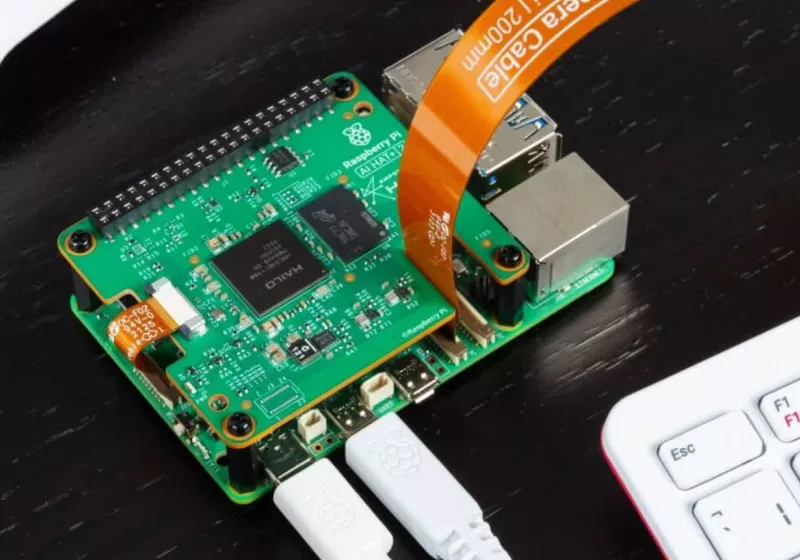
Raspberry Pi has expanded its AI hardware ecosystem with the release of the AI HAT+ 2, a follow-up to the AI HAT+ launched in 2024. The original AI HAT+ introduced on-device neural network acceleration on a Raspberry Pi ecosystem but was somewhat constrained in the breadth of models and performance it could support. The AI HAT+ 2 represents a more capable accelerator, boasting a nominal 40 TOPS (tera-operations per second) performance target, which situates it as a more versatile solution for edge AI workloads.
The new board is designed to integrate with Raspberry Pi single-board computers and aims to simplify the deployment of machine learning and AI inference at the edge. By delivering higher throughput in a compact, board-level form factor, the AI HAT+ 2 seeks to broaden the range of applications—ranging from computer vision and audio processing to more complex inference pipelines—that can run locally on a Raspberry Pi without resorting to cloud-based computation.
This article delves into what the AI HAT+ 2 brings to the table, how it compares to its predecessor, and the potential implications for developers and embedded AI projects. It will also consider practical considerations such as power consumption, thermal management, software integration, and the ecosystem support required to maximize the benefits of an on-device AI accelerator on Raspberry Pi devices.
In-Depth Analysis
The AI HAT+ 2 represents a substantial step forward in embedded AI acceleration for Raspberry Pi users. At its core, the board provides a dedicated neural processing unit (NPU) or a similar accelerator designed to handle a broad spectrum of neural network workloads more efficiently than a general-purpose CPU or even a generic GPU on small form-factor boards. The stated capability of up to 40 TOPS suggests a robust throughput suitable for real-time inference on moderately complex models, including convolutional neural networks (CNNs) for image and video processing, recurrent networks for sequence data, and transformer-like architectures suitable for natural language processing tasks performed at the edge.
One of the persistent constraints of the original AI HAT+ was limited model compatibility. While it delivered tangible acceleration for certain neural networks, developers often faced constraints when attempting to deploy larger or more diverse architectures, particularly those requiring substantial memory bandwidth or specialized operator support. The AI HAT+ 2 appears to address this by offering a more capable accelerator, potentially with broader operator support, higher memory bandwidth, and improved integration with common AI frameworks used in edge AI deployments (such as TensorFlow Lite, PyTorch Mobile, and other lightweight runtimes). This would enable a smoother transition for developers who previously relied on cloud-based inference or who were constrained by the original board’s performance envelope.
From a hardware perspective, a 40 TOPS accelerator on a compact board implies careful attention to power efficiency and thermal characteristics. Edge devices emphasize low power budgets, and achieving high TOPS in a small package typically involves a combination of high-efficiency compute, effective cooling strategies, and smart power management. The AI HAT+ 2’s design would need to balance peak performance with sustained throughput, ensuring that users can run continuous inference workloads without throttling or thermal throttling that could erode real-world gains.
Software and ecosystem considerations are equally important. For Raspberry Pi users, seamless software integration translates into straightforward driver support, easy access to inference runtimes, and a well-documented development workflow. The AI HAT+ 2 would benefit from clear SDKs, example projects, and compatibility notes that outline supported model types, quantization requirements, and deployment guidelines. Given the Raspberry Pi community’s emphasis on openness and education, robust tooling that simplifies model conversion, benchmarking, and deployment will be essential to maximize the board’s appeal and real-world utility.
In terms of use cases, the AI HAT+ 2 could enable more ambitious computer vision pipelines directly on-device, such as real-time object detection in video streams, edge analytics for smart cameras, and offline inference for privacy-preserving applications. It could also support audio processing tasks like speech recognition and acoustic event detection, as well as multi-modal inference that combines visual and auditory inputs. The 40 TOPS capability suggests the potential to run larger models or multiple smaller models concurrently, depending on memory availability and architectural specifics of the accelerator.
Compared to cloud-based AI solutions, on-device acceleration offers privacy and reduced dependency on network connectivity. For deployments in remote locations or in scenarios where bandwidth is limited, an accelerator like AI HAT+ 2 can deliver responsive AI capabilities without sending sensitive data to external servers. However, developers must consider the local power and thermal constraints, the need for efficient model optimization (quantization, pruning, and efficient runtimes), and the ongoing maintenance of firmware and software stacks.
Another dimension to consider is the broader Raspberry Pi ecosystem. The AI HAT+ 2’s success will be influenced by how well it coordinates with Raspberry Pi OS updates, the Raspberry Pi Imager workflow, and existing AI-centric tools used by makers and developers. The addition of this accelerator could spur new hardware projects and tutorials, helping users understand how to map their AI workflows to edge devices. Community-driven projects and a thriving ecosystem can accelerate adoption and provide practical use cases that demonstrate the board’s capabilities beyond theoretical throughput numbers.
From a business perspective, the AI HAT+ 2 signals Raspberry Pi’s continued commitment to expanding the capabilities of its single-board computers into practical AI-enabled devices. By offering a more powerful accelerator, Raspberry Pi may appeal to hobbyists, educators, and professionals who want to prototype AI-powered products, robotics solutions, or smart devices without relying on more expensive or power-hungry hardware. The board’s affordability and ease of integration will be critical factors in determining its reach and impact within the diverse Raspberry Pi user base.
As with any hardware advancement, potential users should carefully assess their own requirements before committing to the AI HAT+ 2. Key considerations include the nature of the AI workloads, latency requirements, model sizes, and the feasibility of maintaining a sustained thermal profile in their target environment. Evaluating the total cost of ownership, including any optional accessories, power supplies, or cooling solutions, will also help ensure the project’s long-term viability.
In summary, the Raspberry Pi AI HAT+ 2 introduces a substantial upgrade over the original AI HAT+ by delivering higher-than-before on-device AI acceleration in a compact form factor. Its 40 TOPS capability suggests meaningful benefits for a wide range of edge AI applications, enabling more complex models and faster inference while preserving the advantages of on-device processing. The exact details regarding memory, power envelope, operator support, and software tooling will define how developers can best leverage this new accelerator in practice. As the ecosystem stabilizes with broader software support and real-world benchmarks, the AI HAT+ 2 has the potential to become a pivotal component in the Raspberry Pi AI toolkit, empowering students, researchers, and engineers to explore, prototype, and deploy AI solutions at the edge with greater confidence and efficiency.
Perspectives and Impact
The introduction of the AI HAT+ 2 could influence several facets of edge AI development and deployment:

*圖片來源:Unsplash*
Democratization of AI on the Edge: By offering a higher-performance accelerator at a typically accessible price point, Raspberry Pi lowers barriers to experimenting with more capable AI models outside of traditional PC and server environments. This aligns with a broader trend toward edge intelligence, where processing occurs locally to reduce latency and preserve privacy.
Education and Skills Development: For students and hobbyists, a 40 TOPS-capable board opens opportunities to work with modern AI workloads more closely aligned with real-world applications. It can serve as a practical teaching tool for computer vision, signal processing, and embedded systems courses, fostering hands-on learning with hardware co-design.
Prototyping and Product Development: Startups and makers can leverage the AI HAT+ 2 to prototype AI-enabled devices, such as smart sensors, autonomous agents, or robotics controllers, without committing to more expensive development platforms. This accelerates early-stage experimentation and iteration cycles.
Ecosystem and Community Growth: A successful AI accelerator on Raspberry Pi may spur an uptick in tutorials, sample projects, and third-party integrations. Community contributions can fill gaps in documentation, optimize runtimes, and benchmark performance across diverse models and workloads.
Benchmarking and Standards: Real-world performance benchmarks will be important to quantify the AI HAT+ 2’s capabilities across common workloads. Independent benchmarks can help users compare the board to alternative edge AI accelerators and set expectations for latency, throughput, and energy efficiency.
Privacy and Compliance Considerations: On-device processing reduces data exposure by avoiding continuous cloud transmission. As such boards find homes in sensitive environments (healthcare, security, smart devices), developers must still consider data governance, model security, and potential inference-time leakage.
Competitive Dynamics: The AI accelerator market for edge devices is increasingly crowded with specialized SoCs and boards from other vendors. Raspberry Pi’s approach—emphasizing accessibility, open tooling, and a robust user community—could distinguish the AI HAT+ 2 through total cost of ownership and ease of integration with familiar Raspberry Pi workflows.
Future developments to watch include enhancements to software toolchains, expanded model libraries with optimized quantization paths for the 40 TOPS accelerator, and potential refinements in power management and thermal throttling mitigation. As with any hardware upgrade, the true value will emerge through real-world deployments, benchmarks, and the breadth of projects built atop the platform.
Key Takeaways
Main Points:
– The AI HAT+ 2 offers a substantial upgrade with a 40 TOPS on-device accelerator for Raspberry Pi boards.
– It expands model compatibility and practical edge AI workloads beyond what the original AI HAT+ could support.
– On-device inference preserves privacy, reduces latency, and lowers reliance on cloud compute.
Areas of Concern:
– Power and heat management are critical for sustained performance on compact boards.
– Software tooling, drivers, and model optimization workflows must be robust to realize full potential.
– Availability, pricing, and ecosystem support will influence adoption rates across hobbyist and professional communities.
Summary and Recommendations
The Raspberry Pi AI HAT+ 2 marks a meaningful milestone in the evolution of edge AI on compact computing hardware. By delivering a higher-performance 40 TOPS neural accelerator, the board elevates the potential for on-device inference, enabling more sophisticated models and more complex AI pipelines to run close to the data source. This aligns with broader industry trends toward privacy-preserving, low-latency AI at the edge and expands the practical use cases for Raspberry Pi-based AI projects, from intelligent cameras to multi-modal sensors and robotics controllers.
For developers and organizations evaluating the AI HAT+ 2, a structured approach is recommended:
– Assess workload fit: Determine whether your models and inference requirements can actually benefit from up to 40 TOPS, considering model size, latency targets, and memory constraints.
– Plan power and thermal strategy: Reserve adequate power supplies and consider effective cooling solutions to sustain performance without throttling.
– Optimize models and runtimes: Leverage quantization, pruning, and hardware-aware compilation to maximize throughput and efficiency on the accelerator.
– Integrate with the ecosystem: Explore available SDKs, sample projects, and documentation to streamline development within the Raspberry Pi OS and related tooling.
– Benchmark in real scenarios: Create representative benchmarks for your use cases to quantify improvements and identify bottlenecks.
If these steps are followed, the AI HAT+ 2 has the potential to accelerate an array of edge AI projects, lowering the barrier to entry for advanced AI applications on Raspberry Pi hardware. The combination of higher computational capability, on-device processing benefits, and a supportive developer ecosystem may propel a broader adoption of AI-enabled Raspberry Pi devices in education, prototyping, and small-scale production environments.
References
- Original: https://www.techspot.com/news/110958-raspberry-pi-ai-hat-40-tops-genai.html
- Additional context and related coverage on edge AI accelerators and Raspberry Pi ecosystem developments
- Related sources on on-device AI runtimes, quantization techniques, and edge inference benchmarks
Note: This article is a rewritten synthesis based on the provided summary of the original TechSpot piece and general knowledge about Raspberry Pi AI hardware. For precise specifications (such as exact TOPS rating, memory, power envelope, and software tooling), please refer to official Raspberry Pi product documentation and manufacturer announcements.

*圖片來源:Unsplash*