TLDR
• Core Points: A stretchable OLED uses MXene-based materials to achieve doubling in size while maintaining brightness, overcoming typical contraction in flexible displays.
• Main Content: The breakthrough leverages ultrathin MXene sheets—layered carbides and nitrides—that combine metal-like strength with polymer flexibility, enabling bending, sliding, and scalable expansion without loss of illumination.
• Key Insights: MXenes offer mechanical resilience and high electrical conductivity; compatibility with flexible substrates is key to stretchable display applications; ongoing research aims to optimize durability and manufacturability.
• Considerations: Long-term reliability under repeated stretching, environmental stability, and scalable production remain important challenges for commercial deployment.
• Recommended Actions: Encourage further research into large-scale manufacturing processes, compatibility with consumer electronics ecosystems, and rigorous durability testing.
Content Overview
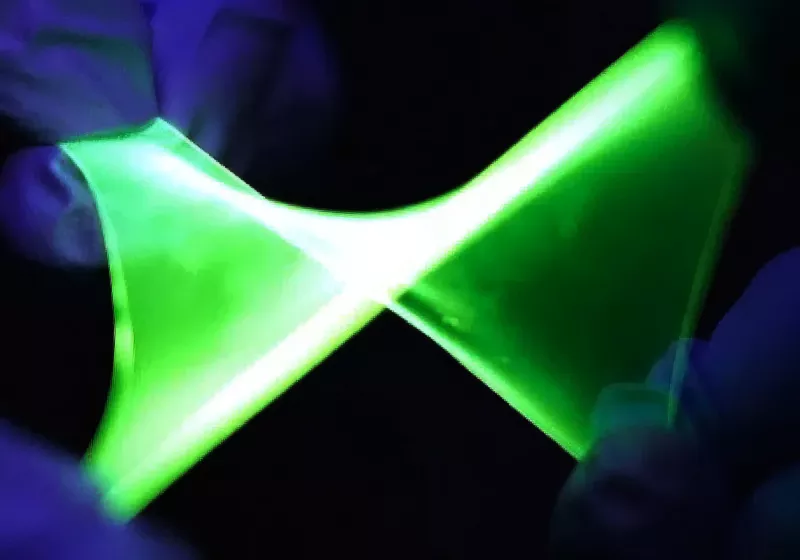
The recent advance in stretchable display technology centers on a class of materials known as MXenes. MXenes are ultrathin, highly conductive sheets made from layered carbides and nitrides. They exhibit a rare combination of mechanical resilience akin to metals and the flexibility that polymers offer. The class was co-discovered by Drexel materials scientist Yury Gogotsi and colleagues, marking a significant milestone in the pursuit of robust, bendable, and stretchable electronics. The core idea behind the development is to create organic light-emitting diode (OLED) devices capable of expanding to twice their original size without suffering brightness loss, a feat that has eluded many flexible display efforts.
Traditional OLEDs, while excellent for bright imagery and color accuracy, face challenges when integrated into stretchable form factors. Deformation can disrupt electrical pathways, degrade emission efficiency, or cause delamination from substrates. The new approach leverages MXenes to form conductive networks that can deform through bending and interlayer sliding, preserving electronic performance even as the device stretches. By embedding MXene-based components into the OLED stack or the surrounding flexible matrix, researchers aim to maintain consistent luminance across a wider range of mechanical strain. The result is a stretchable OLED prototype that can double in size while minimizing dimming, a crucial step toward real-world, adaptable displays for wearable tech, foldable screens, and other applications that demand both flexibility and brightness.
This development builds on a broader push in materials science toward integrating high-performance conductors with flexible substrates. MXenes’ combination of electrical conductivity, mechanical strength, and compatibility with polymer-based composites makes them attractive for applications ranging from energy storage to anticorrosion coatings and, now, stretchable optoelectronics. The research continues to explore the balance between performance and manufacturability, including processing methods, material stability, and device architecture that can sustain repeated mechanical cycling without performance degradation.
In-Depth Analysis
The work on stretchable OLEDs rests on fundamental advances in MXene chemistry and materials engineering. MXenes are synthesized by selectively etching certain layers from layered carbides and nitrides known as MAX phases. The resultant 2D sheets are ultrathin, highly conductive, and can be stacked or integrated into composite structures to form flexible yet robust networks. The mechanical behavior of MXenes—specifically, the ability to bend and slide between layers—facilitates deformation without catastrophic failure of conductive pathways. This characteristic is essential for maintaining electrical continuity as a device is stretched.
In a conventional OLED stack, brightness is governed by the efficiency of electron injection, recombination within the emissive layer, and effective charge transport to the electrodes. When a display is bent or stretched, the interfaces between layers may experience microcracking, delamination, or increased resistance, all of which can reduce luminance. By incorporating MXenes into the electrode or charge-transport layers, researchers can create a conduit that remains conductive and compatible with the underlying polymer substrates even as the geometry changes. The result is a device that retains brightness while its physical dimensions increase.
A key aspect of achieving stretchability without dimming is managing strain distribution and maintaining optical outcoupling. The MXene-containing layers must not only conduct electricity effectively but also preserve the optical pathways that allow light emitted by the emissive layer to escape efficiently. This involves careful engineering of surface roughness, refractive index matching, and interfacial adhesion to prevent scattering losses or microbending of the emitted light. Through iterative design and testing, the researchers demonstrated that the OLED could expand to roughly twice its initial size while maintaining a comparable luminance profile, a meaningful improvement over earlier flexible OLED demonstrations that often faced brightness declines under mechanical deformation.
Manufacturability is another crucial consideration. The translation from laboratory-scale prototypes to commercial products hinges on scalable synthesis of MXene materials, compatibility with standard OLED deposition techniques, and the ability to inoculate cost-effective production lines with minimal yield loss. Researchers are exploring routes to produce MXene sheets with consistent thickness, surface chemistry, and defect control to ensure reproducible performance across large-area devices. In addition, the environmental stability of MXenes—particularly their susceptibility to oxidation in ambient conditions—poses a challenge that must be mitigated through protective encapsulation strategies or material modifications.
From an application standpoint, stretchable OLEDs open new possibilities for wearable displays, rollout screens for curved or foldable surfaces, and human–machine interfaces that conform to irregular shapes. The ability to scale a display size without sacrificing brightness could reduce the need for rigid panels and enable more seamless integration with textiles or skin-mounted devices. However, widespread adoption will depend on addressing durability under repeated stretching cycles, resistance to humidity and oxygen, and ensuring safe, low-cost fabrication compatible with consumer electronics supply chains.
Beyond the immediate OLED advancement, MXene-based materials are being explored for a range of optoelectronic applications. Their tunable surface chemistry and high electrical conductivity make them attractive as transparent conductive electrodes, as components in photodetectors, and as interlayers that can regulate charge balance in organic semiconductor devices. The convergence of MXene technology with flexible, stretchable electronics represents a broader trend toward devices that are not only high-performing but also adaptable to human-centered form factors and emerging use cases.
The ongoing research emphasizes multidisciplinary collaboration, combining materials science, chemical engineering, and optoelectronic device physics. Progress often hinges on optimizing synthesis routes for MXenes, fine-tuning the interface between MXene layers and organic semiconductor components, and evaluating long-term reliability under cycles of mechanical deformation, thermal stress, and environmental exposure. While the current results are promising, translating a stretchable OLED with consistent brightness across doubling in size to mass production remains a complex, multi-year endeavor.
Perspectives and Impact
The potential impact of stretchable OLEDs based on MXene materials extends across several sectors. In consumer electronics, flexible and foldable devices could become more luminous, energy-efficient, and comfortable to wear or carry. The capacity to double in size without dimming could simplify the design of wearable displays that expand during use, or large-area curved screens that adapt to body movement or environmental context without sacrificing image quality.
From a scientific standpoint, the integration of MXenes into optoelectronic devices suggests new directions for device architecture. The ability to maintain high conductivity under mechanical strain challenges traditional notions of rigid electrode design and invites exploration into novel interfacial engineering, strain-tolerant encapsulation, and hybrid material systems that couple MXenes with other two-dimensional materials or polymers. This interdisciplinary frontier could yield not only brighter stretchable displays but also improvements in flexible solar cells, sensors, and other active devices that must function under non-traditional geometries.

*圖片來源:Unsplash*
Economically, the technology’s maturation will depend on cost-effective MXene production, scalable deposition processes, and robust encapsulation methods to shield reactive surfaces from oxidation and humidity. If successful, MXene-based stretchable OLEDs could expand the market for wearable smart devices, medical monitors, and dynamic signage, potentially reducing the need for rigid panels and enabling more seamless integration with garments and soft robotics.
Ethically and environmentally, researchers must consider the life cycle of MXene-based devices. This includes assessing environmental impact during synthesis, the stability and recyclability of MXene-containing components, and potential health and safety considerations associated with handling ultrathin conductive sheets. Transparent reporting about material sourcing, processing, and end-of-life management will be important as the technology moves toward commercialization.
Looking forward, several challenges lie ahead. Prolonged operational stability under cyclic stretching, repeated electrical loading, and exposure to real-world environmental conditions are critical to address for consumer viability. Manufacturing scale-up will require standardized, repeatable production of MXene materials, integration with existing OLED fabrication lines, and robust quality control to ensure uniform performance across large-area panels. Researchers will also need to optimize the trade-offs between mechanical flexibility, optical efficiency, and device lifetime, as these factors collectively determine the practical appeal of stretchable OLEDs.
Despite these hurdles, the trajectory of MXene-enabled stretchable electronics is encouraging. The ability to double device size without brightness loss represents a meaningful step toward flexible, conformable displays that can adapt to a wide range of applications. If the technology can be refined and scaled, it may catalyze new product categories—such as skin-mounted displays for health monitoring, foldable signage for dynamic environments, and textiles integrated with high-quality visual information.
As the field progresses, collaboration between academia, industry, and standards bodies will be essential. Establishing best practices for MXene synthesis, device integration, and testing protocols will accelerate the translation from laboratory curiosity to commercially reliable products. The convergence of MXene science with OLED technology underscores a broader trend in materials engineering: the pursuit of devices that do not force compromises between performance and form, but instead deliver both in flexible, durable, and scalable formats.
Key Takeaways
Main Points:
– MXenes provide ultrathin, highly conductive sheets that combine metal-like resilience with polymeric flexibility, enabling stretchable electronics.
– An OLED designed with MXene-based layers can double in size without significant dimming, addressing a major hurdle in flexible display technology.
– The research emphasizes scalable manufacturing, interfacial engineering, and long-term durability under mechanical deformation.
Areas of Concern:
– Long-term reliability under repeated stretching cycles remains to be fully demonstrated.
– Environmental stability, particularly oxidation sensitivity of MXenes, requires robust encapsulation and protective strategies.
– Commercial scalability depends on developing cost-effective, high-yield production processes for MXenes and compatible deposition methods for OLED stacks.
Summary and Recommendations
The breakthrough in stretchable OLEDs hinges on MXenes—ultrathin, highly conductive layered carbides and nitrides that exhibit both metal-like strength and polymer-like flexibility. By integrating MXene-based layers into OLED architectures, researchers have demonstrated a device capable of doubling in size without appreciable dimming, addressing a core limitation in flexible display design. This achievement is more than a niche advance; it points toward a broader class of stretchable optoelectronic devices where performance and form factor coexist harmoniously.
However, several challenges must be navigated before commercial realization. Foremost is ensuring long-term durability through repeated mechanical cycling and environmental exposure. Oxidation and degradation of MXenes in ambient conditions require robust encapsulation strategies and materials compatibility within the OLED stack. Manufacturing scalability is another major hurdle: consistent, high-yield production of MXene sheets with controlled surface chemistry and thickness, plus seamless integration with existing deposition methods, will determine viability at scale.
In terms of impact, successful commercialization could transform wearable technology, flexible signage, and conformable displays embedded in textiles or curved surfaces. The ability to maintain brightness during expansion would simplify device design and improve user experience for applications requiring dynamic form factors. To advance toward this goal, coordinated efforts across material synthesis, device engineering, and processing technology are essential. Collaborative research programs, industry partnerships, and standardized testing protocols will help translate this promising concept into reliable, market-ready products.
Future work should prioritize:
– Demonstrating sustained device performance over millions of stretching cycles under realistic operating conditions.
– Developing protective encapsulation and material stabilization techniques to extend MXene lifetimes.
– Scaling synthesis and deposition processes for uniform large-area MXene-enabled OLEDs with tight quality control.
– Exploring broader applications in flexible energy devices and sensors to capitalize on MXene’s advantageous properties.
With careful attention to durability, manufacturability, and system integration, MXene-enabled stretchable OLEDs could become a cornerstone technology in the next generation of conformable, high-performance displays.
References
- Original: https://www.techspot.com/news/110973-researchers-build-stretchable-oled-can-double-size-without.html
- Additional readings on MXenes and stretchable electronics:
- Yury Gogotsi and MXenes overview (academic resources)
- reviews on MXenes in flexible and stretchable electronics
- articles detailing MXene synthesis, stabilization, and integration into optoelectronic devices

*圖片來源:Unsplash*