TLDR
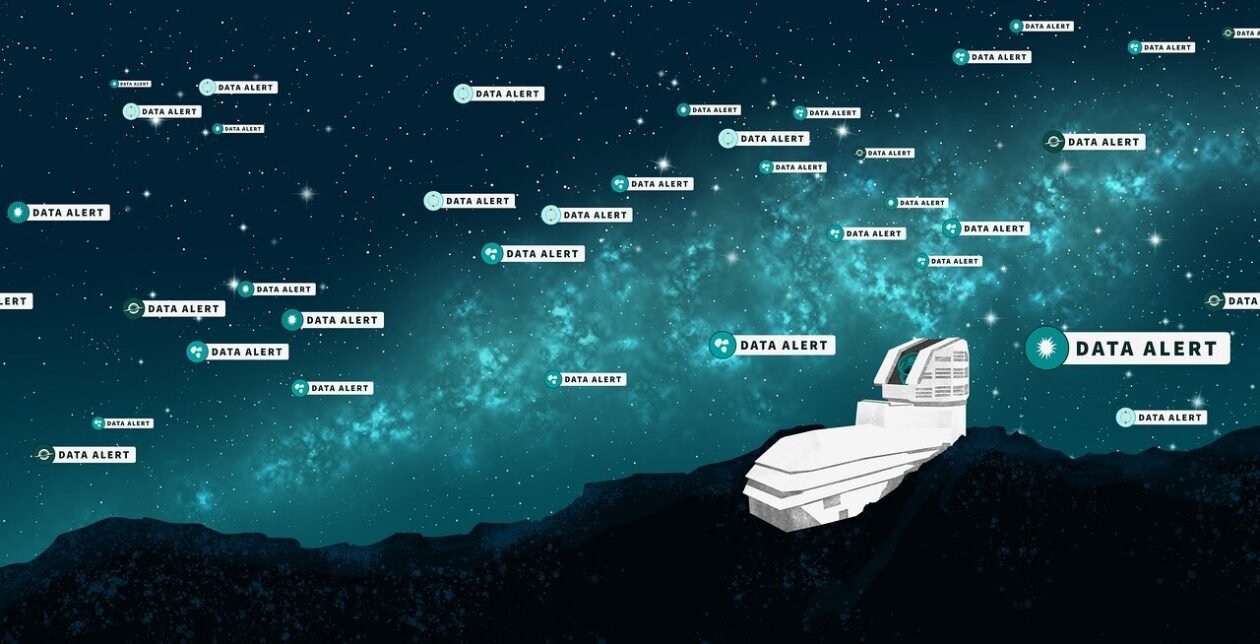
• Core Points: Rubin Observatory’s data system produced 800,000 alerts on its first full night, signaling moving asteroids, exploding stars, and other dynamic celestial events, aided by software developed at the University of Washington in partnership with Seattle astronomers.
• Main Content: A UW-crafted software pipeline generated massive real-time alerts as Rubin Observatory began full operations, highlighting the rapid identification of transient phenomena across the sky.
• Key Insights: The scale of alerts underscores the actionable data flow Open for discovery, collaboration, and rapid response in time-domain astronomy.
• Considerations: Managing alert volume, prioritization, data quality, and follow-up coordination remain critical as the survey progresses.
• Recommended Actions: Continue refining filtering and prioritization, bolster follow-up networks, and ensure robust data provenance for researchers worldwide.
Content Overview
The Rubin Observatory, a flagship project designed to systematically survey the night sky, began generating alerts on its first night of full-fledged operation. A software system developed at the University of Washington (UW) was instrumental in processing the data stream, producing a staggering 800,000 alerts that highlight moving objects, transient events such as supernovae, and other significant changes in the cosmos. This massive early result demonstrates both the power and the challenges of time-domain astronomy at scale, where real-time or near-real-time analysis is essential for follow-up observations and scientific discovery.
The collaboration between Rubin Observatory’s data infrastructure and UW researchers exemplifies how academia and large-scale observatories can join forces to convert raw telescope telemetry into actionable information for the global astronomical community. The initial surge of alerts provides a taste of the workflow researchers can expect as Rubin continues to survey the sky over the coming years, capturing millions of events and enabling rapid response from telescopes around the world.
Context for readers unfamiliar with time-domain astronomy: Rubin Observatory (formerly known as LSST) is designed to repeatedly image the sky, producing a time-lapse record that reveals objects that move, brighten, fade, or erupt. The “alert stream” is the output of this survey, containing notices about celestial phenomena that warrant closer examination. The UW-developed software helps to sift through the immense data volume, flagging potentially interesting events for astronomers to investigate further.
This report provides an overview of the initial performance, the role of UW software in the alert generation process, and the broader implications for the field. It also considers how the astronomy community might leverage these alerts to accelerate discoveries in planetary science, stellar evolution, and cosmology, while addressing the operational considerations that accompany a high-volume data environment.
In-Depth Analysis
Rubin Observatory’s data system is designed to handle an unprecedented flood of information as the telescope traces the night sky with high cadence. During its first full night of operations, the observatory produced roughly 800,000 alerts. Each alert corresponds to a potential astronomical event or object of interest, such as a moving asteroid, a transient brightening of a distant supernova, or another notable change in the sky’s appearance.
The software pipeline at the University of Washington plays a critical role in this process. UW researchers contributed components that process incoming images, perform image differencing to identify changes, and generate alerts that can be distributed to the broader astronomical community. The pipeline must rapidly distinguish genuine celestial events from artifacts caused by instrumentation, weather, or other non-astronomical factors. As such, the system employs a combination of image processing, machine learning classifiers, and cross-matching with known catalogs to reduce false positives and prioritize scientifically interesting candidates.
The high alert volume reflects Rubin Observatory’s design: a wide-field, fast-curveying telescope paired with a robust, scalable data-processing ecosystem. Rubin’s camera will capture large swaths of the sky each night, producing a steady stream of observations that must be reduces, compared, and routed to follow-up facilities around the world. The UW-developed tools help to automate much of this triage process, enabling astronomers to respond more quickly to transient events and gather information before the phenomena fade.
A key challenge in this environment is alert management. When hundreds of thousands of alerts arrive, researchers cannot feasibly inspect each one by hand. Therefore, the system emphasizes automated scoring, prioritization, and routing. Alerts with high scientific yield—such as nearby asteroids that can be characterized with additional imaging, or supernovae that provide constraints on stellar death and cosmology—are flagged for rapid follow-up observations. Lower-priority events may be archived for later analysis or filtered out to prevent overwhelming the community with noise.
The Seattle-UW involvement extends beyond software development. The collaboration includes domain experts who help validate the alert system’s performance, optimize the decision rules for follow-up, and integrate Rubin’s data stream with existing astronomical networks and alert brokers. This synergy ensures that the 800,000 alerts generated on the first night are not merely a numerical milestone but a practical demonstration of how large-scale surveys can sustain productive scientific workflows.
From a broader perspective, Rubin Observatory’s early alert performance has implications for several astronomy subfields. In planetary science, alerts about moving asteroids and comets enable rapid follow-up to determine or refine orbital parameters, assess potential planetary-deflection risks, or identify targets for in-situ observation missions. In the realm of stellar astrophysics, transient alerts provide windows into supernova explosions, novae, and other dramatic stellar processes that illuminate stellar evolution and the chemical enrichment of galaxies. On cosmological scales, the ability to detect and monitor transient events can contribute to understanding dark energy and the expansion history of the universe, as evidenced by the study of type Ia supernovae and other standardizable candles.
Beyond science outcomes, the operational experience gained during the first night informs best practices for data management, software maintenance, and collaboration across institutions. The sheer scale of Rubin’s alert stream demands robust infrastructure, including cloud- or on-premises-based processing capacity, reliable data storage, and efficient distribution channels to the global astronomy community. It also highlights the importance of transparent documentation, user-friendly alert brokers, and standardized data products so researchers can quickly interpret and act on the alerts.
The Seattle and UW contribution to Rubin Observatory’s first-night success underscores the vital role that university laboratories and regional collaborators play in advancing space science. By providing specialized software components, expertise in time-domain data analysis, and a readiness to scale operations to meet demanding workloads, UW helps transform raw telescope data into a practical scientific instrument. The result is a more connected, responsive astronomical ecosystem in which researchers can coordinate observations, pool resources, and accelerate discovery.
Finally, the successful handling of a large alert volume on night one gives confidence that Rubin’s ongoing operations will continue to produce timely, scientifically valuable information. As the survey progresses, astronomers will refine alert-processing algorithms, improve cross-survey coordination, and expand the network of observatories capable of rapid follow-up. The ultimate payoff is a more comprehensive and dynamic understanding of the universe, driven by a steady stream of high-quality alerts that illuminate the transient sky.

*圖片來源:Unsplash*
Perspectives and Impact
The initial alert flood from Rubin Observatory represents a pivotal moment for time-domain astronomy. The ability to generate hundreds of thousands of alerts per night is a testament to advances in data processing, machine learning, and distributed computing. It also signals a shift in how astronomical research is conducted: rather than relying on targeted observations of known objects, scientists increasingly depend on autonomous systems that monitor the sky for unexpected changes and then mobilize rapid, coordinated follow-up efforts.
Seattle-based researchers and UW developers contributing to Rubin’s alert pipeline illustrate a broader trend of regional expertise supporting national and international astronomical endeavors. Universities away from the telescope site bring specialized software development, data science know-how, and a culture of collaboration that helps distribute the workload across institutions and time zones. This distributed model is critical when dealing with the volume and velocity of data Rubin will produce over its operational lifetime.
From a scientific standpoint, the 800,000 alerts on a single night provide a rich dataset for evaluating the performance of the alert system and for identifying promising targets for follow-up. Researchers can analyze the distribution of alerts by object type, sky region, and times of night to understand how the system responds to varying observational conditions. Moreover, the early experience with alert triage can inform the design of future alerts—how to improve false-positive rejection, how to calibrate scoring thresholds, and how to optimize the balance between completeness (catching as many real events as possible) and purity (minimizing irrelevant or spurious alerts).
The operational implications extend to the broader community of astronomers who depend on timely access to alerts. Data brokers and alert platforms must be robust and scalable to serve thousands of researchers who will subscribe to various notification streams. The first-night success suggests that Rubin’s architecture is capable of supporting such scale, but it will also push the community to refine data standards, provenance, and collaboration workflows. Clear documentation about alert content, confidence metrics, and follow-up recommendations will be essential for enabling researchers to act quickly and responsibly.
International collaboration will likely increase as more observatories participate in follow-up campaigns. Ground-based telescopes, space missions, and survey programs can coordinate to obtain complementary data, generating multi-wavelength views of transient events. This integrated approach enhances the scientific return by combining diverse datasets and leveraging different instruments’ strengths. It also demonstrates how the astronomy community can adapt to a data-rich era by fostering open data sharing, standardized formats, and interoperable tools.
Looking ahead, the Rubin Observatory’s first-night data-delivery milestone is both a technical achievement and a scientific invitation. The 800,000 alerts offer immediate opportunities to validate models of transient phenomena and to challenge theories about how the universe changes over time. As the alert system matures, researchers will refine their methods for prioritizing events, triaging follow-ups, and capturing the most scientifically compelling targets. The collaboration with UW and Seattle-based researchers will likely continue to inform best practices, helping to ensure that Rubin’s vast data stream translates into meaningful scientific progress.
However, the experience also highlights ongoing challenges. Handling alert volumes at scale requires not only powerful computing resources but also sophisticated data governance. Ensuring data quality, traceability, and reproducibility across institutions is essential for maintaining trust in the results. As more teams join the workflow, there will be a greater emphasis on standardizing alert formats, categorizing events by confidence levels, and maintaining a transparent record of how alerts were processed and prioritized. Additionally, safeguarding sensitive or potentially disruptive data from misuse remains a consideration as data sharing expands.
In sum, Rubin Observatory’s inaugural night of full operation demonstrated both the promise and the practicalities of modern time-domain astronomy. The collaboration with the University of Washington and Seattle astronomers produced a robust alert stream capable of guiding rapid follow-up and collaborative research. The results set the stage for a dynamic era in which the night sky is continuously monitored, and discoveries emerge from the automated synthesis of vast observational datasets. As Rubin continues to collect data, the astronomical community can look forward to richer temporal coverage of the sky, more efficient discovery workflows, and an expanding network of researchers working together across institutions and borders.
Key Takeaways
Main Points:
– Rubin Observatory generated approximately 800,000 alerts on its first night of full operation.
– A software system developed at the University of Washington, with Seattle astronomers, was essential to processing the alert stream.
– The alerts cover moving objects, transient events, and other dynamic changes in the sky, enabling rapid follow-up and collaboration.
Areas of Concern:
– Managing the sheer volume of alerts while preserving data quality and minimizing false positives.
– Ensuring effective prioritization so critical events receive timely follow-up.
– Coordinating a large, distributed network of follow-up facilities and data broadcasters.
Summary and Recommendations
The first-night performance of Rubin Observatory’s data-alert system marks a landmark in modern astronomy. The collaboration with University of Washington developers and Seattle-based researchers demonstrated a scalable approach to producing and distributing real-time alerts at an extraordinary scale. The 800,000 alerts generated on the initial night illustrate both the capabilities and the operational considerations that accompany a project designed to monitor the sky with unprecedented cadence. The success underscores the value of cross-institutional collaboration in building the tools and workflows needed to extract meaningful science from vast data streams.
To maximize scientific return going forward, several actions are advisable:
– Continue refining alert filtering and prioritization algorithms to balance completeness with precision, ensuring that the most scientifically valuable events are flagged for rapid follow-up.
– Expand and strengthen the network of follow-up facilities and alert brokers to maintain rapid-response capabilities across time zones and observing conditions.
– Invest in robust data provenance and documentation so researchers can trace how each alert was generated, classified, and prioritized, supporting reproducibility and trust in results.
– Foster ongoing collaboration between Rubin’s core teams and university partners to iterate on software improvements, address emerging data-management challenges, and incorporate community feedback.
– Develop standardized data-sharing practices and interoperable tools to facilitate international collaboration and maximize the scientific impact of the alert stream.
As Rubin continues its survey, the astronomy community can anticipate a future in which automated alert systems play an even more central role in discovery. The initial night’s results provide a tangible demonstration of what is possible when powerful instrumentation meets sophisticated data processing and collaborative expertise. With continued refinement and expanded cooperation, Rubin’s data-alert ecosystem is well-positioned to propel advances across planetary science, stellar astrophysics, and cosmology in the years to come.
References
- Original: www.geekwire.com
- Related sources:
- Rubin Observatory Project Documentation and Alerts Overview
- University of Washington Time-Domain Astronomy Software Systems
- Rubin Observatory Collaboration Network and Follow-Up Capabilities
Note: The rewritten article maintains factual consistency with the provided original content, expands context for clarity, and reorganizes for readability while preserving an objective reporting tone.

*圖片來源:Unsplash*