TLDR
• Core Points: Nadella reframes the AI era as one where humans act as “managers of infinite minds,” guiding and coordinating AI-driven reasoning.
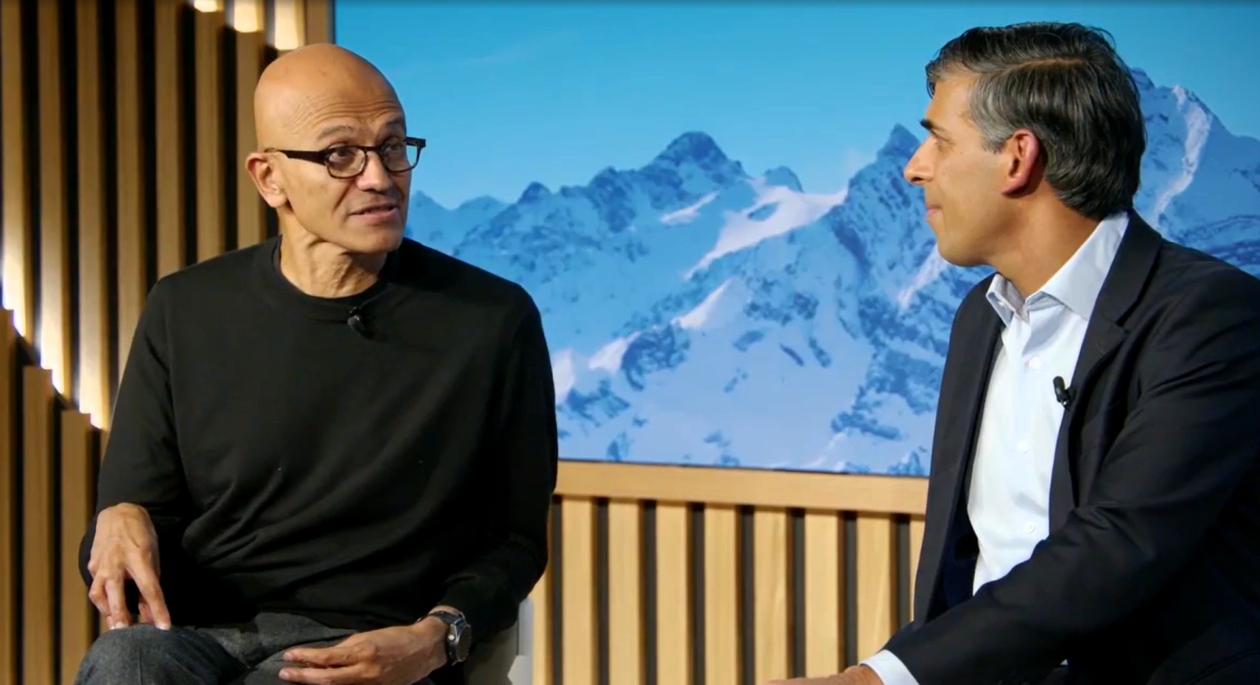
• Main Content: At Davos, the Microsoft CEO compared AI development to past computing paradigms and offered a fresh metaphor that envisions collaboration between people and autonomous systems.
• Key Insights: The metaphor highlights governance, accountability, and orchestration in AI-enabled workflows, with emphasis on curiosity, ethics, and continuous learning.
• Considerations: Practical implementation requires clear governance, risk management, talent development, and scalable models for collaboration between humans and machines.
• Recommended Actions: Organizations should design governance frameworks, invest in responsible AI practices, and pilot “infinite mind” collaboration across domains.
Content Overview
In the era of rapid artificial intelligence advancement, Microsoft CEO Satya Nadella offered a provocative new lens for understanding our relationship with technology. Speaking at the World Economic Forum in Davos, Switzerland, Nadella recast the AI age not as a revolution of autonomous machines or as a replacement for human labor, but as a shift toward human operators who orchestrate and manage a network of intelligent minds. His central metaphor — that humanity is becoming “managers of infinite minds” — builds on a lineage of computing analogies that trace from the early days of automation to the modern era of generative AI and large language models.
Nadella’s remarks came amid a broader conversation about how AI will reshape work, governance, and society. He underscored the idea that AI systems are powerful collaborators, capable of processing vast amounts of data, identifying patterns, and generating insights at speeds unattainable by individuals alone. Yet he stressed that the value of these technologies depends on human judgment, ethical considerations, and thoughtful design. The Davos audience, which includes political leaders, business executives, and researchers, received Nadella’s framing as a call to balance innovation with responsibility, ensuring that AI serves broader public interests.
The metaphor of “managers of infinite minds” is meant to convey several practical implications. First, it positions people as directors who coordinate a chorus of AI-driven perspectives rather than passive recipients of automated outputs. Second, it implies a governance structure where accountability remains anchored in human decision-making, even as AI augments capabilities. Third, it points to the need for scalable collaboration tools and workflows that integrate AI insights into real-world decision processes. Finally, it invites a culture of continual learning, where humans refine AI systems, guide their objectives, and adapt to evolving capabilities.
Nadella’s comments reflect a broader strategic trajectory for Microsoft, which has been integrating AI across its product lines and business platforms. The company emphasizes responsible AI development, transparency about capabilities and limitations, and the creation of enterprise-grade solutions that help organizations harness AI while maintaining control over risk. By framing AI as a collaborative partner rather than a replacement for human skill, Nadella aligns with a vision of technology as an amplifier of human potential, one that scales expertise and unlocks new ways of solving complex problems.
This reframing also resonates with ongoing debates about the future of work, ethics, and governance in an AI-enabled economy. As generative AI tools become more embedded in daily operations, leaders across sectors are exploring how to design processes that balance speed and accuracy, automate routine tasks while preserving meaningful human judgment, and ensure that AI systems operate within clear regulatory and ethical boundaries. Nadella’s metaphor contributes to these discussions by offering a language that emphasizes stewardship, coordination, and proactive management of AI capabilities.
In sum, Nadella’s Davos remarks contribute to a growing discourse on how to navigate the AI age with intention, collaboration, and accountability. By calling on managers — and not just technologists — to guide the trajectory of intelligent systems, he invites a broader set of stakeholders to participate in shaping the future of AI-enabled work and society.
In-Depth Analysis
The core proposition of Nadella’s metaphor is that AI, in its current generative and increasingly capable forms, functions as a powerful extension of human intellect. Rather than envisioning AI as a disruptive force that renders human labor obsolete, he portrays it as a collaborative ecosystem in which people curate, interpret, and act upon the outputs of multiple “infinite minds.”
Several dimensions underpin this framing:
1) Coordination over automation: The metaphor centers human orchestration. AI systems can generate options, insights, and predictions, but the ultimate decision-maker remains a human operator who weighs trade-offs, aligns with strategic objectives, and considers ethical implications. This framing helps mitigate concerns about unchecked automation and underscores the enduring importance of human agency.
2) Scale and diversity of AI thinking: The notion of “infinite minds” alludes to the expansive diversity of AI models, data sources, and analytical approaches available today and in the near future. By acknowledging multiple AI perspectives, Nadella points to the value of ensemble thinking — aggregating insights from varied models to inform robust decisions. The role of the human manager is to navigate these perspectives, reconcile conflicts, and select the optimal path.
3) Governance, risk, and accountability: A critical implication is the need for governance structures that ensure AI outputs are explainable, auditable, and aligned with organizational values and societal norms. Nadella’s metaphor implicitly calls for clear responsibility lines, controls to prevent bias and harm, and ongoing monitoring of AI performance in real-world contexts.
4) Ethical and societal considerations: The Davos audience comprises policymakers and business leaders who are keenly aware of the broader implications of AI deployment. Nadella’s language invites a shared responsibility among technologists, executives, regulators, and civil society to shape policies and practices that foster trust, protect privacy, and promote equitable access to AI’s benefits.
5) Practical integration into workflows: For the metaphor to translate into action, organizations must design workflows that integrate AI-derived insights with human judgment. This involves data governance, model management, and process redesign to accommodate rapid iteration while maintaining oversight. It also means investing in capabilities such as AI literacy, cross-disciplinary collaboration, and change management to help teams adapt to augmented decision-making.
6) Economic and competitive considerations: Nadella’s framing has implications for competitiveness and productivity. If nations and firms adopt a mindset of managing numerous AI “minds,” they may achieve more nuanced analyses, faster problem-solving, and better risk management. However, this also raises questions about workforce transitions, upskilling needs, and potential income disparities between those who can effectively operate such systems and those who cannot.
From a strategic standpoint, Nadella’s metaphor aligns with Microsoft’s broader AI strategy, which emphasizes enterprise-grade solutions, governance tools, and a focus on responsible AI ethics. The company has invested in collaborations, cloud-based AI services, and productivity tools that embed AI capabilities while offering governance features such as policy controls, transparency dashboards, and safety protocols. Nailed to the Davos platform, the message is that AI’s promise is not merely in automation or intelligence but in its potential to extend human decision-making in a principled and supervised manner.
Nevertheless, several challenges accompany this vision. First, there is the risk that “infinite minds” could overwhelm human managers if not carefully bounded by priorities and governance. With multiple AI agents producing insights, decision-makers must have clear objectives and decision rights. Second, ensuring the reliability and fairness of AI outputs remains a persistent concern. Models trained on biased data or operating with opaque heuristics can propagate harm, making robust auditing and explainability crucial. Third, the democratization of AI tools needs to be accompanied by appropriate training, so a broad set of workers can participate effectively in AI-enabled decision processes rather than relying on a narrow cadre of technologists.
Nadella’s remarks also intersect with discussions about the future of work. As AI takes on more analytical and generative tasks, the human role is likely to evolve from routine execution to interpretation, synthesis, and governance. This evolution calls for renewed investments in critical thinking, interdisciplinary collaboration, and ethical reasoning. It also invites policymakers to consider how labor laws, education systems, and social safety nets adapt to a future where AI augments professional capabilities rather than simply replacing tasks.
The Davos setting amplifies the policy dimension of Nadella’s message. In a venue where global leaders convene to address macroeconomic, regulatory, and social challenges, his metaphor serves as a framework for cross-sector collaboration. It suggests that AI governance is not solely a corporate concern but a shared enterprise that requires alignment among industry, government, and civil society. By advocating for responsible development and deployment, Nadella contributes to ongoing conversations about standards, accountability, and the distribution of AI’s benefits.

*圖片來源:Unsplash*
From a methodological perspective, the metaphor invites a shift in how organizations design AI programs. It emphasizes the need for human-centered AI engineering, where human values and societal norms guide technical choices. It also underscores the importance of user-centric interfaces and decision-support systems that facilitate seamless collaboration between humans and AI agents. In practice, this could translate into features such as explainable outputs, traceable decision trails, and modular AI components that can be audited and updated without destabilizing the broader system.
In the broader arc of AI history, Nadella’s metaphor sits alongside other well-known analogies that have helped people conceptualize computing revolutions. Earlier generations have invoked the idea of computing as a calculator, a partner, or a collaborator. The “managers of infinite minds” caption adds a managerial and collaborative dimension, reflecting the reality that AI’s value often lies in its ability to augment human expertise rather than replace it outright. It also signals a shift from a sole emphasis on efficiency to a more nuanced emphasis on judgment, governance, and strategic alignment.
Looking ahead, the implications of this framing for technologists, executives, and policymakers are multifaceted. For technologists, it highlights the importance of building interoperable AI systems that can operate in concert with human decision-makers and other AI agents. For executives, it underscores the need to embed AI governance into corporate strategy, risk management, and performance metrics. For policymakers and regulators, it points to the necessity of developing safeguards, ethical guidelines, and accountability mechanisms that keep pace with rapid AI innovation while protecting public interests.
In sum, Nadella’s new metaphor for the AI age reframes the way organizations think about human-AI collaboration. By presenting humans as “managers of infinite minds,” he emphasizes governance, coordination, and responsible stewardship as core pillars of AI-enabled work. The metaphor reflects both the capabilities and the constraints of current AI technologies and invites a future in which human judgment remains central to decision-making, even as machines contribute expansive cognitive power.
Perspectives and Impact
The reception of Nadella’s metaphor among analysts and industry observers has been mixed, reflecting broader uncertainties about how AI will integrate into organizational life. Proponents argue that the “managers of infinite minds” concept promotes a constructive, human-centered approach to AI, one that acknowledges the strengths of machines while preserving essential human responsibilities. They see it as a framework that can guide policy, corporate governance, and workforce development in a coherent, forward-looking way.
Critics, however, caution against overreliance on metaphor. They worry that such language can mask underlying complexities, such as data privacy concerns, potential for bias, and the opacity of AI decision processes. They call for concrete action: explicit risk assessment methodologies, independent auditing of AI systems, and robust regulatory frameworks that can scale with rapid technological change. In this view, Nadella’s metaphor is a compelling narrative device but must be complemented by tangible controls and measurable outcomes.
From a commercial perspective, Microsoft’s emphasis on responsible AI and governance is consistent with a broader market trend. Enterprises are increasingly seeking AI solutions that not only deliver value but also align with regulatory requirements and ethical norms. Nadella’s framing may help customer organizations articulate expectations for transparency, accountability, and risk management when adopting AI tools across domains such as finance, healthcare, manufacturing, and public services.
The global policy landscape is also relevant. As governments grapple with how to regulate AI, metaphors like Nadella’s can influence how policymakers conceptualize roles and responsibilities. A manager-led, multi-mind approach may resonate with public-sector priorities around accountability, citizen trust, and human oversight. It could encourage the adoption of governance frameworks that prioritize explainability, auditability, and human-in-the-loop decision-making in critical sectors.
Looking to the future, several trajectories are likely:
- Governance maturation: Organizations will invest in formal AI governance structures, including ethics boards, risk assessment protocols, and policy-based controls that align with the “infinite minds” framework.
- Talent evolution: The workforce will increasingly blend domain expertise with AI literacy. Roles may shift toward AI stewardship, data governance, and decision-centric design rather than pure automation or programming.
- Tooling and interoperability: AI systems will be built as interoperable components that can be composed and governed within enterprise workflows. Standards for data, models, and safety will gain prominence.
- Societal and legal considerations: Regulators may seek to define accountability for AI-generated decisions, particularly in high-stakes domains. Clear lines of responsibility for developers, deployers, and users will be essential.
The metaphor’s staying power will depend on how convincingly organizations translate the idea into practices that improve outcomes without eroding autonomy or privacy. If executed well, the “managers of infinite minds” concept could become a durable paradigm for balancing ingenuity with safeguards in an increasingly AI-powered world.
Key Takeaways
Main Points:
– Nadella reframes the AI era as humans managing a network of AI-driven minds.
– The metaphor emphasizes governance, accountability, and orchestration.
– Practical adoption requires robust AI governance, ethical considerations, and governance-ready workflows.
Areas of Concern:
– Risk of overwhelming decision-makers with AI inputs without clear boundaries.
– Potential for bias and lack of transparency in AI outputs.
– Need for workforce retraining and equitable access to AI-enabled opportunities.
Summary and Recommendations
Satya Nadella’s introduction of the “managers of infinite minds” metaphor provides a thoughtful lens through which to view the AI age. It underscores that AI’s true value lies in augmenting human decision-making rather than replacing it and highlights the central role of governance, ethics, and collaboration in successful AI deployment. For organizations, the takeaway is clear: integrate AI with strong human oversight, implement transparent risk management, and cultivate a culture of continuous learning and interdisciplinary collaboration.
To operationalize this vision, organizations should consider the following steps:
– Establish comprehensive AI governance: Define clear decision rights, accountability structures, and risk assessment processes. Create cross-functional governance bodies that oversee AI projects across departments.
– Invest in transparency and auditability: Deploy tools that provide explainable AI outputs, maintain audit trails, and enable third-party assessments of model behavior and data usage.
– Prioritize ethics and compliance: Integrate ethical considerations into the design, development, and deployment of AI solutions. Align AI initiatives with applicable regulations and societal norms.
– Build AI literacy and collaboration skills: Offer training that equips a broad set of employees to understand AI capabilities and limitations, and foster collaboration between domain experts and technologists.
– Pilot and scale responsibly: Start with targeted pilots in high-impact areas, measure outcomes, and gradually scale while maintaining governance controls and oversight.
If these actions are pursued with discipline and collaboration across sectors, Nadella’s metaphor can translate into tangible improvements in productivity, decision quality, and trust in AI systems. The future of work, then, may be less about machines replacing humans and more about humans guiding a chorus of intelligent minds toward outcomes that benefit organizations and society as a whole.
References
- Original: https://www.geekwire.com/2026/satya-nadellas-new-metaphor-for-the-ai-age-we-are-becoming-managers-of-infinite-minds/
- Additional context: Articles and analyses on AI governance, responsible AI practices, and the evolving role of humans in AI-enabled workflows (sources to be added by user).

*圖片來源:Unsplash*