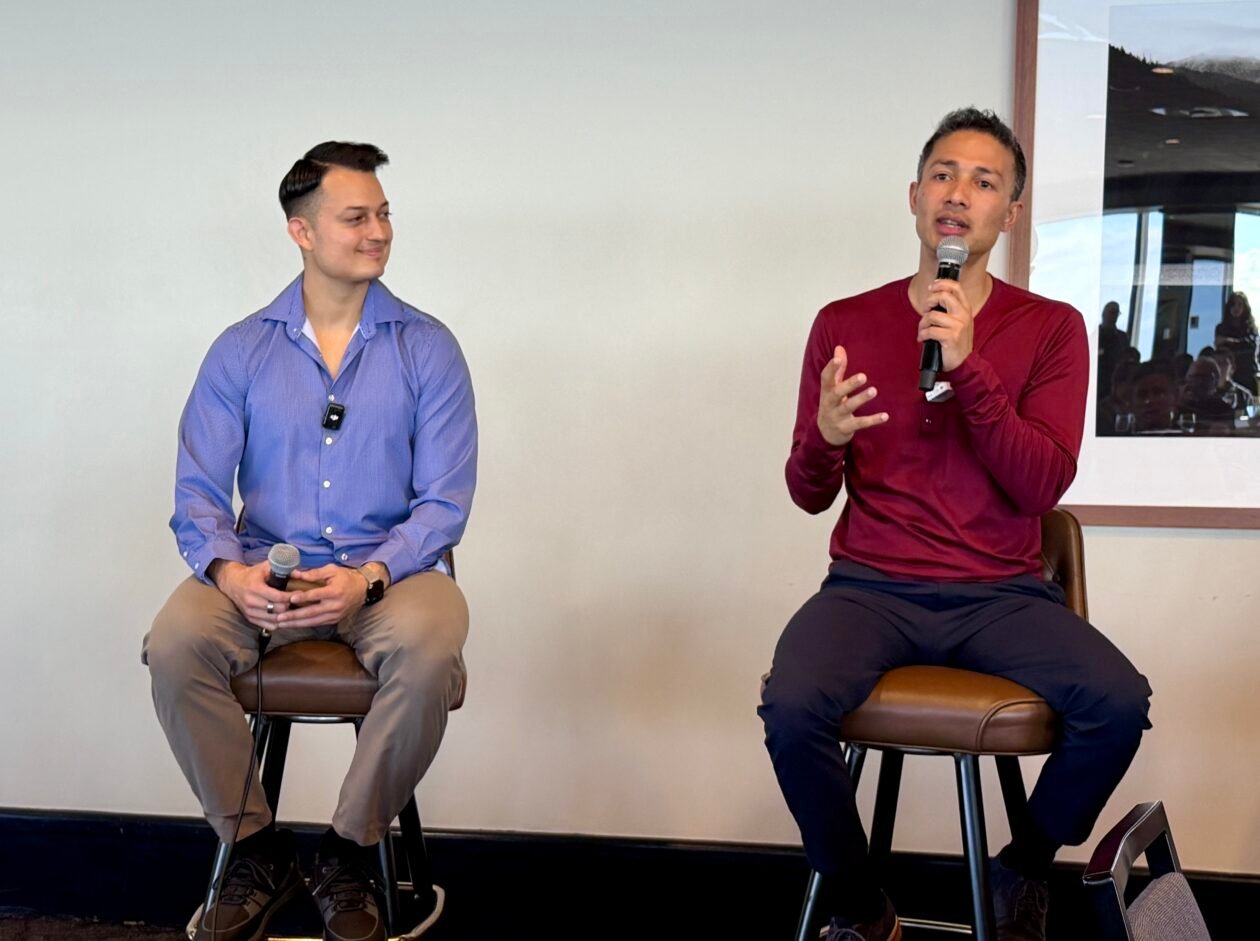
TLDR
• Core Points: The current AI moment represents a rare, favorable window for founders to start new ventures, offering abundant opportunities alongside challenges.
• Main Content: Sudheesh Nair, veteran Bay Area tech leader and co-founder of TinyFish, emphasizes AI-driven opportunities and a favorable IPO/exit climate as reasons to launch now.
• Key Insights: Founders benefit from open AI tooling, talent pools, and investor interest, but must navigate regulatory, ethical, and market risks.
• Considerations: Capital access, talent acquisition, go-to-market timing, and sustainable product differentiation are critical in this cycle.
• Recommended Actions: Start with problem-focused teams, validate with rapid experimentation, and leverage AI-enabled platforms to de-risk early-stage ventures.
Content Overview
The piece centers on Sudheesh Nair, a long-standing Silicon Valley tech executive and entrepreneur, who contends that the current moment—a confluence of rapid AI advancement, available capital, and a supportive entrepreneurial ecosystem—presents a uniquely favorable window for starting and scaling new companies. Nair, who co-founded TinyFish, an enterprise web agent startup, discusses how AI is not merely a cyclical technology upgrade but a transformative inflection point that lowers barriers to innovation in multiple domains. He argues that founders can capitalize on this era by identifying real pains that AI can address, assembling capable teams, and leveraging the broader market appetite for AI-enabled solutions. The article provides context on why this moment stands out compared with prior waves of technology, outlining potential sectors, operating models, and strategic considerations for first-time and serial founders alike.
In-Depth Analysis
Nair’s core thesis rests on several interlocking observations about the current landscape. First, the AI moment has accelerated beyond research labs and open-source chatter, delivering practical tooling, frameworks, and platforms that enable rapid prototyping and deployment. Startups can move from concept to product with reduced development times, leveraging pre-trained models, standardized IP blocks, and scalable cloud-native infrastructures. This shift helps founders iterate quickly, test hypotheses, and demonstrate product-market fit inside shorter cycles than in past tech cycles.
Second, the overall ecosystem has evolved to support risk-taking. Venture capital (VC) appetite for AI-enabled ventures remains robust, with backers increasingly placing bets on startups that can translate complex AI capabilities into tangible business outcomes. This supportive climate is not merely about funding; it extends to advisory networks, industry partnerships, and accelerator programs that provide strategic guidance, customer access, and technical mentorship. In such an environment, founders who can articulate clear value propositions anchored in real-world use cases may access resources more readily than during prior market slowdowns or overhyped cycles.
Third, talent dynamics favor entrants who can attract multidisciplinary teams capable of delivering end-to-end solutions. The Bay Area and broader tech ecosystem still concentrate talent pools across software engineering, data science, product design, and go-to-market expertise. For new ventures, this means opportunities to recruit strong early teams, collaborate with experienced operators, and lean into global talent hubs when appropriate. At the same time, competition for top talent remains intense, and founders must craft compelling value propositions, equitable compensation structures, and clear growth narratives to secure the right talent early.
Nair also highlights the importance of problem-first thinking. In a market saturated with AI-powered demos and “me-too” products, differentiating a startup requires identifying persistent pain points that are not easily solved by generic AI capabilities alone. Founders should focus on sectors where AI can unlock significant efficiency gains, decision support, risk reduction, or revenue acceleration. Real-world validation—through pilots, customer interviews, and measurable outcomes—is essential to avoid premature scaling and to ensure product-market fit before heavy capital expenditure.
From an operational perspective, the AI era encourages lean startup practices. Founders can adopt iterative learning loops, using living experiments to refine product features and pricing models. This approach reduces burn rate and increases the odds of achieving product-market fit within a sustainable timeframe. Additionally, the regulatory and ethical dimensions of AI adoption are becoming more salient. Founders must withstand scrutiny around data privacy, model governance, bias mitigation, and alignment with industry regulations. Proactively addressing these concerns helps build trust with customers, partners, and investors, and can avert costly missteps later in the company lifecycle.
Nair’s position is not to romanticize the current window as infinitely open. He emphasizes timing and discipline: while the AI moment offers extraordinary potential, misalignment between product capability and customer needs can lead to wasted resources. Successful founders will combine a strong technical backbone with disciplined market validation, scalable business models, and strategic alliances that amplify early traction. In addition, founders should be mindful of macroeconomic conditions, such as interest rate fluctuations, inflation, and supply chain impacts on venture funding cycles, which can influence fundraising timelines and the speed at which a startup can reach profitability or meaningful exits.
The article also provides a vantage point on TinyFish, Nair’s own enterprise software venture. While not the central focus, the startup serves as a lens into how experienced founders navigate enterprise software markets amid an AI-enabled shift. TinyFish’s approach to automating or simplifying complex workflows demonstrates the pragmatic path some founders pursue: building practical, scalable tools that integrate into existing customer ecosystems rather than attempting to disrupt from the ground up with sweeping platform overhauls. This example underscores a broader pattern of startup activity where incremental improvements, governance-friendly architectures, and predictable ROI can drive adoption in enterprise contexts, where trust and reliability are paramount.
Of course, the AI surge does introduce risks that founders must mitigate. Market noise around AI capabilities can lead to overpromising and underdelivering. To counter this, founders should maintain rigorous product development practices, prioritize customer outcomes over feature verbosity, and establish clear metrics of success. On the competitive front, the AI space already features a mix of well-funded incumbents, ambitious startups, and open-source communities. The best-positioned new entrants are those that can move beyond mere technology demonstration to deliver measurable business value, offer robust customer support, and maintain a path to sustainable unit economics.
Finally, Nair’s commentary reflects a broader cultural moment within Silicon Valley: a cautious optimism about entrepreneurship as a vehicle for economic opportunity and technological progress. The region’s history of venture capital infrastructure, talent pipelines, and serial founding activity creates a conducive environment for launching and scaling ambitious AI-driven ventures. However, the same ecosystem also demands accountability and thoughtful governance, especially as startups scale and navigate complex customer ecosystems.
Taken together, the discussion frames this moment as more than a cyclical upgrade or a hype-driven rush. It is a period in which AI-enabled problem-solving aligns with practical market demands, investor readiness, and a resilient startup culture. For founders considering their next move, the message is clear: if you have a credible idea that leverages AI to address a real pain with a strong go-to-market plan, now may be among the best times to start a company. The emphasis remains on clarity of purpose, deep understanding of customer needs, and disciplined execution.

*圖片來源:Unsplash*
Perspectives and Impact
The essay offers several lenses through which to view the current startup environment. For first-time founders, the AI moment lowers some traditional barriers to entry because of the availability of plug-and-play AI capabilities and cloud-based deployment options. This can shorten the time to initial product delivery and demonstration of value to customers. For seasoned entrepreneurs, the period presents an opportunity to re-stack portfolios, reimagine legacy products with AI enhancements, and pursue adjacent markets where AI can unlock new revenue streams. Across both cohorts, the era is marked by heightened attention from corporate buyers and enterprise customers seeking AI-enabled efficiencies, risk controls, and decision-support tools that integrate into existing enterprise workflows.
Investors, meanwhile, balance optimism with due diligence. There is enthusiasm for AI-enabled ventures that show a credible path to profitability, scalable go-to-market strategies, and defensible moat—whether through data assets, network effects, or domain expertise. Yet capital markets can be volatile, and founders must prepare for scenarios where funding cycles tighten or exits take longer than anticipated. In such times, a compelling narrative backed by solid unit economics and real customer traction becomes even more critical.
From a societal standpoint, there are broader implications for employment, education, and governance. AI has the potential to automate routine tasks, augment human decision-making, and create new job categories that require advanced technical skills. This shift underscores the need for reskilling programs, workforce development, and thoughtful policy considerations to ensure equitable access to AI-enabled opportunities. Founders who contribute to these conversations by building inclusive products and transparent governance practices can help shape a healthier ecosystem for long-term growth.
The geographic dimension is also noteworthy. While Silicon Valley remains a nerve center for tech entrepreneurship, AI-driven startups are increasingly distributed across regions and countries, leveraging remote collaboration, international talent pools, and cross-border markets. This diversification could influence future patterns of venture investment, talent acquisition, and knowledge exchange. Nevertheless, the Valley’s ecosystem—with its dense concentration of research institutions, engineering talent, and a culture that embraces experimentation—continues to be a distinctive advantage for many founders who rely on proximity to customers, partners, and an ecosystem of services that support startup growth.
In terms of market sectors, certain domains appear especially receptive to AI-driven innovation. Enterprise software, healthcare, financial services, cybersecurity, and supply chain optimization are among the areas where AI’s impact is tangible and scalable. However, success in any sector requires a careful articulation of the value proposition, with concrete customer outcomes such as cost reduction, improved accuracy, faster time-to-delivery, or enhanced user experience. Startups should approach sectors with an understanding of regulatory constraints and domain-specific requirements to avoid misalignment and delays.
Nair’s overarching message—“no better time to start companies than now”—is anchored in the convergence of AI capability, investor readiness, and a pragmatic startup culture. The emphasis is not on drinking the Kool-Aid of every new AI capability but on building ventures with a clear problem-solution dynamic, credible go-to-market plans, and sustainable business models. Founders who balance ambition with discipline—prototyping rapidly, validating with customers, and iterating toward scalable solutions—stand to benefit from a market that is increasingly receptive to AI-enabled innovations.
Key Takeaways
Main Points:
– The current AI moment offers a rare opportunity for startups to rapidly prototype, validate, and scale.
– A favorable funding climate and supportive ecosystem can accelerate early-stage growth for AI-enabled ventures.
– Differentiation through solving real customer problems and delivering measurable outcomes is essential.
Areas of Concern:
– Market hype and over-ambitious promises can mislead founders.
– Talent competition and retention remain intense.
– Regulatory, ethical, and governance considerations around AI need proactive attention.
Summary and Recommendations
For founders considering starting a company today, the central recommendation is to pursue problem-centric ventures that leverage AI to deliver concrete, measurable business value. Begin with a clear problem statement grounded in customer pain, then assemble a lean, capable team and move quickly through validated learning cycles. Engage early with potential customers to quantify value, detail a realistic monetization pathway, and develop robust governance practices to address data privacy, bias, and compliance concerns. Maintain fiscal discipline to avoid unsustainable burn rates and prepare for varied fundraising climates by building a narrative that emphasizes unit economics and defensible advantages.
Investors and ecosystem participants should continue to support ventures that demonstrate tangible customer outcomes, credible paths to profitability, and responsible AI practices. Emphasis on clear governance, transparency, and ethical considerations will help sustain trust and long-term growth across the AI startup landscape.
In sum, Sudheesh Nair’s viewpoint aligns with a broader industry sentiment: this is a moment where intelligent, disciplined entrepreneurship can leverage AI to create meaningful, scalable businesses. Founders who combine technical capability with market insight, pragmatic execution, and responsible governance are well-positioned to thrive in the current climate.
References
- Original: https://www.geekwire.com/2026/silicon-valley-tech-vet-no-better-time-to-start-companies-than-now/
- Additional references:
- https://www.forbes.com/sites/forbestechcouncil/2023/11/01/ai-startups-how-to-build-a-successful-ai-driven-company/
- https://www.a16z.com/2024/05/07/ai-startups-what-investors-want-to-see-in-ai-based-companies/

*圖片來源:Unsplash*