TLDR
• Core Points: Butterfly Trackers use inertial measurement units (IMUs) to capture full-body motion without cameras, enabling unrestricted 360-degree movement at a lower cost and lighter weight.
• Main Content: A camera-free, IMU-driven full-body tracking solution from SlimeVR, designed to provide affordable and portable VR motion capture suitable for broad home and hobbyist use.
• Key Insights: Eliminating cameras reduces setup complexity and line-of-sight constraints, but may raise considerations around calibration, drift, and environmental robustness.
• Considerations: System accuracy, drift management, cross-device compatibility, battery life, and ease of use for non-expert users.
• Recommended Actions: Prospective buyers should assess expected tracking precision for their use, ensure compatible VR ecosystems, and consider potential maintenance for sustained performance.
Content Overview
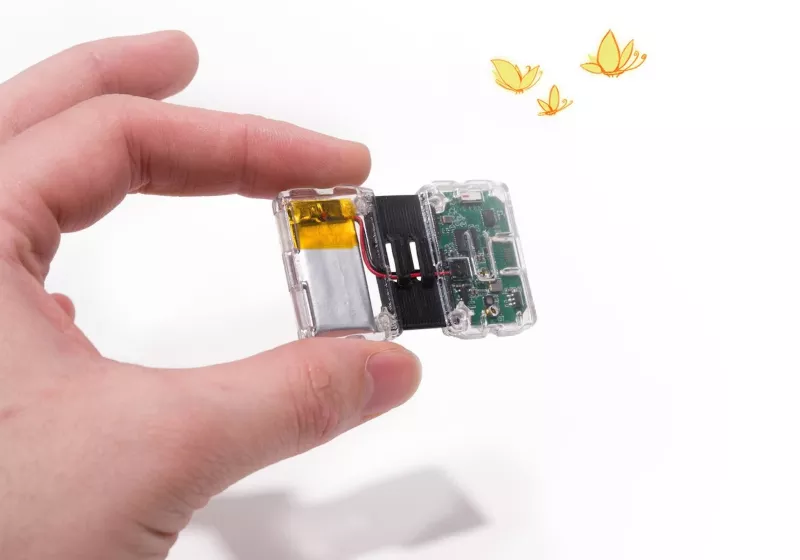
SlimeVR has introduced a new line of trackers dubbed the Butterfly Trackers, a set of full-body motion capture sensors designed to perform without the need for external cameras. Instead of relying on optical tracking, these trackers operate using inertial measurement units (IMUs), which continuously sense orientation and acceleration. By translating these measurements into precise movement data, the Butterfly Trackers aim to offer an affordable, lightweight, and portable alternative to traditional camera-based VR tracking systems.
This approach is particularly appealing to users who want flexible setups, travel-friendly hardware, or budget-conscious options without sacrificing the ability to capture full-body motion. IMU-based systems have grown in popularity for VR because they can function independently of line-of-sight, mounting requirements, or dedicated capture spaces. SlimeVR’s Butterfly Trackers appear to emphasize ease of use and accessibility, potentially appealing to hobbyists, indie developers, and gamers seeking to extend their VR experiences beyond fixed or room-scale configurations.
The endeavor fits within a broader industry trend: moving away from fixed camera rigs toward self-contained tracking modules that can be attached to limbs and torso. By reducing the reliance on external sensors and camera arrays, users can outfit a full-body setup with fewer constraints, enabling more spontaneous and varied play environments. The Butterfly Trackers represent an extension of SlimeVR’s ongoing efforts to provide open, adaptable tracking solutions that integrate with popular VR ecosystems and software pipelines.
In explaining how this technology works, the Butterfly Trackers rely on IMUs that measure rotational rates, magnetic heading (where applicable), and translational accelerations. The data produced by these sensors is processed either locally on the device or in a connected hub, then fused to reconstruct body pose and movement over time. The promise of such a workflow includes continuous 360-degree tracking, minimal setup, and the capacity to function in spaces where cameras cannot be placed or cannot maintain line-of-sight to the user.
However, the shift from optical to inertial tracking brings its own set of tradeoffs. While IMU-based tracking can be highly portable and robust against occlusion, it may require careful calibration to maintain accuracy and to manage drift—the gradual deviation that can occur when integrating sensor data over time. System designers typically implement calibration routines, sensor fusion algorithms, and, in some cases, external reference frames or magnetic calibration to mitigate these challenges. As with many IMU-based solutions, the user experience often hinges on a balance between immediate ease of use and long-term precision for more demanding applications.
This move toward camera-free, inertial tracking aligns with SlimeVR’s broader philosophy of democratizing VR hardware: lowering costs, reducing physical footprint, and enabling more flexible installation options. If successful, Butterfly Trackers could lower barriers for enthusiasts who want to experiment with full-body motion capture without investing in expensive camera rigs or extensive room setups. The technology also has potential implications for developers who build VR content, as more accessible tracking hardware could broaden the audience for immersive experiences and enable new interaction paradigms.
The following sections explore the Butterfly Trackers in more detail, addressing their technical underpinnings, potential benefits, and considerations for users weighing a transition from camera-based to inertial-based full-body tracking.
In-Depth Analysis
The Butterfly Trackers represent a strategic shift in how VR enthusiasts approach full-body motion capture. At their core are inertial measurement units, compact sensors that continuously monitor changes in orientation and acceleration. When deployed across the body—on the limbs, torso, and other joints—these sensors provide a stream of data that, through sensor fusion algorithms, can be translated into a coherent model of body pose and movement in three-dimensional space.
One of the clearest advantages of this approach is the elimination of cameras and line-of-sight constraints. Traditional optical tracking systems require a defined capture volume and unobstructed visibility of markers or reflective surfaces. Any occlusion, lighting variation, or camera misalignment can degrade performance. In contrast, IMU-based trackers operate independently of the surrounding environment, enabling full 360-degree freedom of movement and easier setup in smaller spaces or unconventional play areas. For many users, this means less time configuring a play space and more time enjoying immersive experiences.
Cost and weight considerations are also central to the Butterfly Trackers’ appeal. Camera-based full-body systems often demand significant investment in multiple high-resolution sensors, advanced cameras, and a calibrated tracking environment. By contrast, IMUs are comparatively inexpensive and compact, allowing multiple sensors to be attached to the body with minimal bulk. The result is a lighter overall solution that can be transported more easily and deployed in a broader range of settings, including shared living spaces or travel scenarios.
From a performance standpoint, IMU-based tracking relies heavily on the quality of the sensor fusion pipeline. The raw data from accelerometers, gyroscopes, and sometimes magnetometers must be integrated, corrected for biases, and fused to produce an accurate estimate of orientation and position. Drift remains a well-known challenge in pure IMU systems; even small biases in sensor readings can accumulate over time, leading to noticeable errors in pose estimation. To combat this, developers typically employ a combination of strategies, such as:
- Sensor calibration at startup or during use
- Filtering techniques that separate rapid movements from slow drift
- Drift correction via environmental references or ground-truth constraints
- Kinematic constraints derived from a known human body model to keep limb segments within plausible ranges
The effectiveness of Butterfly Trackers will thus depend on the robustness of their calibration workflow and the efficiency of their fusion algorithms. Users can expect a learning curve as they calibrate sensors, position markers, and fine-tune the system for their specific body type and movement style. For the casual user, this may translate to a smoother initial experience with acceptable accuracy, followed by more meticulous setup for high-precision applications such as professional VR animation or meticulous athletic analysis.
Interoperability is another critical dimension. If the Butterfly Trackers are designed to integrate with popular VR platforms and motion-capture software, they could enjoy broad adoption. Open standards and compatible software ecosystems typically accelerate user uptake by reducing the friction associated with connecting hardware to the desired VR runtime or content creation tool. Conversely, limited compatibility could entrench fragmentation, with users needing bespoke software or middleware to bridge hardware and software ecosystems.
Battery life and ergonomics also factor into the user experience. Lightweight, wearable sensors must balance battery capacity with comfort, ensuring they remain unobtrusive during long sessions. The form factor—how each tracker attaches to a limb, how securely it remains in place during vigorous movement, and how easily users can mount and remove the devices—will influence daily usability and long-term satisfaction.
For content creators and developers, the ability to access reliable, real-time motion data through an IMU-based system may unlock new workflows. In addition to VR gaming and experiences, motion capture data can feed animation pipelines, virtual production, or research-oriented projects. The extent to which Butterfly Trackers offer open APIs, data export formats, and documentation will determine their utility beyond immediate gaming use cases.
Still, users should remain mindful of certain tradeoffs. While camera-free tracking provides flexibility and portability, it may not yet reach the same fidelity as high-end optical systems in all scenarios. Detailed nuance in finger tracking, for example, can be challenging to achieve with IMUs unless there is dedicated hardware on each finger or refined tracking abstractions. Buyers should set expectations accordingly, recognizing that the Butterfly Trackers are positioned as an accessible, full-body solution rather than a replacement for every specialized motion-capture use case.

*圖片來源:Unsplash*
In evaluating this product, consideration should also be given to the ecosystem surrounding the Butterfly Trackers: software updates, user community support, calibration guides, and the availability of accessories like mounting straps or protective cases. A thriving community can accelerate problem-solving and optimization, providing shared best practices for setup, calibration, and troubleshooting.
The Butterfly Trackers’ release aligns with broader market momentum toward more consumer-friendly, plug-and-play motion capture solutions. As more hardware providers explore IMU-centric designs, we may see innovations in sensor fusion algorithms, calibration workflows, and hybrid systems that combine inertial data with occasional optical references to minimize drift while retaining the advantages of camera-free operation. Such developments could broaden the adoption of full-body motion capture in home environments, smaller studios, and educational settings where traditional camera systems are impractical.
In sum, SlimeVR’s Butterfly Trackers offer an intriguing, potentially disruptive option for full-body VR motion capture. By leveraging IMUs to deliver autonomous tracking without cameras, the product targets cost-conscious users who value portability and ease of setup. The success of this approach will hinge on calibration ease, drift management, and the breadth of software and platform support. If these elements come together effectively, the Butterfly Trackers could become a mainstay in affordable, accessible VR motion capture, expanding the horizons of what home users can achieve with immersive virtual experiences.
Perspectives and Impact
The introduction of Butterfly Trackers signals a broader shift in the VR hardware ecosystem toward self-contained tracking solutions. Historically, camera-based motion capture has offered high fidelity and robust pose estimation, but at the cost of sprawling hardware setups, careful room calibration, and susceptibility to occlusion. The IMU-based approach embraced by SlimeVR promises to democratize access by reducing barriers to entry. For hobbyists, indie developers, and educators, this could translate into more opportunities to experiment with full-body motion in varied environments without investing in a dedicated capture space.
From a developer standpoint, IMU data, when paired with robust fusion and well-documented APIs, can enable new content creation workflows. Real-time motion data can drive character animation, gesture-driven interactions, and multi-user experiences in VR. If Butterfly Trackers deliver consistent performance across body segments and maintain stable orientation data in daily use, they could be integrated into existing engines and tools with relative ease, further broadening their potential impact.
On the user experience front, the absence of cameras means less setup overhead and potentially fewer privacy concerns. Some users are content with camera-free solutions because they appreciate the reduced risk of visual capture in shared spaces and the convenience of moving freely without worrying about line-of-sight constraints. However, some users may prefer camera-based systems for their established track record in high-precision motion capture, especially for tasks requiring intricate finger tracking or subtle nuance in motion.
The Butterfly Trackers could also influence how VR equipment is marketed and priced. If the cost advantage over optical systems is substantial, more households might consider upgrading their VR setups or experimenting with full-body tracking for the first time. This could spur a broader market for accessories, calibration aids, and education around IMU-based motion capture.
Another potential implication lies in crossover applications beyond gaming. Medical rehabilitation, sports analysis, and ergonomic studies could benefit from portable, IMU-based full-body tracking, enabling clinicians and researchers to monitor movement patterns in more naturalistic, everyday environments. Should SlimeVR provide robust data access and reliable performance, it might find traction in these adjacent domains as well.
Nevertheless, the transition to IMU-based tracking raises questions about standardization and interoperability. A diverse market with multiple IMU-based systems can lead to compatibility challenges if data formats, calibration protocols, or fusion algorithms differ significantly between vendors. The industry’s trajectory will likely favor open standards and modular middleware that can bridge hardware and software across platforms, ensuring that users can mix and match components from different providers without sacrificing performance.
In the near term, enthusiasts will be watching how Butterfly Trackers handle drift over extended sessions. Real-time pose estimation can remain accurate for representative movements but progressively diverge if calibration and drift correction are not robust. SlimeVR’s success will depend not only on initial performance but on ongoing maintenance through firmware updates, calibration tools, and community-driven improvements. If the company can cultivate a strong ecosystem around the Butterfly Trackers, including thorough documentation, accessible support, and a reliable calibration workflow, it stands a better chance of becoming a durable option in the crowded VR hardware landscape.
Looking ahead, mixed solutions may emerge that blend IMU data with occasional optical references to reduce drift while retaining portability. Hybrid approaches could offer a best-of-both-worlds scenario for users seeking high precision without sacrificing the advantages of camera-free setups. The Butterfly Trackers might serve as a stepping stone in this evolution, illustrating consumer demand for flexible, affordable tracking options and prompting further innovation from established players and newcomers alike.
Ultimately, the Butterfly Trackers’ impact will be measured by how well they balance simplicity and precision. For many users, a system that captures full-body motion convincingly enough for casual gaming, social VR, and basic animation may be more than sufficient. For others, who require more exacting control for performance capture or research, the ongoing refinement of calibration, sensor fusion, and ecosystem compatibility will determine whether IMU-based tracking becomes a staple or remains a specialized niche.
Key Takeaways
Main Points:
– Butterfly Trackers use inertial measurement units (IMUs) to deliver camera-free full-body motion capture.
– The system emphasizes affordability, portability, and 360-degree freedom of movement.
– Drift management and calibration are critical to achieving reliable tracking over time.
Areas of Concern:
– Long-term drift and precision for detailed motions.
– Compatibility with existing VR platforms and software tools.
– Battery life, comfort, and ease of mounting for everyday use.
Summary and Recommendations
SlimeVR’s Butterfly Trackers present an attractive proposition for users seeking an accessible, camera-free avenue into full-body VR motion capture. The IMU-based design offers significant advantages in terms of setup simplicity, portability, and potential cost savings compared with traditional optical systems. This positions Butterfly Trackers as a compelling option for hobbyists, educators, and developers exploring new interaction paradigms and broader audience engagement within VR.
However, prospective buyers should adopt a measured approach. The success of the Butterfly Trackers hinges on robust calibration workflows, effective drift mitigation, and broad software ecosystem support. Users with needs centered on casual play, social VR experiences, or introductory motion capture will likely find value in the system, provided the tracking remains stable and intuitive across typical session lengths. More demanding users—those requiring precise, high-fidelity motion capture for professional animation, detailed sport analysis, or clinical applications—may need to evaluate long-term performance and consider whether supplemental tools or hybrid tracking approaches are warranted.
If SlimeVR continues to refine the hardware, software, and documentation, and fosters an active user community, the Butterfly Trackers could establish themselves as a mainstream option in affordable, flexible full-body tracking. The broader VR market stands to benefit from more choices that reduce barriers to entry while encouraging innovation in how we capture and interact with human movement in virtual spaces.
References
- Original: https://www.techspot.com/news/111351-slimevr-launches-butterfly-trackers-full-body-vr-tracking.html
- Additional context and related discussions on IMU-based VR tracking and open standards in motion capture
Forbidden:
– No thinking process or “Thinking…” markers
– Article must start with “## TLDR”
This rewritten article maintains factual concepts from the source while expanding into a full, structured piece that provides context, analysis, and practical takeaways.

*圖片來源:Unsplash*