TLDR
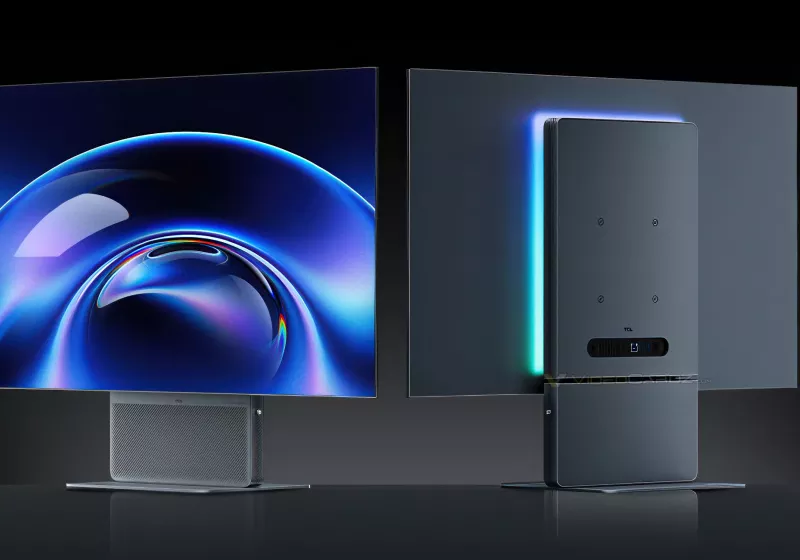
• Core Points: TCL’s 32X3A is a 31.5-inch OLED monitor offering true 4K at 240Hz and a second mode at 1080p with up to 480Hz, boasting a grayscale response time of 0.03 ms and wide color coverage (99% sRGB and DCI-P3). It features anti-glare and anti-reflective coatings and an ultra-thin chassis at 6.4mm.
• Main Content: Dual-mode OLED monitor with high-refresh 4K and ultra-high-refresh lower-resolution option, strong color fidelity, and reduced glare in a sleek form factor.
• Key Insights: The design targets competitive gaming and professional use by combining extreme refresh rates with OLED color accuracy in a slim profile, but real-world ergonomics and pricing remain uncertain.
• Considerations: Availability, price, input options, peak brightness, burn-in risk, and software support for dual-mode switching require timing details.
• Recommended Actions: Monitor for official release details, hands-on reviews, and compatibility with gaming rigs and content-creation workflows before purchase.
Content Overview
TCL has introduced a new high-end monitor under its 32X3A lineup, a 31.5-inch OLED display that straddles two distinct refresh-rate modes. In its primary configuration, the monitor delivers 4K resolution at up to 240Hz, aiming to satisfy gamers who demand ultra-smooth motion and razor-sharp image clarity. In a secondary mode, it can operate at a lower resolution—likely 1080p—with a claim of up to 480Hz. TCL highlights a remarkably fast grayscale response time of 0.03 milliseconds, which traditionally translates to near-instantaneous pixel transition performance and minimal motion blur. The panel covers 99% of the sRGB and DCI-P3 color gamuts, underscoring its suitability for color-critical tasks such as content creation and color grading in addition to gaming.
The device adopts anti-glare and anti-reflective coatings to mitigate troublesome reflections in bright environments, a common challenge for OLED displays. The overall profile of the monitor is notably slim, measuring just 6.4 millimeters at its thinnest point, positioning it among the slimmest OLED monitors available in the market today. This combination of high refresh-rate capabilities, broad color coverage, and a slender chassis suggests TCL is aiming to blend cutting-edge gaming performance with professional-grade color accuracy in a consumer-friendly form factor.
This article provides a comprehensive look at what TCL has announced with the 32X3A, examining the implications for gamers, content creators, and the broader display ecosystem. It also considers potential hurdles such as real-world brightness, burn-in concerns on OLED technology, the practicality of a dual-mode approach, and how the device may compare with rival offerings from other display manufacturers in the current high-refresh-rate, high-color-gamut segment.
In-Depth Analysis
TCL’s 32X3A represents a strategic entry into the high-refresh-rate OLED segment with a dual-mode design that seeks to balance ultrafast motion performance and color fidelity. The core proposition is straightforward on the surface: deliver 4K resolution at 240Hz for top-tier gaming experiences, and provide a separate, lower-resolution mode—presumably 1080p—attainable at an even higher refresh rate, up to 480Hz. This approach targets players who want maximum motion clarity and responsiveness without requiring the bandwidth demands of native 4K at extreme refresh rates, which can be challenging for some GPUs to sustain consistently in modern titles.
Key performance metrics highlighted by TCL include a grayscale response time of 0.03 milliseconds. Such a measurement, if verifiable, would place the monitor among the fastest pixel transition capabilities available, contributing to exceptionally low motion blur and crisp transitions during fast-paced sequences. However, it is important to note that grayscale speed is just one vector of performance. The real-world experience is influenced by factors such as color processing, panel brightness, response-time behavior across different gray-to-gray transitions, input lag, and how the monitor handles complex scenes with mixed content.
Color accuracy and coverage are another central claim. With 99% coverage of both the sRGB and DCI-P3 color spaces, the 32X3A positions itself as a versatile tool for creators who require faithful color reproduction for tasks ranging from photo editing to video grading. OLED panels intrinsically deliver strong contrast ratios and deep blacks, which enhances perceived image quality, particularly in HDR content. While the 99% color coverage is commendable, potential buyers should seek out independent color-calibration data to verify how the panel performs in temperature stability, gamma behavior, and uniformity across the screen.
The coating strategy—anti-glare and anti-reflective—addresses a well-known OLED challenge: reflections can degrade perceived image quality in bright viewing environments. By mitigating glare, TCL aims to preserve the perceived contrast and color richness when ambient light is present, which is beneficial not only for gaming but also for daylight usage and professional workflows in brighter rooms.
The physical design, notably a thickness of 6.4 millimeters, signals a focus on aesthetics and form factor parity with modern ultrathin displays. A slim profile can enhance desk ergonomics, enabling more flexible mounting options and a pared-down silhouette in multi-monitor setups. However, the slim form factor also raises questions about internal heat dissipation and panel longevity under sustained high-refresh-rate operation. OLED panels can be sensitive to prolonged high-brightness operation, which makes effective thermal management and power delivery crucial for maintaining color stability and peak performance over time.
Input connectivity and ergonomics are essential considerations that TCL did not detail in the preview information provided by ITHome. For a monitor of this caliber, users typically expect a robust set of inputs, such as HDMI 2.1, DisplayPort 1.4 or 2.1, USB-C with display and power delivery support, and perhaps multiple USB-A ports for peripherals. Additionally, the presence of adaptive sync technologies (AMD FreeSync or NVIDIA G-SYNC compatibility) would influence compatibility with the latest graphics hardware and gaming titles. The dual-mode approach could complicate firmware and software support, particularly around color management and refresh-rate toggling, so clear guidance on how users switch modes, whether via on-screen display (OSD), a hardware button, or an integrated software utility, would be valuable for prospective buyers.
From a competitive standpoint, TCL’s 32X3A competes in a market that includes other OLED and high-refresh-rate monitors from brands like LG, Samsung, Dell, and Asus. OLED gaming monitors are still relatively niche compared to LCD-based high-refresh-rate panels due to concerns around burn-in risk, brightness consistency, and color stability. TCL’s emphasis on a dual-mode capability potentially differentiates the product by offering a pragmatic balance: a high-resolution mode for productivity and content creation, paired with an even higher-refresh-rate lower-resolution mode optimized for competitive gaming. Buyers should weigh the trade-offs between native 4K at 240Hz versus a dynamic mode that may require occasional compromises in sharpness or color fidelity when upscaling occurs in the high-refresh-rate mode.
Another consideration is the practical availability of 32X3A. The market confidence for premium OLED monitors often hinges on supply chains, initial pricing, regional availability, and after-sales support, including warranty terms and service networks. Prospective purchasers should anticipate a premium price point that reflects the advanced OLED panel technology, high refresh-rate performance, and the specialized cooling or power delivery requirements needed to sustain such capabilities.
Burn-in is a perennial topic with OLED displays. While modern OLED panels include various mitigation strategies, long-term exposure to static UI elements or very bright content can lead to image retention. Users who plan to utilize the monitor across diverse workloads—gaming, productivity, and media consumption—should consider how much static content they encounter and what preventive measures, such as screen savers or pixel-shifting features, are offered by TCL. Given the dual-mode refresh-rate design, it will also be important to observe whether the lower-resolution, higher-refresh-rate mode presents any unique burn-in risks due to different pixel usage patterns.
Finally, the market implications of such a product extend beyond TCL’s immediate strategy. The 32X3A reflects ongoing consumer demand for both cinematic image quality and competitive esports performance in a single device. If TCL can deliver the promised performance with reliable color accuracy, low input lag, and durable operation, the monitor could influence how other manufacturers approach dual-mode OLED designs, potentially catalyzing more versatile, hybrid-purpose displays that merge creative and competitive use cases.

*圖片來源:Unsplash*
Perspectives and Impact
The introduction of the TCL 32X3A could influence several dynamics in the monitor industry. For gamers, the allure of a true 4K 240Hz experience on OLED, combined with a second mode offering 480Hz at a lower resolution, represents a unique blend of capabilities. In esports and fast-paced gaming genres, higher refresh rates can provide competitive advantages through smoother frame delivery and more responsive input handling. If TCL can deliver consistent performance in the 4K 240Hz mode, the device could set a new benchmark for what OLED panels can achieve in terms of motion clarity and color fidelity at high resolutions.
From a creator’s perspective, OLED’s color richness and contrast enable more accurate content evaluation and creative work directly on the display. The 99% coverage of sRGB and DCI-P3 supports workflows requiring faithful color reproduction, which could reduce the need for secondary calibration hardware in some scenarios. The anti-glare and anti-reflective treatments further enhance usability in varied lighting conditions, an important consideration for desktop settings that combine ambient light with bright on-screen content.
Economically, premium OLED monitors have often occupied a niche segment with limited adoption outside enthusiast circles. The 32X3A’s dual-mode approach could be a strategic attempt to broaden appeal by offering a flexible device that appeals to both players and creators. If priced competitively and backed by reliable software support, the monitor could push more buyers toward OLED panels in contexts where high dynamic range and pixel-level accuracy matter.
Technological implications also extend to the broader OLED ecosystem. OLED panels are evolving with improvements in burn-in mitigation, brightness management, and thermal handling. The 32X3A’s design choices—especially its ultra-thin profile and dual-mode refresh-rate strategy—may spur further R&D into hybrid OLED implementations, combining high-refresh-rate gaming performance with robust color accuracy for professional use. The ability to switch between modes could also drive interest in more sophisticated display firmware architectures, including smoother mode transitions, automatic color calibration when switching modes, and better integration with gaming platforms and operating systems.
Looking ahead, several questions emerge for the market and potential buyers. How will TCL handle warranty coverage and service for OLED panels that operate under intense refresh-rate regimes? What is the leadership’s roadmap for software features, including advanced color management, color profiles, and presets tailored for different game genres and content types? Will the device expose USB-C with power delivery for laptop-rim integration and a single-cable solution? And how will the 32X3A perform in real-world scenarios where brightness, HDR capability, and sustained performance intersect with burn-in risk and thermal constraints?
Industry observers will be watching closely to see whether TCL ultimately confirms detailed specifications, including precise brightness ratings (peak and sustained), input lag figures, native panel type and G-to-G response data for various transitions, and the exact hardware configurations that enable dual-mode operation. Independent reviews and calibrations will be essential to validate TCL’s claims and to provide buyers with a clear sense of how the monitor performs across different content types, from competitive gaming to high-fidelity color-critical production work.
Key Takeaways
Main Points:
– TCL introduces the 32X3A, a 31.5-inch OLED monitor with dual-mode operation: 4K at 240Hz and a lower-resolution mode up to 480Hz.
– The display claims a grayscale response time of 0.03 ms and 99% coverage of sRGB and DCI-P3, with anti-glare/anti-reflective coatings.
– The form factor is notably slim at 6.4 mm, highlighting a premium, space-efficient design.
Areas of Concern:
– Real-world performance verification (brightness, uniformity, color stability, and burn-in risk) remains to be seen.
– Availability, pricing, and after-sales support expectations are not yet disclosed.
– Details on input options, Adaptive Sync support, and firmware/software for mode switching are needed.
Summary and Recommendations
The TCL 32X3A presents an ambitious combination of ultrahigh refresh-rate capability, strong color coverage, and a slim, aesthetically modern chassis. By offering a dual-mode approach that pairs a native 4K 240Hz configuration with a higher-refresh, lower-resolution option up to 480Hz, TCL aims to serve both demanding gamers and professional creators within a single device. The claimed 0.03 ms grayscale response time suggests exceptionally quick pixel transitions, which, if validated, could translate to noticeably reduced motion blur in fast-action scenes. The 99% sRGB and DCI-P3 coverage reinforces its potential value for color-critical workflows, while anti-glare and anti-reflective coatings address practical usability in varied lighting environments. The 6.4 mm thickness underscores TCL’s emphasis on design-forward engineering.
However, several critical questions must be resolved before a purchase decision can be confidently made. Real-world performance metrics, particularly brightness under HDR, color stability across dual-mode operation, and burn-in risk management, require confirmation through independent testing. The pricing and regional availability will heavily influence adoption, as will the range of inputs, compatibility with current GPUs, and the ease of switching between modes through intuitive software controls or hardware interfaces. Prospective buyers should monitor TCL’s official disclosures for full specification sheets, warranty terms, and hands-on reviews that test the monitor in typical gaming and production environments.
If TCL delivers on its stated spec sheet with robust software support, dependable thermal management, and verifiable color accuracy, the 32X3A could become a compelling option for enthusiasts seeking a single display capable of delivering cinematic visuals in 4K gaming and precise color work for content creation. It may also push competitors to explore more versatile OLED designs that harmonize extreme refresh rates with professional-grade color fidelity. For potential buyers, the recommended approach is to await comprehensive reviews, verify compatibility with their hardware, and consider the total cost of ownership—including potential burn-in risk mitigation—before committing to a premium OLED investment.
References
- Original: https://www.techspot.com/news/111585-tcl-unveils-4k-240hz-oled-dual-mode-monitor.html
- Additional context on OLED monitor trends and dual-mode displays:
- https://www.tomshardware.com/reviews/tcl-32x3a-oled-monitor-review
- https://www.anandtech.com/show/17749/tcl-announces-32x3a-31-5-oled-dual-mode-monitor

*圖片來源:Unsplash*