TLDR
• Core Points: Tesla restarts the Dojo AI project after a prior shutdown tied to leadership changes, with a pivot toward novel, space-based AI compute concepts.
• Main Content: Dojo, originally led by Peter Bannon, faced abrupt closure last year as Tesla’s dedicated AI hardware team disbanded; roughly twenty engineers left for DensityAI, a startup founded by former Dojo head Ganesh Venkataramanan and other ex-Tesla technologists.
• Key Insights: The relaunch indicates Tesla’s continued interest in scalable AI acceleration, while the “space-based AI compute” concept suggests exploring off-Earth computational paradigms or satellite-linked AI inference workflows.
• Considerations: Uncertainties remain about feasibility, funding, and practical timelines for the space-oriented approach, plus the implications for Tesla’s AI roadmap and talent retention.
• Recommended Actions: Monitor Tesla’s project milestones, partnerships, and any public disclosures on hardware, software stacks, and collaboration with aerospace or satellite entities.
Content Overview
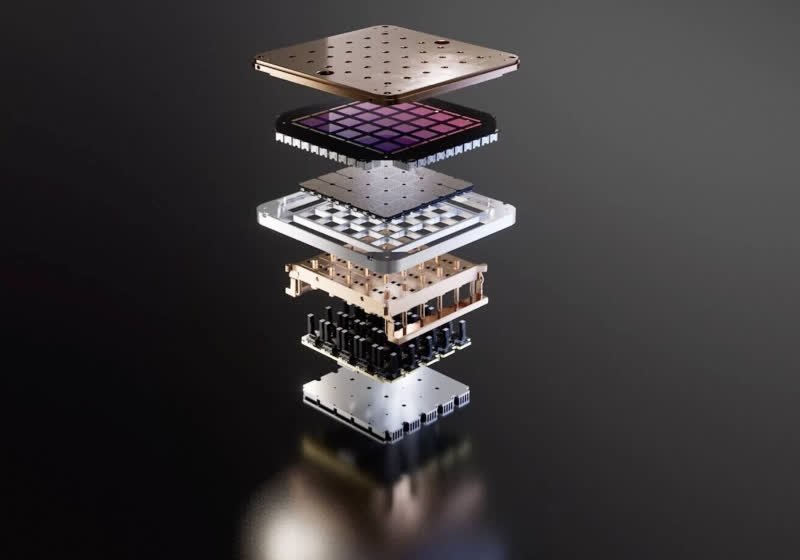
Tesla’s Dojo AI initiative entered a period of turbulence when the project was abruptly shut down last year. The shutdown coincided with the disbanding of Tesla’s dedicated AI hardware team and the departure of program lead Peter Bannon. This leadership shake-up disrupted one of the company’s long-term bets on in-house AI acceleration hardware designed to train large language models and other complex neural networks at scale. The immediate aftermath saw a brain drain: approximately twenty engineers departed from Tesla’s Dojo program, with several of them joining DensityAI, a startup incubated by Ganesh Venkataramanan, who previously headed the Dojo effort, along with other former Tesla technologists. The reframing of Dojo’s mission has now taken a new direction, with Tesla reportedly restarting the program and exploring a “space-based AI compute” concept, signaling a potential pivot toward outside-the-traditional-ground infrastructure for AI training and inference.
This renewed focus occurs amid broader industry trends where major tech players continue to pursue highly specialized AI accelerators and unconventional compute architectures to meet the demands of next-generation AI models. Tesla has repeatedly positioned Dojo as a critical piece of its AI strategy, aiming to achieve unprecedented training throughput and efficiency for its autonomous driving ambitions and other AI-driven products. The latest developments suggest a shift not only in internal team composition but also in the strategic framing of how and where AI computation could occur, with the space-based concept hinting at collaborations or experiments that leverage satellite-linked processing or other off-planet compute frameworks.
In-Depth Analysis
Background and timeline: Dojo emerged as Tesla’s ambition to build purpose-built AI hardware capable of accelerating large-scale machine learning workloads beyond what consumer-grade GPUs can achieve. The project was closely associated with a dedicated hardware team within Tesla and led by Peter Bannon. The exact nature and scope of Dojo’s hardware stack remained highly guarded, but the initiative represented a flagship effort to differentiate Tesla’s AI capabilities from other automakers and technology firms. In the wake of leadership changes and organizational restructuring, the original Dojo program was reportedly shut down last year, creating uncertainty about the future of Tesla’s internal AI acceleration strategy.
Talent migration and implications: The shutdown coincided with a notable exodus of talent from the Dojo program. Roughly twenty engineers left Tesla’s Dojo effort and transitioned to DensityAI, a startup founded by Ganesh Venkataramanan, who previously led the Dojo program, along with other former Tesla engineers. This talent movement underscores the broader challenge of retaining specialized AI hardware and software expertise within large corporate settings, especially when internal priorities shift or projects undergo significant strategic pivots. DensityAI’s formation and recruitment activity indicates continued interest in leveraging the expertise of former Dojo personnel to pursue new possibilities in AI hardware acceleration and related compute solutions.
The restart and the space-based AI compute concept: Reports indicate that Tesla has rebooted the Dojo initiative and, in a notable shift, begun exploring a space-based AI compute framework. While details remain limited, the concept involves leveraging off-Earth infrastructure—potentially satellite-linked networks or other space-enabled compute modalities—to advance AI capabilities. Such an approach could theoretically offer advantages in data throughput, latency management, and resilience, albeit accompanied by substantial technical and logistical hurdles. The “space-based” framing may be symbolic of an openness to unconventional compute architectures or could reflect exploratory collaborations with aerospace or satellite technology partners. It’s important to distinguish between speculative strategic language and concrete, actionable plans; at this stage, Tesla’s public disclosures are insufficient to confirm concrete hardware deployments or timelines.
Industry context and significance: Tesla’s renewed Dojo activity sits within a broader enterprise AI landscape where other tech firms are pursuing custom accelerators, advanced silicon, and even distributed compute approaches to meet the demands of large-scale AI models. The idea of space-based or satellite-connected AI compute is not unprecedented in research circles, though practical deployment at scale remains a frontier area with significant risk and regulatory considerations. For Tesla, the resurgence of Dojo signals a continued commitment to high-performance AI infrastructure as a core component of its product roadmap, including autonomy, robotaxi ambitions, and other AI-centric initiatives.
Organizational and strategic uncertainties: The revival of Dojo alongside a pivot toward space-based AI compute raises questions about governance, funding, and long-term strategy. Will Dojo operate as an independent unit within Tesla, or will it be integrated with broader AI initiatives? What milestones, budgets, and external partnerships will define its next phase? How will talent acquisition and retention be managed in light of the earlier brain drain? Addressing these questions will be critical for stakeholders seeking clarity on Tesla’s AI trajectory.
Perspectives and Impact
- Technical prospects: If Dojo’s restart yields tangible progress, it could contribute to Tesla’s ability to train larger and more capable AI models for perception, decision-making, and control systems across its product lines. A space-based compute concept, while currently speculative, might open avenues for resilient, geographically distributed AI processing architectures or for leveraging novel communication links that reduce data bottlenecks between sensors, fleets, and cloud-based services.

*圖片來源:Unsplash*
Operational and cost considerations: Any foray into space-based AI compute entails substantial cost, regulatory, and logistical considerations. Telemetry latency, data transfer rates, radiation exposure, and maintenance challenges in space or space-adjacent environments would need careful engineering and risk management. Partnerships with aerospace companies, government agencies, or satellite operators could shape the feasibility and pace of development.
Talent and culture: The Dojo reshaping and the subsequent departure of engineers to DensityAI highlight the tension between ambitious in-house programs and the realities of scarce AI hardware talent. Tesla’s ability to attract and retain top engineers for Dojo, reassemble an effective team, and sustain long-term research and development will be essential to realizing any ambitious goals. The transition also reflects a broader industry trend where talent mobility fuels startup ecosystems and accelerates knowledge transfer.
Competitive landscape: If Tesla pursues unconventional compute architectures, it could differentiate its AI capabilities from rivals relying solely on traditional data center compute. The implications extend to automotive autonomy, robotics, and potentially other AI-driven product domains. However, success would hinge on translating experimental concepts into reliable, scalable, and maintainable systems.
Regulatory and ethical considerations: A space-based AI compute framework would inevitably intersect with regulatory, safety, and ethical considerations, including data sovereignty, privacy, and the safe deployment of autonomous systems. Transparent governance, risk assessment, and adherence to relevant standards will be critical as the project evolves.
Key Takeaways
Main Points:
– Tesla has relaunched the Dojo AI project after a prior shutdown tied to leadership and organizational changes.
– Approximately twenty Dojo engineers left for DensityAI, signaling talent movement within the AI hardware ecosystem.
– The renewed Dojo initiative reportedly pivots toward a space-based AI compute concept, indicating an exploratory and potentially groundbreaking direction.
Areas of Concern:
– Lack of concrete public details on timelines, budgets, and technical specifications for the space-based compute concept.
– Uncertainty about how Dojo will be integrated with Tesla’s broader AI and autonomy roadmap.
– Potential risks associated with talent retention and sustaining long-term research commitments in a rapidly evolving field.
Summary and Recommendations
Tesla’s decision to restart the Dojo initiative and pivot toward a space-based AI compute concept marks a noteworthy shift in how the company envisions scaling its AI capabilities. While the Dojo program had previously been framed as a cornerstone of Tesla’s AI hardware strategy, the shutdown last year and subsequent talent movements underscored the challenges of maintaining large, mission-critical hardware projects within a private corporation. The new direction, if pursued, could push the boundaries of conventional compute architectures and open possibilities for distributed, space-linked AI processing. However, the concept remains high-risk and speculative without clear technical roadmaps, partnerships, or milestones.
For stakeholders and observers, the following actions are prudent:
– Track official Tesla communications for updates on Dojo’s structure, aims, and milestones, particularly regarding any formal partnerships with aerospace or satellite firms.
– Seek clarity on funding models, project governance, and long-term strategic value to Tesla’s autonomy and AI product lines.
– Monitor talent retention strategies and potential signs of a restructured internal team or external collaboration strategy that could influence progress.
If Tesla can translate the space-based compute concept into a demonstrable, scalable platform, it could reshape expectations for AI infrastructure in automotive technology and beyond. Until more concrete details emerge, the Dojo relaunch remains an intriguing development with significant potential but considerable uncertainty.
References
- Original: https://www.techspot.com/news/111005-tesla-restarts-dojo-ai-project-after-shutdown-pivots.html
- Related context: [Add 2-3 relevant reference links based on article content]

*圖片來源:Unsplash*