TLDR
• Core Points: Tesla unveils a more affordable Cybertruck at $59,990 with ~325 miles range and dual-motor capability, but the $40k target remains distant.
• Main Content: The updated Cybertruck adds adaptive damping coil springs, steer-by-wire with four-wheel steering, powered frunk, heated front seats, and a 6’6″ bed with a powered tonneau and multiple outlets, highlighting both practicality improvements and the ongoing price-gap to the original low-cost promise.
• Key Insights: Tesla emphasizes utility and tech-forward features, yet market positioning hinges on cost reductions, supply constraints, and potential demand shifts for a premium-feeling truck at a mid-$50k price point.
• Considerations: Charging infrastructure, total ownership cost, reliability of high-tech systems, and competition from other EV pickups will shape adoption.
• Recommended Actions: Monitor real-world range and tuning after launch, compare with rival trucks, and assess total ownership costs, including incentives and maintenance.
Content Overview
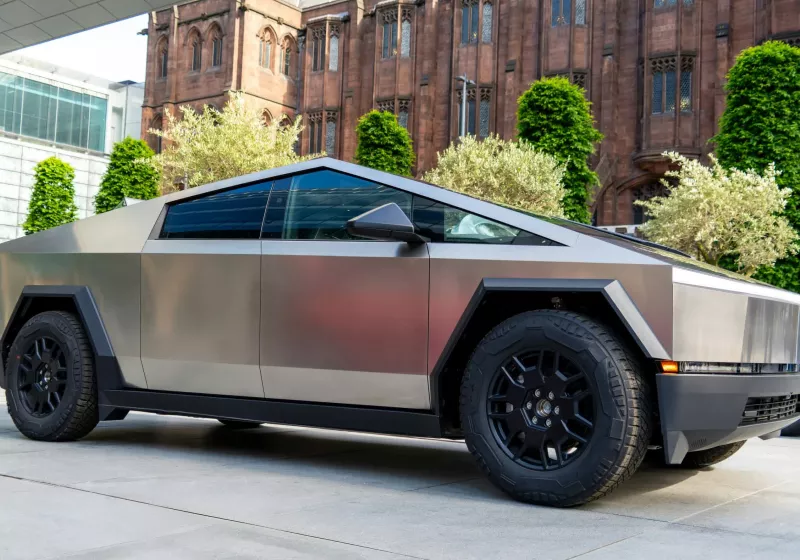
Tesla has rolled out a more affordable variant of its futuristic Cybertruck, positioning it at a starting price of $59,990. The company markets a vehicle that delivers an estimated 325 miles of range on a full charge, a notable feature given the vehicle’s size and payload aims. The new Cybertruck emphasizes a blend of rugged utility and high-tech capabilities that align with Tesla’s broader EV strategy, while attempting to broaden its appeal beyond early adopters who were drawn to the original, higher-priced configurations.
Key equipment highlights for this iteration include adaptive suspension in the form of coil springs with damping, and steer-by-wire technology paired with four-wheel steering. Tesla also introduces a practical convenience feature: a powered front trunk (frunk) and heated seats for the first row, reinforcing comfort alongside capability. The 6-foot by 4-foot loading area remains a central selling point, featuring a powered tonneau cover and a selection of power outlets—two 120V outlets and one 240V outlet—bolstering the vehicle’s appeal for work and recreational use. Tesla also touts Powershare functionality, suggesting the Cybertruck can act as a mobile power source for compatible devices and tools.
The price positioning, however, underscores the ongoing tension between Tesla’s ambitious design language and the company’s promises to deliver a $40,000 Cybertruck. While the $59,990 figure is more approachable than prior configurations, it does not match the original target, leaving consumers and industry watchers reflecting on whether a price point near $40,000 is still feasible given component costs, inflation, and supplier dynamics. This development suggests that Tesla intends to maintain a competitive edge through a combination of range, propulsion options, and equipment that enhances everyday usability, even as the economics of mass-market EV production continue to evolve.
The broader context is equally important. The pickup segment has become an increasingly important battleground for electric vehicles, with several automakers pursuing affordable yet capable electric pickups. Tesla’s approach with the Cybertruck—incorporating advanced steering and suspension technologies, along with robust payload capabilities—signals a strategy aimed at delivering value through feature density and integrated energy solutions rather than through a barebones price cut alone. Whether this approach translates to sustained demand in a market that weighs total cost of ownership, charging accessibility, and reliability remains a key area for observation as the model year unfolds.
This article examines what the new Cybertruck configuration offers, how it compares to prior versions and competing offerings, and what it could mean for Tesla’s broader EV strategy. It also considers how the upgraded feature set might influence ownership experience, use cases, and the competitive dynamics within the EV pickup landscape.
In-Depth Analysis
Tesla’s decision to introduce a “cheaper” Cybertruck at $59,990 represents a strategic move to balance the brand’s iconic design language with a price point that broadens the potential customer base. The stated range of approximately 325 miles per charge places the vehicle within a realistic envelope for modern electric pickups, especially when considering the payload and off-road-oriented use cases that the Cybertruck is designed to handle. Range claims remain dependent on real-world driving conditions, climate, and load, but 325 miles is consistent with a target that would suffice for daily driving, regional trips, and work-day usage without frequent recharging.
One of the most notable technology updates on this version is the adaptive coil-sprung suspension system. Traditional air suspension has been a common choice for trucks seeking a balance of ride quality and load management. Tesla’s coil springs with adaptive damping aim to deliver a smoother ride over varying surfaces while preserving the capacity to handle payloads and towing needs. The adaptation of damping characteristics—potentially adjusting to road conditions and load—could help mitigate abrupt impacts and improve overall daily usability. For a vehicle in this segment, the interplay between ride comfort and durability is crucial, and the coil-spring approach may reflect a strategic choice to reduce maintenance complexity while maintaining performance.
Steer-by-wire with four-wheel steering is another centerpiece of the updated Cybertruck. Steering-by-wire removes a mechanical connection between the steering wheel and the wheels, relying on electronic control to translate driver input into wheel movement. Four-wheel steering can enhance maneuverability at low speeds and stability at higher speeds, which is particularly valuable for a large pickup in urban environments or when navigating tight job sites. This feature, combined with electronic steering, positions the Cybertruck as a technologically advanced vehicle aimed at offering both precision handling and broad functionality.
Interior and convenience enhancements are also prominent. The inclusion of heated first-row seats improves comfort in colder climates, expanding the vehicle’s appeal across a range of weather conditions. The powered frunk adds a level of convenience for quick access to front storage, which can be advantageous for work tools, groceries, or daily cargo. These upgrades demonstrate Tesla’s focus on practical daily usability alongside the vehicle’s core capabilities.
The cargo bed remains a defining element of the Cybertruck’s value proposition. At 6 feet by 4 feet, the bed provides substantial space for tools, equipment, or outdoor gear. Tesla’s addition of a powered tonneau cover helps secure cargo and manage airflow, while the bed’s array of power outlets enhances on-site versatility. The availability of two 120-volt outlets and one 240-volt outlet enables users to power small tools, portable appliances, or charging capabilities for devices in remote or job-site settings. The inclusion of Powershare capability underscores Tesla’s intent to position the Cybertruck as not only a transport solution but also a portable energy resource for users who require reliable power on the go.
From a market perspective, the price point of $59,990 places the Cybertruck squarely in competition with other mid-range EV pickups and traditional internal-combustion alternatives while offering a distinct set of advanced features that differentiate it from conventional pickups. The anticipated incentives, tax credits, or regional subsidies could further influence the total cost of ownership, potentially narrowing the price gap for certain buyers. However, the price gap relative to the original $40,000 promise remains a talking point for enthusiasts and potential buyers who closely tracked Tesla’s announced targets.
Tesla’s strategic rationale appears to hinge on delivering a product that combines substantial range with a high degree of tech integration, while also addressing practical day-to-day tasks with features like the powered tonneau and multi-outlet bed. The company’s approach seems designed to appeal to buyers who want a futuristic truck that remains usable for work and recreation, rather than merely chasing a lower sticker price. In the broader context of the EV market, such a strategy could help Tesla maintain a premium perception even as it expands its addressable market.
Concerns surrounding the new Cybertruck configuration largely mirror the broader debates about the model’s long-term viability and reliability. As with many high-tech vehicles, there is interest in how well steer-by-wire systems perform over prolonged periods, how the adaptive suspension holds up under varying payloads and terrain, and how consistent the range remains under real-world conditions. The supply chain for critical components, including battery cells and advanced sensors, continues to influence production costs and the ability to hit price targets. Additionally, the vehicle’s unique design and software-centric approach raise considerations about repairability and service networks, which could influence ownership experience and resale value.

*圖片來源:Unsplash*
Competition in the electric pickup segment has intensified, with several automakers introducing or expanding EV models to meet demand. Buyers increasingly weigh total ownership cost, including charging infrastructure compatibility, maintenance, and potential incentives. Tesla’s updated Cybertruck emphasizes a balance of capability and technology, which could give it an edge for buyers who place a premium on features like steer-by-wire and Powershare, while still offering practical payload and bed utilities. The market’s response will depend on how these features perform in real-world usage, the quality and reliability of the software driving steer-by-wire and adaptive damping, and the overall ownership experience.
Future implications of this release involve how Tesla positions the Cybertruck against both traditional and emerging competitors. If the company can demonstrate durable performance and reliable long-term service, the Cybertruck may solidify its place as a technologically forward alternative in the pickup segment. On the other hand, if price pressures persist or if reliability concerns emerge, Tesla could confront challenges in converting interest into sustained sales momentum. The degree to which Tesla can maintain a compelling value proposition while delivering the promised capabilities will be a key determinant of the model’s ongoing relevance.
The introduction also raises questions about production scale, availability, and regional pricing strategies as Tesla navigates supply chain dynamics and global demand. The company’s ability to deliver features like steer-by-wire and advanced braking and suspension with consistent quality will be closely watched by industry observers and potential buyers, who often evaluate these systems for how they translate into real-world ownership experiences.
In sum, the new Cybertruck at $59,990 presents a refined proposition: a rugged, capable pickup with a suite of modern technologies and practical conveniences that align with contemporary expectations for electric vehicles. While it narrows the affordability gap compared to earlier targets, it nonetheless leaves unresolved the broader question of whether the original $40,000 promise remains within reach, at least in the near term. Market performance will hinge on a combination of real-world efficiency, software reliability, manufacturing efficiency, and the evolving competitive landscape of electric pickups.
Perspectives and Impact
The Cybertruck’s pricing and feature set reflect Tesla’s broader approach to EV innovation: blend high-tech features with practical utility. For some buyers, the combination of 325 miles of range, four-wheel steering via steer-by-wire, and a robust bed configuration with power outlets provides a compelling package that supports a range of use cases—from on-site work to weekend adventures. The powered tonneau and bed outlets, in particular, speak to a demand for portable power and secure cargo management, which can differentiate the Cybertruck from rival pickups that offer fewer integrated conveniences.
From a consumer behavior standpoint, buyers evaluating the Cybertruck at $59,990 will consider not only sticker price but also potential charging costs, maintenance, and the value placed on features like adaptive damping and steer-by-wire. If the vehicle proves reliable and the software depth proves easy to update and manage, the Cybertruck could cultivate a loyal user base that prioritizes technology and utility. Conversely, if reliability or serviceability concerns surface, potential buyers may hesitate, especially given the price sensitivity of the mid-range pickup market.
The broaderEV market implications include how automakers respond to Tesla’s hardware and software choices. The company’s emphasis on steer-by-wire and four-wheel steering is part of a larger trend toward more sophisticated steering and suspension systems in electric vehicles. If these systems demonstrate robust performance and safety, they could set new expectations for future pickups and SUVs. Suppliers and partners will also be watching, as the successful deployment of such systems could influence the development of new components and software tools tailored for high-tech EV platforms.
The design language of the Cybertruck continues to be a differentiator. Its angular, stainless-steel aesthetic has helped create a distinct brand identity that resonates with certain buyers while possibly alienating others who prefer traditional pickup styling. Tesla’s challenge is to translate this iconic design into broad market appeal, without compromising the reliability and serviceability that customers expect. The pricing strategy, too, signals a careful calibration between preserving the vehicle’s premium aura and reaching new buyers who might be drawn by the mid-$50k price point.
Looking ahead, the Cybertruck’s trajectory will be influenced by how Tesla communicates value to potential buyers and how the marketplace responds to a vehicle that blends rugged utility with advanced electronics. If the company can maintain a steady cadence of software updates, deliver on promised capabilities, and avoid escales in maintenance costs, the Cybertruck could become a mainstay in the EV pickup segment. It may also push other manufacturers to accelerate their own electric truck programs, raising the bar for performance, efficiency, and feature-rich experiences in a segment that has historically valued power and practicality.
In evaluating the Cybertruck’s future impact, several factors stand out: (1) real-world efficiency and range across different configurations and payloads; (2) the reliability and long-term performance of steer-by-wire and adaptive damping; (3) the effectiveness and ease of use of Powershare and in-bed outlets; (4) customer satisfaction with interior and cargo features such as heated seats and the powered frunk; (5) the availability and economics of charging infrastructure to support frequent long trips or heavy-duty use. Collectively, these considerations will shape the Cybertruck’s ability to sustain momentum in a competitive and rapidly evolving market.
Key Takeaways
Main Points:
– Tesla introduces a more affordable Cybertruck at $59,990 with ~325 miles of range.
– Features include adaptive damping via coil springs, steer-by-wire with four-wheel steering, heated front seats, powered frunk, and a powered bed with outlets.
– The price remains above the original $40k target, preserving some mystery about affordable mass-market adoption.
Areas of Concern:
– Whether real-world range and durability meet expectations under various loads and conditions.
– The practical reliability and service network for steer-by-wire and advanced suspension systems.
– Overall ownership costs, including charging, maintenance, and potential software updates.
Summary and Recommendations
Tesla’s latest Cybertruck iteration reinforces the company’s commitment to high-tech, practical EVs in the pickup segment. With an estimated 325 miles of range and a suite of features designed to enhance usability—from a powered frunk to outsized bed capabilities and Powershare—Tesla signals that value can be delivered through technology and convenience, not merely through the sticker price. However, the $59,990 price tag leaves unresolved the promise of a $40,000 entry point that some buyers anticipated. This gap will continue to shape consumer perception and market dynamics as the model enters production and faces real-world usage and competition.
For potential buyers, the prudent approach is to weigh the total cost of ownership, including charging infrastructure, incentives, and expected maintenance costs, against the functional benefits of the features offered. Prospective buyers should also monitor real-world reviews and long-term reliability reports, particularly regarding steer-by-wire and the adaptive suspension system. In the coming months, pricing, availability, and product updates could shift, potentially narrowing or widening the affordability gap.
Overall, the Cybertruck’s refreshed configuration broadens Tesla’s appeal by delivering a capable, tech-forward pickup that accommodates both work and recreational needs. The vehicle stands as a notable contender in the evolving EV pickup space, inviting ongoing scrutiny of how technology, price, and service converge to shape consumer adoption and the future of electric trucks.
References
- Original: https://www.techspot.com/news/111410-tesla-launches-most-affordable-cybertruck-but-only-limited.html
- Additional context and analysis on Tesla Cybertruck features and market positioning can be found at:
- https://www.tesla.com/cybertruck
- https://www.autonews.com EV pickup market analysis articles
- https://www.consumerreports.org/tesla-cybertruck-review (illustrative reference)

*圖片來源:Unsplash*