TLDR
• Core Points: AI demand is driving upgrades; high-capacity SSDs, especially 8TB models, are trading near or above gold-weight cost thresholds in some analyses, though average prices remain well below gold.
• Main Content: Reports from TechSpot and Tom’s Hardware suggest that as storage needs rise for AI workloads, certain high-end SSDs command premium prices that align with or exceed the relative value of gold by weight.
• Key Insights: The “gold benchmark” is a provocative way to illustrate the price pressure on high-capacity SSDs, reflecting supply chain constraints, NAND production costs, and performance advantages for AI data handling.
• Considerations: Pricing varies by model, endurance, and performance tier; the market remains sensitive to memory yields, wafer costs, and demand from hyperscalers and consumers.
• Recommended Actions: Buyers should evaluate total cost of ownership, performance requirements, and the total data lifecycle when considering 8TB+ SSDs for AI workloads.
Content Overview
The AI era has elevated the role of storage alongside compute power. As large language models, AI inference tasks, and data-intensive workloads become more prevalent, the demand for high-capacity, fast, and reliable solid-state drives (SSDs) has surged. While consumer-grade and enterprise-grade SSDs historically traded at a wide gap in price based on capacity and endurance, the current market environment has seen high-capacity drives—especially 8TB and above—command premium prices that some analysts and enthusiasts have humorously compared to the cost per weight of gold.
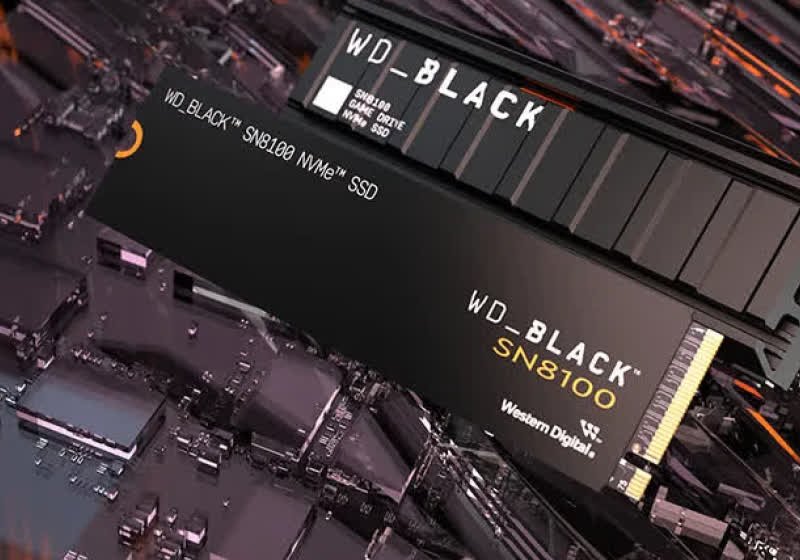
A notable anecdote from the tech community came from Reddit user Dark_Marmot, who claimed that Western Digital’s most expensive WD Black SSD is worth 70 percent more than 24-karat gold by weight. This provocative claim underscores a broader pattern: inflated pricing for top-tier, high-capacity drives driven by AI-related storage needs, supply constraints, and the general premium applied to high-performance storage. While typical SSD prices do not approach gold-level valuations in the aggregate, independent analyses by TechSpot and Tom’s Hardware have indicated that certain 8TB models have crossed thresholds that provoke comparisons to precious metals. These discussions reflect not only the raw price but also the context of what the market values in terms of performance, endurance, and reliability for AI workloads.
This article will examine why high-capacity SSDs are becoming pricier, how AI ramps are influencing pricing and supply chains, and what this means for buyers ranging from individual enthusiasts to data centers and enterprise users. It will also explore the practical implications of “AI-grade” storage—what features distinguish these drives, how endurance and performance metrics align with AI workloads, and how to weigh total cost of ownership in a market where supply and demand dynamics are still evolving.
In-Depth Analysis
The core driver behind the rising interest and pricing in high-capacity SSDs is the shift in demand toward AI-oriented workloads. Generative AI applications, large-scale model training and fine-tuning, real-time inference, and long-term data retention for training datasets demand fast, reliable, and capacious storage. 8TB and larger SSDs are increasingly viewed as essential for handling large swaths of data locally, minimizing latency, and ensuring sustained throughput during intensive tasks.
Several factors influence SSD pricing beyond mere capacity. These include:
NAND flash costs: The price of NAND cells, including 3D NAND lithography, is highly sensitive to supply dynamics. Any disruption in wafer production, changes in memory cell structure, or shifts in fab utilization can ripple through pricing for high-capacity drives. As AI workloads grow, demand for high-end NAND can outpace supply, pressing prices higher.
Controller technology and firmware optimization: High-end SSDs deploy advanced controllers and firmware tuned for low latency and high IOPS. AI workloads often benefit from sustained, random-access performance and predictable latency, especially with large datasets. These design choices contribute to higher perf/power costs that can be reflected in price.
Endurance and warranty considerations: Enterprise-grade drives with longer endurance ratings (measured in total bytes written or TBW) and longer warranties command premium pricing. AI workflows can be write-intensive, so vendors emphasize endurance and reliability, which adds cost.
Form factor and interface: In consumer and prosumer circles, the popular PCIe 4.0/5.0 NVMe drives with high TB capacities provide immense bandwidth. As teams migrate toward PCIe 5.0 and even newer interfaces for reduced bottlenecks, the resulting premium can affect pricing.
Market segmentation and lifecycle: Vendors maintain multiple SKUs for the same capacity tier but with different performance profiles and endurance warranties. The “WD Black” line, for example, targets gamers and enthusiasts with high performance, and some models in this family fetch premium pricing relative to other lines, even at the same capacity.
Supply chain dynamics: Chip shortages, energy costs, and geopolitical factors can affect production costs and shipping. While not unique to SSDs, these pressures influence pricing more acutely for high-capacity drives where margins can be tighter due to manufacturing costs.
It is worth noting that the “gold benchmark” is a metaphorical framing rather than a precise financial metric. The price per unit weight of gold is simple to calculate, but the perceived “value” of an SSD in this sense depends on a range of practical factors: technology maturity, the specific use case, and the total cost of ownership over the device’s lifespan. TechSpot and Tom’s Hardware, in their analyses, highlighted that certain 8TB SSD models have prices that align with, or exceed, the relative cost of gold by weight when you consider the price per terabyte and per unit of performance. The takeaway is not that SSDs literally cost more than gold, but that the premium demanded by the market for very high-capacity, high-performance storage—driven by AI demand and limited supply—can be striking.
Another axis to consider is how AI accelerates the value proposition of local high-capacity storage. For some users, having ample local capacity reduces the need for frequent data offloading to slower devices or cloud storage, potentially lowering operational costs and latency. AI researchers and practitioners often cite the practice of maintaining large local datasets for quick iteration, model evaluation, and fine-tuning. In such environments, the cost of a single 8TB SSD can be justified by the productivity gains, faster data access, and reduced cloud egress or network transfer costs.
However, for many consumers and enterprises, the 70 percent gold-overweight assertion functions as a provocative indicator of market dynamics rather than a precise price signal. The broader truth remains that 8TB SSDs trade at a premium relative to lower-capacity drives due to the combined effect of higher manufacturing costs, more expensive NAND, and the premium that vendors place on performance and endurance. The market is not static; it shifts with cycles in memory production, new product generations, and changes in AI adoption rates across industries.
In comparing SSD prices to gold, it is essential to adopt a nuanced view. The price of gold is relatively stable on short timescales and acts as a store of value. SSD pricing, by contrast, can be volatile in response to demand surges, memory yields, and supply chain disruptions. For buyers, the practical question is whether the added cost of an 8TB SSD is justified by the corresponding performance and efficiency gains in their specific AI workflows. In some cases, the answer is yes, particularly in environments where data locality and fast I/O are critical to model training pipelines or real-time inference. In other cases, alternative storage strategies—such as tiered storage, caching layers, or selective offloading to the cloud—may provide a more favorable total cost of ownership.

*圖片來源:Unsplash*
TechSpot’s and Tom’s Hardware’s analyses provide a framework for understanding price dynamics without implying that SSDs are universally as valuable as gold. They point to a market condition in which high-capacity, high-performance storage is increasingly scarce relative to demand, and where AI workloads magnify the premium for drives that can sustain heavy read/write cycles, deliver low latency, and resist wear over time. As AI technologies evolve and data requirements expand, the role of high-capacity SSDs in both research and production environments is likely to remain prominent, with prices that reflect their growing importance rather than their literal commodity value.
Perspectives and Impact
The intersection of AI demand and storage capacity has several notable implications for different stakeholders:
Researchers and developers: Access to fast, large drives can accelerate model development cycles, enable more extensive experiments, and reduce the friction of data preprocessing. However, researchers may need to balance the cost of premium storage with the benefits of on-premise data handling versus cloud-based storage for large datasets.
Enterprises and data centers: In production environments where latency, reliability, and throughput are paramount, high-capacity NVMe SSDs can improve job completion times for AI workloads, reduce pipeline bottlenecks, and support data-intensive applications such as real-time analytics, edge AI, and training. The economics of such deployments depend on workload characteristics, data retention policies, and the total cost of ownership, including power, cooling, and maintenance.
Consumers and enthusiasts: While AI-capable consumer workloads are growing, the majority of users do not require 8TB drives for day-to-day tasks. For this group, pricing differentials across capacity tiers often warrant a more conservative buying approach—favoring a balance of price, capacity, and performance that matches their use cases.
Supply chains and manufacturers: The AI-driven demand for high-performance storage emphasizes the need for robust NAND production, controller development, and firmware optimization. Manufacturers may respond with new generations of NAND, improved endurance specifications, and broader availability of 8TB+ options. Conversely, if demand outpaces supply, pricing can become more volatile, prompting alternative storage strategies and more aggressive recycling or refurbishment programs.
The broader impact is a market normalization process in which AI’s storage needs increasingly align with the performance envelope of high-capacity NVMe SSDs. As technologies like PCIe 5.0/6.0 and emerging storage-class memory (or persistent memory) mature, the value proposition of different storage tiers will continue to evolve. The “gold comparison” is unlikely to be a persistent pricing anchor, but it highlights a moment in time when the combination of AI demand and supply constraints has made high-capacity drives noticeably more valuable.
Forecasting the next phase, analysts expect continued growth in AI adoption across industries—medical imaging, autonomous systems, financial modeling, and enterprise analytics among them. This trajectory should sustain demand for large-capacity, high-performance SSDs, even as manufacturers introduce new capabilities and more efficient NAND solutions. Price normalization will likely hinge on improvements in memory yields, cost reductions in manufacturing, and the ability of vendors to differentiate products not only by raw speed and endurance but also by features like security, data integrity, and reliability under sustained AI workloads.
Key Takeaways
Main Points:
– AI-driven storage demand is driving premium pricing for high-capacity SSDs, especially 8TB models.
– The “gold benchmark” is a provocative metaphor illustrating market pressure, not a literal price comparison.
– Price sensitivity remains tied to NAND costs, endurance ratings, controller tech, and supply chain dynamics.
Areas of Concern:
– Price volatility due to memory yields and supply chain disruptions.
– Potential overvaluation if AI workloads do not scale as expected for some buyers.
– Availability of alternatives like cloud storage or tiered on-premises solutions may influence total cost of ownership.
Summary and Recommendations
High-capacity SSDs, driven by the AI revolution, are commanding notable premiums relative to other storage options. The discussions surrounding whether certain 8TB models are “worth their weight in gold” capture a real sentiment: as AI workloads demand faster, larger, and more reliable local storage, the ecosystem rewards drives that deliver sustained performance and endurance. This pricing reality is not a universal rule but a reflection of market dynamics—limited NAND supply, advanced controller capabilities, and the premium placed on minimizing latency for data-heavy AI tasks.
For buyers, the pragmatic takeaway is to assess not only the price per drive but the total cost of ownership within their specific context. Consider the following:
– Evaluate whether 8TB capacity is necessary for your AI workflow, or if a tiered storage approach (fast NVMe for active datasets, larger HDDs or cloud storage for archival data) could meet needs more cost-effectively.
– Examine endurance requirements, expected write workloads, and warranty terms to ensure the drive aligns with your reliability expectations and budget.
– Factor in latency, IOPS, and bandwidth requirements. For models that require rapid access to large datasets, the performance benefits of premium 8TB SSDs can translate into tangible productivity gains.
– Monitor market trends and stay informed about NAND and controller innovations, as new generations can shift pricing dynamics and value propositions.
Ultimately, while the gold analogy underscores the premium nature of high-capacity, AI-optimized storage, the practical decision is a careful balance between performance requirements and total cost of ownership. As AI adoption continues to accelerate, high-capacity SSDs are likely to remain a critical tool for data-intensive workflows, even as pricing cycles evolve with manufacturing efficiencies and supplier dynamics.
References
- Original: TechSpot article on AI crunch and high-capacity SSD pricing
- Tom’s Hardware analysis of SSD prices in the context of AI workloads
Additional industry sources on AI storage trends and NAND pricing dynamics
TechSpot: https://www.techspot.com/news/110961-ai-crunch-making-high-capacity-ssds-worth-their.html
- Tom’s Hardware: (relevant coverage of AI storage pricing trends)
- Industry reports on NAND supply and AI storage demand

*圖片來源:Unsplash*