TLDR
• Core Points: A popular YouTube creator demonstrates a coin-operated gaming PC concept, turning powering on into a microtransaction.
• Main Content: The project outlines a PC build and control system that requires a coin (or coin-like input) to initiate boot, offering a demonstration of hardware-integrated monetization concepts.
• Key Insights: The experiment explores the intersection of gaming hardware, microtransactions, and user consent, raising questions about feasibility, ethics, and security.
• Considerations: Practical challenges include coin-sensing reliability, user friction, safety, and potential legal/regulatory issues.
• Recommended Actions: Viewers should understand the concept, study the implementation details, and consider safer, consent-based monetization alternatives.
Content Overview
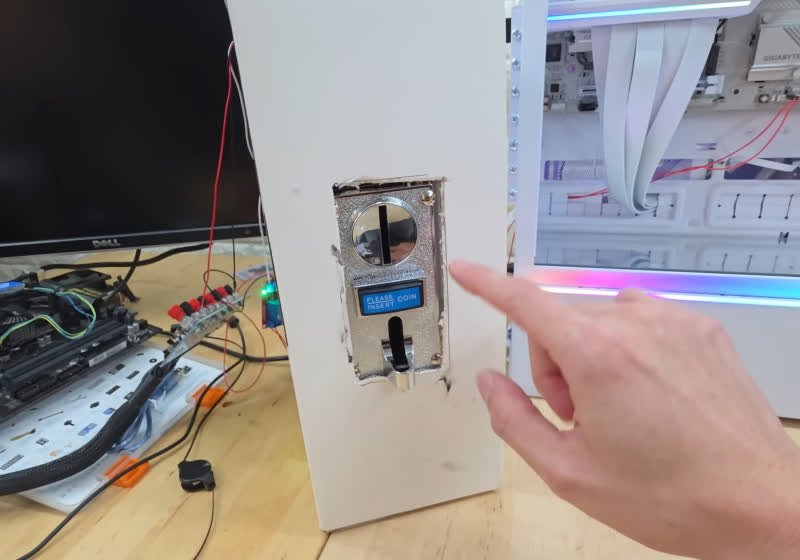
A well-known YouTube creator, mryeester, embarked on an ambitious hardware-integration project: a coin-operated gaming PC. The core idea was to shift the moment of powering on a PC—traditionally a seamless, user-friendly action—into a microtransaction-based gate. By introducing a coin or coin-like input into the boot sequence, the creator aimed to demonstrate how monetization concepts could intersect with PC hardware in a tangible, demonstrable way. The project serves as both a DIY engineering challenge and a provocative commentary on the evolving business models in gaming and hardware ecosystems. The premise prompts viewers to consider not only the technical feasibility but also the broader implications for user consent, accessibility, and the engineering safeguards necessary to prevent abuse or unintended consequences. The video and accompanying materials invite replication, with detailed steps and hardware lists, allowing enthusiasts to reproduce the setup and observe the practicalities and pitfalls of a pay-to-boot system.
In-Depth Analysis
The coin-operated PC concept hinges on integrating a mechanical or sensor-based input stage that must be satisfied before the system begins the boot process. In practice, this could involve a coin slot paired with a microcontroller or single-board computer (such as an Arduino or Raspberry Pi) that reads the input, verifies a currency unit, and then signals the main PC to commence power-on. The technical workflow can be summarized as follows: a user inserts a coin, the sensor detects the coin’s presence and type, the microcontroller processes the input, and upon a successful transaction, a relay or solid-state switch completes the power circuit to the PC’s motherboard, allowing it to boot. This sequence introduces an additional layer of hardware interlock between the power button and the boot process, effectively creating a gate that requires a monetary input.
From a hardware perspective, several components are typically involved:
– A coin acceptor or sensor module capable of reliably detecting coins and validating authenticity.
– A microcontroller or microprocessor to interpret the sensor signal, manage the transaction logic, and issue a command to enable power.
– A power-control mechanism, such as a relay module or high-side switch, that can handle the PC’s standby and boot requirements without creating safety hazards.
– Interfacing circuitry to ensure the PC’s power-good signals, reset lines, and BIOS/UEFI initialization sequences are not disrupted by the gating mechanism.
– Safety interlocks and fusing to prevent short circuits or overcurrent conditions, given the potential for user tampering and hardware faults.
On the software side, the boot sequence must be coordinated to avoid corrupting data or causing the system to hang in an undefined state. If the coin validation is a hardware-only gate, the PC remains powered off until the gate is satisfied, at which point the operating system begins a standard boot. If the system requires software handshakes (for example, to pause a boot while fees are processed), care must be taken to ensure the OS is not exposed to insecure states or corruption risks during the time between power-on and login.
Ethical and legal considerations are central to this concept. A pay-to-boot machine could be construed as a form of monetized gateway that modifies consumer access and could conflict with local consumer protection laws, anti-gaming-syndicate rules, or accessibility standards. Public installations would need to comply with safety regulations, electrical codes, and warranty implications. There is also the risk that such a system could be misused for coercive or discriminatory purposes, or that it becomes a target for vandalism, coin-eating hardware, or spoofed signals. The creator’s approach highlights the importance of clear user consent, transparent pricing, and robust safeguards to prevent abuse.
From a user experience standpoint, the concept introduces friction into a process that is usually instantaneous. The time-to-boot would depend on the transaction throughput and coin validation speed, which could create long wait times and frustration. Additionally, coin-operated systems must be accessible to people with disabilities, and the added gate could impede performance for users who rely on assistive technologies. The design must also consider vandalism and wear-and-tear: coin mechanisms are mechanical by nature and may require frequent maintenance, calibration, or replacement.
Security implications are another critical area of analysis. A coin-activated power gate presents potential attack vectors: tampering with the sensor, bypassing the gate, compromising the microcontroller, or introducing counterfeit inputs. A robust design would include tamper-evident enclosures, secure firmware, and authentication for power-on events. It would also be prudent to implement contingency modes for emergencies or for maintenance staff, ensuring that a locked-down system can be powered on in the event of a critical update or repair.
From a broader perspective, the project sits at the intersection of experimental hardware hacking and the broader trend toward monetized user experiences. It prompts questions about where monetization should begin: at login, during gameplay, or at other interactions within a system. The concept may inspire new kinds of hardware mods for arcades, LAN centers, or maker spaces, provided they adhere to safety, accessibility, and legal guidelines. It also encourages developers and hardware enthusiasts to think deeply about the balance between innovative business ideas and the potential disruptive impact on user autonomy and convenience.
Finally, replication feasibility is a practical concern. The original creator’s video supplies a blueprint, including a bill of materials, assembly steps, and calibration tips. Reproducing the setup in a home workshop requires access to coin-accepting hardware, a compatible microcontroller with reliable I/O options, appropriate power-relay hardware, and a clear safety plan. Viewers looking to recreate the project should plan for testing in a controlled environment, using a non-production PC to avoid data loss or hardware damage during experimentation. It’s essential to observe good electrical safety practices, particularly given the direct involvement with mains-powered devices and the risk of electrical faults that could harm users or property.
Overall, the coin-operated gaming PC project is a provocative demonstration of how monetary transactions could be integrated into fundamental computing actions. It emphasizes both the creative potential and the significant challenges associated with such a concept—ranging from technical feasibility to ethical, legal, and safety considerations. By providing a concrete, replicable approach, the project invites a broader discussion about the future of monetization in hardware and software, and about the safeguards needed to ensure that innovation does not compromise user rights, safety, or accessibility.
Perspectives and Impact
The coin-operated PC concept is emblematic of experimental maker culture pushing the boundaries of what’s possible at the intersection of hardware and monetization. It serves as a thought experiment with tangible, demonstrable steps, enabling hobbyists and engineers to explore how gating power could be integrated into a system’s lifecycle. The broader implications touch on several domains:
Gaming Industry and Arcades: The idea resonates with the monetization models employed by arcades and pay-to-play venues. If executed with careful attention to user consent and safety, variants of this concept could inspire novel arcade experiences where players unlock or extend sessions through microtransactions. However, the concept would need to comply with gaming regulations and consumer protection standards and should avoid creating overly punitive or deceptive charging mechanisms.
Accessibility and Inclusion: One of the critical concerns is accessibility. A pay-to-boot mechanism could disadvantage users who lack access to funds or who require assistive technologies. Developers and venue operators must consider inclusive design principles, offering alternatives or accommodations to ensure that essential computing resources remain accessible. The long-term impact of monetizing the act of powering on a device could shift the baseline expectation for free or low-cost access to technology, potentially reducing participation in communities with limited resources.

*圖片來源:Unsplash*
Security and Misuse Risks: The introduction of financial gates into hardware raises security concerns. Attackers might attempt to bypass the payment mechanism, alter sensor readings, or exploit timing vulnerabilities during the boot sequence. A robust security model would require hardware-based attestation, tamper-resistant enclosures, and secure boot processes to prevent unauthorized access or data loss. The broader risk profile includes the possibility of coin-eating hardware failure, which could lead to electrical hazards or fire hazards if not correctly designed and maintained.
Legal and Regulatory Considerations: Depending on jurisdiction, there may be strict rules around consumer transactions, digital payments, and consumer rights. Devices that collect payments could be subject to cash handling regulations, consumer protection laws, and liability considerations in the event of system failure or injuries. Operators deploying such a system would need to consult legal counsel and ensure compliance with electrical codes and safety standards.
Ethical Implications: The project invites reflection on the ethics of monetizing basic computing actions. While it’s a valuable educational demonstration, it also highlights the potential for introducing paywalls into everyday activities. The concept should be evaluated through lenses of consent, fairness, and the broader societal impact of monetizing access to technology.
Reproducibility and Education: From an educational standpoint, the project provides a clear blueprint for DIY enthusiasts to explore hardware gating, microcontroller interfacing, and safe power control. It can be a powerful teaching tool for topics ranging from embedded systems to human-computer interaction. It also invites dialogue about best practices in documentation, safety, and user-centric design when exploring unconventional hardware projects.
Looking ahead, advancements in sensor technology, microcontrollers, and safe power-switching hardware could make coin-operated or monetized boot mechanisms more reliable and safer. Innovations might include more sophisticated currency validators, digital payment modules, or biometric gating as alternative monetization methods. However, any such direction would need to prioritize user safety, transparency, and consent, and to align with legal frameworks governing payments and access to computing resources.
Key Takeaways
Main Points:
– A coin-operated PC gate demonstrates a tangible intersection of hardware control and monetization concepts.
– Implementing a reliable, safe, and compliant pay-to-boot mechanism requires careful hardware design, software coordination, and safety features.
– The concept raises important questions about ethics, accessibility, and regulatory compliance in monetized hardware interactions.
Areas of Concern:
– Safety risks associated with wiring high-power components to a gating mechanism.
– Potential accessibility barriers for users who rely on equitable access to technology.
– Legal and regulatory implications of monetized boot processes and payment handling.
Summary and Recommendations
The coin-operated gaming PC project presents a provocative exploration of monetization within hardware and computing. By gating the boot process behind a coin input, it offers a concrete demonstration of how payments could influence even the most basic interactions with technology. The experiment is valuable for educational purposes, providing a detailed blueprint that enthusiasts can reproduce and learn from. However, it also underscores significant practical, ethical, and legal considerations that must be addressed before such a concept gains broader adoption.
From a practical standpoint, anyone attempting a similar build should prioritize safety above all. Use properly rated components, ensure robust isolation between mains-powered hardware and low-voltage control circuits, and integrate fail-safes to prevent electrical hazards. Build in a straightforward emergency override or maintenance mode that can be activated without payment to avoid stranded devices during maintenance or emergencies. Rigorous testing in a controlled environment is essential prior to any public demonstration.
Ethically and legally, operators should be transparent about pricing and terms, provide accessibility options or alternatives, and ensure compliance with local consumer protection and safety regulations. Consideration of the user experience is crucial: the gate should not create unnecessary friction or exclusion and should not compromise user data or system integrity.
For educators, makers, and hobbyists, this project can serve as a platform for broader discussions about human-computer interaction, the ethics of monetization, and the security implications of gating essential hardware. If pursued, the project’s documentation should be thorough, with explicit safety instructions, wiring diagrams, code samples, and risk assessments to help others understand both the potential and the limits of such an approach.
Ultimately, the coin-operated PC concept acts as a catalyst for conversation about the future of monetization in hardware and software. As technology becomes more integrated into everyday life, designers and researchers must continue to debate where and how to implement monetization in ways that respect user autonomy, ensure safety, and comply with societal norms and laws. The replication path laid out by the original creator invites continued exploration, critique, and innovation—ideally leading to safer, more ethical, and more user-centric approaches to monetized hardware experiences.
References
- Original: https://www.techspot.com/news/111062-coin-operated-gaming-pc-turns-powering-literal-microtransaction.html
- Additional references:
- A Resource on Safe Power Switching for PC Hardware
- An Overview of Pay-to-Play and Microtransaction Models in Gaming
- Accessibility Considerations in Public Computing Installations
Forbidden:
– No thinking process or “Thinking…” markers
– Article starts with “## TLDR”

*圖片來源:Unsplash*