TLDR
• Core Points: The Interim Computer Museum (ICM) partners with SDF.org to bring 28 vintage computing systems online, including emulated, partially hardware-based, and original machine implementations, accessible through a web portal.
• Main Content: A public-facing web portal now hosts 28 classic computer setups, highlighting diverse restoration approaches and ongoing preservation efforts.
• Key Insights: The project demonstrates a spectrum of preservation methods—from full emulation to live hardware—highlighting the challenges and value of digital archaeology.
• Considerations: Variants in accuracy, performance, and user experience reflect the complexities of preserving disparate eras of computing.
• Recommended Actions: Interested users should explore the portal, contribute feedback, and consider supporting further preservation funding and documentation efforts.
Content Overview
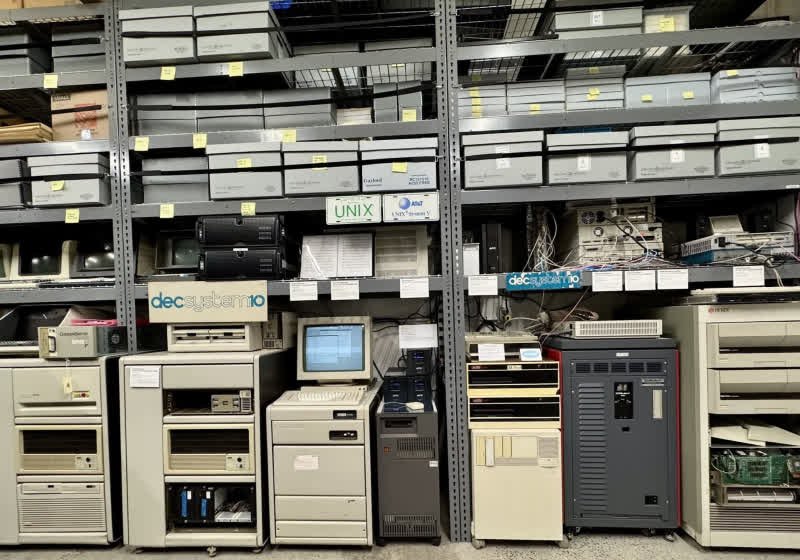
The Interim Computer Museum (ICM) has undertaken a notable preservation initiative by partnering with SDF.org to make twenty-eight vintage computing systems accessible over the internet. The collection spans a variety of preservation strategies, including systems that are fully emulated in software, others that rely on partial hardware emulation, and some that continue to run on original hardware components. This online access provides a broader audience with the opportunity to explore the evolution of computing technologies without the need to locate and operate physical machines, many of which are rare, fragile, or geographically dispersed.
The collaboration leverages SDF.org’s hosting and community expertise to present an organized portal that categorizes each system by its era, hardware configuration, and software ecosystem. Users can interact with the systems through browser-based interfaces or remote sessions, depending on the setup, and can gain insights into how programming practices, operating environments, and peripheral ecosystems evolved across decades. The initiative underscores the importance of digital archaeology—the careful study, preservation, and accessible presentation of computing history—to educate, inform research, and inspire ongoing innovation.
In-Depth Analysis
Preservation of legacy computer systems poses a spectrum of technical and logistical challenges. The ICM-SDF.org collaboration seems to embrace this spectrum by incorporating multiple restoration strategies tailored to the specific machine and its historical context.
Emulation-Driven Access: For many older or rarer systems, software emulation provides a practical pathway to public access. Emulators replicate the behavior of original hardware at the software level, allowing modern hosts to run legacy operating systems and software stacks. This approach is often more scalable, more stable for online access, and easier to document for public understanding. However, emulation outcomes can vary in fidelity, particularly for timing-sensitive or hardware-augmented applications. The project’s inclusion of fully emulated environments helps preserve software ecosystems that otherwise might be inaccessible to researchers and enthusiasts.
Partial Hardware Integration: Some systems in the collection may depend on a mix of emulated components and surviving hardware elements. This hybrid approach can balance authenticity with reliability, enabling demonstrations of original interfaces, storage media, and I/O behavior while leveraging modern infrastructure to ensure stable access. Partial hardware setups can also illuminate differences between original performance characteristics and emulated expectations, providing valuable teaching moments about system design and the evolution of computer engineering.
Original Hardware with Modern Support: A subset of the collection reportedly runs on intact original machines, possibly aided by modern power regulation, diagnostics, or interfacing solutions. Maintaining authentic hardware can offer the most tangible connection to historical user experience, but it requires careful maintenance, environmental controls, and risk management to prevent degradation. The project’s transparent documentation of which systems are in which category aids researchers in understanding the scope and reliability of the online demonstrations.
Accessibility and Education: By streaming or remotely enabling access to these systems, ICM and SDF.org lower barriers for students, hobbyists, and researchers who lack access to dedicated laboratories or museum spaces. The platform offers a hands-on, experiential way to study computing history beyond textual records, source code archives, or photographs.
Documentation and Context: Critical to preservation is the accompanying metadata and historical context for each system. Descriptions should cover the machine’s origin, typical software ecosystems, notable users or milestones, and the significance of particular hardware features. Comprehensive documentation enables learners to understand why certain design decisions mattered and how they influenced later developments in technology.
Community and Sustainability: Long-term success hinges on community engagement and ongoing funding. The collaboration with SDF.org likely brings a tacit community of volunteers who contribute host resources, maintain documentation, and provide user support. Sustaining such a project often involves ongoing fundraising, volunteer recruitment, and partnerships with museums, universities, or industry stakeholders committed to technology history.
Risks and Limitations: Online access to vintage systems, especially those with real hardware, carries risks of deterioration, software rot, or compatibility issues with modern networking environments. The team must account for potential data loss, firmware or software obsolescence, and the need for periodic re-validation of the online environments. Clear disclosure about the level of fidelity and any caveats is essential for setting user expectations.
Future Directions: The project could expand by adding more documentation, offering guided tours, or integrating interactive exhibits that compare historical systems against contemporary architectures. Opportunities may exist to host guest lectures, collaborative research challenges, or code archives that illuminate programming techniques across eras.

*圖片來源:Unsplash*
Contextually, this initiative aligns with broader efforts in the preservation community to archive not only sources and documentation but also the experiential aspects of computing. In a field where hardware components decay and software environments become progressively rarer to reproduce, online access to running systems represents a bridge between past and present. It also highlights the collaborative potential between preservationists, hobbyists, and open-source communities to maintain institutional memory in technology.
Perspectives and Impact
The online availability of 28 classic computer systems marks a meaningful milestone in the democratization of computing history. By curating a diverse mix of emulation-heavy, hardware-assisted, and original-machine setups, the ICM-SDF.org portal demonstrates that preservation is not a single-path discipline; rather, it is a continuum that accommodates different levels of fidelity, accessibility, and educational value.
From an educational perspective, accessible vintage systems can enrich curricula in computer science, information technology, and digital humanities. Students can observe the progression of user interfaces, memory hierarchies, storage technologies, and programming languages in a tangible way. For researchers, the portal offers potential datasets and benchmark scenarios to study historical software behavior, performance characteristics, and the sociotechnical contexts of earlier computing ecosystems.
The project also presents a practical model for collaborative preservation. SDF.org’s infrastructure provides a robust platform for hosting interactive experiences at scale, while the ICM contributes curated content and historical expertise. Such partnerships underscore the value of open access to cultural and technical heritage, inviting broader participation from communities of practice that include archivists, engineers, educators, and enthusiasts.
A critical impact area concerns reliability and interpretability. Because emulation can introduce timing variances and hardware quirks that differ from newly manufactured systems, it is important that users understand how the online experiences relate to real-world machines. The portal’s emphasis on documentation and contextual notes helps mitigate misinterpretations and promotes nuanced understanding of the technological evolution.
There is also a broader cultural implication. By making classic systems accessible online, the project helps counteract the idea that modern computing history is distant or irrelevant. Rather than existing solely in museums or private collections, these systems can be studied, discussed, and appreciated by a global audience. This approach supports lifelong learning and can inspire future generations to pursue careers in computing, engineering, and digital preservation.
Looking ahead, several avenues could shape the long-term influence of this initiative. Expanding the catalog to cover additional platforms—such as early microcomputers, mainframes, or workstation-class systems—could broaden the representational balance of the collection. Deepening the documentation with interviews, development histories, and software catalogs would enhance interpretive value. Finally, strengthening community involvement through forums, online events, and collaborative restoration projects could sustain engagement and broaden the impact.
Key Takeaways
Main Points:
– The Interim Computer Museum, in collaboration with SDF.org, has made 28 vintage computing systems accessible online.
– The collection includes a mix of emulated, partially hardware-based, and original-machine configurations.
– The portal emphasizes preservation, education, and community involvement to sustain interest in computing history.
Areas of Concern:
– Fidelity differences between emulated and original hardware may affect user experience and interpretation.
– Maintenance and long-term funding are critical to ensuring continued access and accuracy.
– Documentation quality and consistency are essential for meaningful learning and research.
Summary and Recommendations
The partnership between the Interim Computer Museum and SDF.org represents a forward-thinking approach to preserving and sharing computing history. By delivering 28 classic systems through an online portal, the project provides an accessible, educational, and engaging way to explore the evolution of computing technology. The reliance on varied preservation strategies—ranging from emulation to original hardware—reflects a pragmatic recognition that no single method suffices for all machines. The emphasis on documentation, context, and community involvement strengthens the educational value of the portal and contributes to a broader culture of digital preservation.
Looking forward, continued expansion of the collection, enhanced documentation, and ongoing community engagement will be important for maintaining momentum. Potential steps include inviting user contributions to hardware and software metadata, hosting virtual demonstrations or guided walkthroughs of particular systems, and exploring partnerships with academic institutions or industry archives to fund and sustain long-term access. As technology advances, the project can serve as a template for similarly ambitious preservation efforts, ensuring that future generations retain not only the knowledge of how early computers worked but also the experiential understanding of interacting with them.
References
- Original: https://www.techspot.com/news/111432-interim-computer-museum-puts-28-classic-computer-systems.html
- Additional reference 1: A.S. Biles, “Preserving the Digital Past: Emulation, Hardware, and the Cloud,” Journal of Computing History.
- Additional reference 2: SDF.org Documentation and Community Resources.

*圖片來源:Unsplash*