TLDR
• Core Points: Electric vehicles meet most drivers’ needs for quiet, comfortable, low-cost operation with no exhaust, but high prices and limited supply persist; the next major leap is scalable, cost-efficient battery production rather than merely better car designs.
• Main Content: Battery manufacturing scaling, affordability, supply chain resilience, and factory innovations will determine EV adoption more than incremental vehicle improvements alone.
• Key Insights: Factory-based breakthroughs—from materials sourcing to automation and vertical integration—could unlock large-scale price reductions and faster rollouts.
• Considerations: Financing, policy support, and environmental impacts of new factories must align to maximize benefits.
• Recommended Actions: Invest in large-scale battery plants, streamline supply chains, and pursue policy incentives that reward factory efficiency and sustainability.
Content Overview
The electric vehicle (EV) era is already delivering on core consumer expectations: a quiet ride, comfortable interiors, lower operating costs, and no tailpipe emissions. Despite rapid growth in EV sales worldwide—electric-only models now account for roughly one-fifth of new car sales in many markets—price remains a sticking point for a substantial portion of potential buyers. Beyond consumer concerns, several major Western automakers face challenges in scaling production and reducing costs quickly enough to maintain momentum in a competitive global market. While innovations in vehicle design will continue to matter, the article argues that the true bottleneck—and the greatest potential for breakthrough—may lie in the battery factories themselves. Large-scale, efficient, and cost-effective battery production could be the defining factor in broad EV adoption for years to come.
In-Depth Analysis
As EVs become more commonplace, the market has proven that the fundamental appeal is robust: electric propulsion eliminates the noise and mechanical complexity associated with internal combustion engines, delivering smoother acceleration and lower running costs. However, the price gap between EVs and traditional combustion-engine vehicles remains a critical barrier, particularly for mid- and lower-income buyers. Battery packs—the most expensive single component in most EVs—drive a substantial portion of the total vehicle cost. Therefore, the economics of battery production strongly influence overall vehicle pricing.
Industry observers argue that incremental improvements in vehicle efficiency or range, while important, will not suffice to dramatically expand EV penetration if the underlying cost structure remains high. The path to affordable EVs, they say, is to produce batteries at a scale that dramatically reduces per-kilowatt-hour costs and to do so in a way that is resilient to supply chain shocks. This means rethinking the entire battery value chain—from mining and refining raw materials to cell manufacturing, module assembly, and pack integration—so that costs are driven down without compromising performance or safety.
Several transformations are already underway in battery manufacturing and logistics:
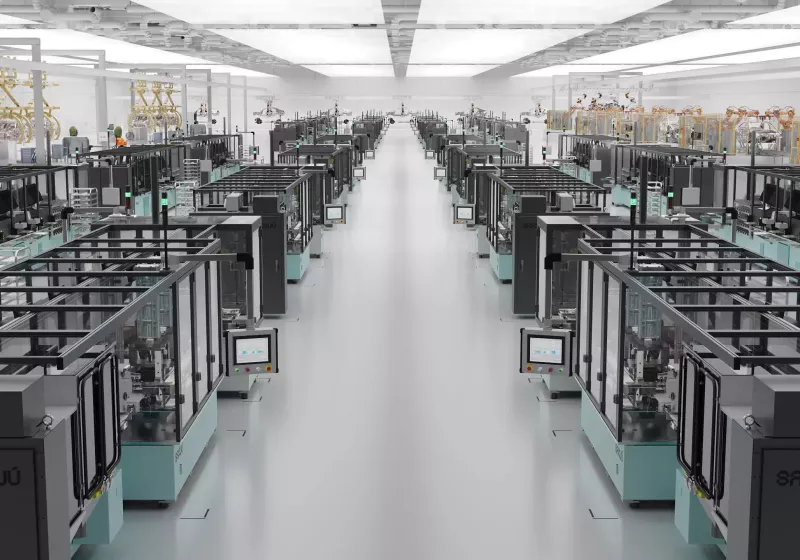
Scale and vertical integration: New plants are being designed to produce batteries at a scale previously unseen in the industry. Proposals include giga-factories that combine raw material processing, cell manufacturing, and module assembly under one roof or within tightly coordinated networks to reduce transport costs and downtime. The rationale is straightforward: higher throughput and streamlined workflows lower unit costs.
Automation and process optimization: Advanced robotics, automation software, and real-time analytics enable faster production lines with fewer defects. This improves yield and reduces labor costs, two major levers in bringing down the price per kilowatt-hour. Manufacturers emphasize standardized processes and modular lines that can be reconfigured for different chemistries or formats as demand evolves.
Materials strategy and supply security: Securing reliable access to critical minerals—lithium, cobalt, nickel, manganese, and others—remains essential. Companies are pursuing longer-term contracts, diversified geographic sourcing, and innovations in materials science to reduce dependence on any single supply point. Recycling and second-life reuse are also increasingly viewed as parts of the battery lifecycle rather than afterthoughts, helping to close the loop and temper raw-material costs over time.
Factory design and energy efficiency: Battery factories require significant energy inputs, cold storage for certain processes, and strict quality controls. Developers focus on energy-efficient plant design, on-site power generation, and low-temperature processing methods to reduce operating expenses and environmental impact. Some facilities are exploring integration with renewable energy sources to stabilize electricity costs.
Policy and financing environments: Government incentives, subsidies, and private-sector investment frameworks influence the pace at which new battery plants come online. Favorable policies can shorten permitting timelines, reduce capital costs, and encourage local job creation, all of which feed into lower overall battery costs in the longer run.
Environmental and social considerations: The broader push for cleaner energy must also address the environmental footprint of battery production itself. This includes responsible mining practices, emissions from factory operations, and worker safety. Companies increasingly publish sustainability reports and set measurable targets to reassure customers and investors that growth does not come at the expense of environmental stewardship.
The central thesis is that breakthroughs in EV affordability hinge less on marginal improvements in car design and more on breakthroughs in how and where batteries are made. If factories can produce cells at much larger scales, with higher yields and lower energy costs, the savings can cascade to final vehicle prices. This, in turn, could unleash a larger wave of demand and encourage automakers to accelerate vehicle development and charging infrastructure investments.
There are, of course, challenges to this vision. Building new giga-factories requires enormous upfront capital, long planning horizons, and the ability to secure steady supplies of critical minerals. Local community impacts, zoning regulations, and potential environmental concerns must be managed carefully. In addition, the technological race to maximize energy density, safety, and charging speed must continue in parallel with factory innovations to ensure that vehicles remain compelling alternatives to internal combustion vehicles across a broad spectrum of consumer needs.

*圖片來源:Unsplash*
Finally, the market dynamics demand a careful calibration of pricing, access, and reliability. Absolute price parity with conventional cars may not be necessary or immediate, but a sustained trend toward lower total ownership costs—driven by cheaper batteries and improved production efficiency—will be crucial to widening EV adoption across income groups and geographies. The interviewed experts underscore that a coordinated push among automakers, suppliers, policymakers, and financiers is essential to transform factory-scale capabilities into tangible consumer benefits.
Perspectives and Impact
The long-term implications of a battery-centric breakthrough are profound. If manufacturing costs decline substantially, automakers can offer more affordable EVs without sacrificing margins, potentially accelerating market penetration in regions with slower adoption rates. This could also encourage more robust charging infrastructure investment, since higher EV volumes often justify and de-risk the expansion of public charging networks.
From a strategic standpoint, the industry may observe a shift in competitive dynamics. Companies that gain early leadership in scalable, efficient battery production could establish a durable advantage, forcing others to reconfigure supply chains, pursue partnerships, or rethink plant locations. Supply chain resilience becomes a strategic priority, with diversification of mineral sources and recycling streams reducing exposure to price volatility and geopolitical risk.
Environmental considerations will shape the public perception and regulatory framework surrounding this transition. If new factories can demonstrate lower emissions per kilowatt-hour produced and higher reuse rates for battery materials, the overall environmental footprint of EVs may improve even as demand grows. Conversely, if factory construction accelerates energy use without commensurate efficiency gains, policymakers may push for stricter emission standards and community safeguards.
The future landscape may feature regional hubs of battery production, each optimized for local resources, energy prices, and regulatory contexts. Governments could shape these hubs through targeted incentives, infrastructure investments, and workforce development programs. The result could be a more geographically distributed supply chain, reducing vulnerability to regional shocks and enabling faster, more responsive production.
From a consumer viewpoint, a more affordable battery supply chain translates into lower vehicle prices, longer-term affordability of ownership, and potentially improved after-sales economics, including better battery warranties and second-life applications. The ripple effects extend to charging networks, vehicle resale value, and even the design philosophy of EVs, which may prioritize cost-effective battery integration and standardized platforms to maximize interoperability and efficiency.
However, the transition also presents potential risks. Rapid factory expansion could strain local ecosystems, housing, and labor markets if not managed responsibly. Market oversupply or misalignment between vehicle demand and battery capacity could create cycles of price volatility and investment risk. Stakeholders must balance speed with sustainability, ensuring that growth does not outpace the capacity to secure materials, manage waste, and protect workers.
Key Takeaways
Main Points:
– The most impactful EV breakthrough may be in scaling and optimizing battery production, not solely in improving the car itself.
– Large-scale, automated, and more efficient battery factories promise meaningful cost reductions and faster deployment.
– A coordinated ecosystem—comprising automakers, battery suppliers, policymakers, financiers, and recyclers—is essential to realize factory-based breakthroughs.
Areas of Concern:
– High upfront capital requirements and the need for stable, diverse mineral supplies pose execution risks.
– Environmental and social impacts of new factories must be managed, including emissions, mining practices, and community effects.
Summary and Recommendations
To accelerate the transition to widespread, affordable electric mobility, stakeholders should prioritize scaling and modernizing battery manufacturing. This involves investing in giga-factories with integrated or highly coordinated supply chains, embracing automation and process optimization, and pursuing diversified, responsible sourcing of critical minerals. Policymakers should align incentives to support factory efficiency, renewable energy integration, and recycling programs that close the battery loop. Automakers must adapt product roadmaps to leverage lower-cost batteries, standardize modules for flexibility, and fund partnerships that secure long-term supply while maintaining high environmental and labor standards. If executed effectively, these factory-driven advancements could bring down total ownership costs, expand EV access across income groups and regions, and accelerate the broader transition away from fossil-fuel-powered transportation.
References
- Original: https://www.techspot.com/news/110876-next-ev-breakthrough-isnt-car-battery-factory.html
- 1) BloombergNEF: Electric Vehicle Battery Supply Chain and Cost Trends
- 2) International Energy Agency (IEA): Global EV Outlook and Battery Value Chain Analysis
- 3) McKinsey & Company: The Economics of Electric Vehicle Batteries and Scaling Battery Production
Forbidden: No thinking process or “Thinking…” markers. Article begins with “## TLDR” and maintains an objective, professional tone throughout.

*圖片來源:Unsplash*