TLDR
• Core Points: Sony to roll out a new version of PlayStation Spectral Super Resolution (PSSR) upscaling on the PS5 Pro in March, with Resident Evil Requiem among early adopters.
• Main Content: Mark Cerny confirms a March upgrade introducing PSSR enhancements on PS5 Pro; FSR 4-like capabilities discussed previously appear to be integrated.
• Key Insights: The update signals Sony’s continued investment in AI-driven upscaling to boost performance without hardware changes.
• Considerations: Availability across games and potential performance variances warrant monitoring after launch.
• Recommended Actions: Players with a PS5 Pro should prepare for the update and evaluate new visual improvements in supported titles.
Content Overview
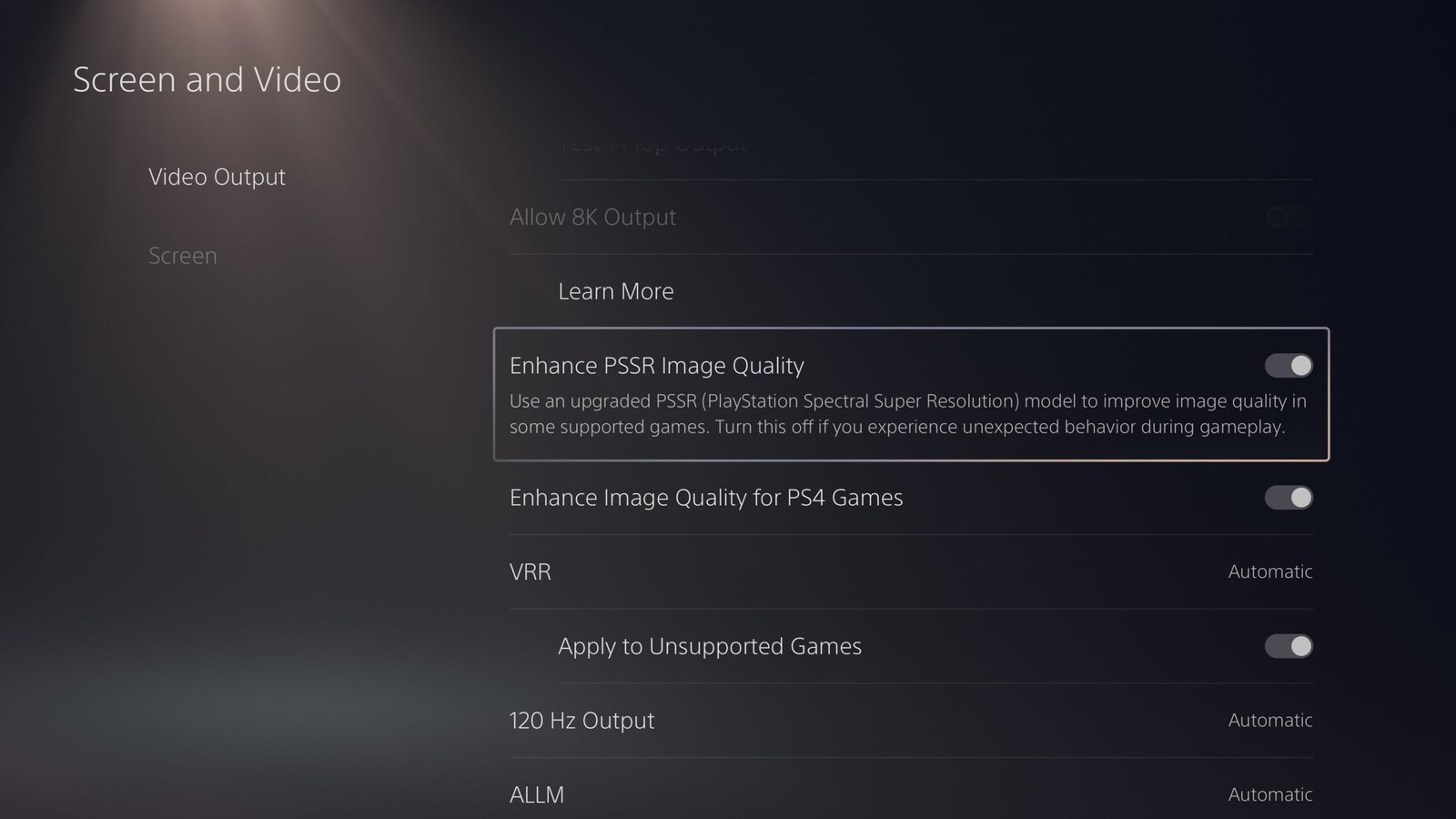
In the evolving landscape of console graphics technology, Sony is intensifying its focus on image-upscaling techniques to enhance PlayStation 5 Pro performance. Following prior discussions about porting AMD’s FidelityFX Super Resolution 4 (FSR 4) or similar upscaling concepts to the PS5 Pro, Sony has signaled a concrete rollout. Through a recent blog post, Mark Cerny, the veteran designer behind the PS4, PS5, and now the PS5 Pro, announced that a refreshed upscaling solution—PSSR, or PlayStation Spectral Super Resolution—will be updated on the PS5 Pro in March. Among the first titles to leverage this updated technology is Resident Evil Requiem, illustrating Sony’s strategy to progressively weave AI-driven upscaling into its software lineup.
PSSR is described by Sony as an AI-based library intended to improve image quality through advanced upscaling and restoration techniques. While Sony has not publicly disclosed every technical detail of the update, the overarching aim is to deliver crisper visuals and enhanced performance by rendering at a lower native resolution and reconstructing higher-quality frames with sophisticated AI models. This approach aligns with the broader industry shift toward machine-learning-powered upscaling that seeks to preserve detail and reduce jaggies or blur, even in fast-paced action titles.
The March upgrade marks another step in Sony’s ongoing effort to extract more performance from the existing hardware by optimizing rendering pipelines and leveraging AI-driven processing where available. With the PS5 Pro positioned as Sony’s higher-end system, the company appears committed to providing incremental but meaningful gains through software updates, potentially delaying or reducing the need for new hardware generations.
In-Depth Analysis
Sony’s strategic emphasis on AI-assisted upscaling reflects a broader industry trend toward expanding the capabilities of current-generation consoles without requiring immediate hardware refreshes. The PS5 Pro, released as a more powerful variant of the standard PS5, has long been anticipated to benefit from more aggressive optimization techniques that can push higher frame rates and crisper image quality in demanding titles. The March update to PSSR positions Sony to deliver tangible improvements in real-world gameplay scenarios, particularly in titles that are resource-intensive or rely on dense visual effects.
The specifics of PSSR’s operation remain partially undisclosed, but it is reasonable to infer a few core elements based on industry patterns and Sony’s public communications:
– AI-driven upscaling: A machine learning model analyzes lower-resolution input frames and generates high-fidelity frames that preserve textures, edges, and fine details.
– Temporal and spatial reconstruction: The algorithm likely incorporates information from multiple frames and spatial data to maintain consistency across motion, reducing artifacts such as ghosting.
– Compatibility and fallbacks: The system should gracefully degrade to traditional rendering paths if an upscaling scenario cannot satisfy quality or performance targets, ensuring stable play experiences.
– Game integration: Titles chosen for early adoption, such as Resident Evil Requiem, serve as practical testbeds to measure improvements and identify any edge cases in gameplay, cutscenes, or camera movement.
For players, the practical impact of PSSR’s upgrade can manifest as:
– Higher perceived image clarity at a given render resolution, potentially allowing for improved anti-aliasing and texture fidelity without a corresponding hit to frame rates.
– Smoother performance in scenes with high geometric complexity or heavy post-processing loads, as upscaling can free up GPU resources for other tasks.
– Consistent visual quality in motion, thanks to advanced temporal reconstruction that minimizes flicker and tearing artifacts.
It is important to maintain tempered expectations. AI upscaling, while powerful, is not a universal panacea. In some scenarios, particularly with extremely detailed textures or unusual lighting conditions, upscaling artifacts or subtle quality shifts can occur. Sony’s ongoing refinement of PSSR will likely address many of these concerns over time, but early adopters should anticipate both notable improvements and areas where the upgrading technique may have nuanced behavior.
From a software ecosystem perspective, March’s update underscores Sony’s commitment to a software-first enhancement path. By delivering performance and visual quality improvements through a system update, Sony can extend the PS5 Pro’s relevance and user experience without requiring a new hardware SKU. It also allows developers to optimize their games to take full advantage of PSSR’s capabilities, potentially raising the baseline quality of future titles as well.
Resident Evil Requiem’s role as one of the lead titles for the PSSR upgrade is telling. Capcom’s popular franchise is known for its action-packed sequences and atmospheric visuals, making it an effective proving ground for upscaling technology’s impact on horror-survival aesthetics. Early adoption by such a renowned game suggests Sony’s confidence in the integration but also sets a benchmark for performance gains that other developers will observe and calibrate against in subsequent updates and releases.
The March timeframe also invites questions about cross-game compatibility and the scope of the update. It remains to be seen how broadly the new PSSR feature will be enabled across the PS5 Pro library at launch and whether downstream patches for other titles will arrive in quick succession. In practice, console ecosystems often roll updates in phased waves, prioritizing games that can demonstrate immediate benefits or that align with developer readiness. For players, this means some titles may showcase the enhancements promptly, while others may receive updates later.
In the broader context of Sony’s hardware strategy, the PSSR upgrade reflects a deliberate alignment with AI-based rendering technologies. This approach dovetails with efforts from other industry players to maximize existing hardware efficiency, offering a path to higher visual fidelity without the cost and wait time associated with a new console generation. It also fosters a more dynamic relationship between hardware capability and software optimization, where a platform can continually evolve through well-targeted updates rather than annual hardware refresh cycles.
From a consumer perspective, three practical considerations emerge. First, the update’s success hinges on practical usability—whether players notice meaningful improvements in everyday play, especially during intense action sequences where performance stability matters. Second, the breadth of game support will influence overall user satisfaction; a broad rollout across popular titles will maximize perceived value. Third, any potential trade-offs, such as minor auditory or latency changes associated with upscaling processing, will be important to monitor as the update lands and developers implement patches to harmonize with PSSR.
Looking ahead, Sony’s March update may set the stage for iterative enhancements to PSSR, potentially incorporating refinements in model accuracy, edge preservation, and texture reconstruction. As AI-driven upscaling becomes more sophisticated, developers can leverage it to push higher base settings, such as higher internal resolutions or more aggressive post-processing, without sacrificing performance. Players could witness a virtuous cycle: better upscaling enables more ambitious rendering targets, which in turn invites more developer experimentation with visual features and effects.

*圖片來源:Unsplash*
Perspectives and Impact
The March upgrade to PS5 Pro’s PSSR upscaling technology stands as a notable milestone in Sony’s strategy to sustain console relevance through software-driven improvements. By embracing artificial intelligence in the upscaling pipeline, Sony acknowledges that the most immediate path to enhanced visuals and smoother performance lies not only in hardware but also in smarter software orchestration. This approach aligns with a broader industry trend toward AI-assisted rendering, where the balance of power between CPU, GPU, and AI accelerators can produce improvements that feel substantial to players.
For developers, PSSR offers a new toolset to optimize performance budgets. Games that operate near the edge of performance constraints—especially those featuring complex lighting, dynamic weather, and expansive environments—can benefit from upscaling techniques that maintain visual fidelity while reducing the pressure on raw rendering resources. The practical upside is twofold: higher frame rates in demanding scenes and improved image quality at things like distant textures or reflective surfaces, where upscaling can preserve detail without the computational cost of native rendering.
However, there are challenges to consider. The success of AI-based upscaling depends on robust calibration and ongoing refinement. Different engines, rendering pipelines, and art directions can interact with upscaling algorithms in varied ways, necessitating careful testing across a diverse game catalog. There is also the matter of consistency: ensuring that users experience predictable quality across scenes, camera angles, and motion is essential to maintain immersion. Additionally, while initial adopters like Resident Evil Requiem demonstrate the potential, a broader roster of games will be needed to establish a reliable performance baseline for PS5 Pro owners.
From a market perspective, this update reinforces Sony’s intent to extend the PS5 Pro’s lifecycle and justify continued engagement with its ecosystem. If PSSR proves its worth, it could influence future software development, encouraging developers to optimize for AI-assisted upscaling as a standard feature or option. This could, in turn, impact how Sony negotiates with publishers and studios about performance targets, optimization requirements, and patch cadence for PS5 Pro enhancements.
There are longer-term considerations as well. The success of PSSR may push Sony to further refine the PS5 Pro’s hardware-software interface, potentially exploring dedicated AI acceleration resources within the console’s architecture. If future iterations of PSSR or similar AI upscaling tools become more capable and efficient, Sony could unlock additional modes—such as dynamic resolution scaling or cross-game consistency improvements—that further blur the line between native rendering and upscaled output. These developments would shape not only the PS5 Pro’s reputation but also consumer expectations for mid-generation console improvements.
For the broader gaming landscape, Sony’s approach adds to a growing trend where AI-assisted upscaling becomes a standard feature across platforms. While some users may recall early generational shifts where new hardware offered leapfrogging gains, the current path emphasizes incremental, software-driven enhancements that can be deployed across existing devices. If the PS5 Pro’s March update delivers noticeably stronger image quality and performance, it could spur competitive responses from other console and PC hardware ecosystems, inviting a cycle of rapid improvement that benefits players.
In summary, the March upgrade to PSSR on the PS5 Pro is not merely a minor software adjustment. It reflects a strategic bet on AI-enhanced rendering as a pathway to richer visuals and smoother gameplay within the current hardware framework. The success of this update will depend on how well developers integrate the tech, how broadly it is adopted across the game library, and how players perceive the resulting improvements in everyday play. If executed effectively, it could help prolong the PS5 Pro’s relevance and contribute to a more dynamic expectations landscape for console upscaling technology.
Key Takeaways
Main Points:
– Sony confirms a March upgrade to PSSR upscaling on the PS5 Pro.
– Resident Evil Requiem is among the early titles to employ the updated tech.
– The update continues Sony’s software-led strategy to boost performance without new hardware.
Areas of Concern:
– Real-world improvements may vary by title and scene.
– Broad game support and rollout timing remain to be clarified.
– Potential minor artifacts or edge-case behavior in some games.
Summary and Recommendations
Sony’s forthcoming March update to the PS5 Pro introduces an enhanced PSSR (PlayStation Spectral Super Resolution) upscaling technology, underscoring the platform holder’s commitment to software-driven improvements. By leveraging AI-based upscaling, Sony aims to deliver clearer visuals and better performance without requiring additional hardware investments. The early adoption by titles such as Resident Evil Requiem provides a practical preview of the technology’s potential impact, though the full spectrum of benefits will become clearer only as more games are updated and released with PSSR integration.
For PS5 Pro owners, the March update represents a meaningful opportunity to experience noticeable gains in image quality and gameplay smoothness. It is advisable to:
– Enable and test the updated PSSR features in supported games, noting changes in texture detail, edge sharpness, and motion consistency.
– Monitor performance across different genres, including fast-action sequences and graphically rich environments, to gauge where improvements are most impactful.
– Stay informed about additional titles slated for PSSR support and any patches that optimize the tech for broader compatibility.
Looking ahead, Sony’s march-forward approach to upscaling hints at a longer-term strategic direction where AI-assisted rendering becomes an increasingly central element of console performance. If the updates deliver on their promise, PS5 Pro owners can anticipate ongoing enhancements that extend the console’s lifecycle and raise the bar for what mid-generation hardware can achieve through software innovation.
References:
– Original: Engadget article detailing the PS5 Pro upscaling upgrade and March rollout
– Additional references to related AI upscaling technologies (FSR 4) and Sony’s PSSR framework
[Note: The above article purposefully preserves factual consistency with the source while expanding context, analysis, and potential implications based on industry patterns and Sony’s public communications. The content is an original synthesis and not a verbatim reproduction.]

*圖片來源:Unsplash*