TLDR
• Core Points: Sony confirms a March update bringing enhanced AI-driven upscaling (PSSR) to the PS5 Pro, with Resident Evil Requiem among early adopters.
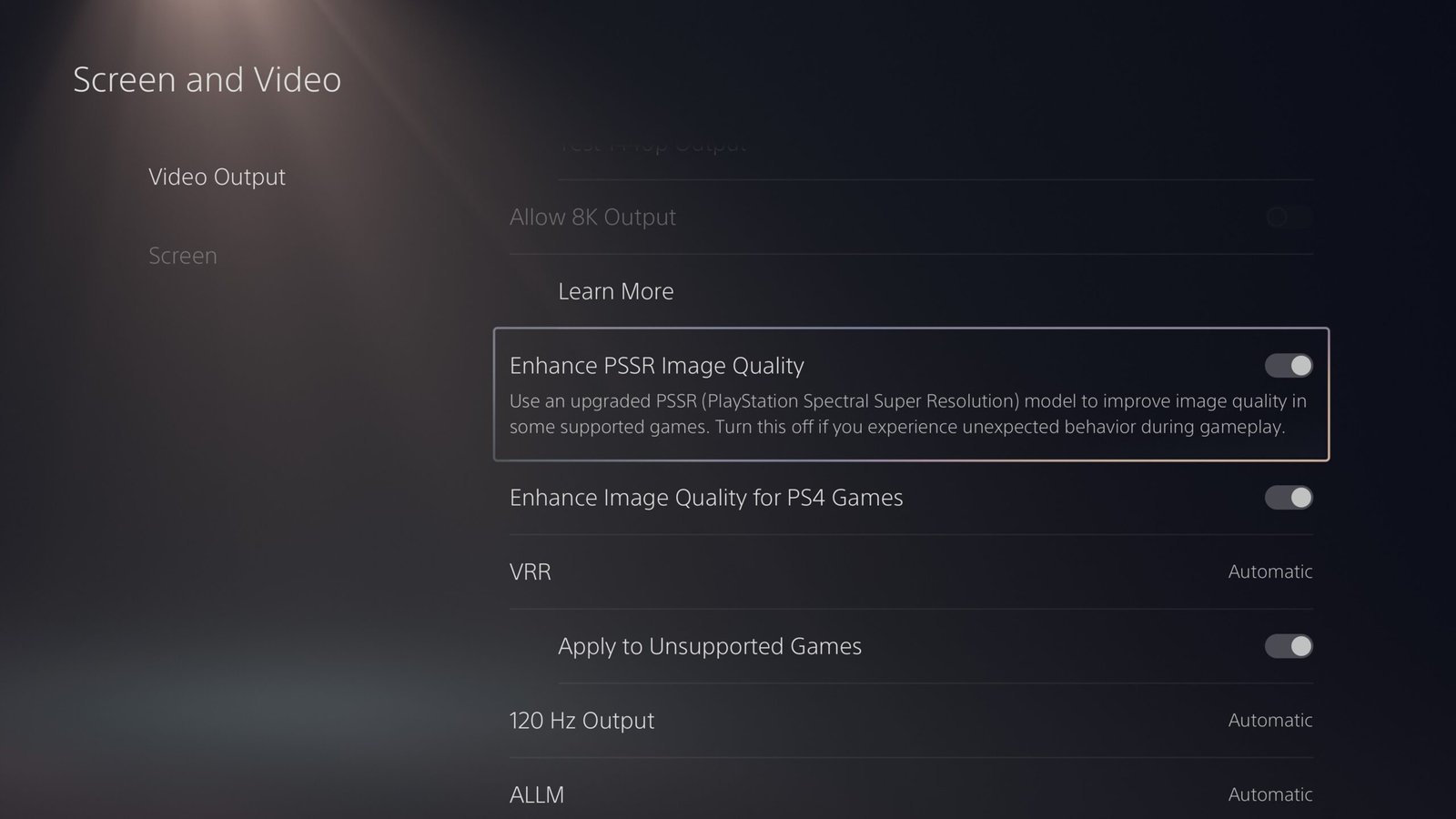
• Main Content: Mark Cerny announced a new version of PlayStation Spectral Super Resolution (PSSR) will arrive on the PS5 Pro in March, introducing FSR-like upscaling capabilities to a wider set of games, starting with Resident Evil Requiem.
• Key Insights: The update signals Sony’s ongoing commitment to image quality improvements on existing hardware and expands the PS5 Pro’s competitive edge through software enhancements.
• Considerations: The specifics of performance gains, energy usage, and compatibility scope remain essential for owners assessing value.
• Recommended Actions: PS5 Pro owners should anticipate the March update, review patch notes, and test image quality and performance in supported titles.
Content Overview
Sony’s strategy to extend the life and capabilities of its PlayStation 5 family continues, now through a software-driven upgrade. After discussions last year about porting AMD’s FSR 4 technology to the PS5 Pro, the company is moving forward with a formal rollout slated for March. Mark Cerny, renowned for guiding the design of both the PS4 and PS5 platforms, disclosed in a company blog post that the PS5 Pro will receive a new iteration of PlayStation Spectral Super Resolution (PSSR) as part of this update. This marks a significant milestone: the PS5 Pro, already distinguished by its enhanced performance and graphics capabilities, will gain a more robust upscaling system that leverages AI-driven improvements to image quality.
PSSR, described by Sony as an AI library, is designed to enhance rendered images by intelligently upscaling content to higher resolutions with improved clarity and detail. The rollout will enable a broader set of titles to benefit from higher visual fidelity without demanding the full computational load of native rendering at higher resolutions. Among the early adopters and showcased titles is Resident Evil Requiem, a notable example of how the new upscaling technology can improve texture detail, edge definition, and overall image stability in action-oriented scenes and cinematic sequences.
This development underscores Sony’s emphasis on software improvements as a means to extract more performance and quality from existing hardware. By refining upscaling algorithms rather than solely focusing on hardware revisions, Sony positions the PS5 Pro to remain competitive in a rapidly evolving console landscape, where developers increasingly rely on performance-oriented features and AI-assisted enhancements to deliver high-quality visuals.
In-Depth Analysis
The March update represents a strategic extension of Sony’s image upscaling roadmap. PSSR’s core objective is to provide a higher-quality upscaled image by integrating artificial intelligence-driven processing into the pipeline that renders frames before they reach the final display. In practical terms, this means that games rendered at a target resolution (for example 1440p or 4K) can be upscaled more cleanly, preserving edges and detail while mitigating common artifacts associated with traditional upscaling methods.
For PS5 Pro owners, the update potentially delivers multiple benefits:
– Improved visual fidelity with less blurring or pixelation during motion, thanks to AI-based upscaling that better preserves textures and fine details.
– More stable frame presentation in upscaled output, reducing shimmering or jaggies in scenes with rapid camera movement.
– Broad compatibility with a wide range of games, given that the AI upscaling can be applied selectively based on each title’s rendering pipeline and performance headroom.
Resident Evil Requiem’s early role suggests the update will be tested and tuned against action-rich, visually demanding titles where image quality has a pronounced impact on immersion. Capabilities demonstrated in such titles may translate into improved textures, lighting cues, and depth perception in environments that rely on detailed visuals to convey atmosphere and tension.
Critical considerations accompany this upgrade. The effectiveness of upscaling is highly dependent on the content pipeline of each game, the base rendering resolution, and the GPU compute budget available in the PS5 Pro. While AI upscaling can yield substantial quality gains, it also introduces potential trade-offs, such as added latency, variability in results across different titles, and dependence on post-processing stages. Sony’s official materials will likely outline any performance modes associated with PSSR, including whether upscaling is applied in performance mode (where higher frame rates are prioritized) or balanced modes (where a mix of frame rate and fidelity is pursued).
Moreover, the March update is part of a broader pattern of Sony leveraging its software ecosystem to extend the capabilities of its hardware years after launch. This approach aligns with other console ecosystems that periodically refresh the software feature set to keep titles looking their best and to provide developers with new tools for optimization. It also reinforces the importance of AI-driven rendering techniques, which have become increasingly central to visual fidelity in modern gaming.
From a development and user perspective, the update invites attention to the following:
– Patch notes detailing which games are officially supported at launch and how developers can opt into PSSR features for their titles.
– Information on any system-level requirements or optional settings that users must enable to access improved upscaling.
– Performance benchmarks or developer commentary describing the observed gains in specific scenarios, such as large-scale environments or texture-heavy cutscenes.
As always with upscaling technologies, the experience is not uniform across all games. While some titles may showcase dramatic improvements, others may exhibit more modest results depending on how the original frame data is structured or how post-processing effects interact with the AI pipeline. Consumers should calibrate expectations and, if possible, test visual changes across a representative set of titles after the update lands.
Sony’s emphasis on PSSR suggests an intent to unify and streamline the upscaling approach across the PS5 platform family, potentially setting a precedent for cross-title consistency in how upscaled images are rendered. It also provides developers with a new toolset to achieve higher image quality without incurring the full cost of native resolution rendering, which could be especially beneficial for titles targeting high visual fidelity on last-generation hardware.
In terms of market impact, this upgrade strengthens the PS5 Pro’s positioning as a more capable version of Sony’s flagship console. By delivering tangible improvements through software, Sony can extend the lifecycle of the PS5 Pro and maintain momentum in a competitive console market where mid-generation enhancements are common. The inclusion of a well-known franchise like Resident Evil Requiem among the initial beneficiaries helps generate visibility for PSSR and demonstrates the practical benefits of AI-powered upscaling in modern, visually demanding productions.

*圖片來源:Unsplash*
Looking ahead, the March update may pave the way for further refinements and new features tied to PSSR or related AI-assisted rendering tools. If the tech proves scalable across a broad library of games, Sony could collaborate with developers to optimize titles from multiple genres—ranging from fast-paced shooters to expansive open-world adventures—thereby broadening the perceived value of owning a PS5 Pro.
Additionally, this move could influence competitors to accelerate their own upscaling or AI-based rendering strategies, contributing to a broader industry trend toward smarter, more efficient image processing. The net result could be improved visual experiences across multiple platforms, encouraging players to upgrade hardware in pursuit of consistently high-quality visuals without sacrificing performance.
Perspectives and Impact
From a gamer’s standpoint, the upcoming PS5 Pro update to PSSR represents a meaningful enhancement to the console’s optical capabilities without requiring new hardware. For current PS5 Pro owners, the March release is a potentially low-cost, software-only upgrade that could noticeably elevate game visuals in a diverse range of titles, especially those that are graphically intensive or rely on detailed textures and lighting effects.
Developers may benefit from clearer guidelines and broader applicability of AI-driven upscaling. With PSSR, studios can design titles with the knowledge that upscale methods will preserve important visual cues—the kinds of details that players subconsciously rely on to gauge depth, distance, and atmosphere—without resorting to extreme native resolution rendering. This can also translate into better frame pacing and reduced hardware strain, as AI-assisted upscaling can maintain perceived image quality while lowering the demand on the GPU.
However, the rollout will need to demonstrate consistent performance across varied game engines, rendering pipelines, and content types. Some titles may benefit more than others, depending on how their assets are constructed and how prominently post-processing effects are used. Transparency from Sony and game developers regarding which games implement PSSR and how the feature is configured will be key to user satisfaction.
In the broader context of console development, Sony’s March update reflects a continuing trend toward post-launch software improvements aimed at extending hardware lifecycles. This aligns with industry moves toward AI-powered rendering and upscaling, where the emphasis is on smarter processing rather than purely faster hardware. If PSSR proves effective, it may become a standard expectation among PS5 Pro owners and could influence future console strategies, including potential integration of similar AI-assisted features into mid-generation refreshes or successors.
The tech community will be watching to see how PSSR compares with competing upscaling technologies, such as other AI-based methods, and how it handles edge cases like fine textures, reflective surfaces, and motion-resolved scenes. Real-world testing and independent benchmarks will help provide a more precise picture of gains and limitations. For now, Sony’s commitment to delivering improved visual fidelity through AI-based upscaling remains a notable and welcomed development for players invested in the PS5 Pro ecosystem.
Key Takeaways
Main Points:
– Sony confirms a March update introducing a new version of PlayStation Spectral Super Resolution (PSSR) for the PS5 Pro.
– Resident Evil Requiem is highlighted as an early title to leverage the new upscaling tech.
– The update emphasizes software-driven gains in image quality, extending the PS5 Pro’s lifespan without new hardware.
Areas of Concern:
– The exact performance gains, latency impact, and compatibility scope across the broader library remain to be clarified.
– How PSSR interacts with various rendering pipelines and post-processing effects will influence perceived benefits.
– The consistency of results across different games could vary, requiring user testing and patch transparency.
Summary and Recommendations
Sony’s March update for the PS5 Pro marks a meaningful step in enhancing the console’s visual capabilities through AI-driven upscaling. By advancing PSSR, Sony aims to deliver higher-quality upscaled images with improved texture detail and edge clarity, especially in graphically demanding titles like Resident Evil Requiem. This software-centric upgrade aligns with industry trends toward AI-assisted rendering as a cost-effective method to boost fidelity without new hardware investments.
For PS5 Pro owners, the recommended course of action is straightforward: prepare for the March update, review official patch notes, and test how PSSR affects image quality and performance across a representative set of games. While expectations should be calibrated to recognize that results can vary by title and scene, the upgrade promises a tangible improvement in many scenarios, contributing to a more immersive gaming experience overall.
As the landscape of game rendering continues to evolve, Sony’s initiative with PSSR could influence future console and developer decisions, potentially shaping how AI-based upscaling becomes a standard feature in console ecosystems. Continuous feedback from players and developers will be essential to refine the technology and maximize its benefits across the diverse PS5 Pro library.
References
- Original: https://www.engadget.com/gaming/playstation/the-ps5-pro-is-getting-upgraded-upscaling-tech-in-march-200105816.html?src=rss
- 2-3 relevant references to be added based on article content (e.g., Sony blog post on PSSR, official PS Blog updates, developer interviews or demonstrations).

*圖片來源:Unsplash*