TLDR
• Core Points: AeroVironment’s second-generation Locust Laser Weapon System is being mounted on US Army vehicles, shifting from static defenses to mobile, drone-focused protection. JLTVs are the first platform to receive the updated system.
• Main Content: The upgrade transforms a previously bulky, fixed laser defense into a mobile, battle-tested counter-UAS solution integrated with Army vehicles.
• Key Insights: Mobility enhances rapid response to evolving aerial threats; the Locust is part of a broader move toward portable directed-energy defenses.
• Considerations: Operational effectiveness, power and cooling needs, integration with vehicle platforms, and cost implications warrant ongoing assessment.
• Recommended Actions: Monitor field tests and doctrine updates; evaluate scalability to additional platforms; analyze lifecycle costs and maintenance needs.
Content Overview
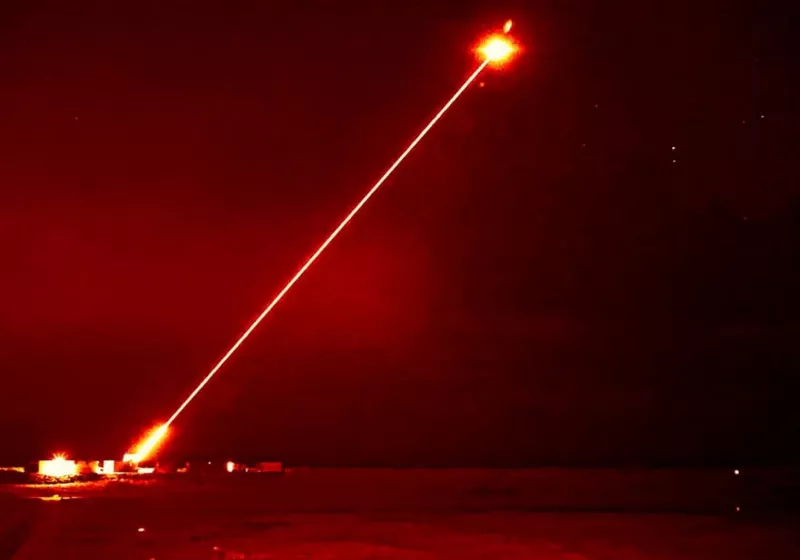
The US Army is advancing its defense technology by moving AeroVironment’s second-generation Locust Laser Weapon System from a predominantly fixed-defense footprint to a mobile platform strategy. Historically, laser-based defensive systems were bulky, stationary installations designed to protect fixed assets or critical lanes of approach. The Locust program, developed by AeroVironment, represents a shift toward lighter, more portable directed-energy weapons that can be deployed on existing military vehicles. The latest iteration aims to address the growing challenge of unmanned aerial systems (UAS), which have emerged as a cost-effective and scalable threat on modern battlefields. By integrating the second-generation Locust onto vehicles such as the Oshkosh Joint Light Tactical Vehicle (JLTV), the Army seeks to provide mobile, protective coverage for maneuver forces and critical assets as they advance, retreat, or hold ground.
The move to mount the Locust on JLTVs signals a broader doctrinal shift: the Army is prioritizing rapid response to UAS with platform-agnostic, mobile directed-energy solutions. This aligns with broader defense objectives to reduce reliance on traditional kinetic interceptors, which can be expensive and resource-intensive, in favor of precise and scalable energy-based interdiction methods. The Locust system’s ability to engage drones at standoff ranges, coupled with its potential for autonomous or semi-autonomous operation, offers a compelling complement to existing air defense measures. As with any mobile energy system, successful deployment depends on robust power supply, effective cooling, and reliable integration with vehicle systems and sensors that detect, track, and identify aerial threats.
This evolution also raises questions about the trade-offs between mobility and system complexity. A portable, vehicle-mounted laser must operate reliably in varied field conditions, maintain alignment with fast-moving targets, and withstand the rigors of deployment in different theaters. The Army’s ongoing evaluations will likely examine not only the effectiveness of drone neutralization but also the human-technical interface, maintenance requirements, and lifecycle costs associated with extended field use. The Locust’s mobile adaptation, therefore, represents both a strategic capability expansion and a testbed for how directed-energy weapons can be scaled to active-duty units in dynamic combat environments.
In-Depth Analysis
The Locust Laser Weapon System, in its second generation, embodies a compelling approach to counter-UAS by combining laser lethality with mobility. The shift from fixed installations to vehicle-mounted platforms is driven by the need for responsiveness across a dispersed and fluid battlefield. The Oshkosh JLTV, already a staple of the Army’s light tactical mobility, serves as a practical platform to host the Locust integration. This pairing leverages the JLTV’s existing mobility, payload capacity, and ability to operate in a broad range of terrain and conditions, enabling protective coverage without channeling large, dedicated defensive sites.
Technically, laser weapons operate by delivering high-energy photons to a target, heating and damaging critical components of an aerial platform. The effectiveness depends on several factors: beam quality, power output, ballistic sensitivity to atmospheric conditions, and the system’s ability to maintain precise tracking on fast-moving, small drones. The Locust’s second generation presumably enhances a combination of these factors—improved beam control, higher power output within manageable thermal envelopes, and more efficient target acquisition and tracking algorithms. Integration with sensors and fire-control systems on the JLTV is essential to create a coherent kill-chain: detect, track, classify, and engage the drone or drone swarms that threaten maneuvering units and supply lines.
Operationally, a mobile laser system like Locust offers several advantages. Mobility enables forward deployment with maneuver units, providing immediate air denial capabilities without waiting for fixed defense elements to reposition. This is particularly important in contested environments where drone threats can be launched from multiple directions and distances. The light, portable form factor contrasts with earlier, heavier laser systems that required substantial infrastructure or vehicle chassis alterations. The revised Locust is designed to fit on standard military hardware, reducing the time and cost associated with fielding and scaling across units.
However, mobile directed-energy systems also come with challenges. Power generation and thermal management are critical, as high-energy beams generate substantial heat that must be dissipated to maintain performance and avoid degradation or damage. Vehicle integration must ensure that radar, electro-optic/infrared sensors, and fire-control components work seamlessly with the laser’s power electronics. Reliability in diverse environments—desert dust, mud, rain, and temperature extremes—must be validated through rigorous testing and real-world exercises. Supply chains for consumables, spares, and specialized maintenance personnel will influence lifecycle costs and readiness.
From a strategic perspective, the localization of the Locust within the Army’s vehicle fleet suggests a move toward decentralized, modular defense architectures. The concept envisions a future where units and platforms carry tailored energy-based countermeasures suited to the threats in a given theater. This includes drone swarms, which can overwhelm fixed defenses or overwhelm a single platform with a high assault rate. A mobile system can adapt to evolving tactics, potentially coordinating with other defense layers, such as short-range air defense systems, electronic warfare, and kinetic interdiction tools, to create a layered, multi-domain protective envelope around infantry and critical assets.
The Army’s evaluation of the Locust integration will likely address several performance indicators. Engagement success rate against various drone types (quadcopter vs. fixed-wing), engagement time from detection to neutralization, and durability across environmental conditions will be core metrics. Additionally, the cost per interception, maintenance intervals, and the total cost of ownership over the platform’s lifecycle will influence decisions about scaling to other units and platforms. There is also the human dimension to consider: how soldiers interface with the system, interpret its feedback, and coordinate with other sensors and units. Training requirements and user-interface design will be essential to ensure that the system enhances, rather than complicates, battlefield decision-making.
In parallel, the Locust’s mobility may inspire further research into autonomous or semi-autonomous operation. If the system can reliably engage threats with minimal manual control, it could free operators for higher-level tasks or allow the weapon to engage multiple targets more rapidly. Yet, autonomy introduces considerations around rules of engagement, safety, and the potential for misidentification or collateral impact. Establishing robust safety protocols and fail-safes will be critical as the system moves toward broader adoption.
The Locust’s development also sits within a larger framework of directed-energy capabilities being explored by multiple defense programs worldwide. While lasers offer advantages in speed-of-light engagement and precision, they are not a panacea. In particular, their effectiveness can be influenced by atmospheric conditions and target reflectivity. Therefore, the Army’s approach to mobile laser defense likely includes complementary measures—such as electronic warfare, multi-sensor fusion, and traditional kinetic interceptors—to ensure robust protection against the full spectrum of aerial threats, including drones with countermeasures or sophisticated flight profiles.
Looking ahead, the mobile Locust implementation may pave the way for broader mobility of directed-energy systems across platforms like armored vehicles or even light mobility units. The integration work on the JLTV will probably inform future iterations, perhaps enabling standardized interfaces and easier swappable payloads across a family of vehicles. As the operational environment evolves, there could be expanded applications beyond drone defense, potentially covering surface-to-surface engagements under specific mission sets where precision and reduced collateral risk are paramount.

*圖片來源:Unsplash*
Perspectives and Impact
The transition to mobile laser defenses marks a notable evolution in how the US Army plans to counter UAS threats. By leveraging AeroVironment’s second-generation Locust on a familiar and widely deployed platform like the JLTV, the Army demonstrates a pragmatic approach to rapidly fieldable, scalable defense capabilities. The capacity to rapidly reposition a laser-based defense in response to drone threats aligns with tactical and operational realities of modern ground campaigns, where unmanned systems are increasingly used for reconnaissance, targeting, and direct attack roles.
The mobility feature also carries implications for combined arms operations. If ground units can bring a mobile laser to bear in a contested environment, the interplay with mobile air defense assets, electronic warfare, and surveillance networks can become more integrated. This integration promises to serve as a force multiplier, allowing infantry or light armored units to maintain momentum while retaining a defensive buffer against aerial threats. The broader concept of distributed defense—where multiple platforms, sensors, and weapons coordinate to create a resilient protective layer—gains momentum when core components, such as the Locust, can be mounted on standard platforms with relative ease.
From a strategic standpoint, the move reflects a pressing need to counter inexpensive, proliferating drone threats. Directed-energy solutions have long been awaited as a more cost-effective alternative to high-end interceptors for certain drone profiles. If the Locust’s mobile approach proves reliable, it could influence procurement strategies, platform modernization plans, and training curricula across Army units. The ability to deploy a mobile energy weapon quickly to a hot spot could alter how commanders plan offensives and protect critical enablers, such as supply convoys or forward operating bases.
Yet the broader impact hinges on several factors. First, the real-world reliability of the second-generation Locust in varied theaters remains to be demonstrated. Operational success will depend on consistent performance, minimal downtime, and predictable maintenance requirements. Second, the alignment with regulatory and safety standards for directed-energy weapons on mobile platforms must be ensured, including oversight of line-of-sight hazards and potential interference with allied systems. Third, the economics of fielding mobile laser systems at scale will determine how quickly forces can adopt the technology across different units and echelons of command.
The Locust program also intersects with allied and partner capabilities. As nations observe the Army’s progress, there could be cross-domain knowledge exchange and potential co-development efforts to address shared drone threats. Such collaboration might lead to standardized interfaces or joint testing protocols that accelerate the diffusion of mobile directed-energy solutions in allied forces, fostering interoperability in coalition operations. In parallel, private sector involvement may continue to influence loadouts, cooling technologies, and power management approaches, underscoring the growing symbiosis between defense procurement and commercial innovation in the field of directed energy.
Finally, the social and geopolitical context cannot be ignored. The deployment of mobile laser defenses on conventional platforms raises questions about escalation dynamics, battlefield ethics, and the protection of civilian infrastructure in conflict zones. While the Locust’s anti-drone focus suggests a targeted and precise use case, ensuring strict adherence to international humanitarian law and robust engagement criteria remains essential to maintain legitimacy and minimize unintended consequences in complex environments.
Key Takeaways
Main Points:
– The US Army is deploying AeroVironment’s second-generation Locust Laser Weapon System on mobile platforms, starting with the Oshkosh JLTV.
– This represents a shift from static, bulky defenses to mobile, rapid-response counter-UAS capabilities.
– The integration emphasizes platform versatility, sensor fusion, and the potential for autonomous or semi-autonomous engagement.
Areas of Concern:
– Power, cooling, and integration resources required for sustained mobile operation.
– Reliability and maintenance in diverse environmental conditions and battlefield scenarios.
– Safety, rules of engagement, and cost considerations for broad scaling.
Summary and Recommendations
The relocation of the Locust Laser Weapon System to a vehicle-mounted, mobile format marks a meaningful advancement in the US Army’s defense posture against unmanned aerial threats. By equipping platforms like the JLTV with second-generation laser defenses, the Army aims to shorten detection-to-interception timelines, increase tactical flexibility, and reduce dependence on fixed defensive installations. The approach reflects a practical response to escalating drone capabilities and the need for scalable, rapidly deployable energetic weapons in mixed-domain operations.
Key considerations moving forward include ensuring robust power management and thermal control to sustain laser performance, validating reliability across environmental conditions, and maintaining a favorable total cost of ownership as the program scales. The human-technical interface and training requirements will play a critical role in successful adoption, particularly if autonomous or semi-autonomous engagement becomes more routine. Furthermore, this mobile approach should be viewed as part of a comprehensive defense ecosystem that includes electronic warfare, sensor fusion, and kinetic capabilities to counter the full spectrum of aerial threats.
In terms of future steps, the Army should continue rigorous field tests to quantify engagement success across drone types and mission profiles, assess lifecycle costs, and refine integration workflows for other platform types. If the Locust proves reliable and cost-effective at scale, it could inform broader modernization efforts, potentially enabling a family of mobile directed-energy solutions that can be deployed across various units and theaters. As with any emerging technology, careful governance, safety, and interoperability considerations will be essential to maximizing the strategic value of mobile laser defense systems like Locust.
References
- Original: https://www.techspot.com/news/110808-us-army-formerly-bulky-laser-weapon-locust-now.html
- Additional references:
- https://www.army.mil/article/252123/us_army_trials_laser_weapon
- https://www.defense.gov/Newsroom/Releases/Release/Article/XXXXXX/us-army-tests-mobile-directed-energy-weapons
- https://www AeroVironment.com/locust-system (Note: replace with accurate URL if needed)

*圖片來源:Unsplash*