TLDR
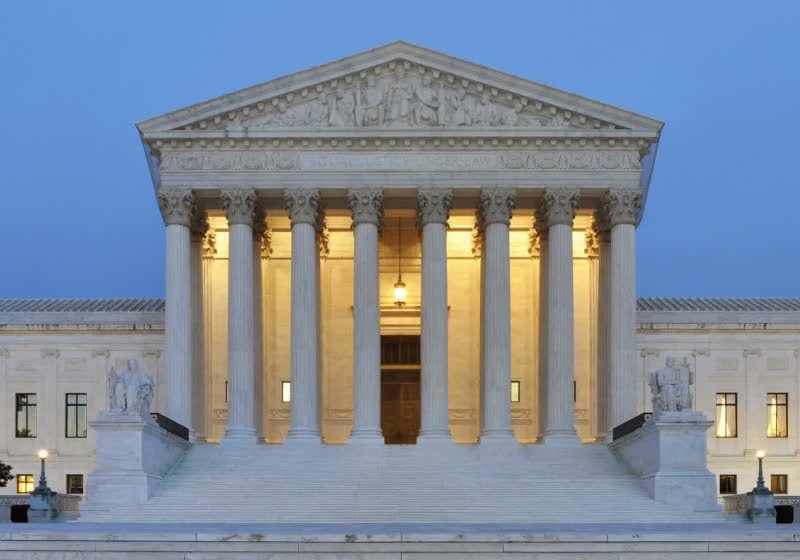
• Core Points: The US Supreme Court declined to hear Stephen Thaler’s bid to secure copyright for AI-generated artwork, leaving the legal question unresolved at the highest level.
• Main Content: Thaler’s DABUS system, which named itself as the author of a novel image, faced rejection as courts consistently required human authorship for copyright, prompting ongoing debates about AI-created works.
• Key Insights: The decision reinforces existing rulings that current copyright law requires human authorship, while highlighting broader implications for AI-generated content and technological innovation.
• Considerations: As AI tools become more prevalent in creative fields, lawmakers may need to redefine authorship and explore alternative protections, while developers consider licensing and attribution practices.
• Recommended Actions: Stakeholders should monitor evolving case law, engage in policy discussions, and prepare licensing frameworks that account for AI-generated outputs.
Product Review Table (Optional):
N/A
Content Overview
The U.S. Supreme Court’s decision not to hear Stephen Thaler’s appeal maintains the status quo on copyright eligibility for works created by artificial intelligence. Thaler, a computer scientist, developed the Device for the Autonomous Bootstrapping of Unified Sentience (DABUS), an AI system that Thaler claimed autonomously produced creative works. In particular, Thaler sought to have an image generated by DABUS recognized as copyrightable with DABUS listed as the author. The move was part of a broader legal strategy to challenge and potentially reshape the framework governing authorship and ownership in the era of advanced AI tools.
The legal journey began in lower courts, where Thaler repeatedly faced adverse rulings grounded in existing copyright law. The central issue across cases has been whether AI-generated creations can qualify for copyright protection when there is no human contributor who can be deemed the author. In the United States, contemporary copyright doctrine has strongly tied protections to human authorship, a stance reinforced by several court decisions over the past decade. Thaler’s position relied on interpreting authorship in a way that could accommodate non-human creators, arguing for recognition of AI-generated images under the copyright regime.
The Supreme Court’s refusal to hear the case does not establish a new precedent, but it effectively leaves in place the holdings from lower courts. These rulings have consistently held that copyright protection requires human authorship, or at least that the author must be a natural person who can exercise creative control and intent. The Court’s decision to bypass the case suggests that there may not be a significant immediate legal shift on this issue at the federal level, though the door remains open for future challenges or clarifications should new questions arise or new arguments emerge.
The broader context involves rapid advances in AI-generated content and the tension between encouraging innovation and providing clear protections for creators. Proponents of extending copyright to AI-created works argue that such protection can incentivize investment and development of sophisticated AI systems, while opponents raise concerns about the erosion of human authorship norms, potential monopolization of generated content, and the devaluation of human creativity. The current legal framework, as applied by U.S. courts, tends to emphasize human-directed creative output as a prerequisite for copyright, even when AI plays a central role in the production process.
This article examines the implications of the Supreme Court’s decision not to hear Thaler’s case, including how the ruling interacts with existing case law, the potential impact on AI developers and users, and the policy considerations that may shape future debates around intellectual property in an AI-rich landscape. It also considers how other jurisdictions have addressed AI-generated works and what policymakers in the United States might consider as they contemplate updates to copyright law, authorship standards, and related protections.
In-Depth Analysis
The central legal question in Thaler’s efforts has been whether copyright law, which traditionally protects original works of authorship created by humans, can or should extend to outputs generated by machines with minimal or no human intervention. Thaler contended that the DABUS system could act as an autonomous author, and that a human operator was not required to claim or control the creative work. This view challenges a long-standing assumption in copyright jurisprudence: that authorship involves human intent, originality, and a direct creative act.
Lower courts have repeatedly rejected this interpretation, underscoring that the U.S. Copyright Act requires a human author for works to qualify for protection. In practice, courts have looked for evidence that a human creator contributed to the work in a manner that fulfills the statutory requirements of originality and fixation. Even when AI systems play a central role in generating an image or other creative output, the courts have tended to filter the result through the lens of human authorship or human oversight and decision-making. This framework has produced a predictable outcome: most AI-generated works, where there is no discernible human contribution beyond permissive use of a tool, do not qualify for copyright protection as the work stands.
Thaler’s position rests on a broader philosophical debate: can a machine, operating autonomously, bear the status of an author? The question has practical consequences beyond legal labels. If AI-generated works cannot be copyrighted, developers and users may rely on contractual arrangements, trade secrets, or other forms of protection to monetize and control the distribution of those works. Conversely, if AI-generated content could be copyrighted, it could raise issues about who holds that copyright (the operator, the creator of the AI, the owner of the AI, or the AI itself) and how to enforce it in practice.
The Supreme Court’s decision not to hear the case suggests a sense of judicial caution about venturing into a largely unsettled area of law. The Court routinely selects a small number of cases that present significant or novel questions or that could provide clarity for lower courts. In deferring, the Court signals that, at least for now, it is content to let the existing framework—where human authorship remains a key determinant of copyright protection—stand. This is not the same as a ruling on the merits of AI authorship, but it does close one avenue for a definitive Supreme Court stance in the near term.
Policy-makers, scholars, and industry stakeholders have continued to debate possible reforms. Several avenues have been proposed in academic and policy circles, including:
– Clarifying or revising statutory language to explicitly address AI-generated outputs and the role of human authorship.
– Creating new forms of intellectual property or sui generis protections for machine-generated works that do not rely on traditional author-based copyright.
– Encouraging licensing frameworks where AI-generated content can be used under standardized terms that reflect the machine-based origin of the work.
– Developing attribution standards to recognize the involvement of AI tools while preserving human authorship as needed for copyright.

*圖片來源:Unsplash*
The practical implications for AI developers are notable. Companies building AI systems that produce images, music, writing, or other forms of creative output must plan for the possibility that future legal developments could affect ownership, licensing, and enforcement. If the law remains centered on human authorship, developers might emphasize transparent disclosure about the role of AI in the creative process, alongside robust licensing agreements for AI-generated outputs. Content creators and users will similarly consider how to manage rights, permissions, and potential limitations on use when AI tools contribute to the creation of works.
International experience offers additional perspective. Some jurisdictions have explored or implemented alternatives to traditional copyright for AI-created content, while others have maintained human authorship requirements with limited exceptions. The divergence in approaches highlights the global nature of AI innovation and the complexity of harmonizing intellectual property regimes in the face of rapid technological change.
Looking ahead, several trends are likely to shape the future of AI-generated content and copyright:
– Increased transparency and disclosure requirements regarding the use of AI in creative works, potentially including standardized metadata about the involvement of AI tools.
– More sophisticated licensing models tailored to AI-produced outputs, with terms addressing access, modification, and commercial use.
– Potential development of policy instruments that balance incentives for innovation with safeguards against overreach or unfair use, particularly in areas like training data rights and data provenance.
– Ongoing court decisions and evolving interpretations of existing statutes as new cases test the boundaries of AI authorship and machine-generated content.
Ultimately, the Supreme Court’s non-review of Thaler’s case serves as a reminder that the intersection of AI and copyright remains unsettled in the United States. The legal system has not issued a final pronouncement on whether machines can be authors, or whether new forms of protection are necessary to address machine-generated works. In the meantime, the practical strategy for stakeholders involves careful navigation of current law, proactive planning for licensing and attribution, and active participation in public discourse about the future of intellectual property in an era of artificial intelligence.
Perspectives and Impact
- For creators and rights holders: The current framework preserves the traditional emphasis on human authorship, which helps preserve clarity in rights ownership and enforcement. However, it also raises questions about the value and protection of AI-assisted creativity, especially as AI becomes more capable of contributing to complex artworks without direct human authorship.
- For AI developers: The decision underscores the importance of designing clear licensing models and providing tools that facilitate attribution, provenance, and usage rights. Developers should anticipate that future reforms could create new protections or obligations related to AI-generated outputs, potentially affecting monetization and distribution strategies.
- For policymakers: The case spotlights the need to address a rapidly evolving creative landscape. Lawmakers may consider updating copyright statutes or introducing new forms of protection to address AI-driven creativity while maintaining incentives for human innovation.
- For the public and academic researchers: The debate invites interdisciplinary analysis of authorship, creativity, and the role of machines in cultural production. It encourages exploration of how society values originality when non-human agents participate in the creative process.
Future implications include potential legislative proposals to redefine authorship criteria, establish AI-generated works as protectable under new regimes, or maintain a strict human-authorship requirement with limited exceptions. The outcomes of such discussions will influence how AI technologies are developed, deployed, and monetized across creative industries.
Key Takeaways
Main Points:
– The Supreme Court declined to hear Thaler’s case, leaving legal questions about AI-generated copyright unresolved at the federal level.
– U.S. copyright law currently emphasizes human authorship as a prerequisite for protection.
– The decision reflects broader tensions between fostering AI innovation and preserving traditional intellectual property norms.
Areas of Concern:
– Ambiguity around the treatment of AI-generated works in copyright regimes could hinder investment and development.
– Potential disputes over attribution, ownership, and licensing for AI-produced outputs.
– Risk of inconsistent protections across jurisdictions as AI tools proliferate globally.
Summary and Recommendations
The Supreme Court’s decision not to review Stephen Thaler’s effort to secure copyright for AI-generated images preserves the status quo: copyright protection in the United States remains largely tied to human authorship. While this stance offers clarity for now, it does not resolve the fundamental questions about AI’s role in creative processes or the best way to protect, license, and distribute AI-generated content. As AI continues to advance and become more capable of autonomous creativity, policymakers, industry stakeholders, and scholars should engage in proactive dialogue to establish clear, workable frameworks that balance innovation with fair rights and responsibilities.
In practical terms, organizations involved in AI-driven creativity should:
– Develop transparent documentation of the involvement of AI systems in the creative process.
– Prepare licensing agreements and terms of use for AI-generated outputs that reflect current legal expectations while allowing flexibility for future reforms.
– Monitor legal developments domestically and internationally to adapt strategies as new rulings or statutes emerge.
– Engage in policy discussions and contribute to the development of standardized norms for attribution, provenance, and rights management in AI-generated art and content.
By taking these steps, creators, developers, and users can navigate a rapidly evolving landscape with greater confidence, even as the legal framework continues to evolve in response to technological progress.
References
- Original: https://www.techspot.com/news/111553-us-supreme-court-not-interested-enforcing-copyright-ai.html
- Additional references:
- U.S. Copyright Office, “Copyright Protection for Works of Authorship” (general principles of human authorship)
- Supreme Court decisions on copyright and authorship (e.g., case law addressing human authorship requirements)
- Academic and policy discussions on AI-generated content, authorship, and proposed legal frameworks

*圖片來源:Unsplash*