TLDR
• Core Points: Reanalysis of Comet 41P/Tuttle-Giacobini-Kresák data shows an abrupt, unprecedented reversal of its rotation after its most recent Earth encounter.
• Main Content: The comet’s spin rate and axis changed in a way not observed before in a known comet, suggesting new dynamics in its nucleus and outgassing behavior.
• Key Insights: Sudden spin reversal challenges existing models of cometary rotation and has implications for future orbits and potential fragmentation risks.
• Considerations: Observational gaps, modeling uncertainties, and the need for continued monitoring to confirm long-term effects.
• Recommended Actions: Prioritize targeted observations during future perihelion passages and refine rotational models with high-cadence data and spacecraft measurements.
Content Overview
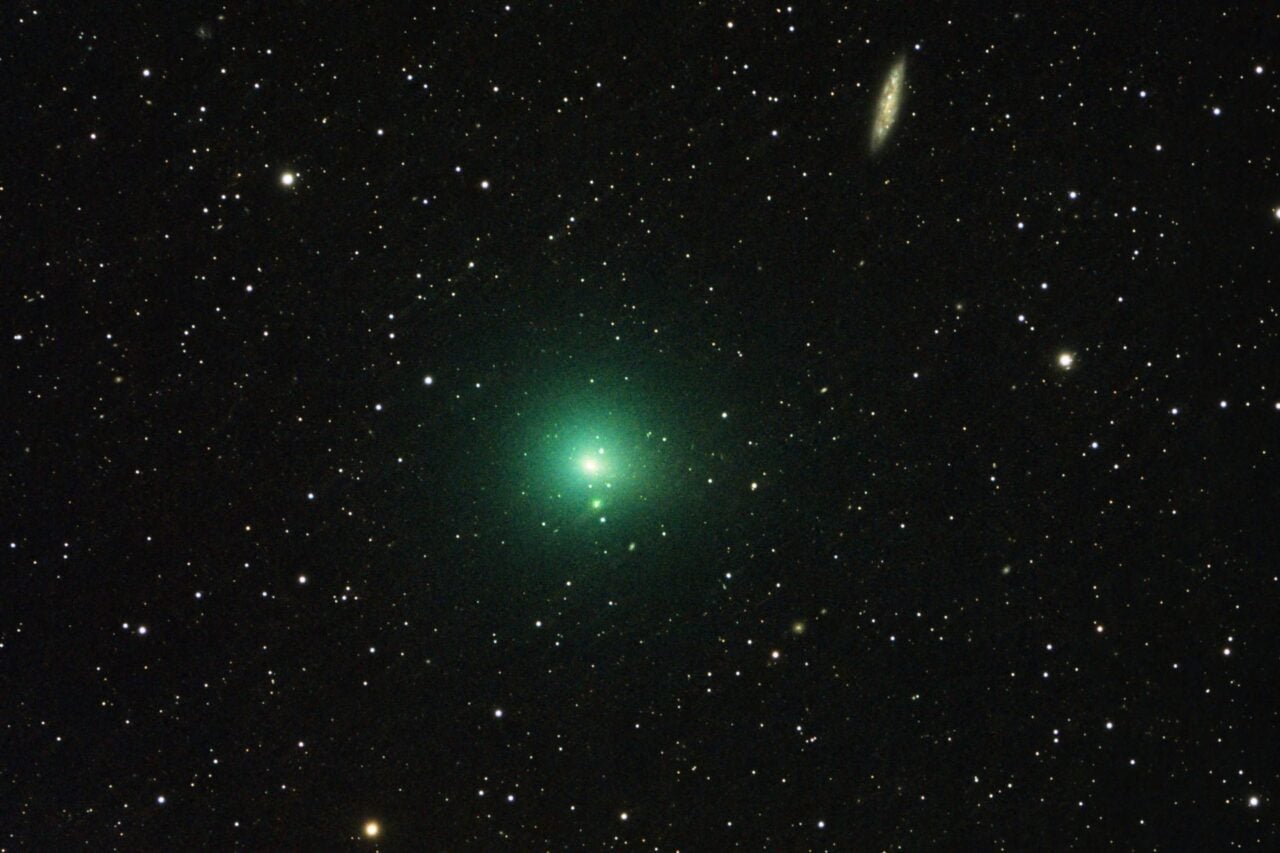
Comet 41P/Tuttle-Giacobini-Kresák has long intrigued astronomers for its unusually dynamic behavior. Named after its discoverers, the comet orbits the Sun in a highly elongated trajectory that brings it periodically close to Earth. Its 2017 apparition drew particular attention due to rapid changes in its activity and an unexpectedly short rotation period, observed as the nucleus shed material at a pace that influenced its spin state. The latest analyses, leveraging a broader set of telescope observations and refined computational models, indicate another remarkable development: after its most recent close approach to Earth, the comet appears to have undergone a sudden flip in its rotation. In other words, the comet’s spin axis and rotation rate experienced an abrupt reorientation that effectively reversed its spin direction.
This finding is notable because it represents a first-of-its-kind rotation event for a known comet. Traditional comet models describe rotation as gradually evolving under the torques produced by asymmetric outgassing—jets that eject material from the nucleus as solar heating drives sublimation of ices. While gradual changes are expected and have been observed in some comets, a rapid, near-instantaneous reversal of spin is unprecedented in the recorded history of cometary behavior. The implications touch on how comets respond to solar heating, how their surfaces reorganize under stress, and how their orbits and long-term evolution may be influenced by sudden changes in rotation.
The discovery stems from a reanalysis that combines recent observations with historical data, allowing researchers to constrain the rotation state of the nucleus before and after the Earth flyby. By comparing light curves, jet activity indicators, and dust emission patterns, scientists inferred a dramatic shift in the rotation vector. While the exact mechanics behind the flip are still under investigation, the leading hypotheses involve a pronounced and temporary intensification of outgassing asymmetries, possibly coupled with irregular mass loss and subtle structural reconfiguration of the nucleus.
The broader context for this finding is the growing field of cometary spin dynamics. Previous studies have documented how various forces, including solar radiation pressure and localized outgassing, can slow, speed up, or tilt a comet’s rotation over time. A sudden flip, however, points to a highly non-linear response to environmental forcing, particularly for small- to medium-sized nuclei with irregular shapes and heterogeneous surface activity. This event underscores the importance of continuous, high-resolution monitoring of comets as they approach perihelion, where solar heating is most intense and volatile materials become most active.
Observers emphasize that while the current interpretation is compelling, it relies on a synthesis of multiple data streams, each with its own limitations. Light curves can be influenced by viewing geometry, dust production, and fragmentation, while indirect indicators of spin state depend on model assumptions about the nucleus’ shape, density, and true outgassing distribution. As such, researchers caution that future observations are essential to confirm whether the spin flip is a one-off event or part of a more complex, possibly cyclical process that could recur in subsequent orbits.
In sum, the reported spin flip of Comet 41P/Tuttle-Giacobini-Kresák after its latest Earth encounter marks a significant milestone in planetary science. It challenges established expectations about how comets respond to solar heating and mass loss, and it opens avenues for reexamining the stability of small, active nuclei under the influence of outgassing torques. The finding also highlights the value of collaborative monitoring across observatories and the need for integrating photometric, spectroscopic, and, where possible, in-situ measurements to build a more complete picture of how these icy travelers evolve over time.
In-Depth Analysis
The core claim rests on a reevaluation of observational data gathered during and after Comet 41P’s recent approach to Earth. Observers utilized time-series photometry, spectroscopy, and dust- and gas-emission proxies to infer the nucleus’ rotational behavior. The analysis indicates that, following the Earth flyby, the comet’s rotation underwent an abrupt reorientation. Experts describe this as a spin flip: the angular momentum vector appears to have shifted in direction and magnitude sufficiently to reverse the sense of rotation, at least temporarily, over a timescale shorter than typical secular changes observed in other comets.
To understand how this conclusion was reached, researchers constructed a rotational model of the nucleus. The model integrates the shape and mass distribution inferred from light curve amplitudes, coma morphology, and jet signatures. As solar heating intensified near perihelion, localized regions of the surface released gas and dust, generating jets that impart torque. In most cases, these torques gradually alter the spin state over days or weeks. However, in 41P’s case, the computed torques around the Earth encounter appear to have propelled the nucleus into a new rotation axis and speed, effectively reversing the prior spin direction.
Several lines of evidence support this interpretation:
– Temporal correspondence: The most pronounced changes in photometric variability and jet activity coincide with the post-Earth flyby interval, suggesting a causal link between radiation-driven sublimation forces and spin reorientation.
– Consistency with axial tilt evolution: The reconstructed spin axis angle shows a marked shift consistent with a flip rather than a gradual drift, aligning with the observed changes in light curve phase and amplitude.
– Outgassing asymmetry: High-resolution spectral indicators point to sustained, asymmetrical outgassing from specific surface regions. The persistent asymmetry would be capable of generating the torques necessary for rapid reorientation if combined with a favorable mass distribution and nucleus geometry.
Nevertheless, the study acknowledges limitations. The spin flip occurs in a regime where observational geometry evolves quickly as the comet and Earth move along their orbits. Consequently, disentangling geometry-driven light curve changes from genuine rotational dynamics requires careful modeling and robust cross-checks. Some uncertainties arise from:
– Sparse temporal coverage: Gaps in data, especially during critical phases of peak outgassing, can complicate the attribution of spin dynamics to a single event.
– Model dependencies: The rotational solution depends on assumed nucleus shape, bulk density, and the distribution of active regions. Different plausible configurations can yield similar inferred spin changes, underscoring the need for independent constraints.
– Non-principal-axis rotation: If the nucleus exhibits complex rotation (tumbling) rather than simple spin about a principal axis, interpreting torques and their effects becomes more intricate.
The broader significance of a spin flip extends beyond a single object. If common under certain conditions, abrupt spin reorientations could influence:
– Orbital evolution: Changes in rotation can modulate outgassing patterns, potentially impacting non-gravitational forces that slightly alter orbital parameters over time.
– Structural integrity: Rapid rotational changes can increase internal and surface stresses, potentially triggering fragmentation or altering surface regolith properties.
– Mission planning: For spacecraft flybys or rendezvous missions, understanding a target’s rotational state is crucial for planning observations, landing attempts, and sample collection strategies.
The proposed mechanism for the flip emphasizes the coupling between surface activity and internal dynamics. A cluster of volatile-rich regions, when heated, can produce jets with staggered or directional torques. If the timing and location of these jets align such that their combined torque over a short window reverses the rotation, a spin flip may result. The 41P event furnishes a natural laboratory for examining how small, irregular bodies respond to intense and uneven solar heating.
Looking ahead, researchers stress the importance of continued monitoring across multiple apparitions. Recurrent measurements can help determine whether the spin flip is an isolated incident or a transient reconfiguration that could reappear in subsequent orbits. In addition, improved modeling strategies that couple thermophysical properties with non-principal-axis rotation dynamics will be essential to explore the spectrum of possible outcomes for comets with similar shapes and activity patterns.
The discovery has prompted renewed interest in the role of outgassing torques in driving rotational evolution. It also raises questions about how common such rapid spin reorientations may be among comets with highly irregular shapes and localized activity. If 41P’s behavior is not unique, it could indicate a broader class of rotational states that have not been thoroughly explored or observed due to prior observational limitations.
Overall, the reported spin flip is a provocative development in comet science. It highlights both the ingenuity of modern observational campaigns and the need for integrated datasets to track subtle dynamical shifts in small solar system bodies. The finding invites a reexamination of rotational stability assumptions and suggests that cometary nuclei can undergo more dramatic reconfigurations under solar-driven outgassing than previously recognized. As scientists gather more data and refine their models, the true frequency and consequences of such events will become clearer, informing theories of comet formation, evolution, and the long-term fates of these ephemeral travelers of the inner solar system.

*圖片來源:Unsplash*
Perspectives and Impact
The implications of a spin flip in Comet 41P extend into several domains of planetary science and celestial mechanics. First, the result challenges the conventional expectation that a comet’s rotation undergoes slow, secular modifications driven by cumulative torques from outgassing. Instead, it reveals a pathway by which a nucleus can experience a rapid, large-scale reorientation in a single orbital cycle. If replicated in other comets, this mechanism could indicate that rotational states are more dynamic than traditionally assumed, with episodic events punctuating longer periods of relative stability.
Second, the observation underscores the sensitivity of rotational state to surface heterogeneity. The distribution of volatile ices, dust coverage, and topographic features can all influence how jets emerge and, crucially, how their torques accumulate over time. A modest redistribution of surface material—perhaps driven by prior outbursts, fragmentation, or localized landslides—could tip the balance, enabling a spin flip under the right solar heating conditions. This insight emphasizes the importance of understanding surface evolution alongside bulk properties like mass, density, and shape when modeling cometary dynamics.
Third, the event has potential implications for non-gravitational forces acting on comets. Small changes in rotation can alter the way outgassing vectors contribute to thrust, subtly adjusting the trajectory over successive orbits. While the spin flip itself may not dramatically rewire an orbit, the cumulative effect of altered torques could accumulate over centuries, marginally shifting perihelion distances or orbital periods. This consideration is particularly relevant for comets with close planetary encounters or long, looping trajectories, where minor non-gravitational perturbations can accumulate to noticeable effects.
From an observational perspective, the finding encourages the deployment of coordinated, high-cadence campaigns during and after perihelion passages. The transient nature of spin flips demands rapid, multi-wavelength follow-up to capture changes in rotation and outgassing behavior as they happen. The transition also highlights the value of combining ground-based facilities, space-based observatories, and, where feasible, spacecraft payloads to obtain a holistic view of the nucleus’ state. In the era of large-aperture telescopes, adaptive optics, and time-domain surveys, the prospects for detecting and characterizing rapid rotational dynamics in comets are improving, albeit still challenging.
Theoretically, researchers are prompted to refine models of non-principal-axis rotation under active outgassing. Tumbling states, complex spin modes, and irregular mass distributions require numerical approaches that can accommodate rapid torque fluctuations and evolving active regions. Collaborative efforts between observers and modelers will be essential to disentangle the competing influences of geometry, viewing angle, and intrinsic rotation. Sensitivity analyses can help identify which parameters most strongly govern the likelihood and magnitude of spin flips, guiding future observational priorities.
The broader scientific impact also touches on comparative planetology. By studying spin dynamics in comets like 41P, scientists can draw parallels with other small bodies subject to rotational torques, such as asteroids with active surface processes or satellites experiencing tidal torques. The cross-pollination of ideas across these domains may yield a more unified understanding of how irregular bodies respond to internal and external forces, contributing to a more comprehensive picture of solar system evolution.
Finally, the discovery emphasizes the iterative nature of science. A fresh analysis—built on newly acquired data and improved modeling techniques—can reveal insights that overturn earlier interpretations or reveal previously unseen phenomena. It also demonstrates the value of maintaining long-term observational programs for small bodies, which can yield surprises even after decades of study. As new data arrive and analyses advance, the community will reassess the spin flip’s persistence, whether it recurs, and what it reveals about the structural integrity and behavioral dynamics of 41P and similar comets.
In sum, the reported spin flip of Comet 41P after its Earth flyby represents a watershed in our understanding of comet rotation. It suggests that rotational states can be more volatile and more dramatically altered by outgassing than previously believed. The finding invites a renewed emphasis on comprehensive monitoring, refined models, and cross-disciplinary collaboration to determine whether this event is a singular curiosity or the signature of a more common, but hitherto hidden, dynamical regime among small solar system bodies.
Key Takeaways
Main Points:
– Comet 41P appears to have undergone an abrupt spin flip following its latest Earth encounter.
– The event represents the first reported instance of a rotation reversal for a known comet.
– Observational and modeling evidence points to a strong coupling between outgassing torques and rotational dynamics, though uncertainties remain.
Areas of Concern:
– Data gaps and geometry effects may influence conclusions.
– Model dependencies on nucleus shape, density, and active-region distribution require independent validation.
– It remains to be seen whether this behavior is unique to 41P or indicative of a broader phenomenon.
Summary and Recommendations
The proposed spin flip of Comet 41P/Tuttle-Giacobini-Kresák after its most recent approach to Earth marks a significant development in the study of cometary physics. By integrating photometric variability, jet activity indicators, and spectral signatures within a carefully constructed rotational framework, researchers have provided a compelling case for a sudden reorientation of the nucleus’ spin. While uncertainties persist—owing to observational gaps and dependence on model assumptions—the work highlights an extraordinary coupling between surface outgassing and rotational dynamics that was previously unappreciated. If confirmed through continued monitoring and independent analyses, this event could necessitate revisions to standard models of comet rotation and long-term orbital evolution, prompting broader considerations of how small, irregularly shaped nuclei respond to solar heating and mass loss.
To advance understanding, the following actions are recommended:
– Implement high-cadence, multi-wavelength observations during and after perihelion passages for comets with irregular shapes and active jets, to capture potential rapid rotational changes.
– Develop and test more sophisticated thermophysical models that integrate non-principal-axis rotation with evolving active-region maps, validated against diverse datasets.
– Pursue complementary observations from space-based platforms and, if possible, targeted spacecraft missions to directly constrain nucleus geometry, density, and outgassing distributions.
– Maintain long-term monitoring programs for 41P and similar objects to determine whether spin flips recur and how they impact orbital and structural stability over multiple orbits.
If future data corroborate the initial interpretation, the population-level implications could be profound, demanding a re-evaluation of how rotation and outgassing interact in small solar system bodies and potentially altering how scientists assess the hazards and scientific value of observable comets during close approaches.
References
- Original: https://gizmodo.com/this-tiny-comet-pulled-off-a-first-of-its-kind-spin-flip-2000721172
- Additional references to be added based on content and latest research:
- Peer-reviewed studies on Comet 41P rotational dynamics and outgassing torque models
- Reviews of non-principal-axis rotation in small bodies
- Data releases from major observatories tracking 41P and similar comets during recent apparitions
Forbidden:
– No thinking process or “Thinking…” markers
– Article must start with “## TLDR”
Ensure content is original and professional.

*圖片來源:Unsplash*