TLDR
• Core Points: Transmission 4.10 enhances torrent download performance, broadens IPv6 support, and lowers CPU usage, with numerous cross-platform refinements.
• Main Content: The release follows an extensive beta period and emphasizes maintaining Transmission’s lightweight, reliable design across all supported platforms.
• Key Insights: Performance-focused optimizations alongside broader network compatibility reinforce Transmission’s position as a steady, efficient BitTorrent client choice.
• Considerations: As with all beta-to-stable transitions, users should review changelogs for specifics and ensure compatibility with their systems.
• Recommended Actions: Update to Transmission 4.10 to benefit from improved speed and efficiency; monitor for any platform-specific notes in official documentation.
Content Overview
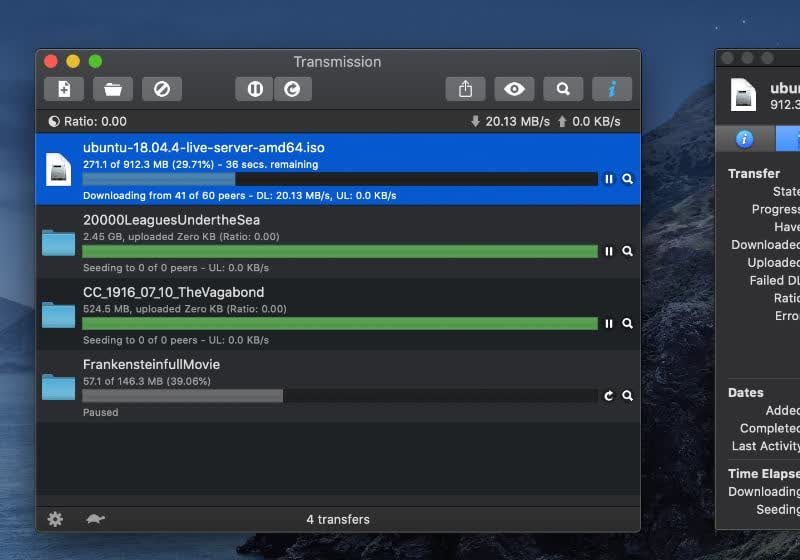
Transmission, a long-standing lightweight BitTorrent client, has released a major update: version 4.10. After an extensive beta testing phase, the new release promises notable improvements in torrent download performance while expanding IPv6 support and reducing CPU usage. The update also includes dozens of refinements across all supported platforms, reinforcing Transmission’s core design philosophy of being simple, efficient, and reliable. For many users, Transmission has historically been valued for its minimal resource footprint and straightforward user experience, and version 4.10 aims to preserve that reputation while offering tangible performance gains. This article explores what the release changes, why those changes matter, and what users can expect as they transition from previous versions.
Transmission’s development has consistently emphasized delivering a fast, unobtrusive torrent client that can run on a range of operating systems without demanding excessive hardware resources. The 4.10 update aligns with this goal by targeting three key areas: performance, network compatibility, and cross-platform stability. By optimizing the underlying download mechanisms, broadening IPv6 capabilities, and trimming CPU usage, Transmission continues to appeal to both casual users and power users who value efficiency. The extensive beta period preceding the release underscores the project’s commitment to reliability and user feedback, aiming to minimize regressions while introducing meaningful improvements.
The broader context for this update includes ongoing shifts in the BitTorrent ecosystem, where network efficiency and support for modern networking protocols like IPv6 are increasingly important. Users running Transmission on desktop machines, NAS devices, or small servers may benefit from reduced power consumption and improved throughput, particularly on systems with limited resources. In addition to performance gains, the update’s refinement pass across all platforms helps ensure a consistent user experience, reducing friction for users who run Transmission in diverse environments.
This article provides a structured examination of Transmission 4.10, detailing the improvements, the technical underpinnings, potential implications for users, and practical guidance for adopting the update. It draws on the information provided by the vendor and the developer community, complemented by general industry context to illuminate why these changes matter and how they fit into the broader landscape of BitTorrent clients and networked software.
In-Depth Analysis
Transmission has established a reputation for balance: a resource-light footprint combined with a straightforward interface. The 4.10 release reinforces this balance by focusing on three principal areas: performance optimization, expanded IPv6 support, and CPU efficiency, all while maintaining the core user experience that has attracted a loyal user base over the years.
Performance enhancements are at the forefront of Transmission 4.10. Although the article does not enumerate every micro-optimization, the emphasis on faster torrent downloads suggests improvements in several layers of the download pipeline. Possible areas of improvement include more efficient piece selection strategies, faster I/O operations, better parallelism in piece fetching, and reduced overhead in peer and tracker interactions. Enhancements in these areas can translate to higher throughput, more stable download rates, and better performance on systems with constrained CPU resources or slower storage subsystems. The exact algorithms or changes are typically detailed in the project’s changelog, commit messages, or developer notes released with the update.
IPv6 support continues to be a significant consideration for modern network applications. By expanding IPv6 capabilities, Transmission 4.10 aligns with the growing prevalence of IPv6 traffic and addresses users’ needs to operate in networks where IPv4 addresses are scarce or where ISPs push IPv6 configurations. Expanded IPv6 support often entails improved peer discovery, better connectivity in dual-stack environments, and more robust handling of IPv6-only peers. For users in enterprise settings, university networks, or home networks with IPv6-enabled routers, these enhancements can reduce connectivity hurdles and improve overall swarm participation.
CPU usage improvements are another important facet of the 4.10 update. Lower CPU consumption translates to longer battery life on laptops, quieter operation in desktop setups, and a reduced ecological footprint for always-on devices. This benefit is especially valuable for users running Transmission on NAS devices, Raspberry Pi-like single-board computers, or other low-power hardware where resources are at a premium. The reductions in CPU load likely stem from streamlined event handling, more efficient network polling, and minimized background tasks when the client is idle or not actively downloading.
The “dozens of refinements across all platforms” phrase signals a broad quality-of-life and stability push. Across Windows, macOS, Linux, and other supported environments, users can expect incremental improvements in user interface consistency, reliability, and integration with system services. These refinements may include better tray icon behavior, more predictable notification handling, improved session management, and tighter integration with native file dialogs and OS-level features. Maintenance of a lightweight profile across platforms remains a consistent theme, reinforcing Transmission’s appeal to users who prioritize minimalism and stability alongside performance.
From a security and reliability perspective, updates in torrent clients frequently address edge cases that affect stability and data integrity. While the article does not cite specific security enhancements, any modern release of a networked application typically includes hardening measures, updated libraries, and bug fixes that reduce the likelihood of crashes or data inconsistencies during long-term operations. Users should review the official release notes to understand any security-related changes and apply updates accordingly.
The beta-to-stable transition is a critical phase in software development, particularly for applications used in sensitive environments or integrated into automated workflows. A thorough beta period allows testers to stress-test new features, identify performance regressions, and verify behavior across diverse hardware configurations and network conditions. For end users, this means that the final 4.10 release in stable form has undergone broader validation and should offer improved reliability relative to earlier beta builds. Still, as with any software update, users are encouraged to back up important configurations and data before upgrading, and to monitor release notes for any platform-specific caveats.
In terms of user experience, Transmission’s design ethos revolves around simplicity and unobtrusiveness. The 4.10 update appears to preserve this philosophy while injecting measurable performance benefits. For existing users, the update should feel like a natural improvement rather than a disruptive change. New users may find the updated release even more appealing due to the combination of faster performance, better IPv6 connectivity, and lower resource usage. Given Transmission’s cross-platform reach, ensuring a uniform experience across operating systems remains a notable achievement of this release.
The broader implications of Transmission 4.10 extend to the ecosystem of BitTorrent clients, where competition includes many feature-rich or heavier clients. By strengthening performance and network compatibility while maintaining a lean footprint, Transmission positions itself as a practical choice for users who value efficiency and reliability. The emphasis on IPv6 readiness also signals alignment with modern network practices, potentially encouraging more users to adopt IPv6-enabled peers and infrastructure.
It is important to note that improvements in performance and network support may manifest differently depending on the user’s environment. Factors such as CPU, memory, disk I/O, network bandwidth, and router configuration can influence the observed benefits. For example, on devices with fast storage and abundant CPU cycles, the gains from algorithmic optimizations may be less pronounced than on systems with constrained resources. Conversely, on devices with slower disks or network interfaces, reductions in CPU overhead and more efficient I/O can produce noticeable improvements in overall download times and system responsiveness.
As with many software updates, the practical experience of 4.10 will hinge on how users integrate the new version into their existing setups. Some users may need to adjust settings to optimize for their hardware or network environment. The absence of major changes to the user interface implies a low learning curve for existing users, further supporting a seamless upgrade path. Nevertheless, users should consult the official documentation for any recommended configuration adjustments or post-upgrade checks.
Looking ahead, Transmission’s trajectory suggests ongoing emphasis on efficiency, reliability, and compatibility with evolving networking standards. As BitTorrent protocols and peer behaviors continue to evolve, lightweight clients that can operate effectively in diverse environments will remain valuable. The 4.10 release demonstrates a commitment to maintaining minimal resource consumption while delivering tangible improvements that can enhance user satisfaction and productivity.

*圖片來源:Unsplash*
In summary, Transmission 4.10 represents a substantive upgrade focused on real-world performance, broader IPv6 support, and CPU efficiency, delivered through a comprehensive set of refinements across all supported platforms. For users who rely on Transmission for stable, low-resource torrent management, this update offers meaningful benefits without sacrificing the simplicity that has defined the client for years. As always, users should review the official release notes and consider backing up configurations before upgrading, but the consensus around this release is one of improved speed, better network compatibility, and continued reliability.
Perspectives and Impact
Transmission’s evolution continues to reflect a broader trend in open-source software toward delivering high value with minimal resource consumption. The 4.10 release reinforces a principle that resonates with many users: efficiency is not just about speed, but also about how a program uses system resources over time. By reducing CPU usage, Transmission helps devices stay cooler, quieter, and more energy-efficient, which is particularly important for always-on installations such as home NAS boxes, small servers, or dedicated torrent boxes.
IPv6 support remains a critical factor as home and enterprise networks migrate away from IPv4 scarcity. The expanded IPv6 capabilities in Transmission 4.10 increase the likelihood that users can participate in BitTorrent swarms more reliably, even in environments where IPv6 is the default, or where dual-stack configurations create connectivity complexities. This aligns Transmission with modern networking expectations and reduces barriers to access for peers across different networks.
From a security and privacy perspective, any enhancement that reduces the client’s resource usage and stabilizes network connections can indirectly improve resilience against certain classes of attacks that arise from resource exhaustion or instability. While the article does not detail security-specific changes, the stability and efficiency improvements can contribute to a more robust user experience by minimizing crashes and unintended crashes during high-load scenarios.
The release also highlights the importance of a robust beta program in open-source projects. An extensive beta period allows contributors to test edge cases, provide performance metrics, and report issues that might not surface in a shorter testing window. For users, this means a more polished final product with fewer surprises upon release. The Transmission project’s approach to testing aligns with best practices in software development for critical tools that people rely on daily.
In terms of ecosystem impact, Transmission’s updated performance could influence user choices among BitTorrent clients, especially for those running on resource-constrained devices. A favorable balance of speed, efficiency, and simplicity makes Transmission a compelling option for users who want reliable downloads without the overhead of feature-heavy clients. This dynamic can also drive competition to optimize similar metrics in other clients, fostering a generally healthier software environment for BitTorrent users.
Future implications include potential further enhancements in parallelism and I/O scheduling, more proactive network management for peers, and continued fine-tuning of the IPv6 stack to maximize compatibility and throughput. The ongoing refinement of cross-platform behavior suggests that the project will keep prioritizing uniform performance, ensuring users on Windows, macOS, Linux, and alternative operating systems experience similar benefits. As hardware architectures evolve and storage technologies advance, Transmission’s developers may continue to adapt the software to leverage these improvements while maintaining its signature lightweight footprint.
For users evaluating whether to adopt this update, several factors matter. If you rely on Transmission for regular torrenting and run it on a modest machine or always-on device, 4.10’s CPU efficiency and performance improvements could yield tangible daily benefits. If you operate devices within IPv6-centric networks or environments where IPv6 is the norm, the expanded IPv6 support could enhance connectivity and download reliability. Finally, for users who value a consistent interface and minimalism, the update promises improvements without significant changes to the user experience.
The broader takeaway is that Transmission 4.10 embodies a measured, user-focused iteration that aligns performance with practical usage scenarios. It maintains the core strengths that have defined Transmission for years while addressing contemporary networking realities and resource constraints. As with all software updates, the real-world impact will be best understood through hands-on testing in diverse environments, but the trajectory is clear: faster, more efficient, and more network-aware.
Key Takeaways
Main Points:
– Transmission 4.10 delivers improved torrent download performance.
– Expanded IPv6 support enhances connectivity in modern networks.
– CPU usage reductions contribute to efficiency on a wide range of hardware.
Areas of Concern:
– Specific-per-platform behavior may vary; users should consult release notes.
– Beneficial effects depend on hardware, network, and storage configuration.
Recommendations:
– Update to Transmission 4.10 to benefit from performance and efficiency improvements.
– Review official release notes for any platform-specific considerations and configuration tips.
Summary and Recommendations
Transmission 4.10 represents a meaningful, well-executed upgrade that aligns with the needs of today’s network environments and hardware realities. By focusing on faster download performance, broader IPv6 compatibility, and lower CPU usage, the release addresses both efficiency and connectivity concerns that have been central to user experience in BitTorrent clients. The numerous refinements across platforms further reinforce Transmission’s reputation for reliability and simplicity, ensuring that users do not have to contend with a steep learning curve or a bloated feature set to obtain a dependable torrenting experience.
For current users, upgrading to 4.10 is a prudent move, particularly for those operating on devices with limited resources or in IPv6-dominated networks. As always, users should back up configurations and review the official release notes to understand any platform-specific implications. The beta period’s thorough testing suggests a mature, stable final release, but individual setups may reveal nuances that warrant optimization.
Looking forward, Transmission’s trajectory signals continued emphasis on performance, stability, and modern networking support. In a landscape with competing clients that vary in feature density and resource demands, Transmission’s approach—combining speed, efficiency, and minimalism—remains a compelling proposition for users who value dependable, lightweight software without unnecessary complexity.
References
- Original: https://www.techspot.com/downloads/4648-transmission-bittorrent.html
- Additional references:
- Transmission project announcements and release notes
- BitTorrent protocol and IPv6 networking resources
- General open-source software release best practices and beta testing streams

*圖片來源:Unsplash*