TLDR
• Core Points: Uber acts as the booking layer for air taxis; Joby supplies aircraft and eventual operations; a Dubai rollout is planned.
• Main Content: The preview demonstrates a working booking interface signaling near-term commercialization of air taxi services.
• Key Insights: The collaboration aims to scale air taxi use, with regulatory readiness and operations integration as critical next steps.
• Considerations: Safety, noise, airspace management, cost, and public acceptance will shape adoption at scale.
• Recommended Actions: Stakeholders should align on regulatory approvals, pilot programs, and transparent pricing to build trust and demand.
Content Overview
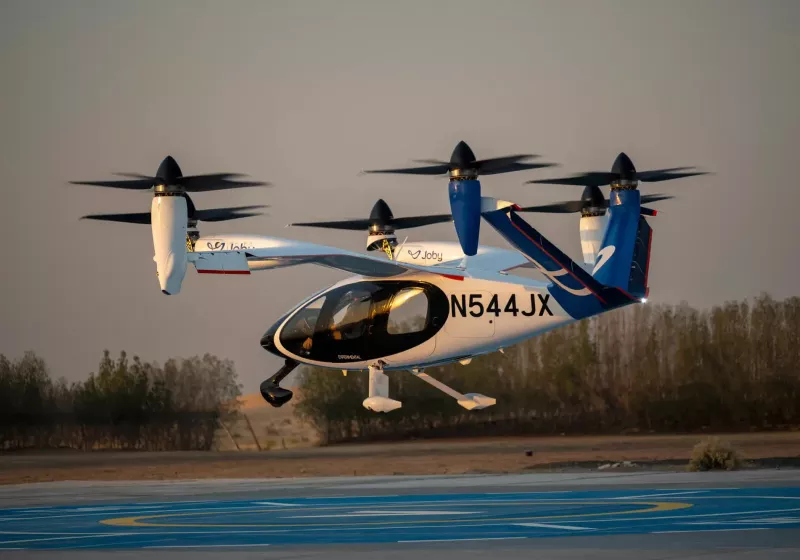
Uber has been exploring the integration of electric vertical takeoff and landing (eVTOL) aircraft into urban mobility networks, positioning itself as the primary booking layer that customers interact with. Joby Aviation, a major developer of eVTOL aircraft, would supply the aircraft and, in time, manage operations for these services. The latest public preview indicates that the partners believe the technology and regulatory pathway are sufficiently mature to begin showcasing a booking system for air taxi rides to the public, a potentially significant milestone on the road to a Dubai-based rollout.
The concept is straightforward: customers would open a ride-hailing app, request an air taxi ride, and be matched with a nearby aircraft operated by Joby. Uber would handle the user experience, trip planning, payments, and dispatch logistics, while Joby would provide the aircraft and, eventually, the operational framework. The Dubai market has been a focal point for many advanced mobility pilots due to its emphasis on cutting-edge transportation infrastructure and supportive regulatory environments. The preview signals both companies’ intent to move from demonstration to deployment, assuming safety, airspace management, and market readiness align.
This collaboration reflects broader industry dynamics where ride-hailing platforms seek to expand into new mobility modalities, leveraging established consumer interfaces and data networks to accelerate adoption. For Joby, the partnership provides a scalable pathway from prototype aircraft to commercial service; for Uber, it represents a bet on owning the end-to-end customer experience across multiple modes of transportation, including air mobility. Dubai’s anticipated rollout would establish one of the world’s most visible tests for urban air mobility, potentially informing global standards and practices.
In the immediate term, the emphasis is on the booking experience and the operational concepts that would support mass deployment. The preview demonstrates that the teams are confident enough in the underlying technology, safety assurances, and demand signals to show a working booking flow. However, many critical components remain, including air traffic integration, passenger safety protocols, battery performance in heat and high-frequency usage, maintenance cycles, and the economics of pricing at scale.
The broader ecosystem—regulatory bodies, aviation authorities, and city planners—will play a decisive role in determining the tempo and scope of any Dubai launch. Key questions include how airspace will be partitioned to accommodate frequent city-to-city routes, what hub-and-spoke models would look like, and how local regulations will govern flight corridors, noise limits, and environmental impact. Stakeholders will also need to address public perception challenges, such as noise, visual pollution, and perceived safety risks, to secure broad acceptance beyond early adopters.
In summary, the preview marks an important step toward operational air taxi services, emphasizing Uber’s ambition to be the front-end platform and Joby’s role as the supplier of the aircraft and, over time, the operator. If successful, the Dubai rollout could serve as a catalyst for international expansion and a proving ground for the practicalities of urban air mobility at scale.
In-Depth Analysis
The collaboration between Uber and Joby signals a deliberate strategy to de-risk air taxi deployment by separating the consumer experience from the back-end aircraft and operations. Uber taking the “booking layer” means riders would interact with a familiar app interface, potentially integrating air taxi options alongside ground transportation, ride-sharing, and potentially other mobility services in a single ecosystem. This approach could lower friction for first-time users by reducing the choice overload and complexity often associated with new transportation modalities.
Joby’s role as the aircraft supplier and eventual operator addresses a critical execution risk in urban air mobility: ensuring a reliable, high-rate, safe aircraft supply and the ability to maintain an aircraft fleet under stringent aviation standards. Joby’s eVTOL design emphasizes electric propulsion, vertical takeoff and landing capabilities, and a focus on quiet operation relative to traditional rotorcraft. The operational model high-level goals would include high-frequency, point-to-point trips with quick turnaround times, optimized routing to minimize energy use, and an integrated maintenance plan to support the fleet scale required for urban networks.
The Dubai context introduces a favorable testing ground for air mobility, given the city’s existing investment in futuristic infrastructure, aviation expertise, and a regulatory environment that has shown openness to pilot programs in emerging mobility categories. Dubai’s support could accelerate standardization efforts for air traffic management (ATM) integration, vertiport siting, safety certifications, and cross-border coordination where applicable. Yet, Dubai also presents its own challenges: extreme heat conditions, high population density in urban cores, and a tourism-driven demand pattern that may differ from other mega-cities. The success of the Dubai rollout will hinge on robust thermal management for aircraft batteries, dependable vertiport utility and charging infrastructure, and a clear value proposition that resonates with both residents and visitors.
From a technology perspective, the booking preview implies that the core digital infrastructure—routing algorithms, availability forecasting, real-time flight tracking, and secure payments—has reached a maturity level acceptable for demonstration. This is a non-trivial achievement because it requires reliable data streams from multiple stakeholders, synchronized scheduling with aviation authorities, and safety-critical decision-making processes that can operate under peak demand and urban air mobility traffic constraints. The user experience must balance convenience with transparency around wait times, flight durations, and potential weather-related disruptions.
A central consideration is the safety framework. Air taxi services demand rigorous risk management, including pilot proficiency (whether human pilots or advanced automation), redundancy in propulsion systems and control surfaces, robust emergency procedures, and continuous system monitoring. Because the model relies on new aircraft types operating in shared urban airspace, regulators will scrutinize certification paths, ongoing airworthiness requirements, and the processes by which faults are detected and mitigated. Public confidence will depend as much on verifiable safety data and transparent incident reporting as on quiet, efficient aircraft.
Economics will ultimately determine the scalability of such services. The price point must justify the travel time savings while remaining accessible to a broad user base or a clearly defined business segment, such as executives or tourism-oriented travelers. The cost structure will depend on aircraft procurement costs, maintenance, energy consumption, insurance, airport and vertiport fees, and regulatory compliance costs. Early pilots may rely on higher-value trips or limited coverage areas to establish a viable economic model before expanding to more routes and times.

*圖片來源:Unsplash*
The operational design also requires feasible airspace integration. Urban air mobility cannot operate in isolation from existing aviation and city traffic management systems. A viable plan would include designated takeoff and landing corridors, geofenced flight zones, and coordination with air traffic control to ensure safe separation from commercial flights, emergency services, and other low-altitude operations. Noise management will be a social license issue as well; even with quieter eVTOL designs, repeated operations over dense urban areas necessitate noise mitigation strategies, scheduling controls, and community engagement to address concerns from residents.
The Dubai preview can be interpreted as a milestone rather than a guarantee of immediate service. The limited nature of the demonstration likely focuses on the feasibility of the end-to-end booking experience, with the actual flight operations, safety certifications, and regulatory approvals continuing in parallel. The timeline to commercialization remains subject to progress across several fronts: aircraft certification milestones, battery performance under real operating conditions, airport/vertiport readiness, and the establishment of operating rules that both protect public safety and enable a compelling service proposition.
Stakeholders outside Uber and Joby—airspace regulators, city authorities, airport operators, and potential insurer partners—will need to align on standards, data sharing, and cost models that ensure predictable operations. A critical factor will be data governance and cybersecurity, given that booking systems will collect sensitive personal information and integrate with critical aviation control systems. Assurances around data privacy, fraud prevention, and system resilience will be essential to widespread adoption.
From a strategic perspective, Uber’s role as a platform operator could unlock opportunities beyond simple point-to-point rides. If the model scales, Uber could offer multi-modal trip planning that includes ground transit, air taxi legs, and subsequent ground transfers, optimizing the route for total travel time and convenience. Joby’s business model would hinge on a stable, scalable aircraft fleet with predictable maintenance costs and under a regulatory framework that supports frequent operations. The collaboration could also influence the competitive landscape, with other ride-hailing and aerospace companies pursuing similar interface strategies or forming alliances to accelerate market entry.
In the broader context of urban mobility, the air taxi concept is part of a larger evolution toward integrated, multi-modal transportation networks that aim to reduce congestion, shorten travel times, and improve accessibility in dense urban environments. However, the realization of such networks depends on carefully managed scale, community acceptance, and consistent execution across technology, policy, and operations. The Dubai initiative, if successful, could provide a blueprint for other cities seeking to demonstrate how air mobility can be integrated into a city’s existing transport ecosystem.
Perspectives and Impact
- For riders: The prospect of an on-demand air taxi service delivered through a familiar ride-hailing app could simplify access to high-speed urban travel. The payoff would be meaningful for time-sensitive trips or areas with limited ground transportation options, provided pricing is competitive and safety is assured.
- For city planners: Urban air mobility introduces a new dimension to urban design, requiring vertiports, charging infrastructure, and airspace scheduling within the fabric of the city. Planners will need to collaborate with aviation authorities to define corridors, noise boundaries, and incident response protocols while evaluating environmental impacts.
- For operators: A successful Dubai rollout could validate the economics of urban air mobility and spur investments in fleet expansion, maintenance capacity, and vertical integration of the value chain, from aircraft production to end-user services.
- For regulators: The initiative tests how well new mobility categories can be certified, integrated into existing air traffic management, and governed by safety, privacy, and consumer protection standards. The experience gained will likely influence future policy and standards for urban air mobility in other jurisdictions.
- For the environment: The environmental footprint will depend on fleet efficiency and electricity sources. As eVTOLs rely on battery power, the transition can reduce emissions if powered by clean energy; however, material sourcing, manufacturing, and end-of-life battery management must be addressed to ensure net environmental benefits.
Future implications include establishing a replicable model for other regions seeking to pilot urban air mobility, refining the interaction between public and private sectors, and addressing equity considerations to ensure services benefit a broad range of residents and visitors, not just high-income users or corporate travelers. Long-term success will also depend on continuous safety performance improvements, user education about new travel modes, and ongoing investment in infrastructure that supports safe, reliable, and efficient operations.
Key Takeaways
Main Points:
– Uber acts as the customer-facing booking layer while Joby provides aircraft and eventual operations.
– A Dubai rollout is being lined up as a primary deployment site.
– The demonstration underscores progress toward a commercial air taxi service, contingent on safety, regulation, and economics.
Areas of Concern:
– Regulatory approval timelines and airspace integration challenges.
– Public acceptance, including noise and perceived safety.
– Cost competitiveness and economic viability at scale.
Summary and Recommendations
The Uber-Joby collaboration highlights a deliberate architectural choice: separate the user experience from the aircraft and operations to reduce integration risk and accelerate time to market. The Dubai preview demonstrates confidence in the digital booking ecosystem and indicates that the partners view air taxi services as sufficiently near-term to warrant public demonstration. However, achieving real-world, scalable urban air mobility requires progress across multiple domains, including regulatory certification, infrastructure readiness, safety assurance, and a compelling business model.
To advance toward a successful Dubai rollout and potential global expansion, the following actions are recommended:
– Finalize regulatory engagement to establish clear certification timelines, flight test hurdles, and airspace allocation plans suitable for urban environments.
– Develop and publish transparent pricing, trip duration estimates, and service-level expectations to build consumer trust and manage demand.
– Invest in vertiport and charging infrastructure planning, ensuring energy reliability and service resilience under peak demand.
– Strengthen safety programs with independent audits, incident reporting frameworks, and public safety communications to improve confidence among riders and communities.
– Create a robust data governance and cybersecurity strategy to protect user data and maintain system integrity across the booking platform and flight operations.
– Engage with local communities to address noise, visual impact, and equitable access to services, potentially piloting routes that balance demand with neighborhood acceptance.
Overall, the Uber-Joby initiative represents a meaningful step toward integrating air mobility into everyday travel. If the Dubai rollout demonstrates reliable operations, cost-effective pricing, and acceptable safety profiles, it could catalyze broader adoption and inform the development of urban air mobility standards around the world.
References
- Original: https://www.techspot.com/news/111469-uber-shows-how-first-air-taxi-ride-could.html
- Additional references:
- Dubai’s regulatory framework for urban air mobility and vertiport development
- Joby Aviation official updates on eVTOL aircraft and certification milestones
- Uber Elevate or Uber Mobility strategic statements on multi-modal platform integrations

*圖片來源:Unsplash*