TLDR
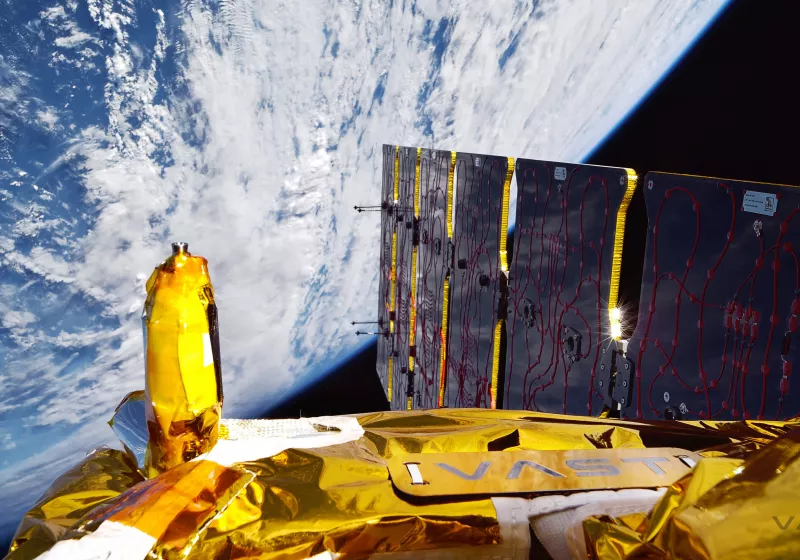
• Core Points: Vast aims to launch Haven-1, a roughly 15-ton autonomous space platform, as a modular outpost launching uncrewed on SpaceX Falcon 9 and evolving to host short human missions.
• Main Content: Haven-1 prioritizes a modest, scalable design with an ambitious schedule, seeking to fill gaps left by NASA’s delayed ISS replacement initiative by offering an autonomous, gradually crewed space station.
• Key Insights: The plan reflects a growing trend toward commercial, modular outposts that can operate independently of government-led programs, potentially accelerating private-sector space infrastructure.
• Considerations: The success depends on reliable launch cadence, autonomous systems, life-support maturation for short human stays, and sustained funding and regulatory alignment.
• Recommended Actions: Monitor Haven-1’s launch timeline, assess its interoperability with future habitat modules, and evaluate its long-term viability for sustained human presence in low Earth orbit.
Content Overview
The article discusses Vast’s strategic push to develop Haven-1, its first space platform, amid delays in NASA’s timetable for replacing the International Space Station (ISS). Haven-1 is intentionally modest in size yet aggressive in its execution plan. Targeting roughly 15 tons, the platform is designed as an autonomous outpost that will launch uncrewed aboard a SpaceX Falcon 9 rocket. Initially, it will operate as a free-flying satellite, and its mission profile envisions eventually hosting short-duration human missions. This approach positions Vast within a broader shift toward private-led space infrastructure, where commercial entities are increasingly taking the lead in developing, deploying, and potentially sustaining in-space habitats. The article signals a broader industry movement in which NASA’s delays create opportunities for private developers to advance their own station concepts, test beds, and crewed mission capabilities without waiting for government timelines. Haven-1’s staged development—beginning as an autonomous outpost and evolving to host human activity—reflects a pragmatic pathway to extend in-space capabilities while maintaining a flexible operational model that could adapt to evolving regulatory, economic, and technological landscapes.
In-Depth Analysis
Haven-1 represents a strategic bet on the commercial viability of independent space stations. The platform’s design emphasizes a lean, modular architecture that can be launched and operated with relatively rapid cadence compared to traditional government-led programs. At approximately 15 tons, Haven-1 is smaller than legacy space stations, but it is positioned to serve as a versatile hub for both autonomous operations and limited human activity. The initial phase as a free-flying satellite enables testing of vital functions—power management, thermal control, communication links, docking capabilities, and station-keeping—without the immediate complexity of full crewed operations. This phased approach allows Vast to validate lifecycle systems, autonomous maintenance routines, and resilience against space weather and microgravity challenges before introducing human missions.
The choice of a SpaceX Falcon 9 as the launch vehicle underscores the contemporary ecosystem where reusable rockets and established launch providers facilitate more frequent access to orbit. By relying on an off-the-shelf vehicle for the first deployment, Vast seeks to minimize upfront development time and leverage existing infrastructure to accelerate time-to-orbit. The subsequent transition to crewed operations on short-duration missions represents a logical progression, should Haven-1 prove itself capable of supporting human presence in low Earth orbit for limited periods. This pathway could help bridge the gap between science-focused research platforms and more routine human-tended outposts, potentially creating a continuum of activity from uncrewed testing to crewed exploration.
The broader market context includes NASA’s delays in articulating a definitive ISS replacement plan. Those delays have created a strategic opening for private entities to pursue alternative architectures, partnerships, and business models for space habitats. Vast’s Haven-1 is an example of how commercial actors are proliferating concepts that were once predominantly the domain of national space agencies. Key questions for the program include ensuring robust autonomous operations, achieving reliable life-support systems capable of supporting short crewed stays, and establishing a sustainable economic model. Long-term success will also depend on ongoing collaboration with regulators, international partners, and potential customers who may use Haven-1 for research, manufacturing, or tourism in space.
Technological readiness is central to Haven-1’s feasibility. Autonomous platforms require mature propulsion, attitude control, docking interfaces, and cross-platform interoperability with other modules and visiting vehicles. Life-support systems, environmental monitoring, and redundancy strategies must be demonstrated to ensure safety during crewed phases. The incremental approach—beginning with an uncrewed stage and advancing to short-duration crewed missions—helps mitigate risk and provide iterative feedback for design refinement. In parallel, Vast would likely need to secure partnerships for modules and services, such as scientific payloads, data downlink capabilities, and resupply logistics, to create a compelling proposition for customers who may seek to conduct experiments or demonstrations in microgravity environments.
Economic considerations are central to the viability of Haven-1. The program must articulate a clear value proposition: what research, manufacturing, or commercial activities will be pursued on Haven-1, and how will these activities yield returns for investors and customers? The platform’s modest scale could lower the barrier to entry for organizations seeking in-space research opportunities, but ongoing operating costs, maintenance, and launch expenses will determine its attractiveness relative to other platforms or to on-orbit services. Additionally, the program must navigate insurance, liability, and safety frameworks for short-duration crewed missions, particularly if Haven-1 operates as a mixed-use facility with private and potential government user bases.
From a policy and regulatory perspective, Haven-1 sits at the intersection of civil, commercial, and international space activities. Coordinating with space agencies and international partners will require alignment on standards for docking, life-support, debris mitigation, and space traffic management. As NASA and other agencies reassess their long-term strategies for LEO infrastructure, Haven-1 could serve as a testbed for public-private collaboration models, standards development, and shared mission responsibilities. The timeline will hinge on a combination of manufacturing progress, launch availability, regulatory approvals, and the ability to secure contracts for research and commercial use.
The broader implications of Haven-1 extend to the future landscape of on-orbit habitats. If successful, Vast’s approach could inspire parallel programs from other private entities or collaborations between corporations and research institutions. It could contribute to a more diversified ecosystem in low Earth orbit, where multiple platforms operate with different capabilities, service profiles, and customer bases. This diversification could drive competition, lower costs, and expand access to space-based infrastructure. However, it also introduces considerations around space debris, spectrum usage, and the long-term sustainability of increased orbital activity, underscoring the need for robust governance and responsible mission planning.
In summary, Haven-1 represents a noteworthy example of private sector acceleration in space station development. It embodies a pragmatic, phased strategy that emphasizes rapid deployment, autonomous operation, and gradual human access. The program mirrors a broader shift in space policy and industry toward commercial-led infrastructure in LEO, particularly in light of government delays. The ultimate success of Haven-1 will depend on technical viability, economic sustainability, regulatory alignment, and the ability to demonstrate a compelling case for short-duration crewed missions in a cost-effective, safe, and scalable manner.

*圖片來源:Unsplash*
Perspectives and Impact
Haven-1’s trajectory highlights the evolving relationship between government space programs and private space companies. As NASA contends with the complexities of replacing the ISS, private entities are capitalizing on the opportunity to propose alternative architectures that may operate more nimbly in the near term. This dynamic could accelerate the emergence of a robust, commercialized space infrastructure in low Earth orbit, with Haven-1 serving as a potential anchor, testing ground, and proof of concept for a new generation of on-orbit facilities.
The project reflects a broader trend where the private sector seizes the initiative to expand human presence in space beyond traditional government-led missions. If Haven-1 demonstrates reliable autonomous functionality and a viable path to crewed operations, it could attract early customers—researchers seeking stable microgravity environments, biotech firms exploring space-based manufacturing, or educational institutions interested in student-led experiments. This diversified demand could help amortize operating costs and justify ongoing investment.
Moreover, Haven-1 may influence international collaboration patterns. As a flexible platform capable of evolving from a satellite to a crewed outpost, it might facilitate partnerships that leverage different countries’ strengths in research, materials science, or space technology. The ability to host short-duration missions could also offer a transitional stepping-stone toward longer-term habitation concepts, potentially informing discussions about shared governance, standardization, and interoperability across various orbital assets.
However, the path forward is not without risks. The success of Haven-1 depends on securing a reliable launch cadence and maintaining system integrity in the harsh environment of space. Life-support systems must reach a maturity level suitable for human occupancy, including safety redundancies, emergency protocols, and medical support capabilities for short-duration stays. Insurance and regulatory compliance remain critical, as does the ongoing management of orbital debris and collision avoidance in a crowded LEO environment. Public perception and investor confidence will hinge on transparent progress reporting, measurable milestones, and demonstrable safety records.
Ultimately, Haven-1 could become a transformative case study in the commercialization of LEO infrastructure. If it delivers on its promise of an autonomous 15-ton platform that can eventually host human missions, it may help catalyze a broader ecosystem of private habitats, services, and stories from space. The broader question is whether such platforms will complement or compete with government-led efforts, and how the regulatory and economic landscapes will adapt to a more pluralistic spectrum of space infrastructure providers.
Key Takeaways
Main Points:
– Vast aims to launch Haven-1, a roughly 15-ton autonomous space platform, as a modular outpost.
– The project launches uncrewed on a SpaceX Falcon 9 and evolves to host short-duration human missions.
– Haven-1 reflects a shift toward commercial space infrastructure amid NASA’s ISS replacement delays.
Areas of Concern:
– Technical readiness of autonomous systems and upcoming life-support maturity for crewed phases.
– Economic viability, including operating costs, customer demand, and funding stability.
– Regulatory, safety, and debris management considerations in a crowded LEO environment.
Summary and Recommendations
Haven-1 showcases Vast’s strategic attempt to accelerate private-sector presence in low Earth orbit by delivering a modest, scalable platform designed for autonomous operation with a future path to short-term crewed missions. This approach aligns with a broader industry trend of commercial entities stepping forward to fill gaps left by government program delays, potentially reducing barriers to access, lowering costs through competition, and expanding the array of available on-orbit services.
To advance this initiative, Vast should prioritize concrete milestones that demonstrate autonomous reliability and incremental crewed capability. This includes rigorous testing of docking, life-support simulations for short missions, radiation and thermal management under operational loads, and the establishment of a clear business model with defined customer segments. Strategic partnerships with research institutions, industry stakeholders, and regulatory bodies will be critical to ensuring interoperability, safety, and long-term viability. Continuous transparency about progress, risk management, and funding plans will be essential to maintain investor confidence and public trust as the project moves from concept to operational reality.
If successful, Haven-1 could become a foundational asset in a diversified LEO economy, offering a pathway for researchers, manufacturers, and educators to conduct experiments and demonstrate in-space processes. Its evolution toward human-tended operations would need to be carefully managed to balance safety, cost, and usability for a range of stakeholders. The broader implication is a potential acceleration of private-led space infrastructure development, with cascading effects on policy, industry competition, and the pace of human presence beyond Earth.
References
- Original: https://www.techspot.com/news/111020-nasa-delays-iss-replacement-plans-vast-pushing-ahead.html
- Additional sources:
- NASA’s ongoing discussions about ISS replacement concepts and timelines (public policy and industry responses)
- Space industry analyses on commercial space station development and private-led LEO infrastructure
- Technical literature on autonomous space platforms, life-support systems for short-duration crewed missions, and modular space habitat interoperability
Forbidden:
– No thinking process or “Thinking…” markers
– Article must start with “## TLDR”
Ensure content is original and professional.

*圖片來源:Unsplash*