TLDR
• Core Points: VW’s European EV sales jumped 56% in 2025, overtaking Tesla’s registrations, which fell 27% year over year.
• Main Content: VW reached 274,278 battery-electric vehicle sales in Europe, while Tesla posted 236,357 BEV registrations.
• Key Insights: A sharp drop in Tesla’s momentum contrasts with VW’s successful product ramp, notably the ID.7.
• Considerations: Market dynamics, charging infrastructure, and model lineup will influence whether VW can sustain leadership.
• Recommended Actions: Stakeholders should monitor model competitiveness, pricing, and regional demand signals to adapt strategies.
Content Overview
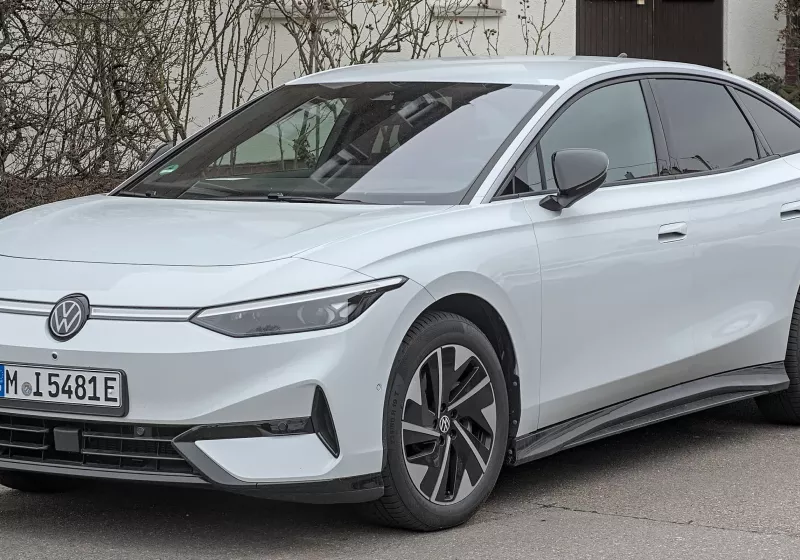
For years, Tesla has dominated Europe’s fully electric vehicle (EV) market, benefiting from a strong brand, a growing charging network, and the early arrival of compelling models. However, 2025 marked a turning point. Data from JATO Dynamics indicate that Tesla’s registrations in Europe declined by 27 percent compared with 2024. In response, Volkswagen accelerated its EV push, delivering a 56 percent year-over-year increase in European battery-electric vehicle (BEV) sales. The most significant driver behind VW’s surge was the rollout and reception of the new ID.7 sedan, which helped the group amass 274,278 BEV sales across Europe. Tesla, by contrast, registered 236,357 BEVs in the region during the same period, marking the first time Volkswagen overtook Tesla in European BEV sales.
This shift occurs amid a broader transformation of Europe’s EV landscape. Automakers are expanding their BEV portfolios, improving driving range, and refining pricing and incentives to appeal to a broader segment of European consumers. The 2025 performance highlights how quickly leadership can change as manufacturers introduce new platforms and update existing products to align with consumer expectations, regulatory requirements, and regional preferences. It also underscores the intense competition within Europe’s EV market, where consumer choice and total cost of ownership are increasingly central to purchasing decisions.
In-Depth Analysis
Tesla’s position in Europe has benefited from a combination of early market entry, strong brand recognition, and a broad supercharger network that supports longer trips and cross-border travel. Yet, the company faced multiple headwinds in 2025 that contributed to a measurable deceleration in registrations. Competitive pressure intensified as legacy automakers, led by Volkswagen, accelerated their electrification programs. VW’s strategy combined bold product launches, price adjustments, and an emphasis on highly anticipated models like the ID.7 to appeal to both existing EV buyers and prospective converts from internal combustion engine (ICE) vehicles.
The ID.7, Volkswagen’s flagship EV sedan designed to compete with premium and near-premium offerings, played a pivotal role in the sales surge. The model benefited from favorable packaging, balance between performance and efficiency, and a market segment receptive to mid- to large-size EV sedans. While the ID.7’s exact specifications and pricing details may vary by region, its reception in Europe helped strengthen VW’s BEV appeal and filled a strategic gap in the company’s lineup, complementing other BEVs such as the ID.4 and ID.3.
Several factors shaped the broader European market in 2025. Government incentives, European Union policies, and national tax treatments continued to influence EV adoption. Additionally, consumer demand dynamics shifted as household budgets assessed the total cost of ownership, including vehicle price, charging costs, maintenance, and potential resale value. Volkswagen’s emphasis on mainstream appeal—focusing on affordability, practicality, and a recognizable design language—aligned well with a substantial portion of European buyers seeking value without sacrificing modern electric technology. Tesla’s challenges may have included pricing pressure as competitors expanded their electric portfolios and offered more options across vehicle classes, from compact hatchbacks to larger family sedans and crossovers.
The performance gap between VW and Tesla in 2025 should be analyzed alongside broader market trends. EV sales are highly sensitive to model availability, production constraints, and regional consumer incentives. If VW can maintain momentum with ongoing product cadence and further enhancements to charging infrastructure and customer experience, it could consolidate its leadership position in Europe’s BEV segment. Tesla, meanwhile, might respond by accelerating new model introductions, refining pricing strategies, or expanding its European service and energy solutions to bolster overall competitiveness.
Beyond individual model performance, the European EV market remains impacted by supply chain dynamics, raw material costs, and regulatory shifts aimed at promoting electrification. Automakers are racing to secure battery supply, optimize production capacity, and deliver cars with compelling value propositions given the evolving competitive environment and changing consumer expectations. The 2025 results illuminate how quickly market leadership can pivot in response to strategic execution and product reception, underscoring the need for continuous adaptation in the region’s fast-changing EV landscape.
Perspectives and Impact
From a strategic standpoint, Volkswagen’s overtaking of Tesla in European BEV sales signals a broader realignment within the region’s EV leadership. VW’s gains reflect not only the success of the ID.7 but also the automaker’s ability to capitalize on a diverse ID lineup and a broad dealer and service network that supports customer confidence in EV adoption. This shift may influence not only market share but also persuading suppliers, retailers, and policymakers to recalibrate expectations around which brands will define the European EV market in the midterm.

*圖片來源:Unsplash*
For Tesla, the decline in registrations suggests a need to reassess growth levers in Europe. The carmaker’s response could involve expanding its model range to address gaps in market segments where VW and others have gained traction, improving perceived value through pricing strategies, and reinforcing after-sales service quality to sustain consumer trust. Additionally, Tesla’s ability to maintain charging infrastructure leadership and to communicate the benefits of its energy ecosystem will be critical in defending share in a more diversified competitive landscape.
Regulatory and macroeconomic factors continue to shape the trajectory of Europe’s EV market. Policies aimed at accelerating electrification, coupled with evolving consumer incentives, can create favorable conditions for new model launches and price competitiveness. Conversely, any abrupt changes in subsidies or regulatory requirements could impact demand dynamics. In this context, Volkswagen’s domestic and regional strategy—emphasizing a balanced mix of affordability, performance, and reliability—may position the company to sustain leadership if it continues to align its BEV roadmap with European policy directions and consumer expectations.
The 2025 performance also has implications for battery supply chains and manufacturing strategies. The demand for BEVs is increasingly correlated with access to high-quality, cost-effective batteries, and automakers are forging long-term agreements with key suppliers. VW’s approach to securing battery capacity and streamlining production will be critical as competition intensifies. Tesla’s focus on scalable production and vertical integration remains a differentiator, but it must translate into tangible in-market advantages such as price stability, availability, and a compelling total cost of ownership.
Finally, market participants should consider consumer behavior shifts. European buyers are increasingly sensitive to total cost of ownership, residual values, and the real-world efficiency of BEVs. Vehicle design is also evolving, with consumers favoring models that blend practicality, comfort, and charging convenience. VW’s ID.7’s appeal illustrates how a well-timed product introduction, paired with strong regional support, can translate into meaningful sales gains even in a market dominated by a prominent incumbent. The competitive dynamic between VW and Tesla is likely to persist, with ongoing product, pricing, and service innovations shaping the EV landscape across Europe.
Key Takeaways
Main Points:
– Volkswagen surpassed Tesla in European BEV sales in 2025, with 274,278 units vs. 236,357 for Tesla.
– VW’s 56% year-over-year BEV sales increase was driven largely by the ID.7 sedan.
– Tesla experienced a 27% decline in BEV registrations in Europe year over year.
Areas of Concern:
– Sustaining momentum amid growing competition and potential regulatory shifts.
– Maintaining pricing power and profitability with expanding BEV portfolios.
– Ensuring service and charging infrastructure meet heightened customer expectations.
Summary and Recommendations
The European BEV market showcased a notable leadership shift in 2025 as Volkswagen overtook Tesla in BEV registrations for the first time. VW’s substantial leap was propelled by the introduction and favorable reception of the ID.7, highlighting the importance of strategic product execution and a compelling value proposition in a competitive region. Tesla’s decline suggests the need for strategic adjustments to preserve market position, including expanding its model lineup, refining pricing strategies, and reinforcing its European charging and service ecosystem.
For automakers and industry observers, 2025 underscores several critical considerations. Market leadership in Europe is increasingly contingent on a holistic approach that combines attractive product design, efficient battery technology, competitive pricing, robust after-sales support, and access to charging infrastructure. As EV adoption accelerates, practitioners should prioritize aligning product roadmaps with regulatory incentives, consumer expectations, and regional preferences. Continuous monitoring of market share dynamics and customer feedback will be essential to navigate the evolving European BEV landscape successfully.
In the near term, VW appears well-positioned to consolidate its leadership if it sustains its ID.-driven strategy, scales battery supply, and maintains competitive pricing. Tesla, to remain a formidable competitor, may need to accelerate new model introductions, optimize pricing, and strengthen its European service footprint to sustain demand and protect market share amid a rapidly changing ecosystem.
References
- Original: https://www.techspot.com/news/111223-volkswagen-overtakes-tesla-european-ev-sales-first-time.html
- Additional context: European EV market dynamics and model strategy insights from industry analyses and regulatory updates (to be added).

*圖片來源:Unsplash*