TLDR
• Core Points: A SERP API provides programmatic access to search engine results data by returning structured data (often JSON) via standardized API requests, easing data retrieval and analysis.
• Main Content: It replaces manual crawling and HTML parsing with an API that delivers organized search results data, including results, features, and metadata.
• Key Insights: SERP APIs improve efficiency, consistency, and scalability for developers and analysts, while raising considerations around data accuracy, rate limits, and compliance.
• Considerations: Users should assess coverage, latency, pricing, throttling, and policy compliance with search engines.
• Recommended Actions: Evaluate provider capabilities, test for your use case, and design data workflows that handle rate limits and data freshness.
Product Specifications & Ratings (Product Reviews Only)
N/A
Content Overview
The SERP API landscape centers on a service model that lets developers retrieve search engine results page data without manually visiting search engines or parsing raw HTML. Historically, extracting search results involved running crawlers that fetch pages, extract links, snippets, and metadata, and then normalize this information for downstream use. This process is labor-intensive, brittle to layout changes, and often violates terms of service if not carefully managed. SERP APIs address these challenges by offering a dedicated interface that returns structured data—typically in JSON—via well-defined endpoints and authentication mechanisms.
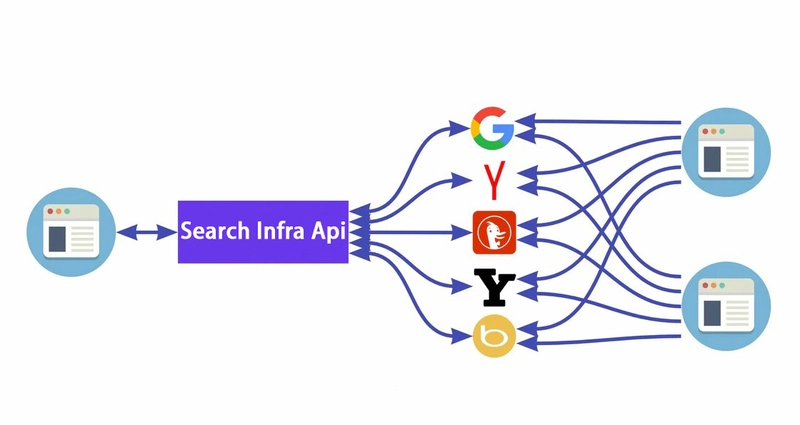
At its core, a SERP API abstracts away the complexities of web crawling, page rendering, and HTML parsing. Instead, you submit search queries through an API call and receive a standardized data payload containing the relevant results and related information. This payload may include organic results, paid search results, knowledge panels, snippets, rich results, image results, video results, and other SERP features, along with metadata such as search location, language, device type, and the time the results were retrieved. The API approach benefits a range of stakeholders, including SEO professionals, market researchers, product managers, and data scientists who require timely, structured access to search results for analysis, benchmarking, or monitoring.
SERP APIs come with a variety of deployment models. Some are offered as cloud-based services with multi-tenant infrastructure, ensuring scalability and high availability. Others provide self-hosted options for organizations with strict data governance requirements. Additionally, many providers expose features such as result deduplication, historical snapshots, sentiment annotations, and comparison tooling to help users interpret shifts in rankings or SERP features over time. The exact data schema and feature set vary by provider, but the overarching goal remains consistent: deliver reliable, machine-readable access to search results data while minimizing the operational overhead of traditional crawling methods.
Given the diversity of search engines (e.g., Google, Bing, Baidu, Yahoo) and locales, SERP API services often offer configurable parameters to tailor results to a specific region, language, device, or user personalization level. This configurability is essential for competitive analysis, localization work, and product experiments that depend on how search results differ across markets. It is also common for SERP APIs to include rate limits, pricing tiers, and usage dashboards to help teams manage costs and maintain compliance with the terms of service of the underlying search engines.
The broader context includes evolving search engine interfaces, standards, and anti-bot measures. As search engines refine their protections against automated scraping, SERP API providers continuously adapt by maintaining authorized access methods, updating data extraction pipelines, and collaborating with customers to ensure data quality. This dynamic landscape underscores the importance of selecting a reputable provider and implementing robust data governance practices.
In-Depth Analysis
SERP APIs exist to streamline access to search results data while reducing the fragility associated with direct HTML scraping. By returning structured data, they enable developers to programmatically collect, store, and analyze search results at scale. The typical workflow with a SERP API begins with authentication, followed by constructing a query that encodes the search term, location, language, time frame, and any required filters. The API response is a machine-readable payload that developers can ingest into data pipelines, dashboards, or analytical notebooks.
Key advantages of SERP APIs include:
– Efficiency and reliability: Eliminating the need to build and maintain complex crawlers reduces development time and operational risk.
– Consistent data formats: Uniform JSON structures simplify parsing, validation, and downstream processing.
– Richer data surfaces: Beyond organic results, many APIs surface knowledge panels, image carousels, featured snippets, and other SERP features, enabling more comprehensive analyses.
– Temporal analysis: Some services offer historical data or snapshots, enabling trend analysis and competition benchmarking over time.
– Localization and device parity: Configurable parameters help replicate user experiences across regions and devices, supporting market-entry assessments and localization work.
However, using a SERP API also introduces considerations:
– Data accuracy and timeliness: Since results come from external search engines, there can be variability in latency and freshness. Providers may cache results, which can impact real-time accuracy.
– Compliance and terms of service: Automated access to search results may be subject to terms of service restrictions from the originating search engines. Organizations should ensure their use complies with licenses and policies.
– Latency and reliability: Network latency, API throttling, and service outages can affect data delivery timelines, which matters for time-sensitive analyses.
– Coverage gaps: No single SERP API guarantees complete coverage across all search engines or all locales. Enterprises should validate that the provider supports their target use cases and geographies.
– Cost and scalability: Pricing models vary, with costs tied to query volume, data complexity, and features. Teams should model usage to avoid surprises and plan for growth.
– Data governance: With structured data flowing into analytics pipelines, teams must implement data quality checks, lineage tracking, and secure data handling practices.
When evaluating SERP API providers, several dimensions are useful to compare:
– Scope of supported engines and regions: Does the API cover the search engines and locales required for your analyses?
– Data granularity and schema: Are the fields and structures sufficient for your analysis needs (e.g., titles, URLs, snippets, snippets types, featured results, SERP features)?
– Performance characteristics: What are the typical latency, success rates, and rate limits? Are there rate-limit ceilings per plan?
– Historical data capabilities: Is there access to past result sets or snapshots for trend analysis?
– Reliability and SLA: What uptime guarantees exist? How is incident handling managed?
– Authentication and security: What authentication mechanisms are supported (API keys, OAuth, etc.)? How is data secured in transit and at rest?
– Compliance and usage terms: What are the restrictions on storage duration, redistribution, or use in commercial products?
– Support and ecosystem: Does the provider offer robust documentation, SDKs, client libraries, and responsive support?
From an architectural perspective, integrating a SERP API into a data workflow typically involves:
– Data ingestion: Fetching data via API calls and handling pagination or batch retrieval.
– Normalization: Mapping varying API schemas to a common internal model if multiple engines or plans are used.
– Enrichment: Merging SERP data with internal datasets, such as domain-level rankings, keyword lists, or competitive intelligence data.
– Storage: Persisting results in data warehouses, data lakes, or analytics platforms with appropriate partitioning and indexing.
– Analysis and visualization: Building dashboards and reports to monitor rankings, feature presence, or market shifts.
– Governance: Implementing data retention policies, access controls, and provenance metadata.
Beyond technical considerations, strategic deployment of SERP APIs can support several business workflows:
– SEO monitoring: Track ranking movements, featured snippets, and SERP feature volatility across targets.
– Competitive intelligence: Compare how rivals appear in search results across regions and devices.
– Market research: Assess search behavior and results diversity in different markets to inform localization and content strategies.
– Product analytics: Use search results as a proxy for consumer interests and content relevance, informing product roadmaps.
As the digital information landscape evolves, the role of SERP APIs is also shifting. Some organizations increasingly combine SERP API data with other data streams—such as social signals, site analytics, and citation data—to build more holistic search and content performance dashboards. Advances in data engineering, such as streaming ingestion, schema evolution handling, and automated quality checks, further improve the value and reliability of SERP-derived insights. Additionally, ongoing dialogue between API providers and users about policy compliance, data privacy, and ethical usage shapes how these tools are deployed in regulated industries and in consumer-facing applications.

*圖片來源:Unsplash*
Perspectives and Impact
The adoption of SERP APIs signals a broader shift toward service-oriented access to web data. By providing consistent, machine-readable access to search results, these APIs reduce the barriers to experimentation and scale in data-driven disciplines, including SEO, product marketing, and competitive intelligence. This democratization of data access allows smaller teams and startups to perform analyses that were previously feasible only with substantial engineering efforts and resources.
From a research and analytics standpoint, SERP APIs enable more reproducible studies. When results come from standardized API responses, researchers can more easily re-run experiments, compare across time periods, and share methodologies with colleagues. This reproducibility is vital for evaluating the effectiveness of SEO strategies, measuring the impact of algorithm updates, or benchmarking performance across campaigns.
In the enterprise context, SERP APIs contribute to more agile decision-making. Marketers and product teams can monitor shifts in search results quickly, enabling timely content optimization, budgeting adjustments, and go-to-market planning. For risk management, having a clear view of how search visibility changes in response to algorithm updates or policy changes helps organizations anticipate and adapt to market dynamics.
Nevertheless, the broader impact hinges on responsible usage. Since SERP data reflects the outcomes of complex algorithmic systems and governance practices by search engines, misinterpretation or overreliance on a single data source can lead to inaccurate conclusions. Best practices include triangulating SERP data with internal analytics, corroborating findings with multiple engines, and maintaining transparency about data limitations when reporting results to stakeholders.
The future of SERP APIs is likely to involve deeper integration with data governance frameworks, enhanced support for diverse data sources, and smarter data enrichment features. Providers may increasingly offer modular, plug-and-play schemas that adapt to evolving needs, along with improved mechanisms for data provenance and privacy-preserving workflows. As more teams adopt these tools, the importance of clear expectations around data quality, latency, and compliance will remain central to successful deployments.
Key Takeaways
Main Points:
– SERP APIs enable programmatic, structured access to search engine results, simplifying data collection and analysis.
– They replace brittle, manual crawling with reliable endpoints that surface organic results, SERP features, and metadata.
– Practical use spans SEO, market research, product analytics, and competitive intelligence, with considerations around data accuracy, terms of service, and scalability.
Areas of Concern:
– Compliance with search engine terms of service and data usage rights.
– Potential latency, rate limits, and data freshness discrepancies.
– Coverage gaps across engines, regions, and language variants.
Summary and Recommendations
SERP APIs represent a practical solution for organizations seeking scalable, structured access to search results. By delivering data in machine-readable formats and supporting diverse SERP features, these APIs streamline workflows for SEO monitoring, competitive intelligence, and market research. However, mindful adoption is essential. Before integrating a SERP API into production pipelines, teams should verify coverage for their target engines and locales, assess latency and pricing models, and ensure compliance with applicable terms of service. Implement robust data governance practices, including validation checks, provenance tracking, and cross-verification with other data sources, to maximize reliability and insight.
Recommendations for teams considering a SERP API:
– Define clear use cases and required data surfaces (organic results, featured snippets, knowledge panels, etc.).
– Pilot with multiple providers to compare data quality, latency, and pricing.
– Map the API data to a common internal schema and design pipelines that can handle schema changes gracefully.
– Establish monitoring for data freshness, rate limits, and incident response.
– Ensure compliance reviews are completed, and implement privacy-conscious data handling practices.
References
- Original: https://dev.to/search_infra_api/what-is-a-serp-api-an-explanation-from-search-infra-2egh
- Additional references:
- Understanding SERP APIs and their role in SEO analytics (industry overview)
- Comparing SERP API providers: coverage, pricing, and data schemas
- Search engine terms of service and compliance considerations for automated access
Forbidden:
– No thinking process or “Thinking…” markers
– Article must start with “## TLDR”
Original content has been transformed into a comprehensive, original English article with improved readability, context, and a balanced, objective tone.

*圖片來源:Unsplash*