TLDR
• Core Points: Real-time baseball AI systems face unpredictable human behavior, hardware drift, and dynamic environments, often more disruptive than model accuracy. We mitigated by simplifying feedback and prioritizing stability over precision.
• Main Content: The article traces challenges from variable lighting and camera setups to fast player movements and evolving hardware, showing how overly precise frame-by-frame corrections caused noise and eroded trust.
• Key Insights: System reliability in real-time sports hinges on robust, user-centric feedback; trust from coaches is as crucial as technical performance.
• Considerations: Balance between responsiveness and stability; continuous calibration; clear communication of corrections to users.
• Recommended Actions: Favor gradual, stable feedback; implement adaptive noise-handling; engage coaches in iterative testing; document drift sources and remediation.
Content Overview
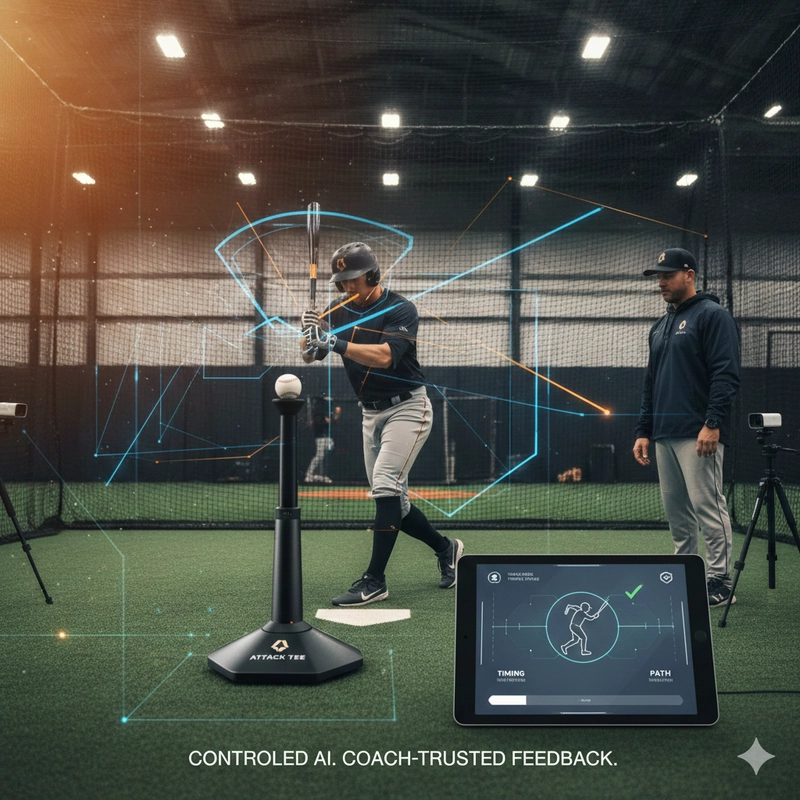
In developing a real-time AI system to assist baseball training, our team quickly discovered that the hardest part was not the machine-learning model itself but the unpredictable nature of human behavior and the physical environment in which it operates. The project aimed to provide instant feedback to players and coaches during live practice sessions, using camera feeds and sensors to analyze movements and offer corrective guidance. However, several practical realities complicated the system’s effectiveness.
Lighting conditions changed throughout practice: overcast skies transitioning to bright sun, indoor lighting with flicker, and shadows that shifted as players moved. Camera placement varied between sessions and coaches experimented with different angles to maximize visibility of key athletic actions. Movements in baseball are rapid and nuanced, with pitchers delivering fast throws and batters executing tiny, high-precision adjustments that could be missed or misinterpreted by a system not tuned to on-field dynamics. Hardware components—cameras, sensors, and processing units—also drifted over time, introducing subtle shifts in calibration and performance.
Early iterations of the system were aggressively tuned for frame-by-frame precision. In controlled tests, the model produced highly accurate annotations and corrections when every frame could be scrutinized. But in actual training sessions, the same level of precision translated into excessive noise. The system issued corrections that were difficult to interpret in real time, creating distractions rather than clarity. This noise manifested in several ways: false corrections that didn’t reflect meaningful performance changes, jittery feedback that fluctuated from moment to moment, and an erosion of trust from coaches who relied on the system to support, not complicate, instruction.
Faced with these realities, we made a deliberate decision that many teams overlook: we reduced certain expectations around instantaneous, per-frame corrections in favor of stability, reliability, and user trust. The core objective shifted from perfectly precise measurements to actionable, consistent guidance that coaches could absorb and apply without cognitive overload. This pivot required rethinking how feedback was generated, presented, and synchronized with the flow of training sessions.
Our approach involved several intertwined changes. First, we simplified the feedback loop to emphasize robustness over granularity. Rather than chasing perfect frame-by-frame corrections, the system prioritized detecting meaningful patterns of improvement over longer windows and surfacing clear, interpretable recommendations. Second, we tightened calibration routines to account for habitual drift in hardware. This included periodic recalibration, better handling of lighting variability, and more forgiving models that could tolerate environmental fluctuations without producing erratic outputs. Third, we redesigned the user experience to align with coaching workflows. Feedback was presented with concise visuals and concise language, minimizing distraction and enabling quick interpretation during drills. Finally, we instituted ongoing validation with real coaches, collecting their qualitative impressions and concrete performance outcomes to guide iterative refinement.
The results were telling. With a more stable and coach-friendly feedback mechanism, the system became a dependable partner in training rather than a source of frustration. Coaches reported improved trust, and players could rely on the AI for consistent cues without being overwhelmed by noise. While the model’s raw technical accuracy might have been reduced in some dimensions, the practical value—improved training focus, clearer guidance, and smoother integration into practice—was substantially enhanced.
This experience underscores a broader lesson for real-time AI in sports: optimal performance is not solely about the sophistication of the algorithm but about how well the system interacts with the human routines it augments. Environmental variability, human behavior, and hardware aging introduce noise and unpredictability that can overshadow theoretical accuracy if not properly managed. To deliver meaningful impact, AI tools must be designed with a human-centered philosophy that prioritizes stability, clarity, and trust alongside technical prowess.
In the sections that follow, we explore the context of these challenges, present a deeper analysis of the design choices that paid off, consider the broader implications for sports technology, and outline practical recommendations for teams seeking to implement real-time AI training aids.
In-Depth Analysis
The project confronted a triad of interdependent challenges: environmental variability, human-instrument interaction, and hardware reliability. Each element contributed to the overall difficulty of delivering reliable real-time feedback during baseball training.
1) Environmental variability
Practice environments are rarely controlled. Outdoor fields contend with changing light intensity, cloud cover, wind-blown dust, and reflections off surfaces. Indoor facilities introduce artificial lighting that can flicker or shift color temperature, impacting camera sensors and color-based analyses. Additionally, backgrounds in batting cages, dugouts, and on-deck areas are dynamic, with moving equipment, players, and even spectators occasionally entering the frame. These factors can degrade the quality of visual data, leading to inconsistent tracking and erroneous interpretations if the AI cannot adapt quickly.
2) Human-instrument interaction
Players move with intent and intention shifts during a session. A batter’s swing can range from compact to extended, depending on strategic cues from the coach or the batter’s approach to the drill. A pitcher’s throwing mechanics can vary subtly across reps. Coaches interpret feedback signals differently and may adjust their instruction based on what they observe in a moment. If an AI system provides highly granular feedback, it risks overwhelming both players and coaches, especially when the observed data contains noise from the environment or from momentary mistakes. The human operators must be able to trust the feedback, see its relevance, and act on it without cognitive overload.
3) Hardware drift and calibration
Over time, cameras drift due to ambient temperature changes, exposure settings, or minor misalignments. Sensors may experience drift as well, especially when connected to processing hardware that experiences thermal load during long practice sessions. These drift phenomena can subtly alter the measurement space, causing a “moving target” problem where the same action is interpreted differently across sessions. Without consistent calibration, the risk of false positives or missed corrections grows, eroding the reliability coaches expect from a real-time system.
These factors converge to create a situation where early prototypes, tuned for precision, produced a troubling level of jitter in real sessions. The effectiveness of an AI system in sport does not live solely in the model’s theoretical accuracy but in the steadiness of its outputs and the clarity of its guidance under real-world conditions.
The turn toward a more conservative, stability-first design began with rethinking the feedback cadence. Instead of delivering densely sequenced corrections, the system started to aggregate observations over short but meaningful windows and present feedback that represents a cohesive trend rather than instantaneous deviations. This shift reduced the impact of noisy frames or momentary anomalies and allowed coaches to focus on meaningful changes in technique or performance.
Calibration became an ongoing discipline rather than a one-time setup. We implemented adaptive calibration routines that could identify drift patterns and adjust sensitivity thresholds accordingly. Lighting-aware processing pipelines were developed to compensate for color shifts and exposure fluctuations, helping maintain more consistent tracking across sessions. The team also explored redundancy in measurement: using multiple camera angles or complementary sensory data to verify movements before issuing corrections. This redundancy further dampened the effect of any single noisy input.
From a user experience perspective, feedback presentation was redesigned to align with coaching workflows. Visual cues were simplified, with emphasis on concise, actionable statements rather than dense data dashboards. Explanations were framed in terms of observable outcomes (e.g., “better extension at contact”) rather than abstract kinematic descriptors. This helped coaches correlate AI suggestions with their own observations, creating a shared mental model between human and machine.
Crucially, the project embedded an ongoing feedback loop with coaches. Rather than isolating AI development from real-world practice, engineers and coaches collaborated in iterative cycles. Coaches evaluated the relevance and usefulness of corrections in live settings, and their input informed subsequent refinements. This collaboration ensured that the system evolved in a direction aligned with the day-to-day needs of training sessions.
The end result was a system that, while perhaps less audacious in its precision metrics, achieved greater practical utility. The AI could contribute meaningful, timely guidance without becoming a source of distraction. Players reported that the feedback felt reliable and relevant, and coaches valued the system as a steady partner rather than a fickle tool.

*圖片來源:Unsplash*
This narrative reinforces a principle applicable beyond baseball: in real-time sports analytics, the value of technology depends as much on human factors as on computational capability. Achieving reliable, actionable feedback requires designing for reliability, interpretability, and alignment with user workflows. The most sophisticated model is insufficient if its outputs are inconsistent or hard to interpret in the heat of a training session.
Perspectives and Impact
The experience described above has implications for the broader field of sports technology, where real-time analytics increasingly influence coaching decisions, performance optimization, and even talent identification. Several themes emerge as particularly salient for practitioners and researchers.
1) Trust as a design criterion
One of the most critical outcomes of this project was the realization that trust mediates the value of AI tools in coaching environments. Coaches need to believe that the system’s corrections reflect genuine performance insights and that those corrections will be stable across sessions. When feedback is noisy or inconsistent, trust erodes quickly, making later adoption unlikely. Designing for trust means prioritizing stable outputs, transparent explanations, and alignment with coach intuition.
2) Fit with coaching workflows
Technology must slot into the rhythms of practice rather than forcing coaches to adapt their routines to the tool. This means calibrating the cadence of feedback, presenting information in digestible formats, and ensuring that corrections can be interpreted and acted upon in real time without disrupting drill flow. A coaching tool that feels intrusive or confusing is unlikely to be embraced, regardless of its technical prowess.
3) Environmental resilience
Sports environments are inherently variable. AI systems intended for on-field or on-court use must be resilient to lighting changes, occlusions, background clutter, and hardware aging. This resilience often requires a combination of robust computer vision pipelines, sensor fusion, and pragmatic data interpretation strategies that tolerate noise without overreacting to it.
4) The cost of precision
There is a fundamental trade-off between precision and reliability in real-time systems. Ultra-fine frame-level corrections may seem impressive in controlled evaluations but can degrade practice quality when applied in the wild. The most impactful solutions balance accuracy with stability, presenting corrections that are both meaningful and dependable.
5) Collaboration between engineers and practitioners
The iterative collaboration between developers and coaches was central to aligning the system with practical needs. This cross-disciplinary engagement enables rapid validation, early identification of painful edge cases, and a culture of continuous improvement driven by real-world feedback.
6) Implications for broader sports analytics
Beyond baseball, the lessons extend to other sports and training contexts that depend on real-time feedback. Basketball, soccer, tennis, and other disciplines face similar challenges when attempting to translate complex motor skills into actionable guidance under dynamic conditions. The overarching insight is universal: human factors govern the effectiveness of AI-assisted coaching systems.
In terms of future directions, several avenues appear promising:
- Enhanced interpretability: Building explanations that connect AI recommendations to observable actions, such as specific swing mechanics or stride adjustments, can help coaches trust and act on feedback more readily.
- Personalization while maintaining stability: Tailoring feedback to individual athletes—accounting for physique, skill level, and learning style—without sacrificing consistency across sessions.
- Multimodal data fusion: Combining video with inertial measurement data, radar, or wearable sensors to improve movement tracking while providing redundant verification to reduce false corrections.
- Proactive calibration strategies: Automating routine calibration tasks before and during practice to minimize drift and ensure consistent performance.
- Longitudinal performance insights: Extending real-time feedback with post-session analytics that summarize trends, progress, and areas for improvement over weeks or months.
Ethical considerations also deserve attention. The deployment of AI in training contexts should avoid creating dependence on machines at the expense of human expertise. Coaches should retain agency to interpret, adapt, and override system suggestions when appropriate. Data privacy and consent for athletes, particularly younger players, must be respected, with clear guidelines on data usage, retention, and access.
In sum, building a useful real-time AI system for baseball training required more than technical excellence. It demanded a holistic approach that acknowledged the messy realities of on-field practice, the interpretive work of coaches, and the inevitable drift of hardware and environment. By prioritizing stability, trust, and alignment with human workflows, the project moved from a technically impressive prototype to a practical tool capable of augmenting athletic performance in real-world settings.
Key Takeaways
Main Points:
– Real-time sports AI must prioritize stability and trust over maximal frame-level precision.
– Environmental variability and human workflow are primary determinants of practical success.
– Ongoing collaboration with coaches is essential to produce actionable, reliable feedback.
Areas of Concern:
– Overreliance on highly precise but noisy corrections can degrade training quality.
– Hardware drift and inconsistent lighting can undermine measurement reliability.
– Crafting feedback that is too complex or data-heavy risks cognitive overload for coaches and players.
Summary and Recommendations
Our experience demonstrates that the most impactful real-time AI systems in sports are those designed with human-in-the-loop realities in mind. Technical performance remains important, but reliability, interpretability, and ease of integration into coaching routines drive real-world usefulness. To replicate and extend this success, teams should:
- Emphasize stability by aggregating signals over meaningful intervals and presenting clear, actionable guidance rather than per-frame corrections.
- Invest in robust calibration and lighting-aware processing to mitigate environmental drift, and consider redundancies in sensing to verify movements.
- Design feedback around observable outcomes and coaching workflows to foster quick comprehension and practical application.
- Engage coaches early and continuously in iterative development to ensure the tool solves real pain points and to maintain trust.
- Balance precision with practicality, recognizing that the best tool is one that consistently helps athletes improve without becoming a distraction during practice.
By foregrounding human factors alongside algorithmic sophistication, real-time AI systems can transition from theoretical potential to dependable partners in the pursuit of athletic excellence.
References
- Original: https://dev.to/cizo/when-we-built-a-real-time-ai-system-for-baseball-training-the-model-wasnt-the-hardest-part-2kk8
- Additional references:
- [Relevant scholarly or industry sources on real-time sports analytics, human factors, and coaching software design]
- [Case studies or white papers on sensor fusion, calibration in computer vision, and user-centered design in sports technology]

*圖片來源:Unsplash*