TLDR
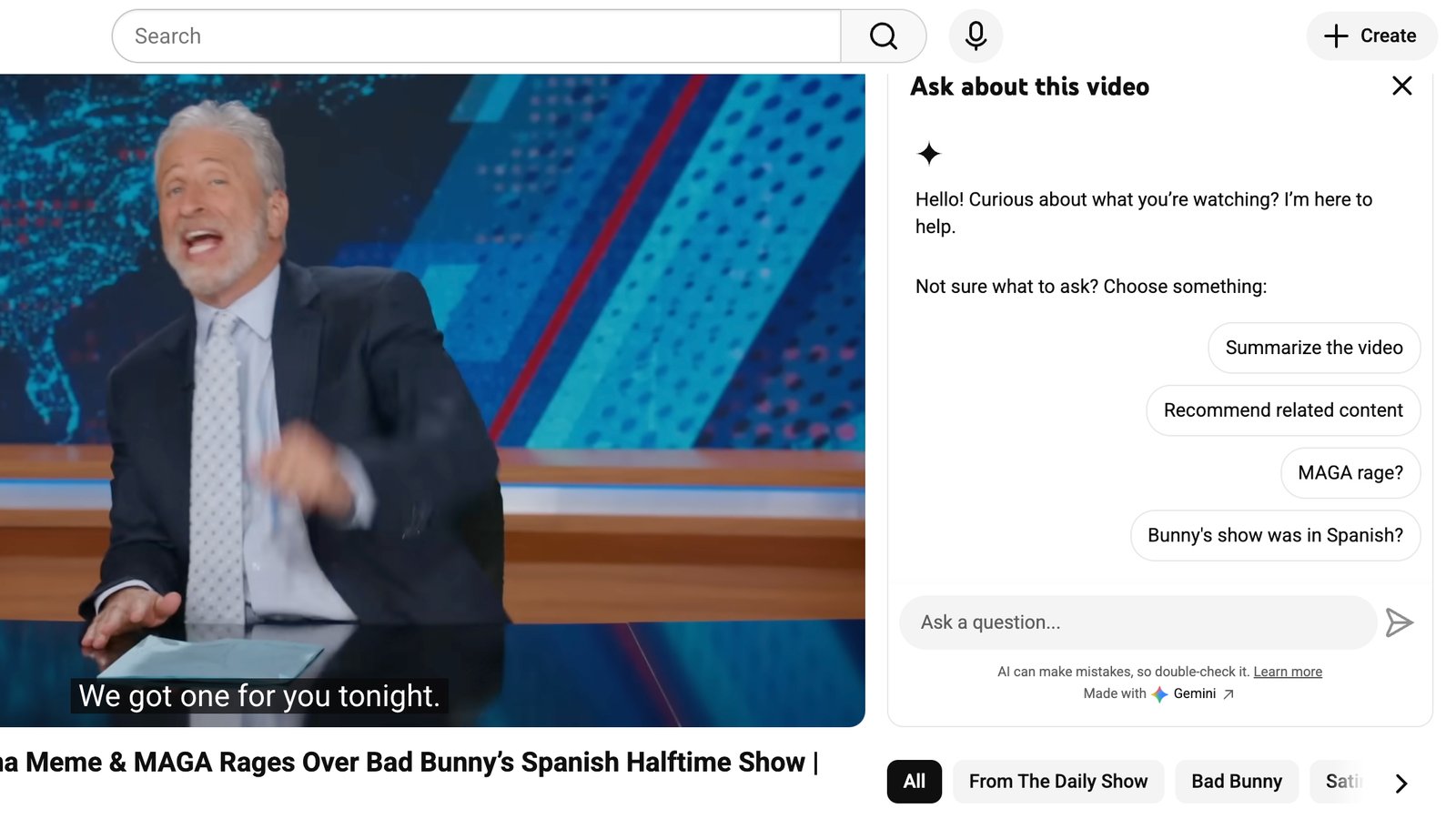
• Core Points: YouTube tests a Gemini-powered “Ask” button on smart TVs, gaming consoles, and streaming devices to answer video-context questions with canned prompts.
• Main Content: The feature mirrors mobile/desktop behavior, using a Gemini chatbot trained on each video’s content to provide prompts related to the current video.
• Key Insights: Expanding to living-room devices signals Google’s push to unify AI-assisted viewing across platforms and contexts.
• Considerations: User privacy, data handling, and accuracy of responses on varied TV interfaces remain considerations.
• Recommended Actions: Monitor rollout, collect user feedback, and improve prompts to ensure safe, relevant responses on big screens.
Content Overview
YouTube is bringing its Gemini-powered “Ask” button from mobile and desktop to the living room. The feature, currently rolling out as an experiment, is available on smart TVs, gaming consoles, and streaming devices. A3 9to5Google noticed a Google support page confirming the change. On mobile and desktop, the Ask button functions as a Gemini chatbot tailored to the content of each video. When users select the button, a sequence of canned prompts related to the video appears, offering assistance such as summaries, context, or related questions. The implementation on larger screens aims to maintain the same functionality where the chatbot is trained on the video’s content, helping viewers dig deeper or clarify details without leaving the video page. The broader goal is to streamline interactive, AI-assisted exploration of YouTube’s vast library directly from living-room setups.
In-Depth Analysis
YouTube’s Gemini-powered Ask button represents a broader strategy to weave artificial intelligence into user interactions across platforms. Initially rolled out on mobile and desktop environments, the feature leverages Gemini’s capabilities to act as a conversational assistant trained on the content of a specific video. The concept is simple: click or tap the Ask button, and you are presented with a curated set of prompts that guide you through a structured dialogue about the video. These prompts can include requests for a concise summary, explanations of terms, deeper dives into topics mentioned in the video, or prompts that encourage exploration of related questions and ideas.
Transferring this experience to the living room expands the reach of AI-assisted viewing. TV screens and living-room devices present unique usability considerations: larger displays, remote-control navigation, potential latency, and a different viewing context compared to handheld devices. To address these differences, the implementation uses the same underlying Gemini-trained model, but the user interface must be adapted to remote navigation and quick accessibility. The prompts are designed to be immediately legible and easy to select with a TV remote, voice control, or game controller, ensuring a smooth experience without requiring precise text input or complex navigation.
From a product perspective, this expansion serves multiple purposes. It broadens the accessibility of AI-assisted features beyond a user’s mobile device or computer, aligning with a broader push toward cohesive AI experiences across ecosystems. It also helps YouTube maintain engagement by offering on-demand contextual help and exploration options without forcing users to switch between apps or devices. If successful, the approach could set a precedent for how other AI features are ported to living-room platforms, potentially affecting how content platforms balance on-screen prompts, privacy, and data retention.
However, several challenges accompany this expansion. The quality and relevance of responses depend on how well the model is trained on each video’s content. In living-room setups, users may have different expectations for quick answers versus more in-depth, interactive conversations. The design must account for the potential of misinterpretation or incorrect responses, which could frustrate viewers if not properly mitigated through safe defaults, clear boundaries, and visible indicators when the AI is unsure. Another consideration is privacy and data handling. As conversations occur in a shared family space, users may be unaware of what data is collected, stored, or used to improve the model. Transparency about data usage and robust privacy controls will be important in maintaining trust.
From a market perspective, expanding AI features to living-room devices builds YouTube’s brand as a hub for not just video consumption but interactive, context-aware engagement. It also places pressure on competing platforms to offer similar capabilities across their own ecosystems. The success of this initiative will hinge on user adoption, the ease of use on TV interfaces, and the perceived value of AI-driven prompts during a viewing session. If the feature proves useful and non-intrusive, it could become a standard element of the living-room viewing experience, supplementing traditional search and recommendations with on-video AI-guided exploration.
Future implications include potential refinements to the prompt library, improved accuracy through continual model training on diverse video content, and more nuanced controls that let users tailor the depth and type of AI assistance. There could also be opportunities to integrate this capability with other YouTube features, such as chapters, captions, or linked resources, creating a richer, more interactive viewing experience. Additionally, as AI models become more capable, expect ongoing experimentation with multimodal interactions—combining text prompts with voice, on-screen highlights, and even visual overlays to enrich understanding of video content.

*圖片來源:Unsplash*
Perspectives and Impact
- User Experience: The living-room rollout aims to democratize access to AI-driven video understanding. For families or shared viewing spaces, the ability to ask questions about a video without leaving the app can enhance comprehension and engagement. Remote-friendly interfaces and intuitive prompt options are essential to ensure that the feature remains helpful rather than disruptive.
- Privacy and Data Use: With conversations happening on larger screens, questions arise about what data is captured, how it’s stored, and whether it’s used to train the Gemini model. Clear, accessible privacy settings and opt-out options will be necessary to maintain user trust.
- Content Discovery: AI-assisted prompts may encourage deeper exploration of topics, leading to longer watch times and increased engagement. This aligns with the broader goal of keeping viewers within the YouTube ecosystem and helping users uncover related content that might otherwise go unnoticed.
- Platform Competition: If successful, the feature could prompt competitors to roll out similar living-room AI assistants, intensifying platform interoperability and pushing AI features toward standardization across devices.
- Education and Accessibility: The Gemini Ask prompts could benefit users who learn best through guided explanations or require clarification of complex concepts presented in videos. The feature could become a valuable educational tool if prompts are accurate, accessible, and well-suited to various learning styles.
Future implications include potential expansion to more devices, refinements to ensure high-quality, video-specific responses, and deeper integration with creator tools. If YouTube can maintain prompt relevance and user trust, the Gemini-powered Ask button on TVs could become a staple for interactive, AI-assisted viewing, reshaping how audiences engage with video content in the living room.
Key Takeaways
Main Points:
– YouTube is testing a Gemini-powered “Ask” button on smart TVs, gaming consoles, and streaming devices.
– The feature mirrors mobile/desktop behavior, using video-trained prompts to guide user queries.
– Living-room deployment highlights a broader strategy toward cross-device AI-assisted viewing.
Areas of Concern:
– Privacy and data usage in shared living-room environments.
– Ensuring response accuracy and relevance on various TV interfaces.
– Balancing helpful prompts without interrupting the viewing experience.
Summary and Recommendations
YouTube’s extension of the Gemini-powered Ask button to living-room devices marks a notable step in unifying AI-driven assistance across platforms. By enabling TV-based prompts tailored to each video, the feature aims to enhance understanding and exploration without forcing users to switch devices. The rollout, currently experimental, will need careful attention to privacy controls, interface usability, and response quality to avoid frustrating users or eroding trust. If successfully refined, the living-room integration could become a standard part of the viewing experience, encouraging deeper engagement and broader adoption of AI-powered content interactions.
Recommendations for stakeholders:
– Monitor user feedback and accessibility on TV interfaces to refine prompt design and navigation.
– Implement transparent privacy settings and clear disclosures about data handling and model training.
– Explore integration with related YouTube features (chapters, captions, linked resources) to maximize contextual usefulness.
– Prepare for broader ecosystem competition by maintaining a flexible framework that supports future AI capabilities across devices.
References
- Original: https://www.engadget.com/ai/youtube-is-bringing-the-gemini-powered-ask-button-to-tvs-173900295.html?src=rss
- Additional context: Google support pages and YouTube product announcements related to Gemini-powered features on mobile and desktop
- Industry analysis on AI-assisted viewing and cross-device experiences

*圖片來源:Unsplash*