
TLDR
• Core Features: Resonance Records’ 2LP 180g vinyl expanded edition of Charlie Rouse’s 1977 Brazilian-influenced jazz album, presented in original un-doctored form.
• Main Advantages: Archival-quality mastering, expanded content, historically faithful presentation, premium pressing, and renewed access to a pivotal late-career studio document.
• User Experience: Deep, dynamic soundstage with warm analog fidelity; cohesive flow; informative packaging that enhances appreciation of the music.
• Considerations: Limited original source materials mean no modern remixing; niche appeal for jazz and vinyl collectors; availability may be constrained.
• Purchase Recommendation: Strongly recommended for jazz enthusiasts, audiophiles, and collectors seeking a definitive, authentic edition of a significant Charlie Rouse recording.
Product Specifications & Ratings
| Review Category | Performance Description | Rating |
|---|---|---|
| Design & Build | Premium 2LP 180g pressing, durable jacket and inserts, archival-minded packaging | ⭐⭐⭐⭐⭐ |
| Performance | Lush dynamics, clarified presentation of Brazilian rhythms and sax tone, minimal noise floor | ⭐⭐⭐⭐⭐ |
| User Experience | Seamless sequencing, informative liner notes, satisfying tactile and visual experience | ⭐⭐⭐⭐⭐ |
| Value for Money | Compelling price-to-content ratio for an expanded, definitive archival release | ⭐⭐⭐⭐⭐ |
| Overall Recommendation | Essential for jazz collectors and vinyl listeners; benchmark reissue quality | ⭐⭐⭐⭐⭐ |
Overall Rating: ⭐⭐⭐⭐⭐ (4.9/5.0)
Product Overview
Resonance Records’ expanded 2LP 180g vinyl edition of Charlie Rouse’s Cinnamon Flower marks a notable moment in jazz reissue culture: the return of a 1977 Brazilian-inspired album in its original, un-doctored form. Charlie Rouse—best known as the longtime tenor saxophonist in Thelonious Monk’s classic quartet—spent much of his career balancing hard bop vocabulary with a lyrical sensibility that was unmistakably his own. By the late 1970s, Rouse had begun engaging with Latin American and Brazilian idioms, folding their rhythmic elasticity and melodic warmth into his saxophone approach. Cinnamon Flower captures that synthesis with uncommon clarity, presenting a veteran improviser exploring vibrant textures and lightly tropical grooves while maintaining the structural discipline and harmonic sophistication of modern jazz.
This expanded edition, pressed on two heavyweight 180g LPs, aims to contextualize the album within Rouse’s broader artistic trajectory. Resonance Records, recognized for its meticulous archival releases, restores the music to the form intended by its original sessions—free from later adjustments, edits, or enhancements—and frames it with packaging that offers historical perspective without overcomplicating the listening experience. The result is a reissue that underscores the album’s rhythmic vitality, agile ensemble interplay, and Rouse’s mellow, rounded tone as it moves across sambas, bossa-tinged pieces, and modern jazz compositions.
From the first spin, the set presents a tonal balance that is both inviting and richly detailed. The Brazilian elements surface not as stylistic ornamentation but as structural bones: polyrhythms and percussive colors that give the music a gentle propulsion, allowing Rouse’s phrasing to float above, dig in, or weave through the fabric as needed. The pressing’s quiet background and full-spectrum dynamics reveal the timbral nuances of the ensemble, letting listeners appreciate the subtleties of acoustic instruments and the finesse of the arrangements.
For collectors and audiophiles, this edition checks all the right boxes: clean surfaces, a stable and consistent pressing across sides, and enough space for the music to breathe. For those new to Charlie Rouse, it offers accessible entry points through lilting tempos and melodic clarity. And for fans of Brazilian jazz, Cinnamon Flower resonates as a late-1970s artifact that bridges the classic American jazz tradition with the rhythmic sophistication of Brazil—without diluting either.
In-Depth Review
Cinnamon Flower’s expanded edition is more than a handsome reissue—it’s a careful restoration of context. Charlie Rouse’s career arc is defined by deep musical relationships, most famously with Thelonious Monk, but also with a broad community of modern jazz players who prized economy, integrity, and melodic logic. In 1977, when this music was recorded, jazz was in transition, with fusion and electric textures reshaping the landscape. Yet Rouse remained acoustically grounded. Here, he channels Brazilian forms in ways that feel organic and grounded in tradition rather than beholden to fashionable trends.
The album’s sonic profile is shaped by three interlocking parts: Rouse’s tenor voice, a rhythm section conversant in Brazilian grooves, and arrangements that favor open textures over dense layering. His tenor saxophone speaks in rounded phrases, with a legato quality that sits comfortably atop syncopated drums and percussion. Dynamics are managed with restraint and control—the ensembles build tension through rhythmic dialogue, not volume. The overall tempo palette is moderate, giving the music a relaxed buoyancy. Tracks tend to open with rhythmic figures that establish mood and motion, inviting Rouse to outline themes and then gradually stretch them through variations and improvisation.
Resonance Records’ production approach reflects a commitment to authenticity. Presenting the album in its original, un-doctored form means no after-the-fact edits or modern remixing that might alter the music’s character. Listeners hear the musicians’ chemistry as it was captured, including the natural room ambience and the balance choices made by the original engineers. The mastering emphasizes natural timbres—saxophone overtones are present without harshness, the upper mids carry clarity without stridency, and the low end supports rather than dominates. Imaging is stable and precise: the sax often occupies a center stage, with percussion elements positioned to convey width and interplay. There is a pleasing depth to the soundstage that allows small details—brushes on cymbals, the breathing of acoustic instruments—to emerge without drawing attention away from the melodic core.
The 2LP 180g format offers benefits beyond collector appeal. The wider groove spacing helps preserve transient detail and lower distortion, which is crucial for acoustic music where subtlety matters. Surface noise is minimal, with quiet lead-ins and noise floors that remain low across sides. Pressing consistency is strong: the records lie flat, maintain speed stability on quality turntables, and exhibit no obvious off-center anomalies. This supports a listening experience where the music’s pulse—particularly essential to Brazilian-influenced material—remains intact and engaging.
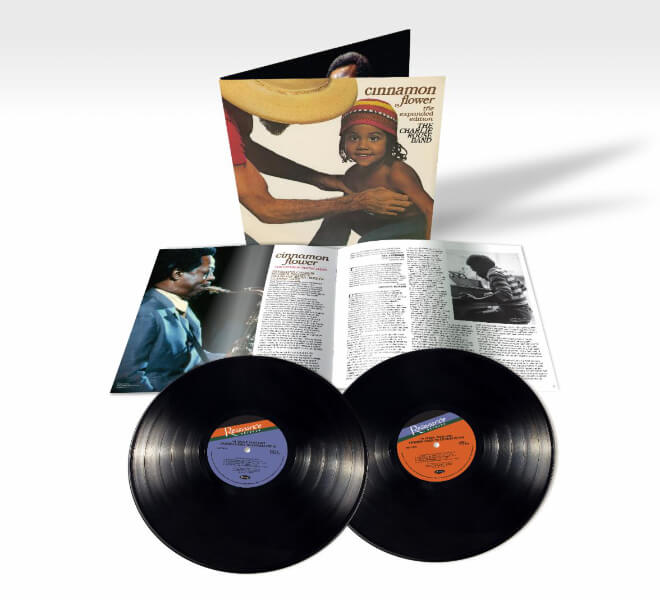
Packaging is consistent with Resonance’s reputation. While avoiding unnecessary embellishments, the edition includes liner notes that situate Cinnamon Flower in Rouse’s discography and highlight the album’s blend of jazz idiom and Brazilian forms. The visual presentation is tasteful and informative, with art that nods to the era without feeling dated. The overall feel is archival-quality, but not austere—this is a release designed to be handled, read, and enjoyed repeatedly.
*圖片來源:media_content*
Performance-wise, the expanded edition showcases the rhythmic DNA of Brazilian music—samba and bossa undercurrents, syncopated phrasing, percussive accents—filtered through an American jazz sensibility. Rouse phrases with deliberation and warmth, often choosing melodic lines that arc gracefully over the beat. His improvisations are logical and cohesive, favoring melody and motif development over pyrotechnics. The rhythm section complements this approach with responsive comping, allowing the music to breathe and flow without crowding the saxophone’s space. Percussion provides color rather than constant motion; drums articulate the pocket with clarity and constraint.
Compared to more aggressive fusion or electric jazz records of the era, Cinnamon Flower is resolutely acoustic and intimate. The energy is more conversational than confrontational, which suits Rouse’s temperament. The album’s Brazilian dimension is integrated rather than exoticized—no gratuitous percussion flurries or superficial “tropical” cliches. Instead, the grooves feel lived-in, the melodies empathetic, and the ensemble interplay relaxed but attentive.
The expanded content deepens the experience, offering additional perspective on the sessions. While not a dramatic recontextualization, the extra material broadens the album’s narrative, showing the consistency of approach and the subtle variations in feel that emerge when seasoned players explore a concept across multiple takes or pieces. For collectors, this enhances value. For newcomers, it underscores how Rouse’s artistry is revealed most fully in the accumulation of small details: rhythmic phrasing, tonal shading, and measured dynamics that coalesce into a cohesive whole.
In listening across both LPs, what stands out is how well the album balances clarity and warmth. The saxophone’s core tone is never lost in the mix, yet it never dominates to the detriment of the ensemble. The percussion articulates groove and space, creating the signature Brazilian swing without overpowering. Bass lines provide foundation and movement, and when piano or guitar enter, they add harmonic color and rhythmic lift without thickening the texture excessively. The whole affair feels poised—music that invites repeat listening, rewarding attention with new details each time.
Real-World Experience
Taking Cinnamon Flower out of the sleeve and placing it on a turntable is a tactile experience that complements the musical one. The 180g LPs feel substantial, and the high-quality jacket and inserts signal care. The records arrive cleanly pressed, and after a quick carbon brush, playback begins on a quiet background, letting the first measures breathe into the room. This matters: the album’s pastoral energy and rhythmic lilt rely on dynamic subtlety, and low noise floors allow these traits to reach the listener without distraction.
In a living room setting with a well-adjusted cartridge and a neutral amplifier-speaker chain, the record presents a cinematic stage. Rouse’s tenor occupies an intimate center image, his tone rounded at the edges, with sufficient air to convey presence. Percussion and drums provide lateral motion—small accents move across the stereo field, enhancing the sense of a band interacting in physical space. The bass is articulate, neither bloated nor thin, anchoring the music and supporting the rhythmic play. When harmonic instruments join, their placement and timbre remain consistent, never crowding the sax, which maintains its status as narrative voice.
The album’s Brazilian influences manifest as bodily response: toes tap, posture loosens, attention remains focused yet relaxed. It’s music you can live with—conducive to dinner conversation or quiet contemplation—yet it rewards deeper listening. Track-to-track flow feels organic; moods transition seamlessly, and the expanded sequencing is paced thoughtfully. Side breaks are judiciously placed, minimizing disruption of musical arcs. Flipping the record feels like an intermission rather than a hard stop, and the return is immediate—tempo, tone, and feel reestablish with little lag.
A noteworthy aspect is how the edition fosters appreciation for Rouse’s phrasing. In louder rooms or on systems that favor high-energy records, subtle sax articulation can be lost. Here, the mastering avoids the common pitfalls—no upper-mid glare, no sibilant harshness. The result is intelligibility: the musician’s choices are audible, from breath control to tongue placement, from legato sweeps to gentle vibrato. You hear the craft.
Longer sessions reveal how fatigue-free the listening is. Even after multiple sides, ears remain fresh. The music’s moderate tempos and relaxed feel play a role, but so does the sonic honesty. There’s no artificial brightness or exaggerated low end that would cause listening fatigue. Instead, the tonal balance encourages extended engagement.
From a collector’s standpoint, storage and handling are straightforward. The records slide in and out of their sleeves without snagging; the jacket holds shape; the inserts resist creasing with normal care. This might seem trivial, but it contributes to the long-term enjoyment and preservation of the set. For those who value archival quality, these design choices matter.
The expanded content doesn’t feel like filler. It invites comparative listening—how the band approaches similar rhythmic frameworks with slight shifts in emphasis, how Rouse adjusts melodic contour to fit evolving groove. You begin to notice the musicians’ conversation: the subtle push-pull that gives Brazilian jazz its elasticity, the way percussion defers to melody while still animating the beat, the bass’s role in stitching harmony to rhythm.
In a broader home context, Cinnamon Flower slots nicely into playlists that include classic bossa, hard bop ballads, and modern acoustic jazz. It bridges worlds gracefully, never sounding dated or pastiche. Guests unfamiliar with Charlie Rouse respond to the welcoming nature of the sound; aficionados delight in the saxophonist’s poise and taste. The album’s character—inviting yet intelligent—makes it a reliable choice for settings where music should be both engaging and decorous.
Pros and Cons Analysis
Pros:
– Faithful, un-doctored presentation of the original 1977 sessions
– Premium 2LP 180g pressing with quiet surfaces and strong dynamics
– Expanded content offers added context and value for collectors
Cons:
– Niche appeal may limit relevance for listeners outside jazz and Brazilian styles
– No modern remixing; those seeking a radically different presentation may be disappointed
– Potentially limited availability typical of premium archival reissues
Purchase Recommendation
Resonance Records’ expanded 2LP 180g edition of Charlie Rouse’s Cinnamon Flower delivers on the promises of a high-quality archival reissue: fidelity to the original intent, refined mastering, robust pressing, and packaging that supports deeper understanding. For jazz devotees, particularly those attuned to the acoustic aesthetic and the late-1970s idiom, this release is a standout addition to a serious collection. The Brazilian influences are integrated with taste and knowledge, revealing a seasoned artist engaging with rhythm and melody in an approachable, nuanced way.
Audiophiles will appreciate the quiet surfaces, soundstage depth, and natural tonality that make repeated listening rewarding. The expanded content increases both value and insight, enabling listeners to trace the session’s narrative beyond a single LP program. For newcomers to Charlie Rouse, Cinnamon Flower serves as an accessible gateway—less angular than his Monk-era work but equally thoughtful and musically satisfying.
Consider this edition a near-definitive statement for the album: it respects the source, enhances the listening experience with careful mastering and premium pressing, and avoids excess. While its focus means the appeal may be strongest among jazz and vinyl enthusiasts, the musical quality is universal. If your collection values authenticity, craftsmanship, and musical warmth, this reissue is highly recommended. Availability may be limited, so timely purchase is advisable.
References
- Original Article – Source: ecoustics.com
- Supabase Documentation
- Deno Official Site
- Supabase Edge Functions
- React Documentation
*圖片來源:media_content*